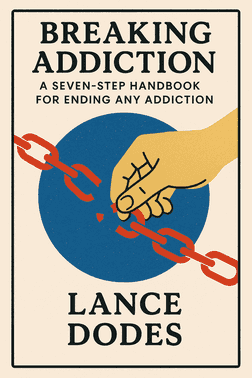
Breaking Addiction: A 7-Step Handbook for Ending Any Addiction by Lance Dodes Summary

Overview of Breaking Addiction
Psychiatrist Lance Dodes revolutionizes addiction treatment with a groundbreaking psychological approach, challenging traditional 12-step programs. Named a Library Journal Best Book, this 7-step handbook reveals how addiction stems from feelings of helplessness - a perspective that's reshaping recovery across America.
- Addiction is a psychological compulsion rooted in helplessness, not a character flaw.
- The seven-step method replaces powerlessness narratives with actionable emotional self-awareness.
- Identify "Key Moments" triggering addictive urges to intercept behaviors before escalation.
- Underlying emotional helplessness drives addiction more than substances or behaviors themselves.
- Traditional 12-step programs fail by reinforcing the helplessness that fuels addiction.
- Addictive acts represent displaced attempts to solve unrelated emotional conflicts.
- Effective recovery requires mapping personal helplessness triggers through structured self-analysis.
- Families should address emotional dynamics rather than enable or punish addictive behaviors.
- "Defensive displacement" explains why addictions persist despite negative life consequences.
- Break addiction cycles by responding directly to core emotional needs first.
- Lance Dodes' approach rejects lifelong recovery for sustainable emotional mastery strategies.
- Holistic treatment combines psychological insight with practical urge-interruption techniques.
About the Author of Breaking Addiction
Lance M. Dodes, author of Breaking Addiction: A 7-Step Handbook for Ending Any Addiction, is a renowned psychiatrist, psychoanalyst, and addiction treatment innovator with over three decades of clinical experience.
A retired assistant clinical professor of psychiatry at Harvard Medical School and training analyst emeritus at the Boston Psychoanalytic Society, Dodes challenges conventional approaches by framing addiction as a psychological compulsion rooted in reversing helplessness. His expertise stems from directing addiction programs at Harvard’s McLean Hospital and the Boston Center for Problem Gambling.
Dodes expanded his groundbreaking theories in The Heart of Addiction and the critically acclaimed The Sober Truth, which scrutinizes 12-step programs. His work has been featured in The New York Times, NPR, and the documentary Unfit: The Psychology of Donald Trump.
Breaking Addiction received a Library Journal Best Book award for its actionable, research-backed framework. Recognized as a Distinguished Fellow of the American Academy of Addiction Psychiatry, Dodes’ bold perspective continues influencing modern addiction science and clinical practice worldwide.
FAQs About Breaking Addiction
What is Breaking Addiction: A 7-Step Handbook about?
Breaking Addiction by Lance M. Dodes, MD, provides a science-backed 7-step framework to overcome addiction by addressing its root cause: an intolerable sense of helplessness. Unlike traditional programs like AA, Dodes argues that addiction stems from emotional triggers, not moral failure, and empowers readers to regain control through self-awareness and actionable strategies. The book includes case studies and critiques the "powerlessness" narrative.
Who should read Breaking Addiction?
This book is ideal for adults struggling with substance abuse, gambling, overeating, or behavioral addictions, as well as families and healthcare professionals. It’s particularly valuable for those seeking alternatives to 12-step programs, as Dodes emphasizes psychological empowerment over surrender. The clear, case study-driven approach also benefits therapists exploring non-traditional treatments.
Is Breaking Addiction worth reading?
Yes, for its groundbreaking focus on addiction’s emotional roots. Dodes’ 30+ years of clinical experience and Harvard-affiliated credentials lend authority, while practical steps and relatable stories make complex concepts accessible. However, those deeply committed to AA’s philosophy may find its critique of powerlessness controversial.
What are the 7 steps in Breaking Addiction?
While the exact steps aren’t listed verbatim in search results, Dodes’ method involves:
- Identifying triggers tied to helplessness
- Recognizing addictive urges as emotional responses
- Developing healthier coping mechanisms
- Addressing underlying psychological conflicts
- Building long-term emotional resilience
The process prioritizes self-analysis over willpower, using clinical examples to guide readers.
How does Breaking Addiction differ from Alcoholics Anonymous?
Dodes directly challenges AA’s core tenet of powerlessness, arguing that surrendering control reinforces the helplessness driving addiction. Instead, his approach fosters agency through psychological insight, positioning addiction as a solvable behavior, not a lifelong struggle. This contrasts with AA’s spiritual and group-focused framework.
What role does helplessness play in addiction, per Dodes?
Dodes identifies helplessness as the universal trigger for addictive acts—a response to situations where individuals feel powerless over deeply important issues (e.g., relationships, self-worth). Addictions temporarily restore control, creating a compulsive cycle. Breaking this requires addressing the 源头 emotional void, not just the behavior.
Does Breaking Addiction include real-life case studies?
Yes. Dodes illustrates his methodology with anonymized patient stories, such as a woman overeating to cope with marital neglect and a man using gambling to escape professional stagnation. These examples demonstrate how recognizing helplessness patterns leads to recovery.
What criticisms exist about Breaking Addiction?
Some argue Dodes oversimplifies complex addictions by attributing them solely to helplessness, potentially underestimating biological or social factors. Others note his approach requires significant self-reflection, which may be challenging without professional guidance. Pro-AA advocates dispute his rejection of powerlessness.
How does Breaking Addiction approach relapse prevention?
The book frames relapses as opportunities to refine self-understanding, not failures. By analyzing triggers post-relapse, individuals deepen their awareness of helplessness patterns and strengthen alternative coping strategies. This contrasts with punitive views of setbacks.
What are notable quotes from Breaking Addiction?
Key lines include:
- “Addiction is a behavior intended to reverse a profound, intolerable sense of helplessness.”
- “Recovery lies in recognizing that you are not powerless—you’ve always had a choice.”
These emphasize Dodes’ core thesis of empowerment.
Can Breaking Addiction help non-substance addictions?
Yes. Dodes explicitly addresses behavioral addictions like gambling, sex, and overeating, noting shared emotional roots with substance abuse. The 7-step method applies universally by focusing on underlying helplessness rather than the addictive medium.
How does Dodes’ approach challenge traditional treatments?
It rejects disease-model frameworks, instead viewing addiction as a learned response to emotional distress. This shifts treatment from abstinence-focused rules to introspective healing, appealing to those skeptical of moral or spiritual recovery models.
Feel the book through the author's voice
Turn knowledge into engaging, example-rich insights
Capture key ideas in a flash for fast learning
Enjoy the book in a fun and engaging way
Key Themes in Breaking Addiction
Quotes from Breaking Addiction
Addiction fundamentally functions as a behavior intended to reverse profound, intolerable feelings of helplessness.
The driving force behind addiction is rage-specifically, rage at helplessness.
Addictions are substitute actions that replace more direct responses to feelings of helplessness.
True addiction must be distinguished from other causes of repetitive behavior.
Characters in Breaking Addiction
Quick Summary Mode - Read or listen to Breaking Addiction Summary in 9 Minutes

Break down key ideas from Breaking Addiction into bite-sized takeaways to understand how innovative teams create, collaborate, and grow.

Flash Card Mode - Top 9 Insights from Breaking Addiction in a Nutshell

Distill Breaking Addiction into rapid-fire memory cues that highlight key principles of candor, teamwork, and creative resilience.

Fun Mode - Breaking Addiction Lessons Told Through 19-Min Stories

Experience Breaking Addiction through vivid storytelling that turns innovation lessons into moments you'll remember and apply.
Personalize Mode - Read or listen to Breaking Addiction Summary in 0 Minutes

Ask anything, pick the voice, and co-create insights that truly resonate with you.

From Columbia University alumni built in San Francisco
"Instead of endless scrolling, I just hit play on BeFreed. It saves me so much time."


"I never knew where to start with nonfiction—BeFreed’s book lists turned into podcasts gave me a clear path."


"Perfect balance between learning and entertainment. Finished ‘Thinking, Fast and Slow’ on my commute this week."
"Crazy how much I learned while walking the dog. BeFreed = small habits → big gains."
"Reading used to feel like a chore. Now it’s just part of my lifestyle."

"Feels effortless compared to reading. I’ve finished 6 books this month already."
"BeFreed turned my guilty doomscrolling into something that feels productive and inspiring."

"BeFreed turned my commute into learning time. 20-min podcasts are perfect for finishing books I never had time for."
"BeFreed replaced my podcast queue. Imagine Spotify for books — that’s it. 🙌"

"It is great for me to learn something from the book without reading it."
"The themed book list podcasts help me connect ideas across authors—like a guided audio journey."
"Makes me feel smarter every time before going to work"
From Columbia University alumni built in San Francisco
"Instead of endless scrolling, I just hit play on BeFreed. It saves me so much time."
"I never knew where to start with nonfiction—BeFreed’s book lists turned into podcasts gave me a clear path."
"Perfect balance between learning and entertainment. Finished ‘Thinking, Fast and Slow’ on my commute this week."
"Crazy how much I learned while walking the dog. BeFreed = small habits → big gains."
"Reading used to feel like a chore. Now it’s just part of my lifestyle."
"Feels effortless compared to reading. I’ve finished 6 books this month already."
"BeFreed turned my guilty doomscrolling into something that feels productive and inspiring."
"BeFreed turned my commute into learning time. 20-min podcasts are perfect for finishing books I never had time for."
"BeFreed replaced my podcast queue. Imagine Spotify for books — that’s it. 🙌"
"It is great for me to learn something from the book without reading it."
"The themed book list podcasts help me connect ideas across authors—like a guided audio journey."
"Makes me feel smarter every time before going to work"
"Instead of endless scrolling, I just hit play on BeFreed. It saves me so much time."
"I never knew where to start with nonfiction—BeFreed’s book lists turned into podcasts gave me a clear path."
"Perfect balance between learning and entertainment. Finished ‘Thinking, Fast and Slow’ on my commute this week."
"Crazy how much I learned while walking the dog. BeFreed = small habits → big gains."
"Reading used to feel like a chore. Now it’s just part of my lifestyle."
"Feels effortless compared to reading. I’ve finished 6 books this month already."
"BeFreed turned my guilty doomscrolling into something that feels productive and inspiring."
"BeFreed turned my commute into learning time. 20-min podcasts are perfect for finishing books I never had time for."
"BeFreed replaced my podcast queue. Imagine Spotify for books — that’s it. 🙌"
"It is great for me to learn something from the book without reading it."
"The themed book list podcasts help me connect ideas across authors—like a guided audio journey."
"Makes me feel smarter every time before going to work"
"Instead of endless scrolling, I just hit play on BeFreed. It saves me so much time."
"I never knew where to start with nonfiction—BeFreed’s book lists turned into podcasts gave me a clear path."
"Perfect balance between learning and entertainment. Finished ‘Thinking, Fast and Slow’ on my commute this week."
"Crazy how much I learned while walking the dog. BeFreed = small habits → big gains."
"Reading used to feel like a chore. Now it’s just part of my lifestyle."
"Feels effortless compared to reading. I’ve finished 6 books this month already."
"BeFreed turned my guilty doomscrolling into something that feels productive and inspiring."
"BeFreed turned my commute into learning time. 20-min podcasts are perfect for finishing books I never had time for."
"BeFreed replaced my podcast queue. Imagine Spotify for books — that’s it. 🙌"
"It is great for me to learn something from the book without reading it."
"The themed book list podcasts help me connect ideas across authors—like a guided audio journey."
"Makes me feel smarter every time before going to work"

Get the Breaking Addiction summary as a free PDF or EPUB. Print it or read offline anytime.