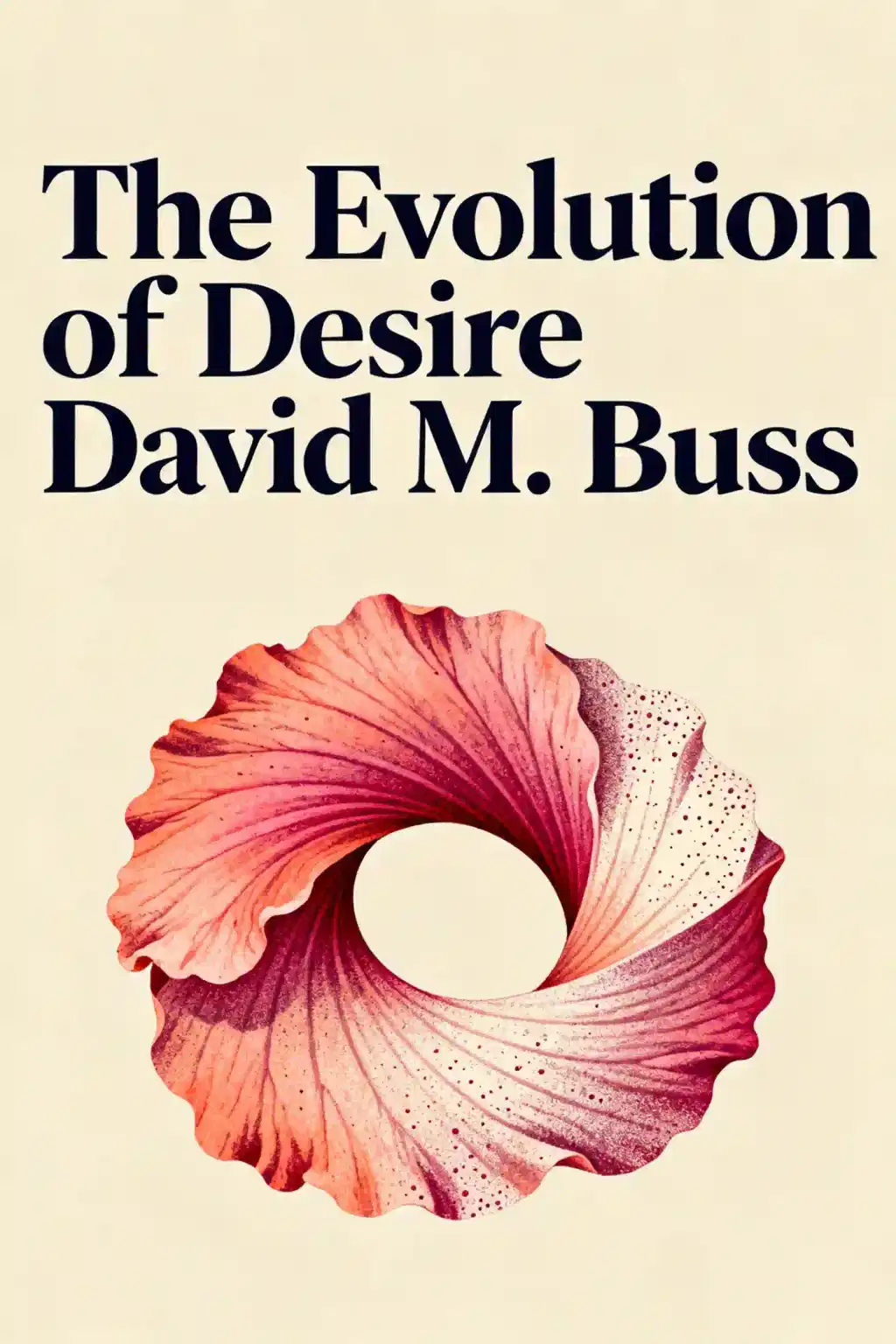
Evolution of Desire: Strategies of Human Mating by David M. Buss Summary

Overview of Evolution of Desire
Uncover the hidden psychology of attraction in David Buss's landmark study spanning 10,000+ participants across 37 cultures. Why do women prefer wealthy men even when financially independent? Discover universal mating strategies that explain everything from jealousy to mate poaching.
- Men evolved to prioritize youth and fertility while women seek resources and commitment
- Sexual conflict arises from divergent evolutionary strategies for short-term vs long-term mating
- Jealousy functions as evolved defense against mate poaching and emotional infidelity risks
- Human attraction patterns reflect ancestral priorities for genetic quality and parental investment
- Mate retention strategies include resource display, emotional manipulation, and rival deterrence tactics
- Evolutionary psychology explains why men overestimate sexual interest while women underestimate commitment
- Cultural status symbols replace ancestral indicators like hunting skills in modern mate selection
- Women's dual mating strategy balances genetic quality with reliable long-term provisioning partners
- Sexual coercion and partner violence stem from evolved conflicts over reproductive control
- Relationship satisfaction depends on fulfilling sex-specific evolved desires for attraction and investment
- Men face higher paternity uncertainty driving mate guarding behaviors and sexual vigilance
- Evolutionary mismatches occur when modern contexts clash with ancestral mating psychology adaptations
About the Author of Evolution of Desire
David M. Buss is a renowned evolutionary psychologist and the author of The Evolution of Desire: Strategies of Human Mating. He stands as a leading authority on human sexuality and mating dynamics.
A professor at the University of Texas at Austin, with a Ph.D. from UC Berkeley, Buss pioneered the application of evolutionary principles to psychology. His work explores themes such as sexual strategies, jealousy, and conflict between the sexes.
His body of work includes seminal books such as Evolutionary Psychology: The New Science of the Mind and When Men Behave Badly. Bridging academic rigor and public understanding, his contributions have earned accolades like the APA Distinguished Scientific Award.
Buss’s cross-cultural research spans 37 nations, underpinning his theories on universal mating behaviors. The Evolution of Desire is a cornerstone in evolutionary psychology that has influenced both scholarly discourse and popular science. This has solidified his reputation as a foundational voice in understanding human relationships through an evolutionary lens. The book remains widely cited in academic curricula and has been translated into multiple languages.
FAQs About Evolution of Desire
What is The Evolution of Desire by David M. Buss about?
The Evolution of Desire explores human mating strategies through an evolutionary psychology lens, analyzing sexual attraction, partner preferences, and relationship conflicts. Based on a 37-culture study, Buss argues that men and women evolved distinct mating tactics—men prioritize youth and fertility, while women seek resources and status. Key themes include jealousy, infidelity, and the evolutionary roots of desire.
Who should read The Evolution of Desire?
This book suits psychology students, researchers, and readers curious about human behavior’s biological underpinnings. It’s valuable for those seeking insights into dating dynamics, gender differences, and evolutionary explanations for love, lust, and conflict. Critics note its heteronormative focus, but it remains a foundational text in evolutionary psychology.
What is the sexual strategies theory in The Evolution of Desire?
Buss’s sexual strategies theory posits that humans evolved short-term and long-term mating tactics. Men historically pursued casual sex to maximize genetic spread, while women prioritized committed partners to secure resources for offspring. These strategies explain modern behaviors like mate guarding, sexual jealousy, and mate poaching.
How does The Evolution of Desire explain gender differences in attraction?
Men universally favor youth, physical attractiveness, and fertility cues (e.g., waist-to-hip ratios), traits linked to reproductive potential. Women prioritize ambition, financial prospects, and social status—qualities that historically boosted offspring survival. These preferences persist despite cultural shifts, shaped by evolutionary pressures.
What are the criticisms of The Evolution of Desire?
Critics argue the book overemphasizes biological determinism, underplays cultural influences, and relies on self-reported data prone to bias. Some call its heteronormative framing outdated, while others question extrapolating ancestral environments to modern behavior. Despite this, it’s praised for pioneering cross-cultural mating research.
How does The Evolution of Desire address infidelity and jealousy?
Buss frames jealousy as an evolutionary adaptation to prevent partner betrayal. Men’s jealousy focuses on sexual infidelity (risking unintended offspring), while women fear emotional abandonment (losing resource access). The book cites global data showing these patterns transcend cultures.
What updates are in the revised edition of The Evolution of Desire?
The 2016 edition includes new research on online dating, shifting gender roles, and LGBTQ+ dynamics. Buss addresses critiques of evolutionary psychology’s heteronormativity and expands on how modern technology intersects with ancient mating instincts, such as social media’s role in mate competition.
How does The Evolution of Desire apply to modern relationships?
The book explains why dating app users swiped-based on evolutionary cues (e.g., height for men, income for women). It also decodes “ghosting” as a mate-screening tactic and links “breadcrumbing” to ancestral resource-display behaviors. These insights help navigated contemporary romance strategically.
What famous quotes come from The Evolution of Desire?
Notable lines include:
- “Jealousy is a primary defense against infidelity.”
- “Men’s desires shape women’s mating rivals.”
- “Women don’t seek equality in mate value—they seek men slightly above them.”
These quotes distill core arguments about evolutionary sexual conflict.
How does The Evolution of Desire compare to The Selfish Gene?
While Richard Dawkins examines gene-centered evolution broadly, Buss focuses specifically on mating. Both ground behavior in Darwinian principles, but The Evolution of Desire offers actionable relationship insights, whereas The Selfish Gene explores theoretical biology.
Why is The Evolution of Desire relevant in 2025?
As AI reshapes dating algorithms and gender norms evolve, Buss’s framework helps decode new trends like virtual reality romance and polyamory. Its evolutionary lens remains a tool to understand enduring patterns in mate choice, despite technological disruption.
What other books has David M. Buss written?
Buss authored The Dangerous Passion (jealousy), Evolutionary Psychology: The New Science of the Mind (textbook), and When Men Behave Badly (sexual conflict). These works expand on mating strategies, aggression, and modern implications of ancestral psychology.
Feel the book through the author's voice
Turn knowledge into engaging, example-rich insights
Capture key ideas in a flash for fast learning
Enjoy the book in a fun and engaging way
Key Themes in Evolution of Desire
Quotes from Evolution of Desire
Human mating is inherently strategic.
Conflict in mating relationships is actually the norm, not the exception?
Not all mates should be retained.
Women's mate preferences are extraordinarily complex.
Understanding our evolved sexual strategies gives us power.
Characters in Evolution of Desire
Quick Summary Mode - Read or listen to Evolution of Desire Summary in 12 Minutes

Break down key ideas from Evolution of Desire into bite-sized takeaways to understand how innovative teams create, collaborate, and grow.

Flash Card Mode - Top 9 Insights from Evolution of Desire in a Nutshell

Distill Evolution of Desire into rapid-fire memory cues that highlight key principles of candor, teamwork, and creative resilience.

Fun Mode - Evolution of Desire Lessons Told Through 26-Min Stories

Experience Evolution of Desire through vivid storytelling that turns innovation lessons into moments you'll remember and apply.
Personalize Mode - Read or listen to Evolution of Desire Summary in 0 Minutes

Ask anything, pick the voice, and co-create insights that truly resonate with you.

From Columbia University alumni built in San Francisco
"Instead of endless scrolling, I just hit play on BeFreed. It saves me so much time."


"I never knew where to start with nonfiction—BeFreed’s book lists turned into podcasts gave me a clear path."


"Perfect balance between learning and entertainment. Finished ‘Thinking, Fast and Slow’ on my commute this week."
"Crazy how much I learned while walking the dog. BeFreed = small habits → big gains."
"Reading used to feel like a chore. Now it’s just part of my lifestyle."

"Feels effortless compared to reading. I’ve finished 6 books this month already."
"BeFreed turned my guilty doomscrolling into something that feels productive and inspiring."

"BeFreed turned my commute into learning time. 20-min podcasts are perfect for finishing books I never had time for."
"BeFreed replaced my podcast queue. Imagine Spotify for books — that’s it. 🙌"

"It is great for me to learn something from the book without reading it."
"The themed book list podcasts help me connect ideas across authors—like a guided audio journey."
"Makes me feel smarter every time before going to work"
From Columbia University alumni built in San Francisco
"Instead of endless scrolling, I just hit play on BeFreed. It saves me so much time."
"I never knew where to start with nonfiction—BeFreed’s book lists turned into podcasts gave me a clear path."
"Perfect balance between learning and entertainment. Finished ‘Thinking, Fast and Slow’ on my commute this week."
"Crazy how much I learned while walking the dog. BeFreed = small habits → big gains."
"Reading used to feel like a chore. Now it’s just part of my lifestyle."
"Feels effortless compared to reading. I’ve finished 6 books this month already."
"BeFreed turned my guilty doomscrolling into something that feels productive and inspiring."
"BeFreed turned my commute into learning time. 20-min podcasts are perfect for finishing books I never had time for."
"BeFreed replaced my podcast queue. Imagine Spotify for books — that’s it. 🙌"
"It is great for me to learn something from the book without reading it."
"The themed book list podcasts help me connect ideas across authors—like a guided audio journey."
"Makes me feel smarter every time before going to work"
"Instead of endless scrolling, I just hit play on BeFreed. It saves me so much time."
"I never knew where to start with nonfiction—BeFreed’s book lists turned into podcasts gave me a clear path."
"Perfect balance between learning and entertainment. Finished ‘Thinking, Fast and Slow’ on my commute this week."
"Crazy how much I learned while walking the dog. BeFreed = small habits → big gains."
"Reading used to feel like a chore. Now it’s just part of my lifestyle."
"Feels effortless compared to reading. I’ve finished 6 books this month already."
"BeFreed turned my guilty doomscrolling into something that feels productive and inspiring."
"BeFreed turned my commute into learning time. 20-min podcasts are perfect for finishing books I never had time for."
"BeFreed replaced my podcast queue. Imagine Spotify for books — that’s it. 🙌"
"It is great for me to learn something from the book without reading it."
"The themed book list podcasts help me connect ideas across authors—like a guided audio journey."
"Makes me feel smarter every time before going to work"
"Instead of endless scrolling, I just hit play on BeFreed. It saves me so much time."
"I never knew where to start with nonfiction—BeFreed’s book lists turned into podcasts gave me a clear path."
"Perfect balance between learning and entertainment. Finished ‘Thinking, Fast and Slow’ on my commute this week."
"Crazy how much I learned while walking the dog. BeFreed = small habits → big gains."
"Reading used to feel like a chore. Now it’s just part of my lifestyle."
"Feels effortless compared to reading. I’ve finished 6 books this month already."
"BeFreed turned my guilty doomscrolling into something that feels productive and inspiring."
"BeFreed turned my commute into learning time. 20-min podcasts are perfect for finishing books I never had time for."
"BeFreed replaced my podcast queue. Imagine Spotify for books — that’s it. 🙌"
"It is great for me to learn something from the book without reading it."
"The themed book list podcasts help me connect ideas across authors—like a guided audio journey."
"Makes me feel smarter every time before going to work"

Get the Evolution of Desire summary as a free PDF or EPUB. Print it or read offline anytime.