Discover the neuroscience behind scattered attention and learn practical techniques to rewire your brain for deeper focus. From 12-minute daily practices to digital boundaries, transform your mental clarity and reclaim your life.

We're mentally present for only about half of our actual existence. The other half, we're running simulations of the past or future while the present moment just slips by unnoticed.
Focus


From Columbia University alumni built in San Francisco
"Instead of endless scrolling, I just hit play on BeFreed. It saves me so much time."
"I never knew where to start with nonfiction—BeFreed’s book lists turned into podcasts gave me a clear path."
"Perfect balance between learning and entertainment. Finished ‘Thinking, Fast and Slow’ on my commute this week."
"Crazy how much I learned while walking the dog. BeFreed = small habits → big gains."
"Reading used to feel like a chore. Now it’s just part of my lifestyle."
"Feels effortless compared to reading. I’ve finished 6 books this month already."
"BeFreed turned my guilty doomscrolling into something that feels productive and inspiring."
"BeFreed turned my commute into learning time. 20-min podcasts are perfect for finishing books I never had time for."
"BeFreed replaced my podcast queue. Imagine Spotify for books — that’s it. 🙌"
"It is great for me to learn something from the book without reading it."
"The themed book list podcasts help me connect ideas across authors—like a guided audio journey."
"Makes me feel smarter every time before going to work"
From Columbia University alumni built in San Francisco

Lena: Hey everyone, welcome back to another personalized podcast from BeFreed! I'm Lena, and I'm absolutely thrilled to dive into today's conversation with my co-host Eli about something we all struggle with-focus.
Eli: And I'm Eli! Oh man, Lena, I am so excited about this topic because honestly? I think we're living through what might be the biggest attention crisis in human history. Like, when was the last time any of us actually sat with one thing for more than a few minutes without our minds wandering or our phones buzzing?
Lena: Right? It's wild when you really think about it. We've got all these incredible tools and resources at our fingertips, but somehow we're more scattered than ever. So today we're going to explore what's actually happening to our attention, why it matters so much, and-most importantly-what we can actually do about it.
Eli: Exactly! And we're drawing from some really fascinating research and insights from neuroscientists, meditation teachers, and productivity experts who've spent years figuring this stuff out. This is going to be good!
Lena: So Eli, let's start with something that honestly kind of blew my mind when I first read about it. There's this neuroscientist, Amishi Jha, who's been studying attention for decades, and she discovered something pretty uncomfortable about how we're actually living our lives.
Eli: Oh, you're talking about that statistic from "Peak Mind," right? The one about how we're only present for about half our lives?
Lena: Exactly! Fifty percent, Eli. We're mentally present for only about half of our actual existence. The other half? We're running simulations of the past or future while the present moment just... slips by unnoticed.
Eli: It's honestly staggering when you think about it that way. Like, imagine if someone told you that you were only conscious for half your life-you'd be terrified! But because this mind-wandering feels so normal, we don't even notice we're missing our own lives.
Lena: And what's fascinating is that this isn't a character flaw or something we need to feel bad about. Jha makes it clear that this is just how human brains operate. But here's what gets me excited-attention is trainable. It's like a muscle we can actually strengthen.
Eli: Right! And before we dive into the solutions, I think it's worth understanding what we're working with here. Our attention actually operates through three distinct systems, and they're all pretty amazing when you think about it.
Lena: Tell me more about that. I love how the research breaks this down.
Eli: Okay, so picture this-you've got what Jha calls the "flashlight," which is your orienting system. This is what selectively illuminates targets while suppressing distractions. Then there's the "floodlight"-your alerting system that maintains broad vigilance. And finally, the "juggler"-your executive control that aligns your actions with your goals.
Lena: And these systems don't all work at the same time, do they?
Eli: Exactly! That's the key insight. When you're in deep focus mode, you might be completely oblivious to someone calling your name. Or when you're on high alert during a crisis, complex planning becomes nearly impossible. It's like having different apps running on your phone-you can't use them all simultaneously at full capacity.
Lena: So if our attention is this incredible superpower-and I love that framing-what's going wrong? What's hijacking this system that should be working for us?
Eli: Oh man, this is where it gets really interesting. There are basically three main culprits that sabotage our attention: stress, poor mood, and threat. And here's the thing-they don't just make us feel bad, they literally rewire how our attention operates.
Lena: How so?
Eli: Well, think about stress first. When we're stressed, our mental flashlight gets stuck on negative thoughts. Instead of being able to direct our attention where we want it, we're caught in these loops of rumination about the past or worry about the future. Our alerting system becomes hypervigilant, and our executive control-that juggler-starts dropping balls left and right.
Lena: And poor mood creates its own problems, right? I remember reading about how even induced negative moods in lab studies significantly degrade performance on attention-demanding tasks.
Eli: Absolutely! It's like being caught in a mental whirlpool. When we're in a negative mood, we get trapped in these repetitive negative thought patterns that just consume our cognitive resources. And threat? That's maybe the most interesting one because it completely reconfigures our attention.
Lena: In what way?
Eli: When we perceive threat-and this could be anything from a work deadline to social judgment-our focused attention scatters. The brain prioritizes threat vigilance over everything else. Anything threat-related captures and holds our focus. This response evolved for survival, right? If there's a predator nearby, you don't want to be lost in deep thought about your grocery list.
Lena: But in our modern world, this becomes a huge problem because most of our "threats" aren't actually life-or-death situations.
Eli: Exactly! And here's what really gets me-you don't even need to feel stressed for your attention to be compromised. High cognitive demands, evaluative pressure, uncertainty... these things degrade attention regardless of how we emotionally experience them. Many high achievers don't even identify their experience as stressful, but their attention is clearly suffering.
Lena: That's such an important point. And I think this connects to something I've been noticing about the advice we usually get for dealing with stress and focus issues.
Eli: Oh, you mean all that "just think positive" stuff?
Lena: Right! Like, "suppress those upsetting thoughts" or "just concentrate on something else." But when you understand how attention actually works, you realize these strategies are completely backwards.
Eli: They're not just ineffective-they're counterproductive! These approaches require the very attentional resources you're trying to conserve. It's like trying to save money by spending more money. You're depleting the exact thing you need to strengthen.
Lena: This brings us to something that I think is really crucial to understand-working memory. Because when our attention is scattered, it's not just that we can't focus. We're literally losing our ability to hold information and intentions in our minds.
Eli: Oh, this is such a good connection! Working memory is like your brain's temporary scratch space, but here's the thing-it uses disappearing ink. The moment your attention shifts, the content starts to fade.
Lena: And the research on this is pretty humbling, isn't it? Most people can only hold about three faces or four simple items before performance collapses.
Eli: Right! And there's actually a neurological reason for this. Each item in working memory has its own brain frequency signature, and you can only maintain about four channels before they start scrambling into each other. It's like trying to tune into multiple radio stations at once.
Lena: What I find fascinating is how working memory fails. It's not just one thing going wrong.
Eli: Exactly! You've got overload-when you exceed capacity. There's blanking-when information just suddenly vanishes. And then distraction-when new information overwrites what you were trying to hold onto. These failures show how deeply working memory and attention are connected.
Lena: And working memory isn't just about remembering phone numbers or grocery lists. It's where we maintain our goals and intentions, right?
Eli: Absolutely! It's the portal between long-term storage and conscious thought. You need it for encoding new information, retrieving memories, tracking what other people are thinking and feeling, regulating your emotions... and most critically, it's where you hold your goals, from simple tasks to complex life intentions.
Lena: So when our working memory is compromised, we're not just forgetful-we're literally losing track of what we're trying to accomplish.
Eli: That's exactly right. And this is where the research from people like Jon Kabat-Zinn becomes so relevant. In "Wherever You Go, There You Are," he talks about this pattern we all fall into-we're constantly reaching toward some imagined better moment instead of engaging with what's actually here.
Lena: It's like we're living in this perpetual forward-lean, always waiting for the next thing.
Eli: Yes! And what's happening neurologically is that our working memory is constantly occupied with these mental simulations of the future instead of being available for present-moment engagement. We're using our cognitive resources to rehearse scenarios that may never happen while missing the actual experience unfolding right now.
Lena: Okay, so we've painted a pretty challenging picture here. Our attention is under constant assault, our working memory is limited and fragile, and we're missing half our lives. But here's what gives me hope-the research shows that we can actually do something about this.
Eli: Oh, absolutely! And this is where Amishi Jha's research gets really exciting. She discovered what she calls the "minimum effective dose" for attention training, and it's way more accessible than you might think.
Lena: Twelve minutes a day, right?
Eli: Exactly! Twelve minutes a day, five days a week, for four weeks. That's it. And the reason this works comes down to something called neuroplasticity-the brain's ability to reorganize itself based on regular input.
Lena: I love the example she gives about London cab drivers having larger hippocampi than bus drivers because they have to navigate complex routes instead of following the same path every day.
Eli: It's such a perfect illustration! Your brain literally reshapes itself based on how you use it. And what Jha found in her research with deploying soldiers was that mindfulness training created measurable improvements in attention, while other approaches-like positivity training-actually proved depleting.
Lena: Why was positivity training depleting? That seems counterintuitive.
Eli: Because it required constant reappraisal! Participants had to continuously work to reframe their thoughts and experiences, which strained their cognitive resources. Mindfulness, on the other hand, is about developing a different relationship with whatever arises-you're not trying to change your thoughts, you're changing how you relate to them.
Lena: And the practice itself is beautifully simple, isn't it?
Eli: It really is. You assume proper posture-which naturally creates a sense of dignity and alertness. You focus on breath-related sensations. When you notice your attention has wandered, you redirect it back to the breath. That's it.
Lena: But here's what I think is so important for people to understand-feeling more stressed initially is actually a positive sign.
Eli: Yes! This is such a crucial point. When people start practicing mindfulness, they often think they're getting worse at it because they become more aware of how much their minds wander. But that increased awareness is exactly the point. You're not creating the mind-wandering-you're finally noticing it.
Lena: It's like turning on a light in a room and suddenly seeing all the dust. The dust was always there; now you can actually see it and do something about it.
Eli: Perfect analogy! And this connects to something that's emphasized in both "Peak Mind" and "Let It Settle"-the practice becomes most valuable precisely when it feels most challenging. When boredom and restlessness arise, that's when you're really building your attention muscle.
Lena: So we've got this twelve-minute daily practice, but I think what really excites me is how this extends into everyday life. It's not just about sitting meditation, is it?
Eli: Not at all! And this is where Jon Kabat-Zinn's approach in "Wherever You Go, There You Are" is so practical. The essence of meditation isn't the sitting position-it's what he calls the "mental posture of dignity."
Lena: What does that look like in practice?
Eli: Well, think about when you're invited to "sit with dignity." People naturally straighten without stiffening, relax without slouching. They're reclaiming their inherent worthiness. That same quality of attention can be brought to any activity.
Lena: Like walking meditation, right? I love how Thich Nhat Hanh puts it: "Peace is every step."
Eli: Exactly! Instead of walking to arrive somewhere, you're fully present with each step. You're not trying to get anywhere-you're simply being present with the experience of walking itself.
Lena: And this can transform the most mundane activities. I was reading about how even going upstairs can become a practice.
Eli: Oh, this is so good! Most of us mentally race ahead when we're climbing stairs, already thinking about what we'll do when we reach the top. But what if you tried taking one breath per step? Suddenly you realize that the inner rush rarely matches any real urgency.
Lena: It's like we're constantly living ahead of ourselves. Even something as simple as cleaning the kitchen can become meditation.
Eli: Right! You're not cleaning to finish-you're simply moving, watching things change, maybe moving in rhythm with music. It becomes a celebration of the present moment rather than a chore to get through.
Lena: And this connects to something I've been thinking about from the productivity research. A lot of the focus advice out there is about forcing yourself to concentrate, but what we're talking about is almost the opposite.
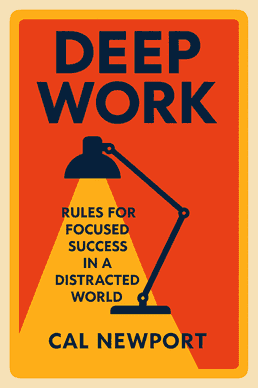
Eli: Absolutely! It's more about creating the conditions where natural focus can emerge. In "Deep Work," Cal Newport talks about this distinction between deep work and shallow work, and how we need to structure our environment and schedule to support sustained attention.
Lena: Let's dive into that because I think Newport's research really complements the mindfulness approach beautifully. He's looking at the same attention challenges from a more practical, workplace-focused angle.
Eli: Exactly! Newport makes this crucial distinction between deep work-professional activity performed in distraction-free concentration that pushes your cognitive capabilities to their limit-and shallow work, which is those non-cognitively demanding, logistical tasks we often do while distracted.
Lena: And the research on distraction is pretty sobering. Gloria Mark's studies found that when people get distracted, it can take 23 minutes to get back to the original task. But we're not getting distracted once or twice a day-office workers get distracted every three minutes!
Eli: Every three minutes! It's no wonder so many people feel like they're drowning in their work. They never actually get the chance to go deep because they're constantly being pulled back to the surface.
Lena: So what does Newport recommend for creating these deep work sessions?
Eli: He's got some really practical strategies. First, you literally block your calendar so others know not to interrupt you. He recommends starting with morning sessions since most people can focus better earlier in the day. During deep work, you enable focus mode on all devices-no notifications whatsoever.
Lena: And there's something almost ritualistic about it, right? Like putting on headphones to signal to others that you're not available.
Eli: Yes! And this connects to what we know about environmental optimization from the research. Creating a workspace that minimizes distractions isn't just about productivity-it's about respecting the fragile nature of attention itself.
Lena: The environment piece is huge. I was reading about how cluttered workspaces can overstimulate the visual cortex, increasing mental load and reducing processing efficiency.
Eli: It's like trying to have a conversation in a noisy restaurant. Your brain is constantly working to filter out irrelevant information, which depletes the very resources you need for complex thinking.
Lena: And this is where some of the simpler techniques can be so powerful. The Pomodoro Technique, for instance-working for 25 minutes, then taking a short break.
Eli: The Pomodoro Technique is brilliant because it works with our natural ultradian rhythms instead of against them. Our brains operate in cycles of peak focus and natural rest periods, roughly every 90 minutes. By building in regular breaks, you're preventing mental fatigue before it sets in.
Lena: And during those breaks, what matters is what you do with them, right?
Eli: Absolutely! This is where the mindfulness piece becomes so important. Instead of checking social media during your break-which just creates more cognitive load-you might do some yoga stretches, step outside for fresh air, or simply sit quietly for a few moments.
Lena: Speaking of breaks and recovery, I think we need to talk about the foundational elements that support focus-things like sleep and nutrition. Because you can have all the best techniques in the world, but if your brain isn't properly resourced, you're fighting an uphill battle.
Eli: Oh, this is so important! Sleep is absolutely critical for memory consolidation, emotional regulation, and executive function. When you're chronically sleep-deprived, you're essentially trying to operate high-performance cognitive machinery with a depleted fuel tank.
Lena: The research recommends 7-9 hours of uninterrupted sleep per night, but it's not just about quantity, is it?
Eli: Not at all! Sleep quality matters enormously. Maintaining consistent sleep schedules helps regulate your circadian rhythms, and minimizing blue light exposure before bedtime protects your natural melatonin production.
Lena: And if someone is struggling with insomnia despite good sleep hygiene?
Eli: That's where approaches like cognitive-behavioral therapy for insomnia can be really helpful. Sometimes there are underlying conditions like sleep apnea that need to be addressed. The key is not to just accept poor sleep as inevitable.
Lena: Nutrition is the other piece of this puzzle, and the research here is fascinating.
Eli: It really is! Your brain is incredibly metabolically active-it uses about 20% of your total energy despite being only 2% of your body weight. What you eat directly impacts cognitive performance.
Lena: So what does brain-healthy nutrition look like?
Eli: Leafy greens and berries are rich in antioxidants that protect neurons from oxidative stress. Fatty fish, flaxseeds, and walnuts provide omega-3 fatty acids, which are crucial for neuronal communication. Whole grains and legumes support steady glucose release-and glucose is your brain's primary energy source.
Lena: And there's emerging research on supplements too, right?
Eli: Yes, though it's important to approach this thoughtfully. Omega-3 supplements can benefit people who don't get enough from their diet. B-complex vitamins support neurotransmitter synthesis and may help with age-related cognitive decline. And adaptogens like ashwagandha and rhodiola have stress-reducing properties that indirectly support cognitive performance.
Lena: But I think the key message is that these are supplements to a healthy lifestyle, not replacements for the basics.
Eli: Exactly! You can't supplement your way out of chronic sleep deprivation or a diet full of processed foods. The fundamentals have to be in place first.
Lena: This brings us to what might be the biggest challenge we face in developing sustained focus-our relationship with digital technology. The research on this is pretty eye-opening.
Eli: It really is! Continuous task-switching, often prompted by notifications, significantly reduces productivity. But it's not just about getting less done-it's about what this constant fragmentation does to our capacity for deep thought and meaningful engagement.
Lena: And the solutions aren't just about willpower, are they? You need systematic approaches.
Eli: Right! First, you schedule designated periods for focused work that are completely free from digital interruptions. This isn't just turning off notifications-it's about creating sacred time where you're unavailable to the digital world.
Lena: I love the idea of implementing "Do Not Disturb" modes or using apps that block distracting websites during work hours.
Eli: And single-tasking! This is huge. Instead of trying to juggle multiple digital streams simultaneously, you concentrate on one task at a time. The research shows this dramatically improves both efficiency and depth of focus.
Lena: Setting boundaries around screen time is important too. Like not using devices during meals or before bedtime.
Eli: Absolutely! And decluttering your digital workspace-organizing files, closing unnecessary tabs, disabling non-essential notifications. It's the digital equivalent of keeping a clean, organized physical workspace.
Lena: What strikes me is how this connects back to the mindfulness principles we discussed earlier. It's about being intentional with your attention instead of letting it be pulled around by external forces.
Eli: That's such a perfect connection! In "Peak Mind," Amishi Jha talks about attention as our most valuable currency. In a world that's constantly mining your attention for profit, reclaiming control over where you direct your focus becomes an act of rebellion.
Lena: And this isn't about becoming a digital hermit. It's about using technology intentionally rather than being used by it.
Eli: Exactly! Technology can be an incredible tool for learning, creating, and connecting. But when we lose the ability to choose how we engage with it, we lose something essential about our human agency.
Lena: There's something I want to explore that might seem a bit unexpected in a conversation about focus and productivity-the role of loving-kindness and self-compassion. Because I think how we treat ourselves during this process of developing better attention is actually crucial.
Eli: Oh, this is such an important point! And it connects beautifully to the research on loving-kindness meditation. When we approach focus training with harsh self-judgment, we're actually undermining the very capacity we're trying to develop.
Lena: How so?
Eli: Well, think about what happens when you notice your mind has wandered during meditation. If your immediate response is "I'm terrible at this" or "I can't do anything right," you're creating additional cognitive and emotional load. You're literally making it harder for your attention to settle.
Lena: So self-compassion isn't just nice to have-it's functionally important for developing focus.
Eli: Exactly! And the research on loving-kindness meditation shows that it improves positive mood, perspective-taking, and may even reduce implicit biases while increasing feelings of connection and reducing loneliness.
Lena: How does loving-kindness meditation work?
Eli: You start by offering well-wishes to yourself-holding yourself in awareness the way a loving parent holds a hurt child. You center in your breathing, then let kindness radiate through your being. You might repeat phrases like "May I be free from suffering. May I be happy."
Lena: And then you extend that outward?
Eli: Yes! Once you've established that quality of kindness toward yourself, you progressively extend it to a benefactor, a neutral person, someone you find difficult, and eventually all beings. It's like stretching your capacity for connection and compassion.
Lena: This connects to something beautiful that Kabat-Zinn writes about-attention as the highest form of love.
Eli: Oh, I love that framing! He points out that "attention" comes from the Latin "attendere," which means "to stretch toward." When we give someone our full attention, we're literally stretching toward them, creating connection.
Lena: And in our fragmented world, being fully present with someone becomes almost revolutionary.
Eli: It really does! Think about how rare it is to have someone's undivided attention these days. When it happens, it's incredibly powerful. There's this story in "Peak Mind" about Lieutenant General Walt Piatt in Iraq, dealing with three conflicting tribal leaders. Instead of rushing to solutions, he fully listened to each leader and precisely reflected their words back. That quality of presence transformed the entire dynamic.
Lena: It's like attention becomes a form of respect, of honoring the other person's experience.
Eli: And it works the same way with ourselves. When we can give our own experience-including our struggles with focus-that same quality of kind attention, we create the conditions for growth rather than resistance.
Lena: So as we start to wrap up our exploration, I want to get really practical. We've covered a lot of ground-from neuroscience to meditation to productivity techniques. How does someone actually integrate all of this into a sustainable practice?
Eli: This is such a crucial question because I think people often get overwhelmed by all the different approaches and end up doing nothing. The key is to start simple and build gradually.
Lena: What would you recommend as a starting point?
Eli: I'd say begin with the twelve-minute daily mindfulness practice that Amishi Jha researched. Four weeks, five days a week, twelve minutes a day. That's your foundation. While you're building that habit, you can start implementing some basic environmental changes.
Lena: Like what?
Eli: Turn off non-essential notifications on your devices. Create a designated workspace that's as free from distractions as possible. Start your day with a focused work session before checking email or social media.
Lena: And then layer in additional elements over time?
Eli: Exactly! Once the basic mindfulness practice feels established, you might add walking meditation or extend your deep work sessions. You could experiment with the Pomodoro Technique or try implementing ultradian rhythm breaks every 90 minutes.
Lena: I think the key insight from all this research is that focus isn't just about willpower-it's about creating systems that support your attention naturally.
Eli: That's beautifully put! And it's about understanding that attention is both incredibly powerful and surprisingly fragile. When you respect both of those qualities, you can work with your attention skillfully rather than against it.
Lena: The sleep and nutrition piece can't be overlooked either.
Eli: Absolutely not! You can have the best meditation practice in the world, but if you're chronically sleep-deprived or running on caffeine and processed food, you're fighting an uphill battle. The physiological foundations have to be solid.
Lena: And then there's the self-compassion element. Being kind to yourself when you notice your attention has wandered, whether that's during meditation or during your workday.
Eli: This is where the practice becomes truly transformative. Instead of attention training being another thing you can fail at, it becomes a way of developing a more loving relationship with your own mind.
Lena: What about dealing with setbacks? Because I think people often start these practices enthusiastically and then get discouraged when they don't see immediate results.
Eli: This is where understanding the research really helps. Neuroplasticity-the brain's ability to rewire itself-takes time. Just like you wouldn't expect to build physical muscle after one workout, you can't expect to completely transform your attention patterns overnight.
Lena: And the research shows that feeling more aware of your mind-wandering initially is actually a positive sign.
Eli: Exactly! You're not getting worse at focusing-you're getting better at noticing when you're not focused. That awareness is the first step toward change.
Lena: I also think it's important to remember that this isn't about achieving some perfect state of constant focus.
Eli: Right! It's about developing what researchers call "meta-awareness"-the ability to monitor your own conscious experience. You're building situational awareness for your internal landscape.
Lena: So you can notice when you're unfocused or overfocused, when your mind is wandering, and what's happening both around and within you.
Eli: And then you can respond skillfully rather than just being carried along by whatever mental currents happen to be flowing.
Lena: As we bring this conversation to a close, I want to step back and look at the bigger picture. What we're really talking about here isn't just productivity techniques or stress management-it's about reclaiming something fundamental about human experience.
Eli: That's such an important point, Lena. When Amishi Jha says we're only present for about 50 percent of our lives, she's not just talking about efficiency-she's talking about what it means to be fully alive.
Lena: And there's something almost political about this, isn't there? In a world where so many forces are competing for our attention, learning to direct it consciously becomes an act of freedom.
Eli: Absolutely! There are entire industries built around capturing and monetizing human attention. Social media platforms, news outlets, advertisers-they're all in the business of pulling your focus away from whatever you've chosen to concentrate on.
Lena: So developing the ability to sustain attention becomes a form of resistance to that constant external manipulation.
Eli: And it's not just external forces. Our own minds have evolved patterns that worked for survival in ancient environments but often work against us in modern contexts. That negativity bias that helped our ancestors spot predators now keeps us trapped in cycles of worry and rumination.
Lena: But here's what gives me hope-the research shows that we're not victims of these patterns. We can actually rewire our brains through practice.
Eli: Right! We have 86 billion neurons, three sophisticated attention systems, and neuroplasticity on our side. All it requires is consistent practice-and we're talking about twelve minutes a day, which is less time than most people spend scrolling social media.
Lena: And the benefits extend far beyond just being more productive at work.
Eli: Oh, absolutely! When you can be fully present with other people, your relationships deepen. When you can stay focused on activities you enjoy, you experience more satisfaction and meaning. When you can observe your thoughts and emotions without being overwhelmed by them, you develop emotional resilience.
Lena: It's like developing a different relationship with your own mind.
Eli: Exactly! Instead of being at the mercy of whatever thoughts and feelings arise, you become the aware space in which they appear and disappear. That doesn't mean you don't have preferences or that you become passive-it means you can respond from a place of clarity rather than reactivity.
Lena: And this connects to something beautiful that Jon Kabat-Zinn writes about-the idea that you're already whole, already complete. The practice isn't about becoming someone different; it's about recognizing what's already here.
Eli: That's such a profound reframe! Instead of focus training being about fixing what's broken, it becomes about uncovering what's always been present beneath the turbulence of a busy mind.
Lena: So to everyone listening who might be feeling overwhelmed by their scattered attention or frustrated by their inability to concentrate-you're not broken. Your attention is a remarkable capacity that's been shaped by evolutionary pressures and modern circumstances, but it's also incredibly trainable.
Eli: And the journey of developing better focus is really a journey of coming home to yourself. When you can be present with your own experience-including the difficult parts-you develop a kind of unshakeable stability that no external circumstance can take away.
Lena: So as we wrap things up, I want to leave our listeners with some final thoughts and maybe a challenge. We've covered so much ground today-from the neuroscience of attention to practical meditation techniques to productivity strategies.
Eli: And I think the key message is that all of these approaches are really pointing toward the same thing-the possibility of living with greater presence, clarity, and intention.
Lena: The research we've explored today shows that you don't need expensive technology or radical lifestyle changes to dramatically improve your focus and mental clarity. You need understanding, practice, and patience with yourself.
Eli: Right! Start with that twelve-minute daily practice. Create some basic boundaries around technology. Pay attention to your sleep and nutrition. And be kind to yourself throughout the process.
Lena: And remember that every moment you notice your mind has wandered and gently bring it back is a moment of awakening. You're not failing when your attention drifts-you're succeeding when you notice it has drifted.
Eli: That's beautifully put! And I think it's worth emphasizing that this isn't just about individual benefit. When you develop the capacity for sustained, loving attention, you become more present for the people in your life, more effective in your work, and more able to contribute positively to the world.
Lena: In a time when so many people feel overwhelmed, scattered, and disconnected, developing focus becomes a gift not just to yourself but to everyone around you.
Eli: And here's the thing-you already have everything you need to begin. You have a mind capable of awareness, a breath that's always available as an anchor, and the innate capacity for presence that's your birthright as a human being.
Lena: So our challenge to everyone listening is this: for the next week, try implementing just one thing we've discussed today. Maybe it's twelve minutes of daily mindfulness practice. Maybe it's creating one hour of distraction-free deep work each morning. Maybe it's simply taking three conscious breaths before you check your phone.
Eli: Pick something small, something sustainable, and commit to it for seven days. Notice what happens-not just to your productivity, but to your overall quality of experience.
Lena: And remember, this is a practice, not a performance. You're not trying to achieve some perfect state of constant focus. You're developing a more skillful relationship with your own attention.
Eli: The goal isn't to never get distracted-it's to notice more quickly when you have gotten distracted and to return to your chosen focus with kindness rather than self-judgment.
Lena: Because ultimately, your attention is your life. How you direct it, what you choose to focus on, and the quality of presence you bring to each moment-that's what shapes your actual lived experience.
Eli: And in a world that's constantly trying to pull you away from the present moment, learning to come back to here and now becomes both a radical act and a profound gift to yourself.
Lena: So stay curious, keep practicing, and remember that every moment offers a fresh opportunity to begin again. Your focused, present, aware mind is always just one breath away.
Eli: And on that note, thank you so much for joining us today, everyone. Keep those questions coming, keep exploring, and most importantly, keep practicing. Until next time, stay curious and keep coming back to this moment.
Lena: Thanks for listening, everyone. Here's to reclaiming your attention and, with it, your life!