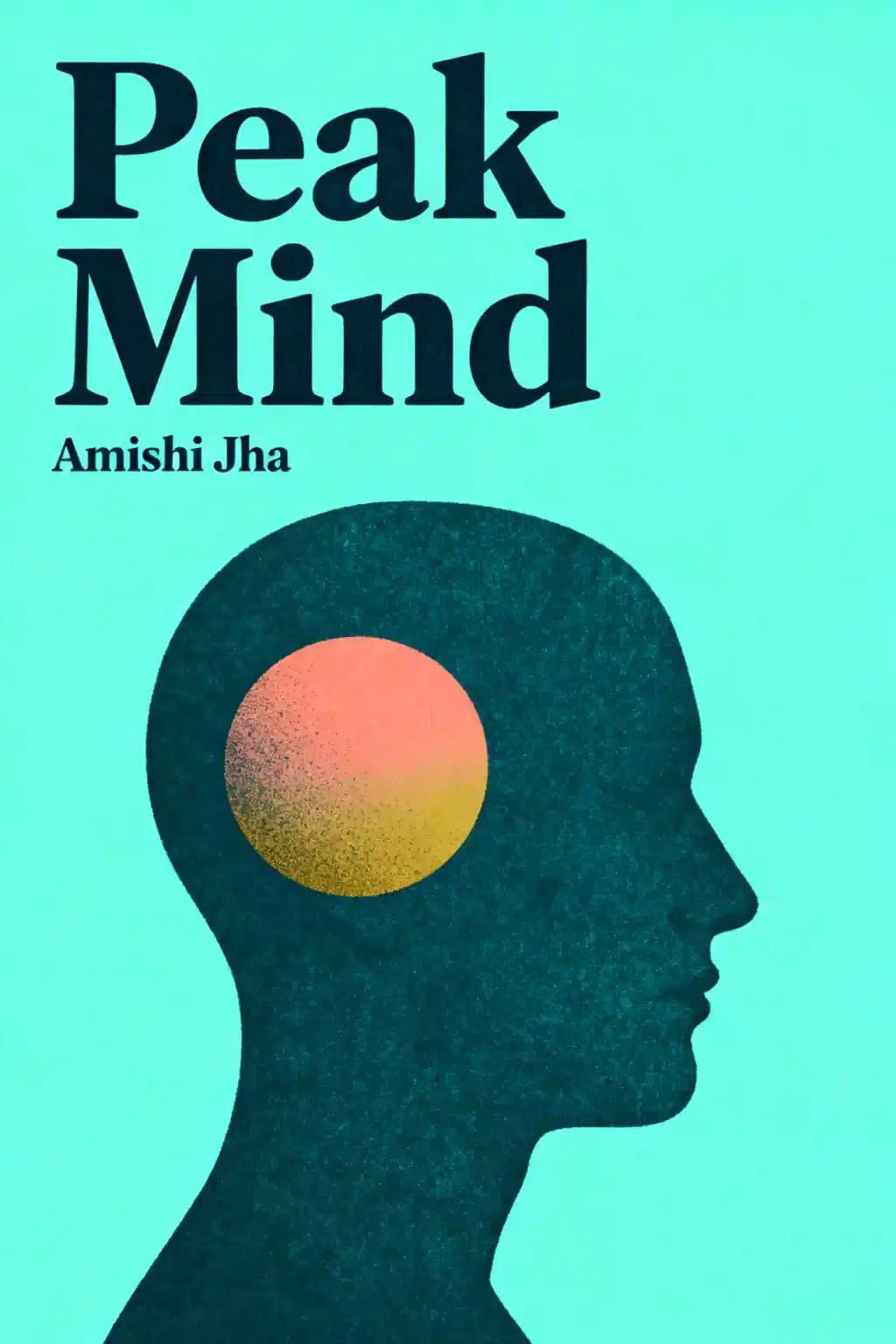
Peak Mind: Find Your Focus, Own Your Attention, Invest 12 Minutes a Day by Amishi Jha Summary

Overview of Peak Mind
In "Peak Mind," neuroscientist Amishi Jha reveals how to reclaim your attention in our distraction-filled world. Endorsed by Tara Brach and transforming military performance, this bestseller offers 12-minute daily practices that rewire your brain for focus - your most valuable currency today.
- Attention is your brain’s currency in the modern distraction economy.
- Mind-wandering occurs 50% of waking hours and reduces cognitive performance.
- Amishi Jha’s 12-minute daily mindfulness practice boosts focus and working memory.
- The “loop of doom” traps minds in destructive rumination cycles.
- Three attention subsystems: flashlight (focus), floodlight (awareness), juggler (working memory).
- Mindfulness breaks confirmation bias by strengthening meta-awareness of thoughts.
- Peak Mind’s “River of Thought” exercise reduces emotional reactivity.
- Attention determines what enters long-term memory and shapes life experience.
- Military-tested mindfulness protocols prevent attentional hijacking in high-stress situations.
- Daily awareness of attention fluctuations prevents chronic stress and burnout.
- Neuroplasticity allows attention systems to grow stronger with consistent training.
- Mindfulness creates space between stimulus and response for better decisions.
About the Author of Peak Mind
Amishi P. Jha, PhD, neuroscientist and bestselling author of Peak Mind: Find Your Focus, Own Your Attention, Invest 12 Minutes a Day, is a leading expert in cognitive neuroscience and mindfulness training. A professor of psychology at the University of Miami and director of its Contemplative Neuroscience initiative, her research focuses on strengthening attention and resilience in high-stress populations, including military personnel, first responders, and elite athletes.
Jha’s work bridges cutting-edge science and practical application, with her findings featured in The New York Times, NPR, and TED (her talk, “How to Tame Your Wandering Mind,” has over 5 million views). She has advised organizations like NATO, the World Economic Forum, and the Pentagon, and her Peak Mind methodology—backed by 15+ years of research—offers science-based tools to combat distraction and enhance mental clarity.
A frequent guest on top podcasts (The Joe Rogan Experience, Armchair Expert), Jha’s book became an instant bestseller, praised for transforming complex neuroscience into accessible daily practices. Her 12-minute mindfulness exercises are used worldwide to boost focus and productivity in both personal and professional settings.
FAQs About Peak Mind
What is Peak Mind by Amishi Jha about?
Peak Mind explores the science of attention and offers evidence-based strategies to combat mental fog and distraction. Neuroscientist Amishi Jha presents 12-minute daily mindfulness exercises to strengthen focus, backed by research from her lab and studies with military personnel, healthcare workers, and students.
Who should read Peak Mind?
This book is ideal for professionals, parents, students, or anyone feeling overwhelmed by distractions. It’s particularly valuable for high-stress roles (e.g., first responders, CEOs) and those seeking actionable tools to improve cognitive resilience.
Is Peak Mind worth reading?
Yes, for its blend of neuroscience insights and practical exercises. Critics note its length, but the book’s structured approach to mindfulness—emphasizing daily practice over passive learning—makes it a standout in self-improvement.
What are the main concepts in Peak Mind?
Key ideas include the “attention crisis” caused by modern demands, the neuroplasticity of focus, and mindfulness as a tool to “own your attention.” Jha debunks myths about multitasking and highlights the cost of mental wandering.
How does Peak Mind suggest improving focus?
Jha advocates 12-minute daily mindfulness exercises, like breath awareness or body scans, to train attentional control. These practices strengthen the brain’s prefrontal cortex, enhancing clarity and reducing distractibility.
What research supports Peak Mind’s methods?
Studies with soldiers pre-deployment, medical professionals, and students show mindfulness training preserves attention under stress. MRI data reveals structural brain changes after consistent practice.
Are there critiques of Peak Mind?
Some reviewers argue the core message could fit a shorter format. However, the book’s depth—integrating personal anecdotes, scientific studies, and scalable exercises—adds value for readers seeking lasting habit changes.
How does Peak Mind compare to other mindfulness books?
Unlike anecdotal approaches, Jha’s work emphasizes peer-reviewed research and tailored programs for high-pressure environments. It’s ideal for skeptics needing scientific validation before adopting mindfulness.
What are key quotes from Peak Mind?
“Pay attention to your attention.” “Your attention is the gateway to every experience you’ve ever had.”
These lines underscore the book’s thesis: attentional control shapes productivity, relationships, and well-being.
Can Peak Mind help reduce stress?
Yes. By training attention, readers gain mental clarity to navigate stressors effectively. Studies in the book show reduced anxiety and improved decision-making in crisis scenarios.
What is the “12-minute exercise” in Peak Mind?
A daily mindfulness drill, such as focused breathing, designed to fit busy schedules. Consistent practice strengthens attentional networks, with benefits measurable within weeks.
How does Amishi Jha’s background influence Peak Mind?
As a contemplative neuroscience pioneer, Jha merges lab research with real-world testing. Her work with soldiers and medical trainees grounds the book in practical, life-or-death stakes.
Feel the book through the author's voice
Turn knowledge into engaging, example-rich insights
Capture key ideas in a flash for fast learning
Enjoy the book in a fun and engaging way
Key Themes in Peak Mind
Quotes from Peak Mind
Attention is the superhero that biases this battle.
Attention becomes a glitchy time machine.
Stress fuels mental time travel.
We're experiencing an attention crisis.
Characters in Peak Mind
Quick Summary Mode - Read or listen to Peak Mind Summary in 9 Minutes

Break down key ideas from Peak Mind into bite-sized takeaways to understand how innovative teams create, collaborate, and grow.

Flash Card Mode - Top 10 Insights from Peak Mind in a Nutshell

Distill Peak Mind into rapid-fire memory cues that highlight key principles of candor, teamwork, and creative resilience.

Fun Mode - Peak Mind Lessons Told Through 25-Min Stories

Experience Peak Mind through vivid storytelling that turns innovation lessons into moments you'll remember and apply.
Personalize Mode - Read or listen to Peak Mind Summary in 0 Minutes

Ask anything, pick the voice, and co-create insights that truly resonate with you.

From Columbia University alumni built in San Francisco
"Instead of endless scrolling, I just hit play on BeFreed. It saves me so much time."


"I never knew where to start with nonfiction—BeFreed’s book lists turned into podcasts gave me a clear path."


"Perfect balance between learning and entertainment. Finished ‘Thinking, Fast and Slow’ on my commute this week."
"Crazy how much I learned while walking the dog. BeFreed = small habits → big gains."
"Reading used to feel like a chore. Now it’s just part of my lifestyle."

"Feels effortless compared to reading. I’ve finished 6 books this month already."
"BeFreed turned my guilty doomscrolling into something that feels productive and inspiring."

"BeFreed turned my commute into learning time. 20-min podcasts are perfect for finishing books I never had time for."
"BeFreed replaced my podcast queue. Imagine Spotify for books — that’s it. 🙌"

"It is great for me to learn something from the book without reading it."
"The themed book list podcasts help me connect ideas across authors—like a guided audio journey."
"Makes me feel smarter every time before going to work"
From Columbia University alumni built in San Francisco
"Instead of endless scrolling, I just hit play on BeFreed. It saves me so much time."
"I never knew where to start with nonfiction—BeFreed’s book lists turned into podcasts gave me a clear path."
"Perfect balance between learning and entertainment. Finished ‘Thinking, Fast and Slow’ on my commute this week."
"Crazy how much I learned while walking the dog. BeFreed = small habits → big gains."
"Reading used to feel like a chore. Now it’s just part of my lifestyle."
"Feels effortless compared to reading. I’ve finished 6 books this month already."
"BeFreed turned my guilty doomscrolling into something that feels productive and inspiring."
"BeFreed turned my commute into learning time. 20-min podcasts are perfect for finishing books I never had time for."
"BeFreed replaced my podcast queue. Imagine Spotify for books — that’s it. 🙌"
"It is great for me to learn something from the book without reading it."
"The themed book list podcasts help me connect ideas across authors—like a guided audio journey."
"Makes me feel smarter every time before going to work"
"Instead of endless scrolling, I just hit play on BeFreed. It saves me so much time."
"I never knew where to start with nonfiction—BeFreed’s book lists turned into podcasts gave me a clear path."
"Perfect balance between learning and entertainment. Finished ‘Thinking, Fast and Slow’ on my commute this week."
"Crazy how much I learned while walking the dog. BeFreed = small habits → big gains."
"Reading used to feel like a chore. Now it’s just part of my lifestyle."
"Feels effortless compared to reading. I’ve finished 6 books this month already."
"BeFreed turned my guilty doomscrolling into something that feels productive and inspiring."
"BeFreed turned my commute into learning time. 20-min podcasts are perfect for finishing books I never had time for."
"BeFreed replaced my podcast queue. Imagine Spotify for books — that’s it. 🙌"
"It is great for me to learn something from the book without reading it."
"The themed book list podcasts help me connect ideas across authors—like a guided audio journey."
"Makes me feel smarter every time before going to work"
"Instead of endless scrolling, I just hit play on BeFreed. It saves me so much time."
"I never knew where to start with nonfiction—BeFreed’s book lists turned into podcasts gave me a clear path."
"Perfect balance between learning and entertainment. Finished ‘Thinking, Fast and Slow’ on my commute this week."
"Crazy how much I learned while walking the dog. BeFreed = small habits → big gains."
"Reading used to feel like a chore. Now it’s just part of my lifestyle."
"Feels effortless compared to reading. I’ve finished 6 books this month already."
"BeFreed turned my guilty doomscrolling into something that feels productive and inspiring."
"BeFreed turned my commute into learning time. 20-min podcasts are perfect for finishing books I never had time for."
"BeFreed replaced my podcast queue. Imagine Spotify for books — that’s it. 🙌"
"It is great for me to learn something from the book without reading it."
"The themed book list podcasts help me connect ideas across authors—like a guided audio journey."
"Makes me feel smarter every time before going to work"

Get the Peak Mind summary as a free PDF or EPUB. Print it or read offline anytime.