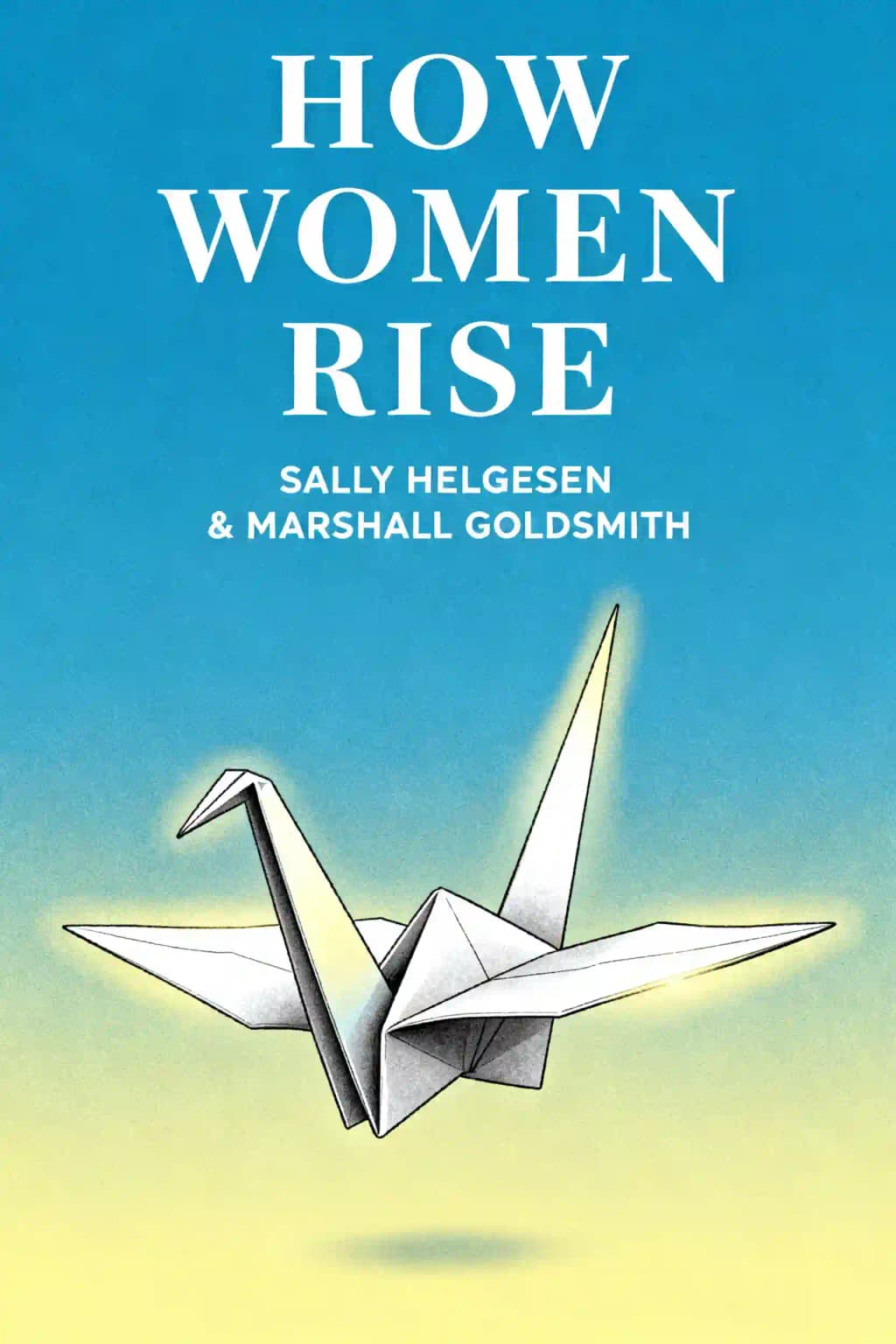
How Women Rise
Break the 12 Habits Holding You Back
Overview of How Women Rise
"How Women Rise" reveals 12 self-sabotaging habits keeping women from career advancement. Endorsed by top executives, this game-changing collaboration between leadership expert Sally Helgesen and executive coach Marshall Goldsmith offers tangible strategies that successful women use to break invisible barriers.

Key Themes in How Women Rise
- breaking career plateaus
- female leadership habits
- workplace gender dynamics
- strategic self-promotion
- overcoming perfectionism
Quotes from How Women Rise
The journey to the top looks remarkably different for women than for men.
Changing your own behaviors is within your control.
The most insidious career obstacles often come from within.
Recognition of these patterns is the first step toward changing them.
Success often requires deliberately practicing new behaviors.
Characters in How Women Rise
- Sally HelgesenAuthor and researcher on women's leadership
- EllenSoftware engineer used as a case study
- CarrieHead of a risk assessment unit used as a case study
About the Author
About the Author of How Women Rise
Sally Goldsmith & Marshall Helgesen, authors of How Women Rise, are acclaimed voices in empowerment and community-driven storytelling.
Goldsmith, a poet, scriptwriter, and songwriter, brings decades of experience in collaborative arts projects, working with diverse groups including older adults and individuals with dementia to amplify marginalized narratives. Her work with the Guild of St George, notably a walking play exploring local history, reflects her commitment to intertwining personal and collective resilience.
A contributor to anthologies like The North, her writing often blends memoir with social commentary, as seen in her acclaimed essay “Caravan,” which highlights grassroots activism. Helgesen’s collaborative approach complements Goldsmith’s ethos, fostering accessible frameworks for personal and professional growth.
Goldsmith’s innovative methods in community engagement and storytelling have earned recognition in literary and educational circles, reinforcing her authority on transformative narratives. How Women Rise distills these principles into actionable strategies for overcoming systemic barriers, rooted in Goldsmith’s hands-on advocacy and Helgesen’s cross-disciplinary insights.
Download Summary of How Women Rise
Get the How Women Rise summary as a free PDF or EPUB. Print it or read offline anytime.
FAQs About This Book
How Women Rise identifies 12 self-sabotaging habits that hinder women’s career advancement, such as minimizing achievements, overvaluing expertise, and perfectionism. The book provides strategies to replace these behaviors with confidence-building practices, helping women break through the "sticky floor" and reach leadership roles.
This book is ideal for women seeking to advance into leadership positions, professionals navigating workplace barriers, and managers aiming to support female colleagues. It’s particularly relevant for those recognizing that past behaviors may no longer serve their growth.
Yes—it combines actionable advice with real-world examples, endorsed by leadership experts. Readers gain tools to address habits like reluctance to claim credit or avoidance of strategic risks, making it a practical resource for career development.
Key habits include:
- Reluctance to claim achievements (e.g., deflecting praise).
- Over-investing in expertise instead of leadership.
- Perfectionism that stifles risk-taking.
- Putting others’ needs first ("disease to please").
The "sticky floor" refers to invisible barriers keeping women in mid-level roles despite qualifications. Unlike the "glass ceiling," it highlights self-limiting behaviors and cultural biases that prevent advancement to executive positions.
- “We are often taught to hide our accomplishments, to wait for someone else to notice and praise us.”
- “The most powerful thing you can do for your career is to change what’s in your control.”
The authors urge women to prioritize impact over flawlessness, delegate tasks, and embrace strategic risks. Letting go of minor details fosters leadership agility and visibility.
While Lean In focuses on systemic barriers, How Women Rise targets internalized habits. It offers more tactical behavioral changes rather than broad cultural critiques, making it complementary to Sandberg’s work.
Some argue it overlooks structural inequality by emphasizing personal behavior shifts. However, the book balances this by acknowledging systemic issues while empowering women to control actionable changes.
It advises moving beyond “collecting contacts” to leveraging networks strategically. Women are encouraged to seek sponsors (not just mentors) and articulate their goals clearly.
Despite progress, women remain underrepresented in senior roles. The book’s focus on self-advocacy and redefining leadership styles aligns with evolving workplace dynamics, including remote work and AI-driven industries.
Helgesen’s 30+ years studying women’s leadership, paired with Marshall Goldsmith’s behavior-change frameworks, create a research-backed guide. Their collaboration merges gender-specific insights with proven coaching strategies.