Chapter 4
Questioning Faith in a World Built on Lies
As Poppy's relationship with Hawke deepens, so does her questioning of the religious and political systems that control her life. The kingdom of Solis operates on a foundation of unquestioning faith - in the gods, in the necessity of the Rite and Ascension, and in the benevolence of the Ascended who rule. To question is to risk being labeled a Descenter, enemies of the kingdom who reject the gods' authority.
The Rite exemplifies this cruel system of control. Families must sacrifice their third sons and daughters to the Temple, ostensibly as gifts to the gods. When the Tulis family begs for their infant son to be exempted, the Duchess coldly refuses: "Your son is a gift to the gods, not a gift from them." The Duke adds that the gods protect everyone from "what comes in the mist" and they must not risk angering them. The broken couple leaves with their infant, the crowd parting as if their request has left them tainted.
This scene affects Poppy profoundly, activating her empathic gift involuntarily as waves of grief pour into her with such potency her knees nearly buckle. Yet she also notices others whose faces show sympathy and anger directed at the Duke and Duchess, suggesting growing discontent with the system.
The Ascension ceremony that awaits Poppy represents another pillar of faith built on deliberate obscurity. She knows she'll be "given to the gods," but no one explains what this actually means or whether she'll survive. When she questions the Priestess about what would happen if she didn't Ascend, the woman attempts to strike her in outrage.
Increasingly, Poppy notices contradictions that challenge the kingdom's official narratives. The Ascended, supposedly blessed by the gods, trigger no emotional response when she uses her empathic gift on them - as if they're hollow inside. The Duke claims Descenters are responsible for attacks while evidence points to Atlantians. Most troublingly, the children given during the Rite disappear into the Temples, never to be seen again.
These observations, coupled with Hawke's pointed questions about her role, lead Poppy to a crisis of faith. She begins to wonder if her entire life has been built on manipulation rather than divine purpose: "Perhaps what drives me is simply the desire for choice in a life where I have none."
This questioning reaches its climax during the attack on the Rite, when masked Descenters shouting "From blood and ash, we will rise!" massacre hundreds of people. As Poppy fights to survive, she witnesses Ascended with burning eyes entering the Great Hall, after which all screaming suddenly ceases. This glimpse of supernatural power from those supposedly protecting the kingdom plants the seed for the revelations to come.
Chapter 5
When Duty and Desire Collide
The growing attraction between Poppy and Hawke creates an impossible dilemma. As the Maiden, Poppy's body doesn't belong to her - it belongs to the gods and the kingdom. Any physical intimacy would render her "unworthy" for Ascension, resulting in exile and certain death. Yet as a young woman experiencing desire for the first time, she craves the connection and pleasure Hawke offers.
Their relationship progresses through a series of increasingly intimate encounters, each representing Poppy's deliberate choice to claim agency over her own body. During the Rite celebrations, they share a passionate moment beneath a willow tree in the garden. When Hawke asks if she wants him to stop, she realizes: "I didn't want him to stop. Gods help me, I didn't."
This collision of duty and desire reaches its peak during their journey to the capital after the attack on Masadonia. Camping in the freezing Blood Forest, Hawke offers his warmth and more. Their intimate encounter represents Poppy's most significant act of rebellion yet - choosing physical pleasure despite knowing it violates her sacred role. The morning after, she acknowledges this watershed moment: "I know there can be no future for us - I'm still the Maiden, destined for either Ascension or exile - I refuse to let these worries ruin what last night meant to me."
The culmination comes at Haven Keep, where Poppy makes the final choice to give herself completely to Hawke. This decision is framed explicitly as an act of personal agency: "This moment feels destined - I crossed the final forbidden line not just for Hawke but for myself. It's about what I want, my choice."
What makes this narrative thread so compelling is that Poppy's choices aren't presented as simple rebellion or romantic abandonment. She thoughtfully considers the consequences, acknowledging that she can no longer be the Maiden "not just in body but in spirit." She formulates plans to speak honestly with the Queen, hoping for understanding similar to what her mother received when she chose love over Ascension.
This careful balance between passionate desire and thoughtful consideration of consequences creates a protagonist whose choices feel meaningful rather than impulsive. Poppy isn't simply swept away by romance; she's actively claiming ownership of her body and future, regardless of the price she may have to pay.
Chapter 6
The Bloodstained Truth Revealed
The novel's devastating twist comes when Poppy discovers Hawke's true identity. After being attacked by residents of Haven Keep, she's severely wounded and dying. Hawke saves her by forcing her to drink his blood, which heals her injuries completely. This miracle reveals the first shocking truth - Hawke is an Atlantian, one of the supposedly monstrous enemies of the kingdom.
The betrayal cuts deeper when Poppy learns that "Hawke Flynn" was an elaborate deception. His real name is Casteel Da'Neer - the Dark One himself, Prince of Atlantia and the kingdom's most feared enemy. Everything about their relationship was calculated to get close to her. Hannes was poisoned at the Red Pearl to create an opening for him to become her guard. His goal was to kidnap her as leverage to free his brother, Prince Malik, who's been held captive by the Ascended.
This revelation shatters Poppy's world completely. The man she's fallen in love with is responsible for the deaths of people she cared about - Rylan, Vikter, and countless others killed during the attack on the Rite. In her rage and heartbreak, she stabs Casteel with her bloodstone dagger before fleeing into the snow.
Yet the most earth-shattering revelation is still to come. When Casteel captures her again, he reveals the true nature of the kingdom she's served her entire life. The Ascended aren't blessed by gods - they're vamprys who feed on the blood of innocents. The children given during the Rite aren't offerings to deities but food for these monsters. The entire religious system is a facade created to control the population and ensure a steady supply of blood.
This inversion of everything Poppy believed is masterfully constructed. The clues were there all along - the hollow feeling she sensed from the Ascended, the disappearing children, the puncture wounds on Malessa's neck that didn't match a Craven's bite pattern. What she thought was a kingdom protecting its people from monsters turns out to be a kingdom run by monsters protecting their food supply.
The final revelation is perhaps the most personally devastating - Poppy herself is part Atlantian. This explains her empathic gifts and why she was chosen as the Maiden. It also casts doubt on everything she believed about her family and identity. If one of her parents was Atlantian, is her brother Ian truly her full-blooded sibling? Has her entire life been built on lies?
These cascading revelations transform the novel from a forbidden romance into something far more complex - a story about discovering that you've been a pawn in a centuries-old conflict, and that both sides have used and manipulated you. It leaves Poppy in the impossible position of being caught between worlds, unable to return to the Ascended knowing what they are, yet unwelcome among the Atlantians who hate what she represents.
Chapter 7
The Rise of a Warrior
Throughout the novel, Poppy's journey from sheltered Maiden to capable warrior forms a compelling arc of personal growth. When we first meet her, she's already begun this transformation through secret combat training with Vikter, but she's still largely defined by her ceremonial role and the restrictions it imposes.
The attack in the Queen's Garden that kills Rylan marks the first significant test of her fighting abilities. Using her hidden dagger, she wounds her attacker deeply in his side, though she misses his heart. This initial combat experience, while not a victory, demonstrates her potential and foreshadows her later capabilities.
During the massacre at the Rite, Poppy's warrior spirit fully emerges. When attackers breach the room where she's sheltering with the Duchess and others, she reveals her hidden dagger and fights with deadly efficiency: "Using the skills Vikter had taught me, I killed two attackers swiftly and efficiently." She continues to defend the group with growing confidence, grabbing fallen weapons and using them with surprising skill. This transformation shocks those who knew her only as the veiled, passive Maiden.
Her combat abilities develop further during their journey to the capital. When Craven attack in the Blood Forest, Poppy fights alongside the guards: "I fight with my dagger, taking down several Craven with precise strikes. When Hawke tosses me Noah's bloodstone sword, I become even more effective." During this battle, she remembers Vikter's training: "Never cave to panic. If you do, you die."
The culmination of this warrior arc comes at Haven Keep when she's attacked by Jericho and others seeking vengeance against the Maiden. Despite being outnumbered, she fights ferociously: "Armed with Delano's sword, I knock out one attacker" and later uses "a sickle sword to decapitate his attacker, Rolf, in one clean stroke." Though she's ultimately overwhelmed, her fighting prowess earns the respect of even her enemies.
This physical transformation parallels her mental evolution from passive acceptance to active questioning. The skills Vikter taught her become not just a means of self-defense but a metaphor for taking control of her destiny. Each time she reaches for a hidden weapon, she's rejecting the helplessness imposed on her as the Maiden and choosing to fight rather than submit.
By the novel's end, Poppy has evolved from a sheltered symbol into someone who can defend herself and others - a transformation that will prove crucial as she navigates the dangerous new reality revealed to her. Her final act of stabbing Casteel in the heart, while born of betrayal and rage, demonstrates how far she's come from the veiled, untouchable Maiden who began the story.
Chapter 8
The Price of Freedom and Truth
The novel's final chapters explore the devastating consequences of Poppy's discoveries and choices. Having learned the truth about the Ascended, the Atlantians, and her own mixed heritage, she finds herself in an impossible position - caught between worlds with no safe haven.
Casteel, having recovered from her attack, offers her a new fate that's as shocking as it is unwelcome. They're going to Atlantia because "Atlantians can only marry in their homeland." Taking her hand and smiling with those dimples she knows too well, he announces they're going home to marry, calling her his Princess.
This forced engagement represents a cruel irony - Poppy has escaped one form of control only to find herself trapped in another. Though the circumstances differ dramatically from her role as the Maiden, the fundamental lack of choice remains the same. She's still being used as a political pawn, now as leverage to free Casteel's brother rather than as a religious symbol.
The bodies lining the hallway at Haven Keep - both mortal and Atlantian, nailed to the walls with bloodstone spikes through their hands and stakes through their chests or heads - serve as a grim reminder of the violence underlying this new chapter of her life. Casteel coldly informs her this is his promised retribution for those who harmed her, and a warning to others who might try. This display of brutality forces Poppy to confront uncomfortable truths about her own moral compass when she admits that while horrified, she doesn't feel much sympathy for those who laughed as she was tortured.
The novel ends with Poppy facing a future as uncertain as her past was structured. She knows her brother Ian is alive but likely Ascended - transformed into one of the very creatures she now understands to be monsters. She's learned she's part Atlantian but doesn't know which parent carried that bloodline. Most painfully, she's fallen in love with Casteel despite his betrayal, creating an emotional conflict she can neither resolve nor escape.
This unresolved ending perfectly captures the novel's central theme - that freedom and truth come at a terrible price. Poppy has gained knowledge and agency but lost everything familiar and secure. She's no longer the Maiden, but what she is remains an open question. As she prepares for the journey to Atlantia, she faces not just an uncertain future but an uncertain identity - caught between worlds, between bloodlines, and between hatred and love for the man who both freed and imprisoned her.
Chapter 9
A World Built on Blood and Deception
Jennifer L. Armentrout's masterful world-building creates a setting as complex and morally ambiguous as its characters. The kingdom of Solis presents itself as a bastion of safety in a dangerous world, with the massive Rise protecting its citizens from the monstrous Craven that roam beyond. Yet this protection comes at a terrible price - regular sacrifices of children during the Rite, strict religious control, and a rigid social hierarchy dominated by the Ascended.
The novel's settings mirror this duality between appearance and reality. Castle Teerman in Masadonia gleams with opulence, yet contains hidden chambers where the Duke administers brutal punishments. The Queen's Garden, seemingly a place of beauty and peace, becomes the site of Rylan's murder. The Red Pearl offers pleasure and freedom but operates under the watchful eyes of the very authorities who forbid its activities.
Beyond the Rise lies a landscape transformed by centuries of conflict - the Barren Plains where farms once stood, now just endless grass, twisted trees, and ruins; the Blood Forest with its unnaturally crimson leaves and ground littered with bones. These desolate regions serve as physical manifestations of the kingdom's corrupted history.
The novel's mythology gradually reveals itself as a carefully constructed lie. The gods Aios and Nyktos, supposedly the source of the Ascended's power, are inventions designed to justify a system of blood sacrifice. The Atlantians, portrayed as monsters who create Craven with their poisonous kiss, are actually the victims of a centuries-long propaganda campaign by the vampry Ascended.
This inversion of the traditional fantasy narrative - where those claiming to protect humanity are actually predators, and the supposed monsters are fighting for freedom - creates a morally complex world where simple distinctions between good and evil dissolve. Both sides have committed atrocities. The Ascended maintain a system built on deception and feeding on innocents, while the Atlantians and their wolven allies have massacred hundreds in their quest for vengeance and liberation.
Poppy's discovery of her mixed heritage places her at the center of this conflict, embodying the novel's rejection of binary thinking. She is neither fully mortal nor fully Atlantian, neither completely innocent nor entirely complicit in the systems that raised her. Her journey through this morally ambiguous landscape forces readers to question not just who the true monsters are, but whether anyone in this blood-soaked world can claim true innocence.
Chapter 10
A Promise of Rising From the Ashes
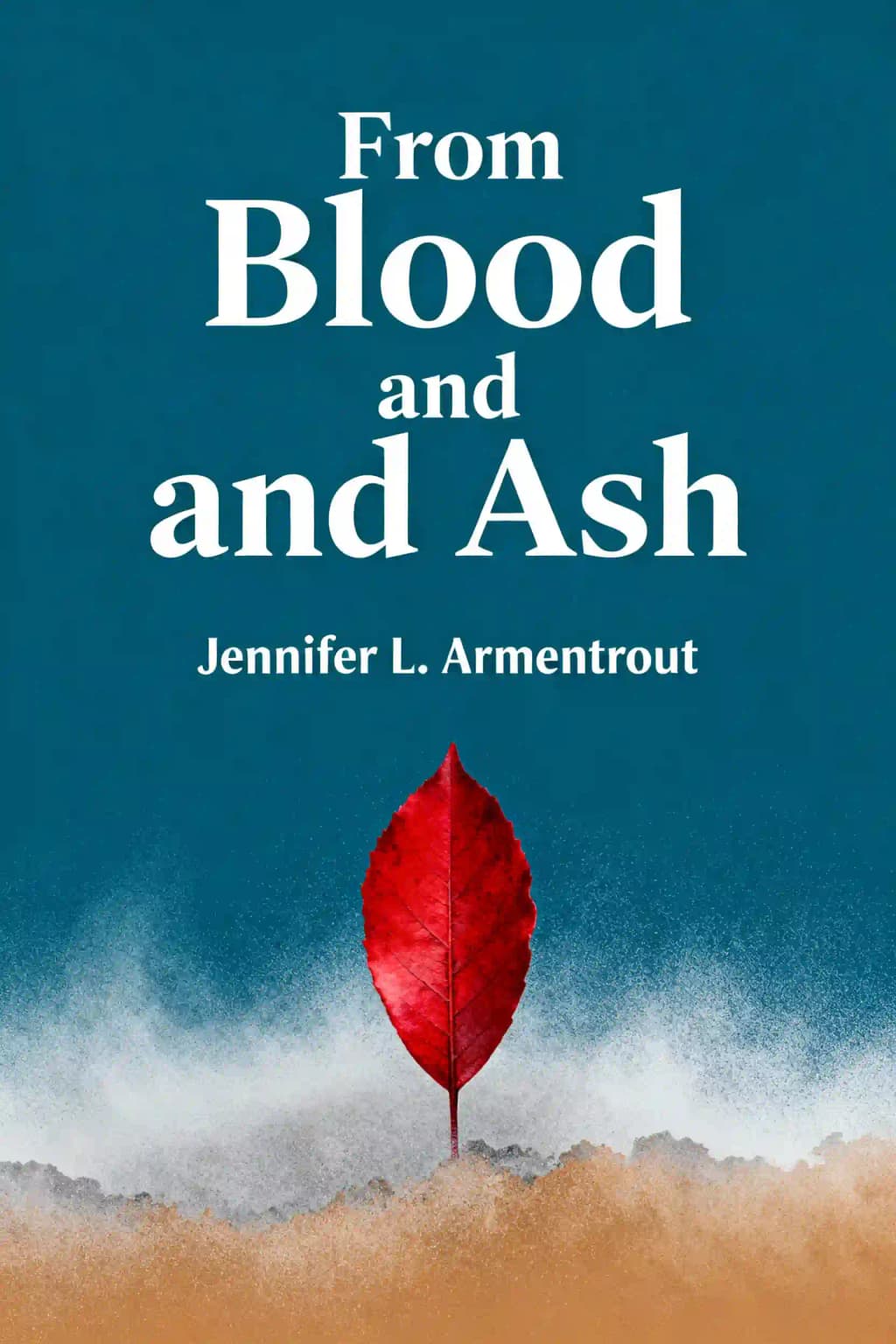
"From blood and ash, we will rise!" - this battle cry of the Descenters captures the novel's central promise of rebirth through destruction. For Poppy, everything familiar has been burned away - her role as the Maiden, her trust in the kingdom's leadership, her belief in the gods, and even her understanding of her own identity. Yet from these ashes, a new self is emerging - one defined by her choices rather than her ceremonial function.
The novel ends not with resolution but with transformation. Poppy stands at the threshold of a new journey, heading toward Atlantia with the man she both loves and hates. She carries with her the knowledge that will forever change how she sees herself and the world - that she's part Atlantian, that the kingdom she served was built on lies, and that she possesses powers beyond what she's been taught.
This ending sets up the continuing series while honoring the emotional and psychological journey of the first book. Poppy hasn't defeated her enemies or fully escaped her constraints, but she has begun the process of defining herself on her own terms. She's no longer simply the Maiden, a passive symbol waiting for Ascension. She's becoming someone capable of both terrible violence and profound compassion, someone who questions rather than accepts, someone who fights rather than submits.
The final image of Poppy preparing for the journey to Atlantia captures this state of becoming - she's between worlds, between identities, between hatred and love. This liminal position, while painful and uncertain, contains the promise of something new emerging from the destruction of the old. Just as the kingdom itself stands on the brink of transformation as its foundational lies are exposed, Poppy stands at the beginning of her true story - one she will write herself rather than having it written for her.
Jennifer L. Armentrout has crafted not just an enthralling fantasy romance but a profound exploration of how we define ourselves when everything we believed about our world and our place in it proves false. Through Poppy's journey from veiled symbol to sword-wielding warrior, from unquestioning acceptance to fierce determination, we witness the painful but necessary process of shedding imposed identities to discover our authentic selves. It's this universal theme, wrapped in the trappings of fantasy and forbidden love, that makes From Blood and Ash resonate so deeply with readers and promises that the journey is only just beginning.