Chapter 1
Shadows of Desire: Where Darkness Meets Temptation
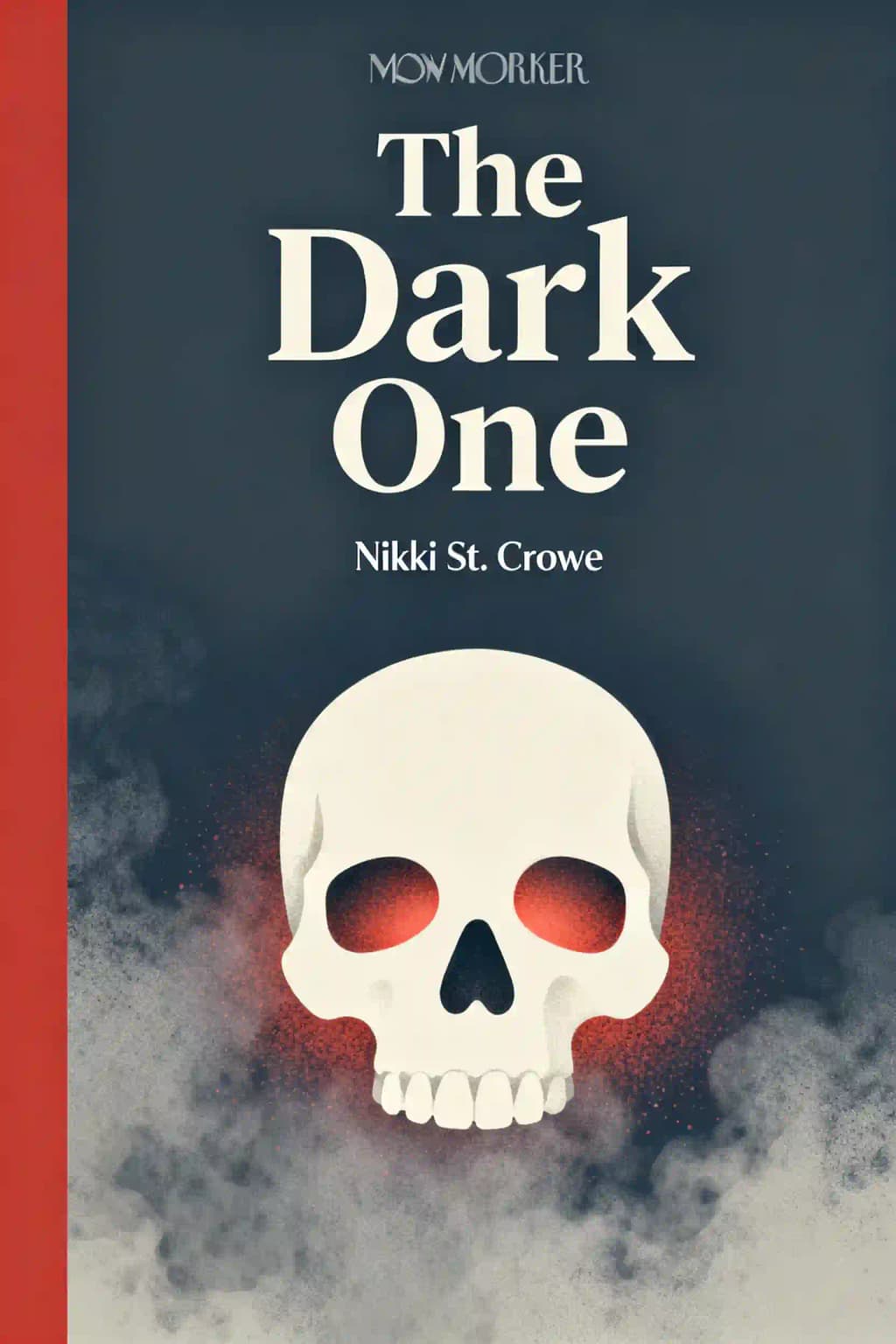
In Nikki St. Crowe's "The Dark One," readers are transported to a reimagined Neverland that's decidedly not for children. This dark fantasy romance has captivated millions, becoming a BookTok sensation with over 500 million views under related hashtags. The novel's blend of nostalgic characters and mature themes has earned it spots on numerous bestseller lists, with celebrities like Megan Fox and Sydney Sweeney reportedly counting themselves among its fans. What makes this reimagining particularly compelling is how it transforms the innocent tale of Peter Pan into a provocative exploration of power, desire, and redemption. St. Crowe's work has been praised for its bold approach to fantasy romance, with The New York Times Book Review calling it "a seductive fever dream that transforms childhood nostalgia into something deliciously dangerous."
Chapter 2
A Neverland of Shadows and Secrets
The Never Tree stands tall in the heart of Neverland, its ancient branches stretching toward perpetually twilight skies. Within its hollow chambers dwell Peter Pan and his Lost Boys - no longer the innocent children of fairy tales, but grown men whose games have evolved into darker pursuits. The tree's bark holds centuries of secrets, its roots deep in soil enriched by countless nights of revelry and violence. Pan's desperate hunt for his escaped shadow drives the opening action, as he commands the twins to pursue one direction while he and Vane chase another. This isn't the playful shadow of childhood tales; it's a sentient, powerful entity that could shift the balance of power for those who manage to capture and control it.
The island has evolved into a complex tapestry of territories, each with its own dangers and alliances. Pan's domain - wild and primal - remains separate from Captain Hook's more civilized lands by treacherous borders marked by thorny vines and deadly quicksand. Mysterious lights dance through the perpetual dusk, leading unwary travelers astray. This Neverland is a place where fires burn eternal through nights of endless celebration, where Lost Boys dance with dangerous abandon, their laughter mixing with screams that might be pleasure or pain. The magical elements of the original remain intact but transformed - flying still requires happy thoughts, but those thoughts now tend toward the carnal; shadows possess consciousness and power, capable of both creation and destruction; and belief still works its enchantments, though often with unexpected and sometimes deadly consequences.
For the twins, Bash and Kas, their position in this dark paradise is precarious. As banished fae princes, they carry the weight of their exile like chains, their quest to capture a shadow representing their only hope for redemption. Their sister's betrayal burns fresh in their memories, driving their every action. The twins' true nature reveals itself when the Death Shadow - most feared of all shadows - attacks Bash with lethal intent, leaving him with a throat slash that gleams silver in the eternal twilight. As Bash lies dying, blood pooling beneath him, Kas's desperate embrace reveals years of shared secrets and sacrifices, establishing their relationship as one of the story's most complex bonds.
The magical framework of this reimagined world crystallizes when Winnie encounters the dying Bash. Her instinctive utterance of "I believe in fairies" - a phrase that once saved Tinker Bell - now serves as a powerful incantation that knits flesh and restores life. This moment establishes that while the old magic still exists, it has matured alongside its users. This Neverland operates on a trinity of power: belief that can reshape reality, blood that seals both curses and cures, and desire that fuels the island's darkest enchantments - three currencies that will drive the characters through increasingly dangerous territory as their stories unfold.
Chapter 3
Winnie Darling: Descendent of Legend
Winnie Darling arrives in Neverland carrying the legacy of her famous ancestor Wendy, but with her own complex history of trauma and abandonment. Unlike the innocent girl of the original tale, Winnie is a young woman whose body bears the scars of abuse-literal marks on her back inflicted by people her mother paid to hurt her. This history of pain has shaped her into someone who craves both connection and control, making her both vulnerable to and perfect for the dangerous men who now surround her.
When we meet Winnie, she's already established herself in the Never Tree house, forming complicated relationships with Pan and the twins. Her character embodies a fascinating contradiction-she's simultaneously vulnerable and resilient, submissive and demanding. She allows herself to be bound, used, and dominated by the men around her, yet maintains a core of steel that enables her to make demands of her own: "I don't want to share."
Winnie's journey is one of self-discovery through surrender. She finds that being "used" by the Lost Boys makes her feel less alone, filling an emotional void left by her mother's neglect. Yet she's not merely a passive participant in their games. She actively pursues what she wants, whether it's Pan's exclusivity or Vane's dangerous attention, demonstrating agency even in submission.
Perhaps most intriguing is Winnie's connection to Neverland itself. We learn that her mother Merry was pregnant with her on the island, explaining why Neverland feels familiar to Winnie upon her arrival. This revelation, along with the magical black seashell her mother received from the lagoon, suggests Winnie has a deeper destiny on the island than merely being the men's plaything. The lagoon-described as "the island's soul"-gifted this shell to protect her before birth, indicating she holds special significance to Neverland itself.
Chapter 4
The Men of the Never Tree: Dangerous Desires
The male characters surrounding Winnie form a fascinating study in different manifestations of power, desire, and damage. Peter Pan, the Never King, remains eternally youthful but has grown into a possessive, controlling figure who declares "I am a king, I do what I want." His pursuit of his shadow drives much of the plot, as without it, his power is diminished. Pan's relationship with Winnie is complicated-he claims her as his "Darling" but struggles with exclusivity, eventually promising to be hers alone while maintaining his dominance.
The twins, Bash and Kas, bring fae magic and duplicitous charm to the group. As banished fae princes who murdered their father for power, they harbor their own agenda while serving Pan. Their identical appearance but distinct personalities-Bash more impulsive, Kas more calculating-creates an intriguing dynamic, especially in their shared desire for Winnie. Their scenes with her explore boundaries of pleasure and pain, consent and surrender, as they bind her to the Never Tree and force her to experience multiple orgasms until she begs them to stop.
Most complex is Vane, the Dark One, who harbors the Death Shadow within him. His character represents the ultimate dangerous attraction-a man whose touch can literally kill, whose anger transforms him into something demonic. Vane's backstory reveals tragedy-he claimed the Death Shadow to avenge his murdered sister-and his relationship with Winnie evolves from hostility to fascination. Their encounters are marked by violence and vulnerability, with Winnie discovering that self-inflicted pain helps her overcome the terror his shadow induces. When she deliberately cuts her palm with a branch, the blood overrides her fear, allowing her to connect with the man beneath the monster.
Each man represents a different facet of masculine power: Pan's is rooted in control and ownership, the twins' in manipulation and pleasure, and Vane's in raw, destructive force. Together, they form a dark fantasy of masculine attention, each claiming Winnie in different ways while she, in turn, claims pieces of them.
Chapter 5
Power Dynamics: The Game of Control
At its heart, "The Dark One" explores power dynamics through the lens of primal desire and complex psychological manipulation. The relationships between characters operate as an intricate dance of control - who wields it, who relinquishes it, and how that exchange shapes both parties. When Pan commands Winnie to prove she can satisfy all four men's appetites, he's not merely asserting dominance; he's orchestrating a sophisticated power play that offers her a paradoxical form of control: the ability to bring four powerful men to their knees through pleasure while seemingly submitting to their will.
The BDSM elements woven throughout the novel transcend mere erotic content, serving as physical manifestations of the psychological power exchanges happening between characters. Rope becomes both literal restraint and metaphorical connection - binding Winnie physically while representing the emotional ties forming between her and her captors. When the twins secure her to the Never Tree, forcing orgasm after orgasm until she gasps out her safe word "crackle," they're not just testing physical limits; they're establishing a complex framework of trust, control, and mutual dependency. Each knot tied represents another layer of psychological bondage forming between captor and captive.
Vane's relationship with Winnie particularly illuminates these nuanced power dynamics. His Death Shadow makes him lethal to touch - a curse that should place him firmly in control - yet Winnie deliberately provokes him, discovering that her blood and pain can neutralize his shadow's effect. Their encounters are violent and primal - he pursues her through dark forests, slams her against ancient trees, wraps his hands around her throat - yet remain fundamentally consensual, with Winnie actively demanding his roughness despite the mortal danger. This dynamic reveals how power flows bidirectionally even in seemingly unbalanced relationships, with submission often masking a deeper form of control.
The novel expands its exploration of power through territorial claims and the concept of possession. Neverland itself exists as a divided kingdom between Pan and Hook, with strictly enforced borders that cannot be crossed without explicit permission - a physical manifestation of their power struggle. Shadows become currency in this world, representing power that can be claimed, stolen, or willingly transferred between parties. The women - particularly Winnie and Cherry - become living territories to be conquered, claimed, or traded, with Cherry's eventual return to her brother Hook serving as a pivotal negotiation piece in the larger power game.
These interwoven dynamics create a complex tapestry where consent, desire, and manipulation become inseparable threads. Every touch, every command, every act of submission or dominance carries multiple layers of meaning, challenging readers to question where true power resides in relationships defined by the deliberate exchange of control. The novel suggests that perhaps the greatest power lies not in domination but in the conscious choice to surrender, and that true strength can be found in vulnerability freely given.
Chapter 6
Shadows as Power: The Central Metaphor
Shadows in this reimagined Neverland aren't merely the absence of light-they're manifestations of power that can be separated from their owners, captured, and even transferred. This central metaphor drives the plot while deepening the thematic exploration of identity and control.
Pan's desperate pursuit of his escaped shadow forms the narrative's backbone. Without it, his power as Never King is diminished, making him vulnerable to enemies like Hook and the fae queen Tilly. The shadow represents his true self-his complete identity and full capabilities-separated from him and requiring reclamation.
The Death Shadow that Vane harbors represents a different kind of power-destructive, consuming, and nearly uncontrollable. It transforms him physically when provoked, turning his eyes black and his appearance demonic. This shadow demands release through violence, pursuit, or sex, suggesting the darker impulses within that must be either expressed or contained.
When Tilly reveals her plan to summon the Crocodile-Vane's brother-to defeat both Pan and Hook, shadows take on yet another dimension. The Crocodile represents an even greater shadow threat, one that terrifies even Hook, whose very name triggers panic attacks through the ticking clock sound that announces his approach.
The metaphor extends to the characters themselves, each harboring their own internal shadows. Winnie's trauma forms a shadow over her present relationships. The twins' banishment from the fae court casts a shadow over their allegiances. Cherry's jealousy shadows her actions, eventually leading her to betray Winnie by trapping her with a shadow.
By the novel's climax, when Pan finally reclaims his shadow by smashing the seashell under his boot, the metaphor reaches its fullest expression. His transformation is immediate and profound-though physically unchanged, his presence becomes godlike, causing even the fae princes to kneel instinctively. The shadow, once reintegrated, completes him, suggesting that embracing our darker aspects may be necessary for wholeness and power.
Chapter 7
Betrayal and Loyalty: The Bonds That Break and Hold
Throughout "The Dark One," characters navigate complex webs of loyalty and betrayal. The twins, Bash and Kas, find themselves caught between their sister Tilly, who banished them but might restore their wings and position at court, and Pan, who offers them revenge against Tilly but might kill them if they step out of line. Their decision to stand with Pan represents a pivotal choice, with Kas realizing he would "pick Darling over my own wings because with her I am already flying."
Cherry's betrayal of Winnie stems from jealousy over Vane's attention. Despite initially bonding with Winnie, Cherry ultimately tricks her into a room with a trapped shadow, resulting in the novel's cliffhanger ending where Winnie emerges with completely black eyes, suggesting she's been claimed by a shadow herself.
Hook and Pan's enmity runs deep, yet circumstances force them to negotiate. When Hook captures Pan's shadow, he leverages it to gain information about his sister Cherry. Pan cruelly lies that Cherry is "in a metal box at the bottom of the ocean," triggering Hook's rage and creating a distraction that allows Vane to rescue Winnie. This manipulation demonstrates Pan's willingness to exploit others' loyalties for his own ends.
The fae queen Tilly represents perhaps the most significant betrayal. The twins killed their father to protect her from being married off to Hook, only to discover she had known and approved of their father's plans all along. Her ultimate scheme-to summon the Crocodile and eliminate both Pan and Hook-reveals her as manipulating everyone for her own power.
These shifting loyalties create tension throughout the narrative, keeping readers guessing about who can truly be trusted. By the novel's end, the core group-Pan, Vane, the twins, and Winnie-have formed their own loyalty circle against external threats, though the cliffhanger ending suggests even this alliance may face challenges in future installments.
Chapter 8
The Island's Magic: Belief, Blood, and Desire
The magical system of Neverland operates on three primary currencies: belief, blood, and desire. These elements intertwine throughout the narrative, creating a unique framework for how power functions in this adult fantasy world. Each component carries its own weight and significance, forming a complex tapestry of supernatural forces that govern the island's reality.
Belief remains a cornerstone of Neverland's magic, carried over from the original tale but darkened for this mature reimagining. When Bash lies dying from the shadow attack, Winnie saves him by declaring "I believe in fairies," demonstrating that faith still holds tangible power. This moment echoes the classic story while adding deeper implications - belief can literally mean the difference between life and death. Pan describes the lagoon as "the island's soul" while he is "its beating heart," suggesting the island itself is a living entity sustained by belief and connection. The mermaids' magic, too, draws strength from others' belief in their beauty and power, allowing them to enchant and entrance visitors. Even the Lost Boys' abilities are enhanced when they truly believe in their own capabilities, suggesting a direct correlation between faith and magical potency.
Blood emerges as a second magical currency, particularly in relation to the Death Shadow. When Winnie is paralyzed by terror in Vane's presence, she discovers that cutting her palm and drawing blood counteracts the shadow's effect. Blood represents life force and sacrifice, a physical manifestation of vulnerability that holds power against darkness. This connection between blood and magic appears repeatedly, from Bash's near-fatal throat wound to the various cuts and injuries sustained during confrontations. The island itself seems to hunger for blood sacrifices - the more vital the blood, the more powerful the magic it can fuel. Ancient rituals performed in the Dark Hollow require blood offerings, and even the mermaids' songs grow stronger when mixed with blood in the water.
Desire forms the third pillar of Neverland's magic, particularly sexual desire. The intimate encounters between characters aren't merely erotic interludes but exchanges of power that affect their relationships and abilities. Pan's reclamation of his shadow coincides with his promise of exclusivity to Winnie, suggesting a connection between his sexual commitment and his magical restoration. Vane's Death Shadow responds to both violence and sexual release, indicating that primal urges - whether destructive or creative - channel similar energies. The mermaids harness desire through their songs, using it to bind victims to their will. Even the island's weather patterns seem responsive to the emotional and sexual tensions between characters, with storms brewing during moments of intense passion or conflict.
These three elements - belief, blood, and desire - create a cohesive magical framework that supports both the plot and thematic explorations. Characters must navigate all three to achieve their goals, whether reclaiming shadows, overthrowing rivals, or forming meaningful connections. The system's complexity reflects the mature themes of the story, where power comes at a price and magic is inextricably linked to both pleasure and pain. This framework also explains why Neverland attracts certain types of people - those willing to believe despite evidence to the contrary, those prepared to bleed for their desires, and those whose passions burn bright enough to fuel magical transformations.
Chapter 9
Beyond the Never Tree: A World of Consequences
While much of the action centers around the Never Tree and its inhabitants, "The Dark One" establishes a vast and intricate world with far-reaching consequences. The island is meticulously divided into distinct territories - Pan's wild and untamed wilderness, Hook's treacherous coastal domain, and the ethereal fae realm - each operating under its own complex set of rules and harboring unique dangers. Beyond Neverland's shores lies Everland, a twisted prison realm where Wendy Darling has been trapped for generations, her presence a testament to Pan's capacity for cruelty. Then there's Darkland, Vane's foreboding home island, shrouded in perpetual twilight and ancient magic.
This expanded geography creates a rich tapestry where actions ripple outward with far-reaching implications. When Pan finally reveals the truth about abandoning Wendy in Everland - a calculated act of revenge against the Darling family's attempt to domesticate him - it uncovers layers of historical grievances and generational trauma. Winnie's passionate demand that Pan rescue her great-great-grandmother Wendy isn't merely a plot point but represents the intersection of past and present wounds, suggesting that time in these realms moves in cycles rather than lines. The weight of history bears down on every character's choices, creating intricate webs of obligation and revenge.
The political landscape proves equally complex, with alliances shifting like quicksand. Tilly's ambitious scheme to summon the legendary Crocodile - aiming to eliminate both Pan and Hook to secure her own dominion over Neverland - reveals the sophisticated power dynamics at play. Her machinations demonstrate how personal vendettas interweave with larger political ambitions, creating a volatile environment where trust is a luxury none can afford. The tragic tale of the twins' exile from the fae court after killing their father serves as a dark reminder that even immortal beings must face consequences for their actions, establishing a complex political hierarchy that influences current events.
The shadow magic system adds another layer of depth to this world building. The Death Shadow that Vane carries isn't simply a personal curse but a sentient force with its own mysterious agenda, representing ancient powers that predate even Neverland itself. When Pan reclaims his shadow, his transformation into an almost godlike entity suggests the existence of primordial forces beyond mortal understanding, hinting at a deeper mythology that underlies the entire world.
By establishing these broader contexts and interconnections, "The Dark One" transcends its surface-level dark romance elements to become a rich fantasy epic with meaningful stakes. Every passionate encounter, power struggle, and political maneuver occurs within a framework of magical consequences, political intrigue, and generational conflicts. This gives weight and significance to the characters' choices and relationships, creating a narrative where personal desires constantly clash with larger responsibilities and ancient powers.
Chapter 10
Cliffhanger: The Shadow's New Host
The novel concludes with a shocking cliffhanger that promises to upend the established dynamics. Cherry, consumed by jealousy over Winnie's relationship with Vane, tricks her into entering a room with a trapped shadow. After sounds of struggle and breaking glass, Cherry opens the door to find Winnie standing amid destruction, her eyes transformed to "darkest black"-the telltale sign of shadow possession.
This ending brilliantly sets up the next installment while raising numerous questions. Which shadow has claimed Winnie? Is it Pan's Neverland shadow, the Death Shadow, or something else entirely? How will this possession change her relationships with Pan, Vane, and the twins? Will she gain new powers, or become a threat to those she cares about?
The possession also creates a fascinating parallel between Winnie and Vane, who has been struggling with his own shadow throughout the narrative. Their shared experience of hosting darkness may create a deeper bond between them, or potentially set them at odds if their shadows have conflicting agendas.
Cherry's betrayal adds another layer of complexity. Her jealousy-motivated action may have catastrophic consequences, potentially endangering everyone on the island. This raises the stakes for the next book while establishing Cherry as a more significant character than her initial portrayal suggested.
Most importantly, this cliffhanger transforms Winnie from primarily a love interest to potentially a central power player in her own right. No longer merely the object of the men's desires, she now harbors a shadow of her own, suggesting she'll take a more active role in the magical conflicts ahead. This evolution promises to deepen her character while shifting the power dynamics that have defined the relationships thus far.
The image of Winnie with blackened eyes standing amid destruction perfectly captures the novel's central themes-desire, power, and the shadows we all harbor-while leaving readers desperately eager to discover what happens next in this darkly reimagined Neverland.