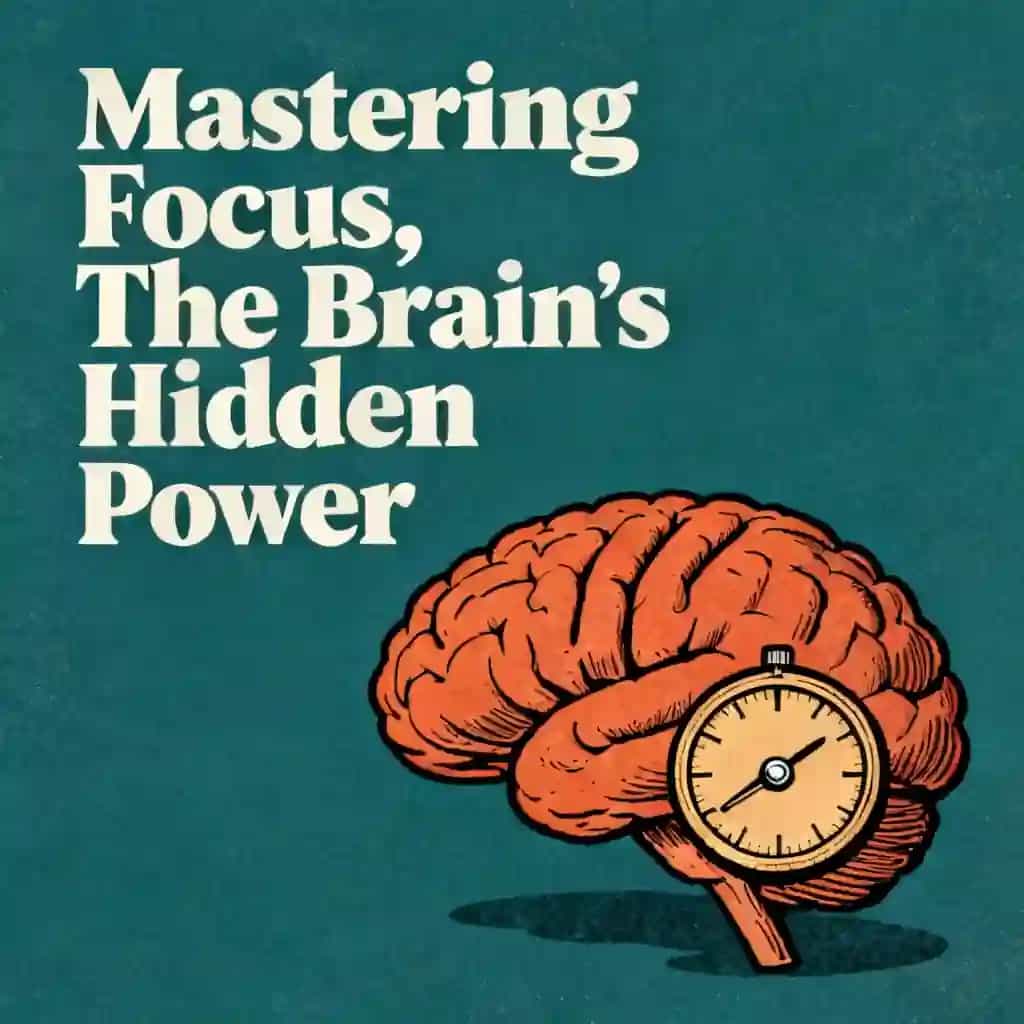
In a world of digital distractions, "Focus" reveals why attention is our hidden superpower. Goleman's science-backed insights have transformed how business leaders and educators approach excellence. What mindfulness practice improved school performance so dramatically that even skeptics couldn't ignore it?
Daniel Goleman, a renowned psychologist and bestselling author of Focus: The Hidden Driver of Excellence, is celebrated for pioneering research on emotional intelligence and cognitive science. A former science journalist for The New York Times and visiting faculty member at Harvard, Goleman bridges neuroscience and practical self-improvement in his work.
Focus, rooted in his expertise, examines attention’s role in personal and collective excellence, aligning with his broader exploration of human behavior in books like Emotional Intelligence—a global phenomenon translated into 40 languages.
Goleman’s authority stems from decades of influential writing, including Working with Emotional Intelligence and Pulitzer Prize-nominated journalism. A sought-after speaker, he advises Fortune 500 companies and has contributed to the Harvard Business Review.
His frameworks underpin leadership programs worldwide, while Focus has been adopted by educators and executives for its actionable insights on sustaining productivity. With over 5 million copies sold across his works, Goleman remains a defining voice in psychology and organizational success.
Focus explores the science of attention, arguing that sharpening inner, outer, and other-focused awareness is critical for success. Daniel Goleman combines neuroscience research with case studies from sports, education, and business to show how disciplined attention enhances decision-making, emotional regulation, and systemic thinking in a distraction-heavy world.
Professionals, educators, students, and anyone seeking to improve productivity or emotional intelligence will benefit. The book offers actionable insights for leaders managing teams, individuals combating distractions, and those interested in mindfulness or cognitive science.
Goleman categorizes focus as:
High performers cultivate all three to navigate personal, interpersonal, and global challenges.
The book expands on Goleman’s earlier research by linking emotional intelligence to attention management. Inner focus strengthens self-regulation, while other focus enhances empathy—both core components of emotional intelligence. This connection underscores how disciplined attention underpins interpersonal and intrapersonal skills.
Key strategies include:
Goleman ties flow states—optimal focus during challenging tasks—to balanced attention. Achieving flow requires aligning task difficulty with skill level, minimizing distractions, and leveraging intrinsic motivation. He cites athletes and artists as examples of flow mastery.
System blindness refers to humans’ difficulty grasping long-term, interconnected consequences (e.g., climate change). Goleman argues outer focus helps overcome this by prioritizing sustainable solutions over short-term fixes. He suggests framing issues positively to motivate action.
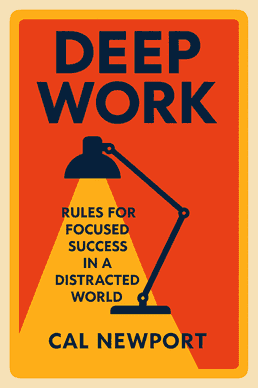
Some readers find the book overly broad, combining disparate topics like education reform, global warming, and neuroscience without a cohesive thread. Critics note it leans more on theoretical exploration than actionable steps compared to productivity guides like Deep Work.
While both address attention, Deep Work emphasizes tactical productivity frameworks, whereas Focus examines attention’s role in emotional and societal well-being. Goleman’s work is more interdisciplinary, blending psychology, neuroscience, and systems thinking.
Yes. The book teaches leaders to model focused behavior, create distraction-free environments, and foster empathy in teams. Individuals learn to prioritize tasks, manage stress, and sustain attention during complex projects.
Mindfulness trains the brain to sustain inner focus, reducing reactive emotions and improving decision-making. Goleman highlights studies showing mindfulness strengthens the anterior cingulate cortex, enhancing self-regulation and resilience.
The book warns that constant multitasking erodes attention spans, harming creativity and problem-solving. It advocates for intentional tech use, emphasizing “single-tasking” and digital detoxes to reclaim cognitive control.
Feel the book through the author's voice
Turn knowledge into engaging, example-rich insights
Capture key ideas in a flash for fast learning
Enjoy the book in a fun and engaging way
A wealth of information creates a poverty of attention.
Children now spend more time attuned to devices than people.
Attention operates like an invisible spotlight in our consciousness.
Our meandering minds may be wandering toward something profoundly valuable.
Angry faces have particular 'super-salience,' popping out from crowds.
Break down key ideas from Focus into bite-sized takeaways to understand how innovative teams create, collaborate, and grow.
Distill Focus into rapid-fire memory cues that highlight key principles of candor, teamwork, and creative resilience.

Experience Focus through vivid storytelling that turns innovation lessons into moments you'll remember and apply.
Ask anything, pick the voice, and co-create insights that truly resonate with you.

From Columbia University alumni built in San Francisco
"Instead of endless scrolling, I just hit play on BeFreed. It saves me so much time."
"I never knew where to start with nonfiction—BeFreed’s book lists turned into podcasts gave me a clear path."
"Perfect balance between learning and entertainment. Finished ‘Thinking, Fast and Slow’ on my commute this week."
"Crazy how much I learned while walking the dog. BeFreed = small habits → big gains."
"Reading used to feel like a chore. Now it’s just part of my lifestyle."
"Feels effortless compared to reading. I’ve finished 6 books this month already."
"BeFreed turned my guilty doomscrolling into something that feels productive and inspiring."
"BeFreed turned my commute into learning time. 20-min podcasts are perfect for finishing books I never had time for."
"BeFreed replaced my podcast queue. Imagine Spotify for books — that’s it. 🙌"
"It is great for me to learn something from the book without reading it."
"The themed book list podcasts help me connect ideas across authors—like a guided audio journey."
"Makes me feel smarter every time before going to work"
From Columbia University alumni built in San Francisco

Get the Focus summary as a free PDF or EPUB. Print it or read offline anytime.
What if I told you that the average office worker now checks email 74 times daily and switches tasks every three minutes? We're living through an unprecedented assault on our most precious cognitive resource-attention itself. In 1977, Herbert Simon warned that "a wealth of information creates a poverty of attention." He couldn't have imagined how prophetic those words would become. Today, teams of psychologists and data scientists work around the clock to capture and monetize your focus, designing notifications and feeds that hijack your brain's reward circuits. We've entered an attention economy where your concentration has become the product. Yet attention isn't just about productivity or digital wellness-it's the invisible spotlight that shapes who you become through accumulated experiences. The question isn't whether you'll pay attention, but whether you'll control where it goes.