Mastering Dan Koe's Art of Focus

Dan Koe Art Of Focus Summary: episode overview
This BeFreed audio episode explores Dan Koe's philosophy on reclaiming attention in a distracted world. We break down the core concepts of 'The Art of Focus,' treating it as a practical guide to finding meaning and consciously designing your ideal future through deep work.
Create Your Podcast in a Click
Generated by TongTong Chan
Input question
I wanna learn about Dan Koe art of focus
Host voices

What you'll learn about Dan Koe's Art of Focus framework
- 1
Focus: The New World Currency
 00:0000:00
Lena: Hey there, curious minds! Welcome to another episode of Mind Matters. I'm Lena, and I'm joined by the always insightful Miles. Today we're diving into something that feels increasingly rare in our distraction-filled world—focus. Miles: And not just any focus, Lena. We're exploring Dan Koe's "The Art of Focus," which makes a pretty bold claim: that focus is literally the currency that runs the modern world. Lena: That's such a powerful framing! I mean, when I look around, it does feel like we're living in what Dan calls "a dystopia of excessive pleasure and comfort." Wake up, check phone, work, Netflix, repeat—sound familiar? Miles: All too familiar. And it's no wonder people feel anxious and overwhelmed. What struck me most was his observation that most of us are following a "default path" that was set by society, not chosen by us. Lena: Right! And he argues that focus is how we wake up from this collective nightmare. It's how we take control of our attention and, by extension, our lives. Miles: Exactly. In a world where the average person is bombarded with notifications, endless scrolling, and constant distractions, the ability to direct your focus has become a superpower. You know what's fascinating? Dan says we can process only about 10-50 bits of information per second with our conscious attention. Lena: That's tiny compared to what's coming at us! So let's explore how Dan's framework helps us reclaim our attention and use it to create the life we actually want instead of the one we're drifting into...
- 2
The Hidden Architecture of Mental Energy
Miles: So let's get into the mechanics here, because Dan breaks down focus into three fundamental pillars that really changed how I think about productivity. It's not just about willpower—it's about understanding focus, energy, and experience as interconnected systems. Lena: Yes! And what I love is how he frames focus as a trainable muscle. You know how we condition our bodies at the gym? Dan argues we can condition our minds the same way through mental training. Miles: Exactly. But here's what's crucial—focus has a frame, which he calls our perspective or worldview. This is where it gets really interesting. Your perspective is constructed from the goals you plan to achieve, the paths you know to achieve them, and the problems you must identify along the way. Lena: That's such a key insight. If you don't have conscious goals, you're essentially pursuing the ones society assigned to you without even realizing it. It's like being on autopilot. Miles: And that connects directly to the energy pillar. Dan makes this point that specific goals demand specific amounts of mental energy to actualize. When you're locked into society's default path, you're spending mental energy on goals that aren't even yours. Lena: Which makes it nearly impossible to invest in what you actually want to achieve! It's like having your mental RAM constantly occupied by programs you never chose to run. Miles: That's a perfect analogy. And this is where entropy comes in—nature's tax, as Dan calls it. Everything falls apart with time unless effort is made to reverse it. Your mental state, your physical health, your relationships, your career—they all require energy to maintain order. Lena: So you need systems, right? Dan emphasizes that society has had years to construct systems for capturing mass attention. If you want to live differently, you need to create and maintain your own systems across health, wealth, relationships, and happiness. Miles: Absolutely. And then there's the experience pillar, which is all about trial and error. You can't just take ideas or advice as law without filtering them through direct experience. This is how you develop what Dan calls "specific knowledge"—insights that are uniquely yours. Lena: What I find powerful is how these three pillars create a feedback loop. As you gain experience, your ability to focus becomes more refined, and your energy investment becomes more strategic. The results compound over time. Miles: Right, and this addresses something Dan talks about extensively—psychic entropy. Most people's minds are like that disgusting nest of filth he describes, with attention scattered across regrets about the past, anxiety about the future, and an endless list of mixed-priority tasks. Lena: It's exhausting just thinking about it! But here's what's fascinating—Dan argues that boredom and anxiety are actually diagnostic tools. If you're bored, the challenge is too low for your skill level. If you're anxious, the challenge is too high. Miles: That's brilliant because it gives you a way to calibrate. When your skill matches the challenge of a task, life becomes like a video game where you actually enjoy playing the quests. You're not fighting against the work—you're flowing with it.
- 3
The Universe as Operating System
Lena: Now, this next part might sound a bit philosophical, but Dan's perspective on the Universe—capital U—really reframes how we think about struggle and meaning. Miles: Yeah, and I appreciate that he uses "Universe" instead of cultural labels like "God" or "Brahman" because people get emotional about their specific belief systems. He's pointing to something experiential that transcends conceptual disagreements. Lena: Exactly. The Universe, as Dan describes it, is everything—divided into infinite creative parts he calls ideas. And here's the key insight: everything is connected and layered in a way that allows us to make sense of the world. Miles: What struck me was his observation that you don't have a sense of purpose because you're disconnected from the ideas that would allow you to see that purpose. You haven't explored reality enough to create your place in it. Lena: And these ideas are impermanent and ever-flowing. Dan describes the Universe as a "one song"—a harmony unfolding with highs, lows, problems, solutions, rising actions, and climaxes. Life follows story patterns and game structures. Miles: This is where his practical wisdom really shines. Humans experience suffering when they can't see the full story or game. We isolate one situation with our focus and hold it like a static image, but reality keeps moving forward. Lena: So we get trapped in the past while life unfolds in the present. Dan's solution is to harness the creative ability of our minds to view life from above—to gain that higher perspective that brings both peace and progress. Miles: Right, and this connects to his principle that struggle is a Universal law. It's silly to think struggle isn't supposed to be part of your life. The problem is we expect life to be a certain way when it's not supposed to be anything other than what it's being. Lena: That's such a liberating realization! Instead of fighting against struggle, you can see it as the engine of evolution. Dan points out that everything, from emotions to ideas to health to economic systems, is impermanent. Miles: And if creativity is key to becoming irreplaceable, and your creativity depends on the openness of your mind, then understanding these Universal principles puts you ahead of 99% of people. As above, so below. Lena: What I love is how this philosophical framework becomes intensely practical. When you zoom out to see the big picture, negative situations lose their overwhelming power. You can see them for what they are—temporary challenges in a larger story.
- Chapter 4
The Identity Construction Project
**Miles:** Let's talk about something that might make some listeners uncomfortable—the idea that who you think you are is largely a construction project that happened without your conscious input. **Lena:** Oh, this is huge. Dan argues that humans are pattern recognition and learning machines. From birth, we absorb ideas like sponges and adopt groups of ideas—ideologies—as absolute law. This narrows our minds dramatically. **Miles:** And here's the kicker: most people never consciously create their identity. Society gets to us early through parents, teachers, and friends who had their minds conditioned by their parents, teachers, and friends. It's conditioning all the way down. **Lena:** So we end up with what Dan calls "conceptual survival"—surviving the idea of who we are rather than actual physical survival. This is why people get so emotionally triggered when their beliefs are challenged. **Miles:** Exactly. Republicans and Democrats are literally in a war of opposing ideas they're attached to. If your favorite sports team loses, you feel personally threatened even though your actual survival isn't at stake. It's completely irrational when you step back and look at it. **Lena:** Dan uses this powerful metaphor of the self as an intellectual structure—a house but not a home. When you remodel a house, you don't rip out the foundation and watch it collapse. You make small, strategic changes as you identify problems. **Miles:** That's the key—you change who you are by solving problems in alignment with goals you create, not ones assigned to you. Most people don't "find their purpose" because they can't see the purpose staring them in the face. **Lena:** Right! You have to solve the burning problems that are preventing your mind from expanding beyond surface-level living. Fix your health, fix your money problems, fix your relationships—then you can dive into deeper purpose. **Miles:** And Dan makes this crucial point: you don't have one purpose. You move from lesser to greater purposes with time, effort, and evolution of who you are. Purpose is dynamic, not static. **Lena:** What's liberating is understanding that you can choose to start your game over at any point. You can change who you are, what you pursue, and stack the resources—skills, network, environment—that allow you to create that new reality. **Miles:** It's like being the main character in your own story instead of an NPC following someone else's programming. Most people remain NPCs through social conditioning, playing the game they were programmed to play without conscious thought.
Chapter 5The Game Theory of Everything
**Lena:** Speaking of games, Dan's life-as-video-game analogy really clicked for me. It's not just a cute metaphor—it reveals the actual structure of how we can approach any situation. **Miles:** Absolutely. Think about what makes video games addictive: clear hierarchy of goals, rules and feedback loops, and challenges that match your skill level. Life can work the same way if you approach it consciously. **Lena:** And just like in World of Warcraft, you choose your race, class, appearance, starting zone—you learn the fundamentals and mechanics, then begin your journey as the main character. The beautiful thing is, in real life, you can reset and start over anytime. **Miles:** What I love is how this reframes mundane situations. Every situation has goals, problems, and paths that individuals perceive according to their identity or perspective. If you can see situations as games with your own objectives, even boring tasks become engaging. **Lena:** Right! Games are enjoyable because they focus the mind and eliminate distractions. They present descending series of goals with appropriate challenge levels. If your skill doesn't match the challenge, you're either bored or anxious. **Miles:** But when the challenge is just above your skill level and you have confidence in your ability to execute, you tap into what's arguably the most enjoyable state in human experience—flow state, without any external substances needed. **Lena:** So Dan's approach is to create macro and micro games. The macro game is your vision as the goal, your life's work as the path, and micro games as daily ways to level up toward that vision. **Miles:** And here's the strategic part—you must approach every situation with an open mind, create your own goal, and attempt to win only the games that are conducive to your vision. Everything else is a distraction. **Lena:** This is where most people get trapped. They play every game that's presented to them instead of consciously choosing which games serve their larger objectives. It's like getting distracted by every side quest when you should be focused on the main storyline. **Miles:** Exactly. And from a macro perspective, this "metagame" is society itself. Most people are unconsciously playing society's game without realizing they could design their own rules and objectives.
Chapter 6The Lens Shifting Revolution
**Miles:** Now let's talk about something that could completely change how our listeners see the world—Dan's concept of perspective as a camera lens system. **Lena:** This is brilliant. Your perspective is like a DSLR camera with interchangeable lenses. The camera itself has limits based on its programming, but you can attach different lenses to capture situations in completely different ways. **Miles:** And most people have one lens stuck to their camera for life! They might have a religious lens, or a political lens, or a business lens, and they see everything through that single filter. They never get the full picture. **Lena:** Dan's approach is to be like a shapeshifter. Study multiple perspectives and collect lenses that allow you to see from various viewpoints. This is how you stop reacting emotionally and start taking actions that serve your future. **Miles:** Right, and there's this concept of field of view. When you zoom in and focus on one thing, the background blurs. This creates focus in practical life and eliminates distractions, which is essential for getting work done. **Lena:** But staying in narrow focus limits creativity! So you need to zoom out periodically to gather truths, patterns, and creative resources. Then zoom back in to apply them practically. **Miles:** This connects to something Dan emphasizes—you are a manifestation of your past mental, physical, financial, and spiritual choices. Who you want to become is determined by the choices you make right now, and the next moment, until it all ends. **Lena:** So to make better decisions, you can't go through life as a mindless robot. You must pause, gain perspective, perceive situations from a place of non-reaction, and choose the path that actualizes your ideal future. **Miles:** And here's something counterintuitive—Dan argues that if the good life is created by high-quality decisions, and high-quality decisions only come from learning from low-quality ones, then you should fail hard and often with a smile on your face. **Lena:** That's so different from our perfectionist culture! Someone who makes 100 decisions regardless of how they feel will make exponentially more progress than someone who makes one decision because they're paralyzed by overthinking. **Miles:** This ties into what Dan calls the perception threshold or "runner's high." When you stick through increasing difficulty instead of seeking quick fixes, you eventually break through to a state of enjoyment. This happens in both macro and micro situations. **Lena:** So mastery becomes the path out of chaos. It's the utter dedication to creating the best life for yourself through self-education, skill acquisition, and daily practice. Masters embrace difficulty because they've experienced this breakthrough pattern.
Chapter 7The Formula for Conscious Living
**Lena:** Alright, let's get practical. Dan provides a specific formula for designing your life consciously, and it starts with understanding that most people stop learning after graduation. **Miles:** Which is incredibly dangerous! You get trapped completing repetitive tasks, life stays the same, you get bored. The cure is to learn, build, and discover your way into an interesting life. **Lena:** And here's the counterintuitive part—if you feel lost, the solution isn't to find your way back to the known. It's to throw yourself deeper into the unknown and become even more lost! **Miles:** Move locations, read new books, acquire new skills to change careers or build your own business. Force yourself into a place where you can gain clarity and interest, then discover your way out. **Lena:** Dan's formula requires four components: an anti-vision and vision to create your perspective's frame, a purpose to provide a lens for identifying problems, a path to bring clarity to education and skill acquisition, and a priority to focus on daily. **Miles:** Let's break that down. The anti-vision is actually easier to create than the vision—it's what you don't want. Become brutally aware of where you'll end up if you keep doing what you've been doing. **Lena:** Right! Observe the masses and see where mindless action leads. It's not pretty. This anti-vision provides insight into what you do want through contrast and reflection. **Miles:** Then your purpose is the most pressing problem in your life right now—the one you've been putting off solving. Before you go solve big problems in the world, you must solve the big problems in your life. **Lena:** Health, wealth, and relationships are where burning problems exist. Fix them first. That alone opens up room for curiosity, creativity, and consciousness because your mind isn't plagued with survival stress. **Miles:** Your path becomes a hierarchy of goals that evolves over time. There are skills, education, and knowledge you must acquire to reach new levels of mind. It's a never-ending path of mastery. **Lena:** And your priority involves learning or building for a dedicated time block every day. Along this journey, Dan says to let curiosity be your guide into the icebergs of opportunity that life presents. **Miles:** He outlines four paths for pursuing curiosity: appreciation, understanding, mastery, and monetization. You don't have to judge everything immediately—you can appreciate ideas and opportunities for what they are, then choose how deep to go.
Chapter 8The Digital Renaissance Revolution
**Miles:** Now we're getting into something that's happening right now—what Dan calls a second Golden Age or Digital Renaissance that's completely reshaping how we think about work and opportunity. **Lena:** This is where his philosophy becomes incredibly practical for our listeners. The formal education system is being challenged by independent educators, the banking system by decentralized currency, governments by remote work and multi-nation citizenship. **Miles:** Dan's personal story really illustrates this shift. He spent five years at university, had two years left on his degree, took out $20,000 in loans even with a full scholarship, but discovered he could learn the entire web development curriculum through self-study in less than a month. **Lena:** And that self-study got him a high-paying tech job after his first interview! If he could learn more useful skills in six months of self-education than five years of formal education, why waste time in college? **Miles:** This introduces what Dan calls "deep knowledge"—information that gradually raises your level of mind and helps you solve problems toward meaningful goals. It's like a zip file for the mind. **Lena:** The future of schooling is happening online right now, with creators as teachers. Students can join the "schools" that align with their interests and values rather than being dominated by one system throughout childhood. **Miles:** And here's the key insight: the future demands that we earn with our mind, not our time. You must solve your own problems to increase the value you offer the world. **Lena:** The internet is one big community, just like our ancestors lived in smaller communities where everyone fulfilled a role they were best suited for. Entrepreneurship is modern survival, and the internet is your hunting ground. **Miles:** You hunt for deep knowledge by pursuing curiosity. Dopamine becomes your compass, but you need to break free from the drip-fed dopamine sedation of quick pleasures for this to work effectively. **Lena:** What's exciting is that this shift is creating what Dan calls "The New Rich"—people who achieve wealth not just in money but in mental peace, meaningful work, and fulfilling relationships. **Miles:** And the beautiful thing about the internet is that you don't need money, tools, a degree, or a physical location to provide value anymore. The barriers that existed for previous generations have largely disappeared.
Chapter 9Your Personal Focus Playbook
**Lena:** Alright, let's give our listeners a concrete playbook they can start implementing today. Dan's approach isn't just theory—it's a practical system for reclaiming your attention and designing your life. **Miles:** First, you need to understand that focus is trainable. Just like physical fitness, you can condition your mind through deliberate practice. Start with what Dan calls the 4-hour workday framework. **Lena:** Block out one hour minimum, work on one meaningful project, aim for one vision for your future, take it one day at a time. You don't need more motivation—you need more clarity. **Miles:** Here's the key insight: your mind is a supercomputer, and your attention is the RAM. The more programs running—thoughts about the past, anxiety about the future, mixed-priority tasks—the slower your performance. **Lena:** So step one is identifying and closing those mental programs. Dan suggests using boredom and anxiety as diagnostic tools. If you're bored, increase the challenge. If you're anxious, build your skills or break the task into smaller pieces. **Miles:** Step two is creating your hierarchy of goals. Pull out a notebook and describe your ideal future in detail. Mind, body, spirit, business—how will these impact every area of your life? Contrast this with your current reality. **Lena:** Then deconstruct each area into manageable sub-goals: 10-year, 1-year, monthly, weekly, and daily objectives. Don't attach to these—they'll evolve. This is about generating clarity, not creating rigid plans. **Miles:** Step three is choosing one meaningful project that solves your most pressing problem. Are you overweight? Broke? Stressed? Lacking energy? What problem, if solved, would unlock the next level of life enjoyment? **Lena:** From there, dedicate the first hour of your day to education and action around that problem. If you need money, focus on money. If you want to lose weight, focus on fitness. If you want less stress, focus on mental health. **Miles:** The key is treating this like a quest in a video game. Set challenging deadlines, work in focused time blocks of 45-90 minutes, then take real breaks. Your focus is finite—you need rest between sets. **Lena:** And here's something crucial that Dan emphasizes: work for 1-4 hours with intensity, then stop. Ancient Romans, Greeks, Steve Jobs, Charles Darwin—the world's most impactful creatives worked surprisingly few hours because they understood that creativity demands rest. **Miles:** Finally, curate your environment ruthlessly. Digital—unfollow accounts that don't serve your future, buy books that increase awareness of your potential. Mental—treat your mind like a garden that needs weeding. Physical—surround yourself with people and places that support your vision. **Lena:** Remember, you're not trying to eliminate all distractions forever. You're training your ability to consciously direct attention toward what matters most to you, rather than letting society's algorithms and other people's agendas capture your focus.
Chapter 10The Compound Effect of Conscious Attention
**Miles:** As we wrap up our exploration of Dan Koe's "Art of Focus," I want to leave our listeners with something profound—the understanding that focus isn't just a productivity hack, it's literally the foundation of consciousness itself. **Lena:** Exactly. What we've been discussing isn't just about getting more done or being more successful, though those are natural byproducts. It's about reclaiming your role as the conscious architect of your own experience. **Miles:** Think about it this way—you have approximately 125 billion bits of conscious information processing capacity in your lifetime. That's your potential. The question is: will you invest those bits into creating a better future, or let them get consumed by distractions and other people's agendas? **Lena:** And the beautiful thing about focus is that it compounds. As you get better at directing your attention, you become more skilled at filtering signal from noise. Your mind naturally gravitates toward information that brings prosperity and meaning to your life. **Miles:** What struck me most about Dan's approach is how it integrates the philosophical with the practical. Understanding the Universe as an interconnected system of ideas isn't just abstract philosophy—it's a practical framework for navigating complexity and uncertainty. **Lena:** Right, and the identity work we discussed isn't just self-help fluff. When you understand that your sense of self is a construction that can be consciously redesigned, you gain the power to break free from limiting conditioning and create yourself anew. **Miles:** The game theory perspective transforms how you approach every situation. Instead of being reactive, you become strategic. Instead of being overwhelmed by choices, you get clear on which games serve your vision and which are distractions. **Lena:** And that lens-shifting ability—collecting multiple perspectives rather than being trapped in one worldview—this is what allows you to see opportunities and solutions that others miss entirely. **Miles:** For anyone feeling stuck or overwhelmed by the pace of modern life, Dan's message is ultimately hopeful. You have more power than you realize. The tools and opportunities available today are unprecedented in human history. **Lena:** The Digital Renaissance is real, and it's happening right now. Whether you participate consciously or get swept along unconsciously is entirely up to you. But the choice requires focus—the ability to see clearly and act intentionally. **Miles:** So to everyone listening, remember that focus is both a skill and a practice. Start small—one hour, one project, one day at a time. But start. Your future self is counting on the choices you make with your attention today. **Lena:** Thanks for joining us on this deep dive into the art of focus. We'd love to hear how you're applying these ideas in your own life, so feel free to reach out and share your experiences. **Miles:** Until next time, keep questioning, keep learning, and most importantly, keep focusing on what matters most to you. The quality of your attention determines the quality of your life. **Lena:** See you next episode, curious minds!
What people search for about Dan Koe's Art of Focus
Listeners and readers often seek a practical summary of Dan Koe's framework to understand how to apply his principles to their daily routines. Many want to know how to unlock extreme focus on command, integrate a structured workday, and move away from surface-level distractions toward true mastery.
A practical guide to Dan Koe's Art of Focus
Dan Koe's approach to focus bridges self-development, modern entrepreneurship, and personal psychology. It emphasizes the importance of the present moment and direct experience. By blocking out dedicated time for one meaningful project each day, individuals can practice deep work and digital minimalism. This framework is not a clinical intervention, but rather a personal philosophy for conceptual survival—helping you navigate an era of endless digital noise by consciously choosing where your attention goes.
Continue learning about focus and attention
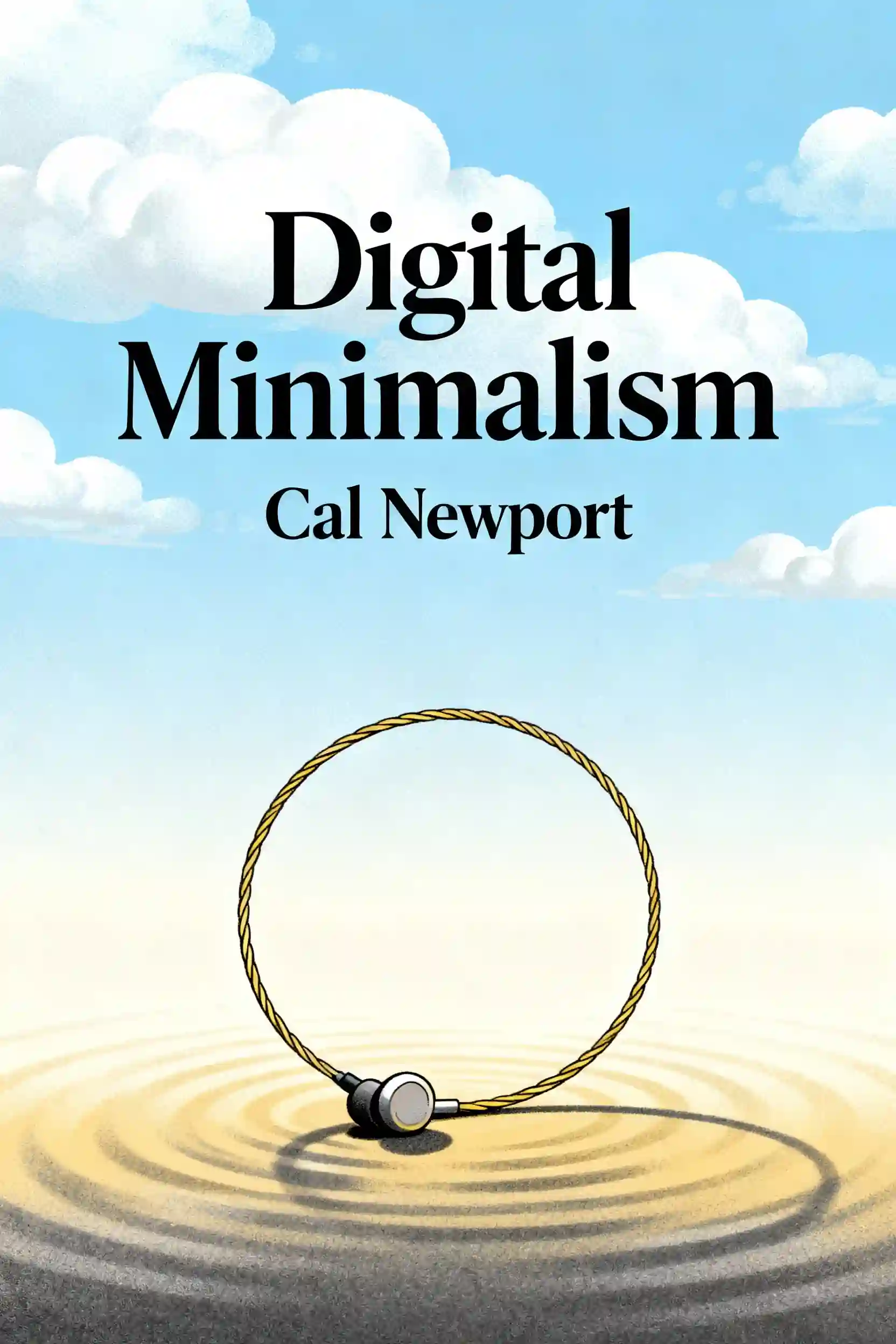
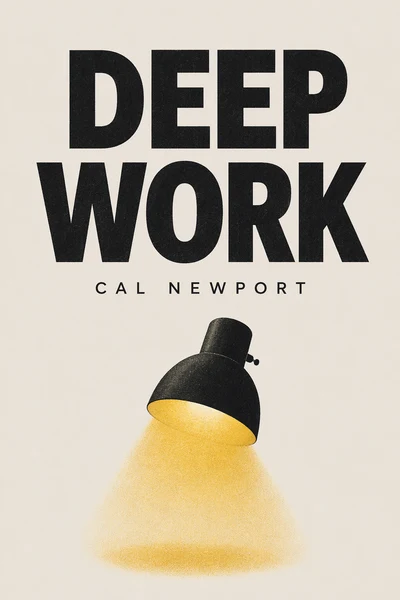
- Deep work and digital minimalism
- Johann Hari's Stolen Focus concepts
- Strategies for reclaiming radical focus
- Conscious life design and self-development
Best quote from Mastering Dan Koe's Art of Focus
Focus is the currency of the modern world. In a dystopia of excessive pleasure and comfort, the ability to direct your attention is a superpower that allows you to create the life you actually want instead of the one you are drifting into.
Knowledge sources
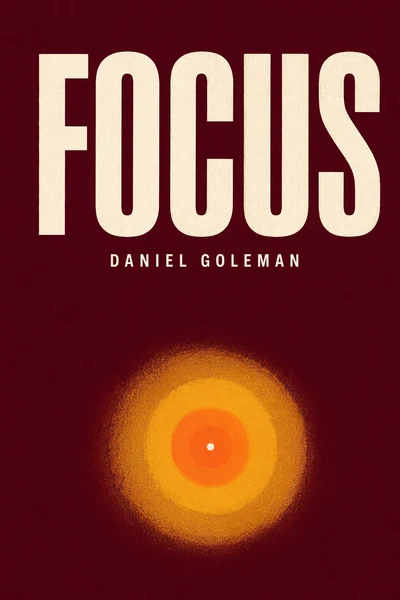





FAQ
The Art of Focus by Dan Koe is a practical philosophy for finding meaning and reinventing yourself. It teaches readers how to navigate modern distractions, master their attention, and consciously design their ideal future through focused, meaningful work.
His core principles center on mastering attention, embracing deep work, and prioritizing direct experience in the present moment. He advocates for a simplified approach, such as dedicating specific daily blocks to one meaningful project, to achieve a clear vision for the future.
Key takeaways include the importance of digital minimalism, the shift from surface-level distractions to true mastery, and the concept of 'conceptual survival'—protecting your attention to build a life of purpose rather than reacting to constant digital noise.
From Columbia University alumni built in San Francisco
"Instead of endless scrolling, I just hit play on BeFreed. It saves me so much time."


"I never knew where to start with nonfiction—BeFreed’s book lists turned into podcasts gave me a clear path."


"Perfect balance between learning and entertainment. Finished ‘Thinking, Fast and Slow’ on my commute this week."
"Crazy how much I learned while walking the dog. BeFreed = small habits → big gains."
"Reading used to feel like a chore. Now it’s just part of my lifestyle."

"Feels effortless compared to reading. I’ve finished 6 books this month already."
"BeFreed turned my guilty doomscrolling into something that feels productive and inspiring."

"BeFreed turned my commute into learning time. 20-min podcasts are perfect for finishing books I never had time for."
"BeFreed replaced my podcast queue. Imagine Spotify for books — that’s it. 🙌"

"It is great for me to learn something from the book without reading it."
"The themed book list podcasts help me connect ideas across authors—like a guided audio journey."
"Makes me feel smarter every time before going to work"
From Columbia University alumni built in San Francisco
"Instead of endless scrolling, I just hit play on BeFreed. It saves me so much time."
"I never knew where to start with nonfiction—BeFreed’s book lists turned into podcasts gave me a clear path."
"Perfect balance between learning and entertainment. Finished ‘Thinking, Fast and Slow’ on my commute this week."
"Crazy how much I learned while walking the dog. BeFreed = small habits → big gains."
"Reading used to feel like a chore. Now it’s just part of my lifestyle."
"Feels effortless compared to reading. I’ve finished 6 books this month already."
"BeFreed turned my guilty doomscrolling into something that feels productive and inspiring."
"BeFreed turned my commute into learning time. 20-min podcasts are perfect for finishing books I never had time for."
"BeFreed replaced my podcast queue. Imagine Spotify for books — that’s it. 🙌"
"It is great for me to learn something from the book without reading it."
"The themed book list podcasts help me connect ideas across authors—like a guided audio journey."
"Makes me feel smarter every time before going to work"
"Instead of endless scrolling, I just hit play on BeFreed. It saves me so much time."
"I never knew where to start with nonfiction—BeFreed’s book lists turned into podcasts gave me a clear path."
"Perfect balance between learning and entertainment. Finished ‘Thinking, Fast and Slow’ on my commute this week."
"Crazy how much I learned while walking the dog. BeFreed = small habits → big gains."
"Reading used to feel like a chore. Now it’s just part of my lifestyle."
"Feels effortless compared to reading. I’ve finished 6 books this month already."
"BeFreed turned my guilty doomscrolling into something that feels productive and inspiring."
"BeFreed turned my commute into learning time. 20-min podcasts are perfect for finishing books I never had time for."
"BeFreed replaced my podcast queue. Imagine Spotify for books — that’s it. 🙌"
"It is great for me to learn something from the book without reading it."
"The themed book list podcasts help me connect ideas across authors—like a guided audio journey."
"Makes me feel smarter every time before going to work"
"Instead of endless scrolling, I just hit play on BeFreed. It saves me so much time."
"I never knew where to start with nonfiction—BeFreed’s book lists turned into podcasts gave me a clear path."
"Perfect balance between learning and entertainment. Finished ‘Thinking, Fast and Slow’ on my commute this week."
"Crazy how much I learned while walking the dog. BeFreed = small habits → big gains."
"Reading used to feel like a chore. Now it’s just part of my lifestyle."
"Feels effortless compared to reading. I’ve finished 6 books this month already."
"BeFreed turned my guilty doomscrolling into something that feels productive and inspiring."
"BeFreed turned my commute into learning time. 20-min podcasts are perfect for finishing books I never had time for."
"BeFreed replaced my podcast queue. Imagine Spotify for books — that’s it. 🙌"
"It is great for me to learn something from the book without reading it."
"The themed book list podcasts help me connect ideas across authors—like a guided audio journey."
"Makes me feel smarter every time before going to work"