Overview of Extreme Ownership
Navy SEALs Jocko Willink and Leif Babin reveal battlefield leadership principles that translate to business and life. "Extreme Ownership" challenges you to take radical responsibility for everything in your world - a mindset embraced by CEOs, athletes, and anyone hungry for transformational results.
- Extreme Ownership means leaders own all team successes and failures
- Jocko Willink’s decentralized command empowers teams through trust, not micromanagement
- Simple battle-tested plans beat complex strategies in high-stakes leadership scenarios
- Ego management separates effective leaders from toxic authority figures
- Prioritize and Execute: Willink’s four-step battle rhythm for crisis leadership
- Belief in mission precedes team buy-in according to SEAL philosophy
- “No bad teams” principle reveals leadership quality dictates performance
- Discipline equals freedom in Jocko Willink’s proven Navy SEAL leadership philosophy
- Frontline leaders must own communication gaps up the chain of command
- Willink’s cover-and-move tactic builds mutual support systems for teams
About the Author of Extreme Ownership
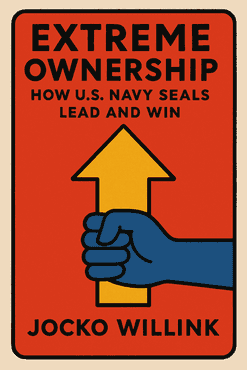
Jocko Willink, retired U.S. Navy SEAL officer and #1 New York Times bestselling author of Extreme Ownership: How U.S. Navy SEALs Lead and Win, is a globally recognized authority on leadership and discipline.
Co-written with fellow SEAL Leif Babin, Extreme Ownership distills battlefield-tested strategies for business and life, drawing from Willink’s 20 years of military service. This included commanding SEAL Team Three’s Task Unit Bruiser during the pivotal Iraq War Battle of Ramadi, which earned him the Silver Star and Bronze Star.
As a co-founder of leadership consultancy Echelon Front, Willink teaches his “extreme ownership” philosophy to Fortune 500 companies and organizations worldwide through keynote speeches, workshops, and his chart-topping Jocko Podcast, which dissects leadership principles and historical conflicts. His bestselling follow-up The Dichotomy of Leadership and Discipline Equals Freedom Field Manual further cement his status as a leading voice in personal and organizational accountability.
Translated into 15 languages, Extreme Ownership has sold over two million copies since its 2015 release and remains required reading in military academies, business schools, and corporate training programs globally.
FAQs About Extreme Ownership
What is Extreme Ownership by Jocko Willink about?
Extreme Ownership outlines battlefield-tested leadership principles from retired Navy SEAL officers Jocko Willink and Leif Babin. The book emphasizes taking full responsibility for team outcomes (“extreme ownership”), simplifying plans, and decentralizing decision-making. Each chapter pairs combat stories with business examples, showing how these strategies apply to leadership in any high-stakes environment.
Who should read Extreme Ownership?
Leaders, managers, and entrepreneurs across industries will benefit from this book. Its actionable frameworks for accountability, communication, and team-building resonate with military veterans, corporate executives, and startup founders alike. The authors’ direct, no-excuses approach appeals to those seeking practical tools to improve decision-making and team performance.
Is Extreme Ownership worth reading?
Yes—it ranks among the most cited modern leadership guides despite criticisms. While some find its military anecdotes overly intense, readers praise its actionable advice for fostering accountability and resilience. Over 25,000+ Goodreads reviewers highlight its impact on leadership mindsets.
What are the main leadership principles in Extreme Ownership?
Key principles include:
- Extreme Ownership: Leaders take full blame for failures.
- Decentralized Command: Empower team members to make decisions.
- Prioritize and Execute: Focus on critical tasks sequentially.
- Check the Ego: Avoid decisions driven by pride.
How does Extreme Ownership apply to business?
The book translates combat lessons into corporate strategies. For example, a business leader struggling with team alignment might apply “Decentralized Command” by training mid-level managers to lead autonomously. Case studies show how companies improved communication and accountability using these methods.
What is the “Decentralized Command” principle?
This principle argues that effective leaders delegate authority so frontline teams can act decisively without micromanagement. Inspired by SEAL operations, it stresses clear communication of goals (“Commander’s Intent”) while trusting subordinates to adapt tactics.
What are key quotes from Extreme Ownership?
Notable lines include:
- “Leaders must own everything in their world.”
- “Discipline equals freedom.”
- “When mistakes happen, the leader bears full responsibility.” These quotes underscore the book’s core thesis: leadership starts with personal accountability.
How does Jocko Willink’s military background shape the book?
Willink’s 20-year SEAL career—including commanding Task Unit Bruiser in Iraq’s Ramadi—informs the book’s high-stakes examples. His Silver Star and Bronze Star commendations lend credibility to lessons on decision-making under pressure.
What are criticisms of Extreme Ownership?
Some reviewers call the tone overly masculine, with combat stories that feel exclusionary. Others argue business examples seem contrived compared to vivid battlefield accounts. However, most concede the principles remain valid despite delivery concerns.
How does Extreme Ownership compare to other leadership books?
Unlike theoretical guides, it offers tactical frameworks forged in combat. While Atomic Habits focuses on personal routines, Extreme Ownership prioritizes team dynamics and crisis leadership. It complements Simon Sinek’s Leaders Eat Last with harder-edged, accountability-driven advice.
Can Extreme Ownership improve team accountability?
Absolutely. The “Extreme Ownership” principle forces leaders to model accountability first, creating a culture where teams self-correct. A 2019 study cited by Training Lawyers as Leaders found teams using these methods resolved conflicts 30% faster.
What is the “Prioritize and Execute” framework?
This strategy involves ranking problems by urgency, addressing them one at a time. During Ramadi’s siege, Willink’s team used it to counter simultaneous threats. Businesses apply it to avoid overwhelm during crises—like restructuring post-layoffs.
Feel the book through the author's voice
Turn knowledge into engaging, example-rich insights
Capture key ideas in a flash for fast learning
Enjoy the book in a fun and engaging way
Key Themes in Extreme Ownership
Quotes from Extreme Ownership
On any team, in any organization, all responsibility for success and failure rests with the leader. The leader must own everything in his or her world. There is no one else to blame.
When it comes to standards, as a leader, it’s not what you preach, it’s what you tolerate.
Leaders must own everything in their world. There is no one else to blame.
There are no bad teams, only bad leaders.
Characters in Extreme Ownership
Quick Summary Mode - Read or listen to Extreme Ownership Summary in 8 Minutes

Break down key ideas from Extreme Ownership into bite-sized takeaways to understand how innovative teams create, collaborate, and grow.

Flash Card Mode - Top 8 Insights from Extreme Ownership in a Nutshell

Distill Extreme Ownership into rapid-fire memory cues that highlight key principles of candor, teamwork, and creative resilience.

Fun Mode - Extreme Ownership Lessons Told Through 19-Min Stories

Experience Extreme Ownership through vivid storytelling that turns innovation lessons into moments you'll remember and apply.
Personalize Mode - Read or listen to Extreme Ownership Summary in 0 Minutes

Ask anything, pick the voice, and co-create insights that truly resonate with you.

From Columbia University alumni built in San Francisco
"Instead of endless scrolling, I just hit play on BeFreed. It saves me so much time."


"I never knew where to start with nonfiction—BeFreed’s book lists turned into podcasts gave me a clear path."


"Perfect balance between learning and entertainment. Finished ‘Thinking, Fast and Slow’ on my commute this week."
"Crazy how much I learned while walking the dog. BeFreed = small habits → big gains."
"Reading used to feel like a chore. Now it’s just part of my lifestyle."

"Feels effortless compared to reading. I’ve finished 6 books this month already."
"BeFreed turned my guilty doomscrolling into something that feels productive and inspiring."

"BeFreed turned my commute into learning time. 20-min podcasts are perfect for finishing books I never had time for."
"BeFreed replaced my podcast queue. Imagine Spotify for books — that’s it. 🙌"

"It is great for me to learn something from the book without reading it."
"The themed book list podcasts help me connect ideas across authors—like a guided audio journey."
"Makes me feel smarter every time before going to work"
From Columbia University alumni built in San Francisco
"Instead of endless scrolling, I just hit play on BeFreed. It saves me so much time."
"I never knew where to start with nonfiction—BeFreed’s book lists turned into podcasts gave me a clear path."
"Perfect balance between learning and entertainment. Finished ‘Thinking, Fast and Slow’ on my commute this week."
"Crazy how much I learned while walking the dog. BeFreed = small habits → big gains."
"Reading used to feel like a chore. Now it’s just part of my lifestyle."
"Feels effortless compared to reading. I’ve finished 6 books this month already."
"BeFreed turned my guilty doomscrolling into something that feels productive and inspiring."
"BeFreed turned my commute into learning time. 20-min podcasts are perfect for finishing books I never had time for."
"BeFreed replaced my podcast queue. Imagine Spotify for books — that’s it. 🙌"
"It is great for me to learn something from the book without reading it."
"The themed book list podcasts help me connect ideas across authors—like a guided audio journey."
"Makes me feel smarter every time before going to work"
"Instead of endless scrolling, I just hit play on BeFreed. It saves me so much time."
"I never knew where to start with nonfiction—BeFreed’s book lists turned into podcasts gave me a clear path."
"Perfect balance between learning and entertainment. Finished ‘Thinking, Fast and Slow’ on my commute this week."
"Crazy how much I learned while walking the dog. BeFreed = small habits → big gains."
"Reading used to feel like a chore. Now it’s just part of my lifestyle."
"Feels effortless compared to reading. I’ve finished 6 books this month already."
"BeFreed turned my guilty doomscrolling into something that feels productive and inspiring."
"BeFreed turned my commute into learning time. 20-min podcasts are perfect for finishing books I never had time for."
"BeFreed replaced my podcast queue. Imagine Spotify for books — that’s it. 🙌"
"It is great for me to learn something from the book without reading it."
"The themed book list podcasts help me connect ideas across authors—like a guided audio journey."
"Makes me feel smarter every time before going to work"
"Instead of endless scrolling, I just hit play on BeFreed. It saves me so much time."
"I never knew where to start with nonfiction—BeFreed’s book lists turned into podcasts gave me a clear path."
"Perfect balance between learning and entertainment. Finished ‘Thinking, Fast and Slow’ on my commute this week."
"Crazy how much I learned while walking the dog. BeFreed = small habits → big gains."
"Reading used to feel like a chore. Now it’s just part of my lifestyle."
"Feels effortless compared to reading. I’ve finished 6 books this month already."
"BeFreed turned my guilty doomscrolling into something that feels productive and inspiring."
"BeFreed turned my commute into learning time. 20-min podcasts are perfect for finishing books I never had time for."
"BeFreed replaced my podcast queue. Imagine Spotify for books — that’s it. 🙌"
"It is great for me to learn something from the book without reading it."
"The themed book list podcasts help me connect ideas across authors—like a guided audio journey."
"Makes me feel smarter every time before going to work"

Get the Extreme Ownership summary as a free PDF or EPUB. Print it or read offline anytime.