Overview of Getting Started in Consulting
The definitive consulting roadmap that's transformed thousands of careers. Alan Weiss's industry-shaping guide delivers practical strategies for launching a thriving practice with minimal overhead. What's the surprising secret that makes this the go-to resource for professionals seeking financial independence? The blueprint awaits.
- Build a consulting business with minimal overhead and maximum client value creation.
- Set fees based on results, not hours, to align with client ROI.
- Allocate 6-12 months’ savings to survive the startup cashflow gap.
- Leverage informal media and referrals over traditional advertising for client acquisition.
- Distinguish wholesale (corporate) vs retail (individual) consulting models for pricing clarity.
- Master consultative questioning over solution-selling to uncover true client needs.
- Avoid methodology obsession – focus on measurable outcomes and relationship building.
- Develop multiple income streams through products, speaking, and retainers for stability.
- Embrace rejection as market feedback to refine your value proposition.
- Prioritize high-trust relationships with economic buyers over technical perfectionism.
- Implement "good enough" systems early; optimize operations as revenue grows.
- Transition from self-employed technician to CEO of your consulting enterprise.
About the Author of Getting Started in Consulting
Alan Weiss, the bestselling author of Getting Started in Consulting, is a globally recognized authority on entrepreneurial consulting and value-based advisory.
A pioneering figure in professional services, Weiss founded Summit Consulting Group in 1985, guiding organizations like Merck, Hewlett-Packard, and Mercedes-Benz through transformational strategies.
His book distills decades of expertise into actionable insights for launching and scaling consultancies, emphasizing high-impact client relationships and innovative fee structures.
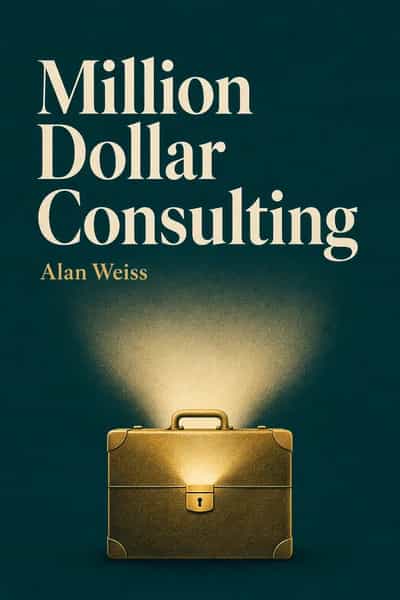
Weiss’s influential works, including Million Dollar Consulting and The Consulting Bible, have redefined modern business practices across 60 countries. Inducted into the Professional Speaking Hall of Fame, he has delivered keynotes at leading institutions and contributed to Fortune 500 executive education programs.
With over 60 books translated into 12 languages, Weiss’s frameworks remain essential reading in top MBA curricula and consulting firms worldwide.
FAQs About Getting Started in Consulting
What is Getting Started in Consulting by Alan Weiss about?
Getting Started in Consulting by Alan Weiss is a practical guide for launching a successful consulting business. It covers niche selection, pricing strategies, client acquisition, and operational efficiency, emphasizing low overhead and high-value service delivery. Key themes include building a six-figure income from a home office, crafting persuasive proposals, and leveraging ethical practices for long-term growth.
Who should read Getting Started in Consulting?
Aspiring consultants, career changers, and solo entrepreneurs seeking actionable advice on starting a consultancy will benefit most. The book is ideal for professionals in fields like management, HR, or finance looking to monetize expertise. It’s also valuable for existing consultants aiming to refine their pricing, branding, or client retention strategies.
Is Getting Started in Consulting worth reading?
Yes, it’s a must-read for its no-nonsense approach and real-world frameworks. Weiss combines 40+ years of experience, offering tools for writing proposals, setting fees, and avoiding common pitfalls. The book’s focus on immediate cash flow and scalable systems makes it a standout resource.
What are Alan Weiss’s credentials as a consulting expert?
Alan Weiss founded Summit Consulting Group in 1985, earning $3M annually advising firms like Merck, GE, and Toyota. He’s authored 60+ books, including Million Dollar Consulting, and teaches advanced consulting at the University of Rhode Island. His methodology has shaped thousands of consultancies worldwide.
How does Getting Started in Consulting recommend finding a niche?
Weiss advises identifying underserved markets where your expertise intersects with client pain points. Examples include compliance training for healthcare or AI adoption for SMEs. He stresses specificity: “Become indispensable in a narrow vertical before expanding”.
What fee-setting strategies does the book suggest?
The book advocates value-based pricing over hourly rates. Charge based on client ROI, such as 10-20% of a project’s estimated financial impact. For a $500K cost-saving initiative, propose a $50K fee. Weiss also recommends retainer models for recurring advisory roles.
How does Getting Started in Consulting address common startup mistakes?
Top pitfalls include underpricing, vague niches, and overinvesting in infrastructure. Weiss highlights a case where a consultant lost $20K by renting premium office space prematurely. The solution? Start lean, reinvest profits, and scale only with proven demand.
What role does ethical practice play in Weiss’s methodology?
Ethics are central to building trust and referrals. The book advises transparent contracts, confidentiality safeguards, and avoiding conflicts of interest. Weiss shares an example where rejecting a lucrative but misaligned project led to three referral-based clients.
How does the book compare to Million Dollar Consulting by the same author?
Getting Started focuses on launch fundamentals, while Million Dollar Consulting targets scaling established firms. The former details business registration and initial marketing; the latter explores team hiring and global expansion. Both emphasize value-based pricing and niche dominance.
What criticisms exist about Getting Started in Consulting?
Some reviewers note the book underestimates digital marketing’s role in modern client acquisition. While Weiss prioritizes referrals and speaking engagements, readers suggest supplementing with SEO and LinkedIn outreach. The 2000s-era case studies also lack AI-driven market analysis examples.
How relevant is Getting Started in Consulting in 2025?
The core principles remain valid, but readers should adapt advice to remote work trends and AI tools. Weiss’s emphasis on lean operations aligns with hybrid consultancy models. Updated tactics might include virtual workshops and AI-enhanced proposal drafting, building on his timeless value-creation framework.
Can Getting Started in Consulting help transition from corporate to freelance roles?
Yes, it provides a six-month roadmap for corporate employees, including financial runway planning (save 6-12 months’ expenses) and skill repositioning. A case study features an HR manager who tripled her income by branding as a “hybrid workforce compliance specialist” using Weiss’s templates.
Feel the book through the author's voice
Turn knowledge into engaging, example-rich insights
Capture key ideas in a flash for fast learning
Enjoy the book in a fun and engaging way
Characters in Getting Started in Consulting
- Alan WeissAuthor and founder of Summit Consulting Group
Key Themes in Getting Started in Consulting
- value-based pricing
- marketing gravity
- professional service marketing
- solopreneur business models
- consultant mindset
Quotes from Getting Started in Consulting
Consulting isn't primarily about methodology or sales—it's fundamentally a marketing business.
True marketing involves creating need rather than simply meeting wants.
An unsupportive spouse or partner can doom your venture.
Consulting has virtually no barriers to entry.
Word of mouth remains the most powerful tool.
Explore Your Way of Learning
 Quick Summary Mode
Read or listen to Getting Started in Consulting Summary in 10 Minutes
Break down key ideas from Getting Started in Consulting into bite-sized takeaways to understand how innovative teams create, collaborate, and grow.

 Fun Mode
Getting Started in Consulting Lessons Told Through 25-Min Stories
Experience Getting Started in Consulting through vivid storytelling that turns innovation lessons into moments you'll remember and apply.
 Personalize Mode
Experience Getting Started in Consulting in your own learning style
Ask anything, choose your learning style, and co-create insights that truly resonate with you.

From Columbia University alumni built in San Francisco
"Instead of endless scrolling, I just hit play on BeFreed. It saves me so much time."


"I never knew where to start with nonfiction—BeFreed’s book lists turned into podcasts gave me a clear path."


"Perfect balance between learning and entertainment. Finished ‘Thinking, Fast and Slow’ on my commute this week."
"Crazy how much I learned while walking the dog. BeFreed = small habits → big gains."
"Reading used to feel like a chore. Now it’s just part of my lifestyle."

"Feels effortless compared to reading. I’ve finished 6 books this month already."
"BeFreed turned my guilty doomscrolling into something that feels productive and inspiring."

"BeFreed turned my commute into learning time. 20-min podcasts are perfect for finishing books I never had time for."
"BeFreed replaced my podcast queue. Imagine Spotify for books — that’s it. 🙌"

"It is great for me to learn something from the book without reading it."
"The themed book list podcasts help me connect ideas across authors—like a guided audio journey."
"Makes me feel smarter every time before going to work"
From Columbia University alumni built in San Francisco
"Instead of endless scrolling, I just hit play on BeFreed. It saves me so much time."
"I never knew where to start with nonfiction—BeFreed’s book lists turned into podcasts gave me a clear path."
"Perfect balance between learning and entertainment. Finished ‘Thinking, Fast and Slow’ on my commute this week."
"Crazy how much I learned while walking the dog. BeFreed = small habits → big gains."
"Reading used to feel like a chore. Now it’s just part of my lifestyle."
"Feels effortless compared to reading. I’ve finished 6 books this month already."
"BeFreed turned my guilty doomscrolling into something that feels productive and inspiring."
"BeFreed turned my commute into learning time. 20-min podcasts are perfect for finishing books I never had time for."
"BeFreed replaced my podcast queue. Imagine Spotify for books — that’s it. 🙌"
"It is great for me to learn something from the book without reading it."
"The themed book list podcasts help me connect ideas across authors—like a guided audio journey."
"Makes me feel smarter every time before going to work"
"Instead of endless scrolling, I just hit play on BeFreed. It saves me so much time."
"I never knew where to start with nonfiction—BeFreed’s book lists turned into podcasts gave me a clear path."
"Perfect balance between learning and entertainment. Finished ‘Thinking, Fast and Slow’ on my commute this week."
"Crazy how much I learned while walking the dog. BeFreed = small habits → big gains."
"Reading used to feel like a chore. Now it’s just part of my lifestyle."
"Feels effortless compared to reading. I’ve finished 6 books this month already."
"BeFreed turned my guilty doomscrolling into something that feels productive and inspiring."
"BeFreed turned my commute into learning time. 20-min podcasts are perfect for finishing books I never had time for."
"BeFreed replaced my podcast queue. Imagine Spotify for books — that’s it. 🙌"
"It is great for me to learn something from the book without reading it."
"The themed book list podcasts help me connect ideas across authors—like a guided audio journey."
"Makes me feel smarter every time before going to work"
"Instead of endless scrolling, I just hit play on BeFreed. It saves me so much time."
"I never knew where to start with nonfiction—BeFreed’s book lists turned into podcasts gave me a clear path."
"Perfect balance between learning and entertainment. Finished ‘Thinking, Fast and Slow’ on my commute this week."
"Crazy how much I learned while walking the dog. BeFreed = small habits → big gains."
"Reading used to feel like a chore. Now it’s just part of my lifestyle."
"Feels effortless compared to reading. I’ve finished 6 books this month already."
"BeFreed turned my guilty doomscrolling into something that feels productive and inspiring."
"BeFreed turned my commute into learning time. 20-min podcasts are perfect for finishing books I never had time for."
"BeFreed replaced my podcast queue. Imagine Spotify for books — that’s it. 🙌"
"It is great for me to learn something from the book without reading it."
"The themed book list podcasts help me connect ideas across authors—like a guided audio journey."
"Makes me feel smarter every time before going to work"

Download Summary of Getting Started in Consulting
Get the Getting Started in Consulting summary as a free PDF or EPUB. Print it or read offline anytime.