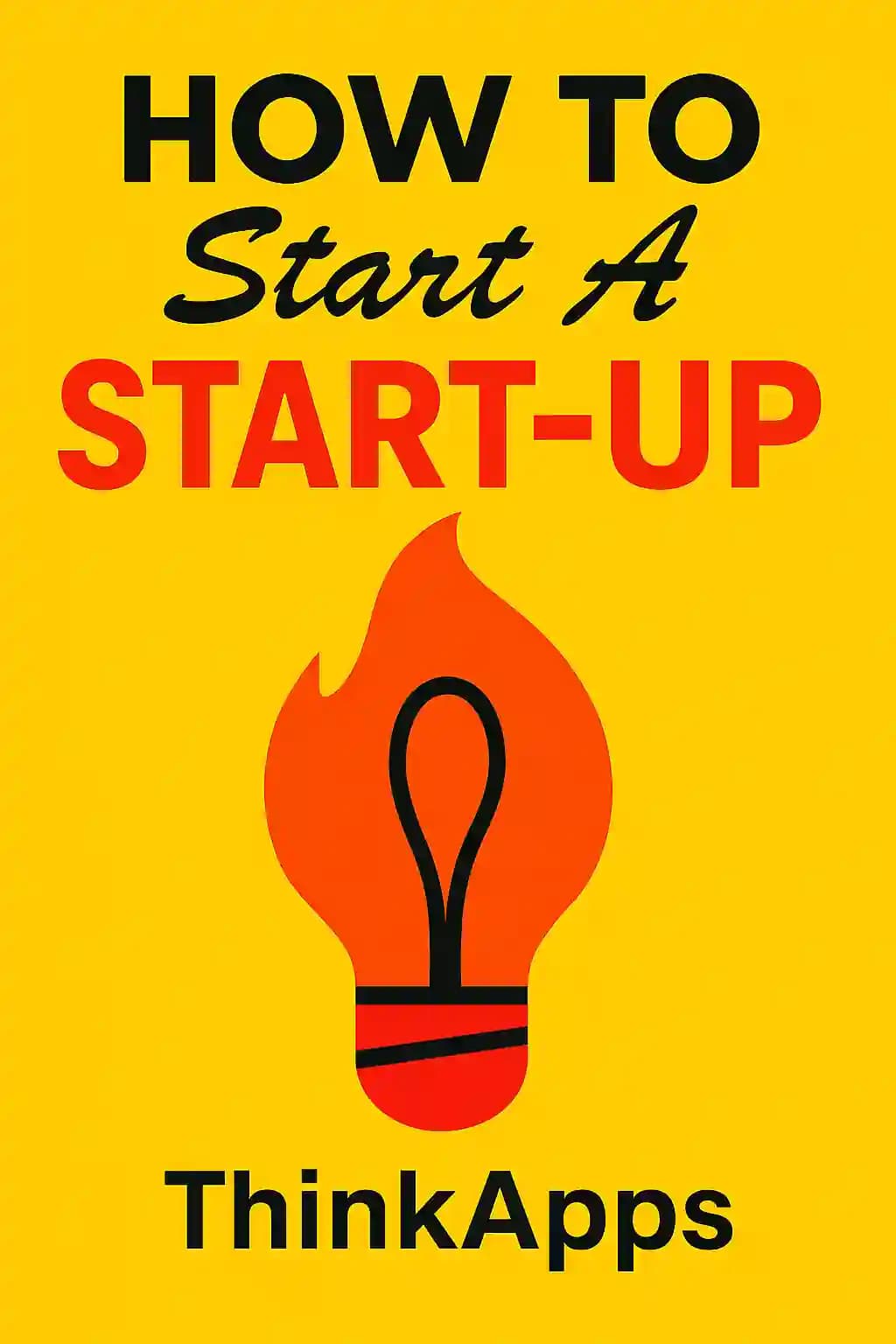
How to Start a Start-up book cover

How to Start a Start-up by ThinkApps Summary

How to Start a Start-up
ThinkApps
4 (1 Reviews)
Entrepreneurship
Business
Technology
Overview
Key Takeaways
Author
FAQs

Overview of How to Start a Start-up

Born from Stanford and Y Combinator's elite startup course, this Silicon Valley playbook features wisdom from 25+ tech titans including Sam Altman and Peter Thiel. Nominated for Product Hunt's "Book of the Year," it reveals why the best startups solve problems founders genuinely care about.

Show more

Key Takeaways from How to Start a Start-up

  1. Mission-driven startups outperform competitors by rallying teams around long-term purpose.
  2. Validate your idea through real-world problems you personally experience or deeply understand.
  3. Prioritize building a product loved by few over one liked by many.
  4. Handpick early users for brutal feedback to accelerate product-market fit.
  5. Choose rapidly growing niche markets over stagnant industries for exponential scaling.
  6. Founder transition from operator to leader is critical for scaling beyond startup phase.
  7. No-code tools enable non-technical founders to prototype faster than traditional development.
  8. Weekly user feedback cycles create compounding improvements in product and messaging.
  9. Hire for cultural cohesion first—skills can be taught but values can't.
  10. Design revenue models around customer desperation rather than convenience for stickiness.
  11. Treat your first 100 users like co-founders to build evangelist networks.
  12. Successful founders obsess over market trajectory more than current financial metrics.

Overview of its author - ThinkApps

ThinkApps is the authoritative voice behind how-to-start-a-startup-by-thinkapps, a practical guide rooted in the company’s expertise as a leading on-demand service for web, mobile, and wearable app development. Specializing in transforming entrepreneurial visions into market-ready products, ThinkApps draws from its experience collaborating with Silicon Valley startups and global enterprises to deliver actionable insights on product design, agile development, and scalable tech solutions.

The book merges actionable frameworks with real-world case studies from their network of 1,000+ top-tier designers and developers across 25 countries, reflecting their signature blend of innovation and execution.

Recognized as a top wearable app development firm (#7 in 2023 rankings), ThinkApps empowers founders through its transparent collaboration model, live project dashboards, and weekly demo cycles. Their work has shaped products for venture-backed startups and Fortune 500 companies alike, with a presence spanning San Francisco, London, Bangalore, and Hong Kong.

The guide distills decades of collective expertise into strategies trusted by innovators worldwide.

Common FAQs of How to Start a Start-up

What is How to Start a Startup by ThinkApps about?

How to Start a Startup is a practical guide for entrepreneurs, offering actionable strategies for launching, scaling, and managing a successful business. It covers ideation, product development, fundraising, team-building, and marketing, with insights from 25+ Silicon Valley experts like PayPal’s Jawed Karim and Y Combinator’s Sam Altman. The book emphasizes lean methodologies, customer-centric design, and iterative growth.

Who should read How to Start a Startup?

Aspiring entrepreneurs, business students, and professionals curious about startup ecosystems will benefit most. It provides actionable frameworks for validating ideas, securing funding, and building teams. The book also appeals to corporate innovators seeking entrepreneurial tactics.

Is How to Start a Startup worth reading?

Yes—it’s praised for its concise, actionable advice from industry leaders. Unlike theoretical business guides, it focuses on real-world scenarios like creating minimum viable products (MVPs) and navigating investor negotiations. However, critics note its Silicon Valley bias may require adaptation for non-tech industries.

What are the key concepts in How to Start a Startup?

Core ideas include:

  • Problem-first ideation: Start with a pressing market need.
  • MVP development: Launch quickly, iterate based on user feedback.
  • Team diversification: Founders should complement each other’s skills.
  • Growth hacking: Prioritize metrics like user retention over vanity stats.
How does the book approach building a product?

The “product building cycle” emphasizes rapid prototyping, user testing, and iteration. For example, Pinterest’s co-founder manually demoed early versions in coffee shops to gather feedback. The book advises founders to “build something a small group loves” before scaling.

What fundraising strategies does the book recommend?

It outlines angel investing, venture capital, and crowdfunding options. Key tips include:

  • Pitch with a clear problem-solution narrative.
  • Target investors aligned with your industry.
  • Use milestones (e.g., user growth) to justify valuations.
How does How to Start a Startup compare to The Lean Startup?

While both advocate MVP-driven development, How to Start a Startup offers more tactical advice on team dynamics and investor relations. It includes case studies from modern tech companies, whereas The Lean Startup focuses broadly on validated learning.

What are common criticisms of the book?

Some argue it overemphasizes Silicon Valley’s “fail fast” culture, which may not suit capital-intensive or regulated industries. Others note it lacks depth on bootstrapping alternatives to venture capital.

How does the book address hiring challenges?

It advises hiring generalists early for flexibility, then specialists as scaling demands grow. Red flags include candidates overly focused on titles or equity. The “simplify and delegate” framework helps founders avoid micromanagement.

What quotes from the book are highlighted?

Notable lines:

  • “Your customers are the best source of feedback—if you listen”.
  • “A startup with three founders isn’t a committee—it’s a Swiss Army knife”.
How relevant is How to Start a Startup in 2025?

Despite evolving tech trends, its core principles—problem validation, agile development, and team synergy—remain critical. Updated examples (e.g., AI integration) would enhance its modern applicability.

Books similar to How to Start a Startup

For complementary reads, consider:

  • Zero to One by Peter Thiel (venture-building philosophies).
  • The Hard Thing About Hard Things by Ben Horowitz (scaling challenges).
  • Sprint by Jake Knapp (rapid prototyping techniques).

Similar books to How to Start a Start-up

Start Reading Your Way
Quick Summary

Feel the book through the author's voice

Deep Dive

Turn knowledge into engaging, example-rich insights

Flash Card

Capture key ideas in a flash for fast learning

Fun

Enjoy the book in a fun and engaging way

Key takeaways

1

Why Most Startups Fail Before They Even Begin

play
00:00
00:00

Every year, thousands of entrepreneurs chase the startup dream, convinced their idea will be the next unicorn. Yet 90% crash before reaching profitability. What separates the Facebooks from the failures? It's not luck, timing, or even brilliance-it's understanding that entrepreneurship is fundamentally about serving others, not yourself. Before you quit your job and dive into the startup world, you need to grasp a counterintuitive truth: becoming a CEO doesn't put you at the top of a pyramid. Instead, everyone becomes your boss-employees, customers, partners, and investors all demand your attention. This reality check matters because building a company will consume 5-10 years of your life. You'd better have the right reasons for starting. Two elements must align before you begin: passion and aptitude. Passion means you're compelled to solve a particular problem; aptitude means you're qualified to solve it. Without both, you're setting yourself up for years of misery. The best startup ideas solve problems you personally experience. If you're not your own customer, you must get extraordinarily close to those who are. Answer this question honestly: "Why now?" If your solution would have worked equally well five years ago or could wait five years, you're missing something crucial. Target small but rapidly growing markets rather than large stagnant ones. Build something a small group of users desperately loves, not something many users merely like. When customers are desperate for a solution, they'll embrace even imperfect products.

2

The Unsexy Foundation That Makes or Breaks Your Company

3

The Impossible Balancing Act of Great Leadership

4

Building Products People Actually Love

5

Why Competition Is Actually Killing Your Startup

6

From First Customer to Sustainable Growth

7

Building Something That Lasts Beyond the Launch

Explore Your Way of Learning
How to Start a Start-up isn't just a book — it's a masterclass in Entrepreneurship. To help you absorb its lessons in the way that works best for you, we offer five unique learning modes. Whether you're a deep thinker, a fast learner, or a story lover, there's a mode designed to fit your style.

Quick Summary Mode - Read or listen to How to Start a Start-up Summary in 9 Minutes

Quick Summary
Quick Summary
How to Start a Start-up Summary in 9 Minutes

Break down key ideas from How to Start a Start-up into bite-sized takeaways to understand how innovative teams create, collaborate, and grow.

play
00:00
00:00

Flash Card Mode - Top 7 Insights from How to Start a Start-up in a Nutshell

Flash Card
Flash Card
Top 7 Insights from How to Start a Start-up in a Nutshell

Distill How to Start a Start-up into rapid-fire memory cues that highlight Pixar’s principles of candor, teamwork, and creative resilience.

Flash Mode Swiper

Fun Mode - How to Start a Start-up Lessons Told Through 24-Min Stories

Fun
Fun
How to Start a Start-up Lessons Told Through 24-Min Stories

Experience How to Start a Start-up through vivid storytelling that turns Pixar’s innovation lessons into moments you’ll remember and apply.

play
00:00
00:00

Personalize Mode - Read or listen to How to Start a Start-up Summary in 0 Minutes

Personalize
Personalize
Experience How to Start a Start-up in your own way.

Ask anything, pick the voice, and co-create insights that truly resonate with you.

Flash Mode Swiper

From Columbia University alumni built in San Francisco

BeFreed Brings Together A Global Community Of 200,000+ Curious Minds

"Instead of endless scrolling, I just hit play on BeFreed. It saves me so much time."

@Moemenn
platform
star
star
star
star
star

"I never knew where to start with nonfiction—BeFreed’s book lists turned into podcasts gave me a clear path."

@Chloe, Solo founder, LA
platform
comments
12
likes
117

"Perfect balance between learning and entertainment. Finished ‘Thinking, Fast and Slow’ on my commute this week."

@Raaaaaachelw
platform
star
star
star
star
star

"Crazy how much I learned while walking the dog. BeFreed = small habits → big gains."

@Matt, YC alum
platform
comments
12
likes
108

"Reading used to feel like a chore. Now it’s just part of my lifestyle."

@Erin, Investment Banking Associate , NYC
platform
comments
254
likes
17

"Feels effortless compared to reading. I’ve finished 6 books this month already."

@djmikemoore
platform
star
star
star
star
star

"BeFreed turned my guilty doomscrolling into something that feels productive and inspiring."

@Pitiful
platform
comments
96
likes
4.5K

"BeFreed turned my commute into learning time. 20-min podcasts are perfect for finishing books I never had time for."

@SofiaP
platform
star
star
star
star
star

"BeFreed replaced my podcast queue. Imagine Spotify for books — that’s it. 🙌"

@Jaded_Falcon
platform
comments
201
thumbsUp
16

"It is great for me to learn something from the book without reading it."

@OojasSalunke
platform
star
star
star
star
star

"The themed book list podcasts help me connect ideas across authors—like a guided audio journey."

@Leo, Law Student, UPenn
platform
comments
37
likes
483

"Makes me feel smarter every time before going to work"

@Cashflowbubu
platform
star
star
star
star
star

"Instead of endless scrolling, I just hit play on BeFreed. It saves me so much time."

@Moemenn
platform
star
star
star
star
star

"I never knew where to start with nonfiction—BeFreed’s book lists turned into podcasts gave me a clear path."

@Chloe, Solo founder, LA
platform
comments
12
likes
117

"Perfect balance between learning and entertainment. Finished ‘Thinking, Fast and Slow’ on my commute this week."

@Raaaaaachelw
platform
star
star
star
star
star

"Crazy how much I learned while walking the dog. BeFreed = small habits → big gains."

@Matt, YC alum
platform
comments
12
likes
108

"Reading used to feel like a chore. Now it’s just part of my lifestyle."

@Erin, Investment Banking Associate , NYC
platform
comments
254
likes
17

"Feels effortless compared to reading. I’ve finished 6 books this month already."

@djmikemoore
platform
star
star
star
star
star

"BeFreed turned my guilty doomscrolling into something that feels productive and inspiring."

@Pitiful
platform
comments
96
likes
4.5K

"BeFreed turned my commute into learning time. 20-min podcasts are perfect for finishing books I never had time for."

@SofiaP
platform
star
star
star
star
star

"BeFreed replaced my podcast queue. Imagine Spotify for books — that’s it. 🙌"

@Jaded_Falcon
platform
comments
201
thumbsUp
16

"It is great for me to learn something from the book without reading it."

@OojasSalunke
platform
star
star
star
star
star

"The themed book list podcasts help me connect ideas across authors—like a guided audio journey."

@Leo, Law Student, UPenn
platform
comments
37
likes
483

"Makes me feel smarter every time before going to work"

@Cashflowbubu
platform
star
star
star
star
star

"Instead of endless scrolling, I just hit play on BeFreed. It saves me so much time."

@Moemenn
platform
star
star
star
star
star

"I never knew where to start with nonfiction—BeFreed’s book lists turned into podcasts gave me a clear path."

@Chloe, Solo founder, LA
platform
comments
12
likes
117

"Perfect balance between learning and entertainment. Finished ‘Thinking, Fast and Slow’ on my commute this week."

@Raaaaaachelw
platform
star
star
star
star
star

"Crazy how much I learned while walking the dog. BeFreed = small habits → big gains."

@Matt, YC alum
platform
comments
12
likes
108

"Reading used to feel like a chore. Now it’s just part of my lifestyle."

@Erin, Investment Banking Associate , NYC
platform
comments
254
likes
17

"Feels effortless compared to reading. I’ve finished 6 books this month already."

@djmikemoore
platform
star
star
star
star
star

"BeFreed turned my guilty doomscrolling into something that feels productive and inspiring."

@Pitiful
platform
comments
96
likes
4.5K

"BeFreed turned my commute into learning time. 20-min podcasts are perfect for finishing books I never had time for."

@SofiaP
platform
star
star
star
star
star

"BeFreed replaced my podcast queue. Imagine Spotify for books — that’s it. 🙌"

@Jaded_Falcon
platform
comments
201
thumbsUp
16

"It is great for me to learn something from the book without reading it."

@OojasSalunke
platform
star
star
star
star
star

"The themed book list podcasts help me connect ideas across authors—like a guided audio journey."

@Leo, Law Student, UPenn
platform
comments
37
likes
483

"Makes me feel smarter every time before going to work"

@Cashflowbubu
platform
star
star
star
star
star
Start your learning journey, now
Download This Summary

Get the How to Start a Start-up summary as a free PDF or EPUB. Print it or read offline anytime.