Who decides what's "correct" English? Anne Curzan's revolutionary linguistics work challenges language authority, arguing for inclusivity over rigid standards. Her viral TED Talk sparked debate among educators - could embracing linguistic diversity actually strengthen communication across our increasingly connected world?
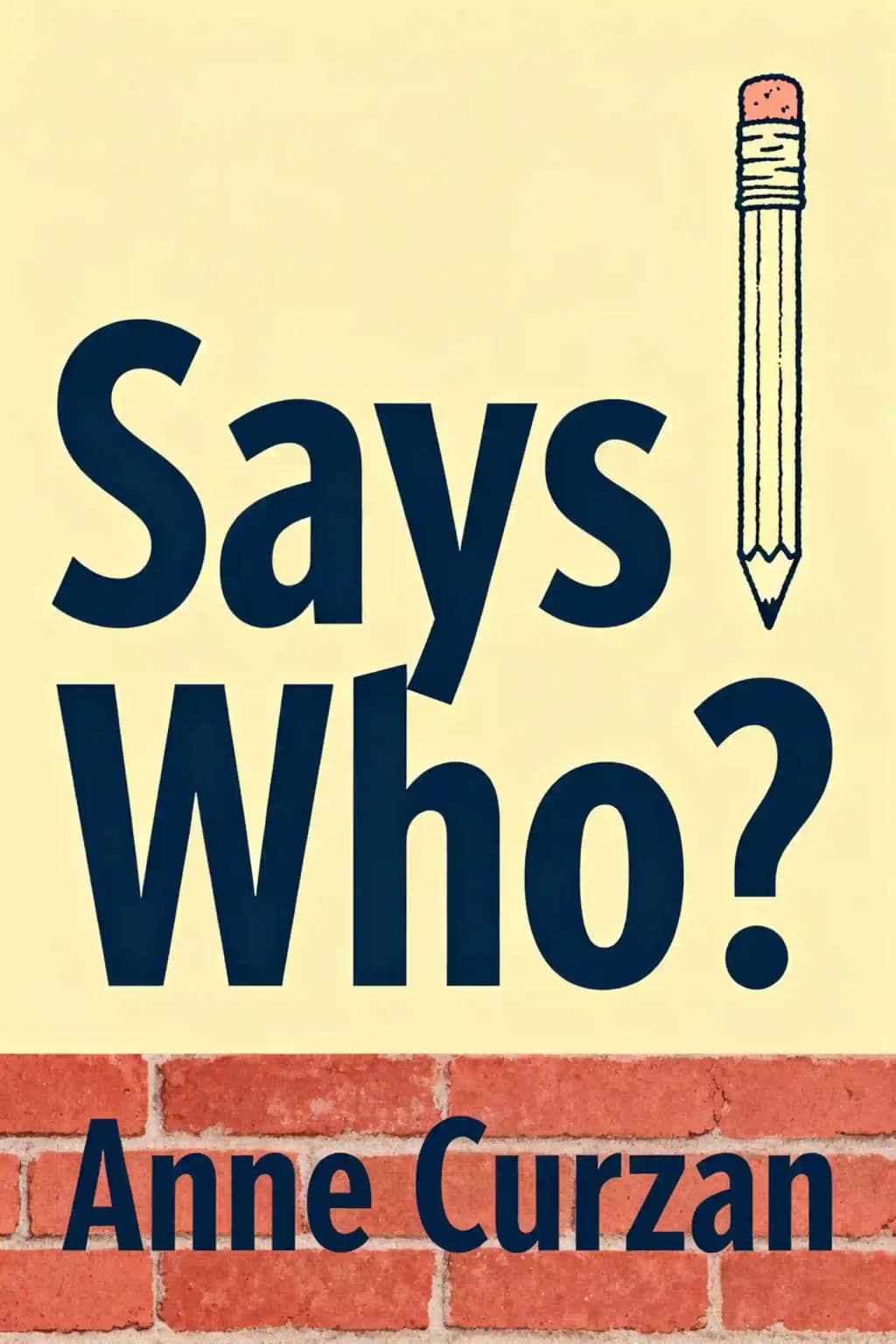
Anne Curzan, author of Says Who?: A Kinder, Funner Usage Guide for Everyone Who Cares About Words, is a renowned linguist, English language historian, and award-winning professor at the University of Michigan. A Geneva Smitherman Collegiate Professor of English, Linguistics, and Education, she served as dean of the College of Literature, Science, and the Arts from 2019–2024. Her expertise in language evolution and prescriptivism vs. descriptivism informs this engaging exploration of grammar’s cultural dynamics, reflecting her decades of research and teaching.
Curzan’s authority extends beyond academia: she hosts NPR’s That’s What They Say, writes for the Chronicle of Higher Education’s Lingua Franca blog, and delivered a TED Talk on linguistic legitimacy with over 2.1 million views.
Her prior works include Fixing English: Prescriptivism and Language History and the widely used textbook How English Works: A Linguistic Introduction. Says Who? merges her signature wit with rigorous scholarship, debunking myths while celebrating language’s fluidity. The book builds on her legacy of making linguistics accessible, cemented by her three popular Great Courses series on word origins and grammar.
Says Who? challenges rigid grammar rules by exploring how English evolves through cultural shifts and common usage. Linguist Anne Curzan blends humor with linguistic research to debunk myths about "correct" language, addressing topics like split infinitives, singular they, and dictionary labeling. The book emphasizes adapting language for clarity and inclusivity rather than strict adherence to outdated norms.
This book suits grammar enthusiasts seeking a fresh perspective, writers navigating formal vs. informal tone, and anyone curious about linguistic equity. Curzan’s approachable style appeals to both rule-bound traditionalists and colloquial speakers, offering tools to become language "caretakers" rather than gatekeepers.
Yes—the book provides actionable insights into balancing precision with inclusivity in communication. Curzan’s witty analysis of language debates (e.g., who vs. whom) and real-world examples (job interviews vs. barbecues) make it a valuable resource for educators, professionals, and word nerds alike.
Curzan traces rules to 18th-century prescriptivists and reveals how usage trends shape modern standards. For example, snuck overtook sneaked through widespread adoption, demonstrating how language democratically evolves. The book highlights how dictionaries track—rather than dictate—these changes.
Yes. Curzan defends singular they as both historically rooted (used since Chaucer’s era) and essential for gender inclusivity. She critiques opposition as prioritizing outdated norms over clarity and respect.
Curzan dismantles the myth that splitting infinitives (e.g., to boldly go) is grammatically wrong, noting the “rule” originated from Latin-based 18th-century pedantry. She advocates using split infinitives when they enhance rhythm or meaning.
Some traditionalists argue the book overly prioritizes linguistic flexibility, potentially muddying clarity. However, Curzan counters that context-aware usage preserves precision while fostering inclusivity—a balance supported by most modern linguists.
While Benjamin Dreyer’s guide focuses on practical style rules, Says Who? examines why rules exist and when to bend them. Both emphasize clarity, but Curzan’s work leans more on linguistic evolution and social equity, making them complementary reads.
Absolutely. The book teaches tailoring language to audience expectations—using formal structures for resumes but colloquialisms in team chats. Curzan provides frameworks for avoiding unintentional bias while maintaining authority.
As AI tools like Grammarly enforce rigid standards, Curzan’s human-centric approach helps balance automation with empathy. The book’s focus on inclusive language aligns with global DEI initiatives, making it a timely resource for educators and workplaces.
Sinta o livro através da voz do autor
Transforme conhecimento em insights envolventes e ricos em exemplos
Capture ideias-chave em um instante para aprendizado rápido
Aproveite o livro de uma forma divertida e envolvente
Language stirs deep emotions in all of us.
Language is deeply personal and fundamentally social.
Language change is natural and inevitable.
A word is simply a set of sounds that functions independently.
We often mistakenly assume dictionaries prescribe correct usage.
Divida as ideias-chave de Says Who? em pontos fáceis de entender para compreender como equipes inovadoras criam, colaboram e crescem.
Destile Says Who? em dicas de memória rápidas que destacam os princípios-chave de franqueza, trabalho em equipe e resiliência criativa.

Experimente Says Who? através de narrativas vívidas que transformam lições de inovação em momentos que você lembrará e aplicará.
Pergunte qualquer coisa, escolha a voz e co-crie insights que realmente ressoem com você.

Criado por ex-alunos da Universidade de Columbia em San Francisco
"Instead of endless scrolling, I just hit play on BeFreed. It saves me so much time."
"I never knew where to start with nonfiction—BeFreed’s book lists turned into podcasts gave me a clear path."
"Perfect balance between learning and entertainment. Finished ‘Thinking, Fast and Slow’ on my commute this week."
"Crazy how much I learned while walking the dog. BeFreed = small habits → big gains."
"Reading used to feel like a chore. Now it’s just part of my lifestyle."
"Feels effortless compared to reading. I’ve finished 6 books this month already."
"BeFreed turned my guilty doomscrolling into something that feels productive and inspiring."
"BeFreed turned my commute into learning time. 20-min podcasts are perfect for finishing books I never had time for."
"BeFreed replaced my podcast queue. Imagine Spotify for books — that’s it. 🙌"
"It is great for me to learn something from the book without reading it."
"The themed book list podcasts help me connect ideas across authors—like a guided audio journey."
"Makes me feel smarter every time before going to work"
Criado por ex-alunos da Universidade de Columbia em San Francisco

Obtenha o resumo de Says Who? como PDF ou EPUB gratuito. Imprima ou leia offline a qualquer momento.
Have you ever silently judged someone for saying "between you and I" or cringed when hearing "impactful" in a business meeting? These reactions reveal something fascinating about ourselves. Language stirs deep emotions in all of us, often exposing social dynamics more than actual communication problems. When we police others' grammar, we're not just correcting errors - we're asserting authority. This tension between linguistic prescription and natural evolution lies at the heart of Anne Curzan's exploration of language rules. Most of us have both an inner "grammando" (who constantly corrects others' mistakes) and an inner "wordie" (who delights in language's shifting landscape). These competing impulses create an internal tug-of-war. I've witnessed this firsthand - my mother once called out "And me!" from the back of the room during my sister's wedding toast when she said "for my husband and I." But public grammar policing creates uncomfortable moments that reveal something crucial: language is deeply personal and fundamentally social. When we comment on someone's language, it almost inevitably feels like a personal judgment.