Capítulo 1
The Power of Words: How Everyone Can Write Ridiculously Good Content
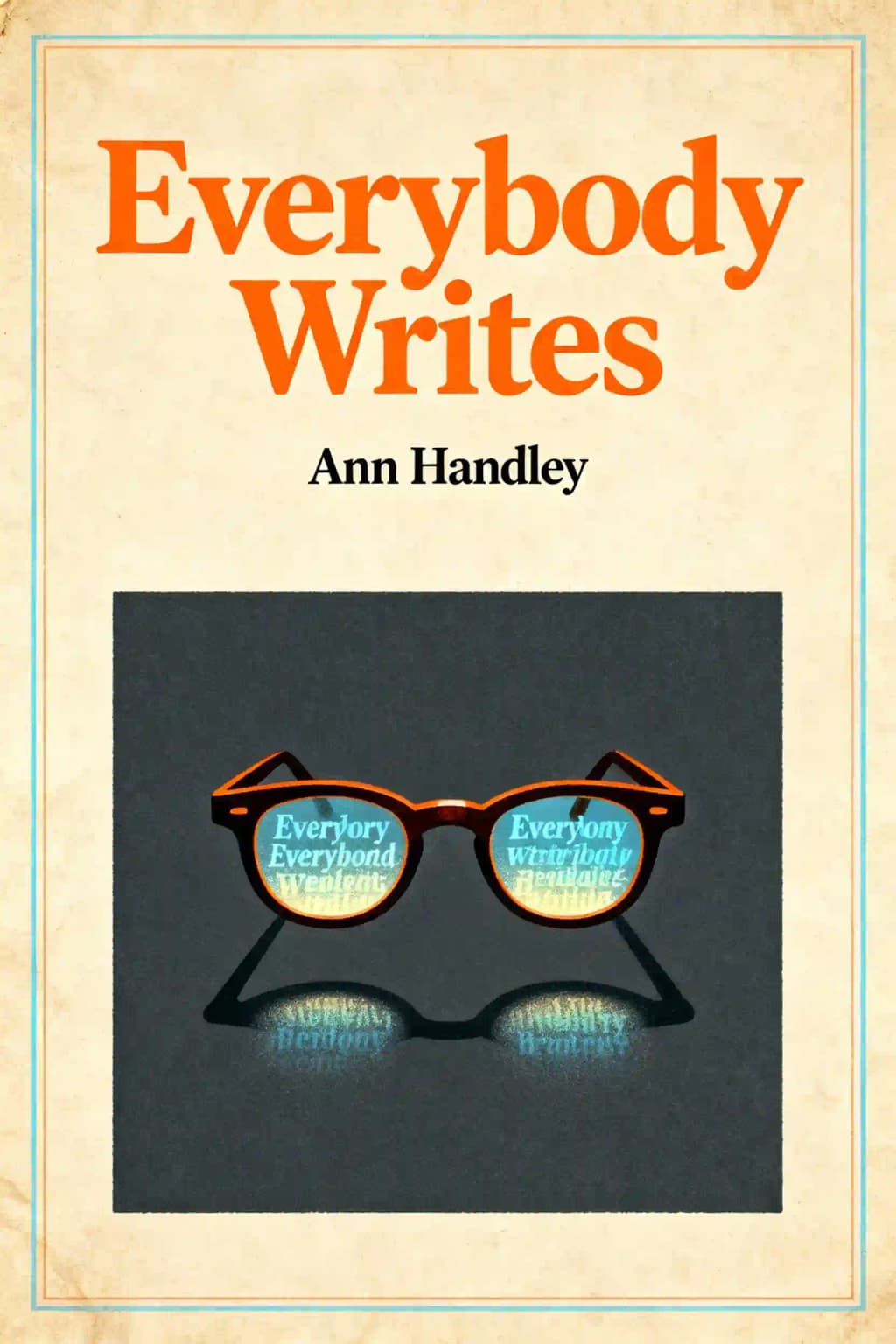
In a world drowning in content, Ann Handley's "Everybody Writes" stands as a lighthouse for anyone who puts words to screen. Since its 2014 publication, this guide has transformed how marketers, business professionals, and everyday communicators approach writing. What makes this book particularly remarkable is Handley's ability to demystify the writing process-stripping away the notion that writing is some mystical gift bestowed upon a chosen few. Instead, she presents writing as a learnable skill, a muscle that grows stronger with consistent exercise. The book has earned praise from marketing luminaries like Jay Baer, who called it "the go-to guide for anyone creating content," and has become required reading in marketing departments and MBA programs nationwide. With her background as MarketingProfs' Chief Content Officer and her distinctive blend of practical wisdom and humor, Handley doesn't just tell us how to write-she shows us why it matters more than ever in our digital-first world.
Capítulo 2
Everyone Is a Writer in the Digital Age
The digital revolution has fundamentally changed who gets to be called a writer. If you have a LinkedIn profile, send emails, post on social media, or contribute to your company's website-congratulations, you're already writing professionally. The distinction between "writers" and "non-writers" has collapsed in our digital landscape where, as Handley puts it, "If you have a website, you are a publisher. If you are on social media, you are in marketing."
This democratization of writing carries profound implications. Our online words have become our "emissaries"-digital ambassadors representing us when we're not physically present. They shape how others perceive our intelligence, trustworthiness, and competence. Poor writing doesn't just fail to communicate; it actively damages credibility and undermines relationships.
Content now extends far beyond website copy to encompass "everything your customer or prospect touches or interacts with." Handley playfully paraphrases The Lion King: "Everything the light touches is content." And at the core of most content experiences-whether text-based or visual-lies writing. Even videos and podcasts begin with scripts or outlines.
Despite this central role, many businesses neglect writing quality to their detriment. Good writing serves as a powerful business tool in three crucial ways: as the foundation of effective content, as a mirror reflecting clear thinking, and as the key to truly customer-centric communication. When we write well, we demonstrate respect for our readers' time and attention-a commodity increasingly scarce in our distraction-filled world.
The quality formula Handley proposes is elegantly simple: Utility x Inspiration x Empathy = Quality Content. If any element equals zero, the entire equation collapses. This means content must help solve problems (utility), be creatively unique or data-driven (inspiration), and view everything through the customer's perspective (empathy). Without all three elements working together, content becomes just another contribution to what Handley calls the "landscape of content crap."
Capítulo 3
The Writing Process: From Ugly First Drafts to Polished Prose
The most liberating revelation for struggling writers is that good writing rarely emerges fully formed. Even celebrated authors like Maya Angelou and Ernest Hemingway relied on ordinary routines and schedules rather than flashes of inspiration. Handley demolishes the romantic myth of the tortured artist waiting for their muse, instead framing good writing as the product of consistent practice-"the key to being a better writer is to write."
Handley's 12-step "writing GPS" provides a practical roadmap through the often murky journey from idea to published piece:
1. Identify your business goal
2. Reframe to focus on reader benefits using "so what? because" questioning
3. Seek supporting data and examples
4. Organize with appropriate structure
5. Write to one specific person
6. Produce "The Ugly First Draft" without self-editing
7. Walk away to gain perspective
8. Rewrite with the reader in mind
9. Create a compelling headline
10. Have someone edit
11. Check for readability
12. Publish with a clear next step for readers
The concept of "The Ugly First Draft" (TUFD) is particularly liberating. Handley encourages writers to "barf up" ideas without concern for grammar, spelling, or coherence, then walk away before returning to reshape this raw material. Good writers, she explains, are actually excellent editors of their terrible first drafts. The brilliance emerges during revision, not initial composition.
This approach counters our natural tendency to self-edit while writing-a habit that creates paralysis as we try to produce perfect sentences on the first attempt. By separating the creation and editing processes, writers can overcome the intimidation of the blank page and produce more authentic, engaging content.
Handley also emphasizes the importance of organization before writing. She presents 15 structural approaches for blog posts and articles-from quizzes and how-tos to case studies and contrarian views-that provide frameworks to organize thoughts around any topic. Having some structure prevents meandering and helps maintain focus throughout the writing process.
Capítulo 4
Writing Rules That Actually Matter
Handley's approach to grammar and usage is refreshingly practical and human-centered. Rather than overwhelming readers with every possible rule from traditional style guides, she focuses on those most relevant to modern marketers and content creators. She acknowledges that while grammar matters for credibility, it's secondary to thinking clearly and maintaining reader engagement. The goal is effective communication, not perfect adherence to every obscure grammatical rule.
The most important rules center around clarity and authenticity in modern communication. Writers should use "real words" that actual humans would use in conversation rather than corporate jargon, "Frankenwords" (awkwardly stitched-together terms like "productize" or "operationalize"), or "Weblish" (tech-derived language inappropriately applied to human interactions). She asks pointed questions about natural language: Would you tell your sweetheart you "don't have the bandwidth" for something, or simply say you "don't have the time"? Would you "ideate" with friends or just "brainstorm" together? These examples highlight how corporate-speak can create unnecessary distance between writer and reader.
Active voice makes writing more dynamic and direct by putting the focus where it belongs. Compare "The video was edited by Hibachi" (passive) with "Hibachi edited the video" (active). Though grammatically correct, passive voice often sounds stilted and awkward, creating unnecessary distance between subject and action. Similarly, strong verbs breathe life into sentences - instead of "put a QR code on a tombstone," try "etch a QR code on a tombstone." Rather than "make an improvement," simply "improve." Each strong verb choice adds impact and reduces wordiness.
Handley encourages breaking certain traditional grammar rules when it serves clarity and readability. Feel free to start sentences with "and," "but," or "because" when it adds energy and flow to your writing. Embrace occasional sentence fragments for emphasis or dramatic effect. Split infinitives when needed - "to boldly go" sounds more natural than "to go boldly." End sentences with prepositions when the alternative sounds forced or awkward ("This is the kind of behavior up with which I will not put" versus "This is the behavior I won't put up with"). And use single-sentence paragraphs for emphasis, especially online where white space improves readability and scannability.
The book also clarifies commonly confused word pairs that can trip up even experienced writers. Examples include "disinterested" (impartial) versus "uninterested" (don't care), "historic" (important to history) versus "historical" (took place in history), "fewer" (for countable items) versus "less" (for uncountable quantities), and "that" versus "which" in restrictive and non-restrictive clauses. While these distinctions might seem minor, using the wrong word can undermine your credibility with knowledgeable readers and distract from your message. Handley provides memorable examples for each pair to help writers internalize the correct usage without getting bogged down in technical explanations.
Capítulo 5
The Art of Storytelling in Business
Storytelling in business isn't just a trendy concept-it's about how companies exist in the real world: who you are, what you do for others, and how you add value to people's lives. Handley distinguishes between generic "storytelling" and "telling a true story well," emphasizing that compelling brand stories connect businesses with audiences as one person to another.
Great brand stories should be true (based on real people and situations), human (focused on how products touch people's lives), original (offering fresh perspective), customer-serving (making the customer the hero), and aligned with business strategy. She highlights exemplary brand storytelling from companies like Chipotle, whose "The Scarecrow" video garnered millions of views by focusing on responsible food sourcing rather than cheap Mexican food.
Even smaller companies can tell powerful stories, as demonstrated by Chicago law firm Levenfeld Pearlstein's unconventional attorney profile videos that ask personal questions like "What did you want to be when you were little?" These videos humanize professionals who might otherwise seem intimidating or one-dimensional.
Voice and tone play crucial roles in storytelling. Voice is the expression of your company's personality and point of view-a consistent element across all communications. Tone, meanwhile, should adjust to different situations, like Gogo Inflight's ability to shift from cheeky to helpful depending on context. Handley advises selecting three or four defining adjectives for your brand and writing in a way that reflects those attributes.
Innovation in storytelling often comes from looking outside your immediate field. As Seth Godin notes, innovation frequently means taking something that worked elsewhere and applying it to your context. Massachusetts congressional candidate Carl Sciortino's campaign video borrowed storytelling techniques from outside politics, "coming out" to his Tea Party father as a liberal. The ad received national attention not because of a big budget but because it told a compelling, relatable story that revealed character.
Capítulo 6
The Ethics of Content Creation
As content marketing has become ubiquitous, ethical standards have grown increasingly important. Handley argues that companies need to not just think like publishers but act like them, adhering to journalistic principles of honesty, integrity, accountability, and responsibility. She adds "generosity" as an essential mindset-freely providing content with real value that makes audiences grateful for your contributions.
Brand journalism involves hiring journalists to create content for companies, bringing reporting and storytelling skills to convey a company's story in a compelling way. While not completely impartial like traditional journalism, brand journalists still deal in facts and true stories. Companies like HubSpot, Qualcomm, Boeing, and GE have hired journalists to lead content creation efforts, recognizing the value of their outside perspective and healthy skepticism.
Creating brand content demands scrupulous trustworthiness. You must tell the full truth with journalistic integrity-crediting sources, grounding content in data, acknowledging biases, linking to sources, and limiting anonymous sources. Your content should feature real people, genuine emotions, and actual facts while incorporating outside perspectives beyond your company's.
Ethical curation is equally important. Quality content curation isn't mere aggregation-it requires human insight to explain why content matters. To curate ethically: use diverse sources; credit original creators prominently; quote only short passages; add meaningful context and perspective; write new headlines; and avoid nofollow links that rob creators of search benefits.
Copyright infringement isn't something to take lightly just because it's common. When using others' work in your marketing, always seek permission rather than forgiveness. The process is simple: ask (ensuring you're contacting the right owner), get permission in writing (even an email suffices), and honor the specific terms granted. For images, embedding social media posts is safer than uploading others' photos to your site, even with attribution.
Capítulo 7
Platform-Specific Writing Strategies
Different platforms demand different writing approaches, and success requires understanding the unique characteristics and user expectations of each channel. Handley provides comprehensive guidance for the most common platforms marketers use:
For Twitter, the key is creating genuine dialogue rather than broadcasting monologues. When sharing content, don't simply post links - provide meaningful context about why you found it valuable and why your followers should care. Write conversationally, as if speaking directly to someone across the table. The most effective tweets stay under 120 characters (leaving room for retweets) and include clear, compelling calls to action when appropriate. Time-sensitive content works particularly well, as does asking questions that encourage engagement.
Hashtags serve as powerful tools when used strategically rather than gratuitously. They can effectively tell your brand's story and connect you with targeted audiences. Use them to share company history (e.g., #CompanyAnniversary), tap into what your audience genuinely cares about (#SustainableFashion), and convey personality through commentary (#MondayMotivation). For maximum impact and readability, limit yourself to two or three relevant hashtags per post. Research shows engagement drops significantly with four or more hashtags.
On Facebook, recent algorithm changes have reduced organic reach to as low as 2-3% of followers, requiring marketers to approach the platform more strategically. Success requires connecting with existing niche communities through groups and targeted content, allocating budget for paid promotion of your best content, and creating "rallying cries that unite an audience." Focus on shareable content that reflects your authentic brand voice - whether that's educational, entertaining, or inspiring. Video content, especially live video, tends to get significantly higher engagement.
LinkedIn has transformed from a simple digital Rolodex into a sophisticated content platform where thought leadership thrives. For maximum impact, post 3-5 times daily during business hours, focusing on helping rather than selling. Mix up your content types between articles, quick tips, industry insights, and company culture posts. Your LinkedIn profile should avoid overused buzzwords like "responsible" or "strategic," instead using active language with specific examples: "Increased sales 47% by implementing new CRM system" rather than "Responsible for sales improvement."
Email marketing remains one of the most effective channels when treated as personal communication rather than broadcasting. Write emails you would actually want to open yourself, with concise subject lines (6-10 words perform best) and genuine personalization beyond just inserting names. Most importantly, be human - write from an actual person to an actual person, using first-person language and a natural voice. Test different sending times, segment your audience, and always provide clear value in every message. Mobile optimization is crucial, as over 60% of emails are now read on mobile devices.
Each platform has its own "language" and best practices, but authenticity and value remain universal keys to success across all channels. Regular testing and measurement help refine what works best for your specific audience on each platform.
Capítulo 8
Creating Effective Website Content
Your website's home page serves as your digital storefront and should immediately communicate your unique value proposition to visitors within seconds of arrival. Replace self-centered language ("We are the world's leading..." or "Our innovative solutions...") with customer-focused benefits ("You will make smarter decisions..." or "Your team will save 10 hours per week..."). Keep the design simple and uncluttered, especially above the fold, following successful examples like Dropbox's minimalist approach or Slack's clear value messaging. Count your pronouns: "you" and "your" should outnumber "we," "our," and "us" by at least 2:1 to maintain customer focus.
Landing pages should provide visitors with a laser-focused experience and clear path to follow. They must maintain message match - aligning precisely with the promise that led visitors there, whether from an ad, email, or social media post. Deliver valuable content that addresses specific pain points, but avoid information overload that can overwhelm visitors. Use benefit-driven headlines that speak to concrete outcomes ("Reduce Your IT Costs by 40%" rather than "Our Enterprise Solutions"). Keep copy brief and scannable with bullet points, subheadings, and short paragraphs. Use second-person language with active verbs that place the reader in the driver's seat. Make calls to action unmissable with action-oriented wording like "Start Your Free Trial" or "Get Your Custom Report" instead of generic terms like "Submit" or "Click Here."
The best About Us pages transform company history into customer story. Rather than listing achievements and founding dates, show how your journey intersects with customer needs. Show your human side with conversational language that sounds like real people talking, avoiding corporate-speak and empty superlatives like "best in class" or "industry-leading innovation." Humanize your team members through professional yet personality-rich photos, relevant personal details, or creative elements that showcase company culture. Most importantly, weave customers into your narrative through specific, detailed testimonials that demonstrate tangible impact - complete with real names, photos, and measurable results where possible.
Headlines deserve as much strategic attention as body content, as they often determine whether content gets read at all. While sites like BuzzFeed and Upworthy have popularized curiosity-gap headlines that drive clicks ("You Won't Believe What Happened Next..."), marketers should be cautious about emulating this approach as it can damage credibility. The best headlines create moderate curiosity while honestly promising what the content will deliver. They should speak directly to readers by incorporating "you" and "your," offering clear benefits, and using numbers when relevant ("5 Ways to Double Your Email Open Rates"). Test different headline variations to find what resonates with your specific audience while maintaining authenticity and clarity.
Capítulo 9
Tools for Better Writing
Throughout history, writers have been particular about their tools-from Steinbeck's cherished 300 Eberhard Faber Blackwing pencils to Hemingway's distinctive blue notebooks. Virginia Woolf insisted on writing with a specific purple ink, while Neil Gaiman alternates between fountain pens and different computers for various projects. While there's nothing inherently magical about specific writing instruments, many writers develop strong preferences for particular tools that help them achieve their creative flow and produce their best work.
For research and knowledge management, digital tools have revolutionized how writers collect and organize information. Evernote excels at capturing and categorizing research with its powerful tagging system and web clipper, while Diigo specializes in annotating web pages and creating searchable highlights. Microsoft OneNote offers robust organization through notebooks and sections, particularly useful for long-form projects. Pocket allows writers to save articles for offline reading, creating a personal research library. These tools synchronize across devices, ensuring writers can access their research whether working from home, a coffee shop, or while traveling.
Many modern writers still prefer analog tools for initial drafting, finding that physical notebooks and whiteboards create a more intimate connection with their work. The tactile experience of pen on paper can bypass the internal editor that often interferes with digital composition. For digital writing, Scrivener offers powerful organization tools specifically designed for long-form writing, including cork board planning and easy reorganization of sections. Microsoft Word remains the industry standard, particularly useful for its tracking changes and commenting features. Specialized text editors like iA Writer and Ulysses provide minimalist interfaces that reduce distractions while offering markdown support.
Productivity tools address common writing challenges like procrastination and maintaining focus. WeaveWriter's self-guided course helps writers develop sustainable habits through structured exercises and accountability features. More aggressive tools like Write or Die employ negative reinforcement - from unpleasant sounds to actually deleting text if the writer stops typing for too long. Distraction-free writing environments such as OmmWriter create immersive experiences with customizable backgrounds and subtle sound effects, while WriteRoom and FocusWriter offer stripped-down interfaces that fill the entire screen. The Pomodoro Technique, using 25-minute focused work intervals followed by short breaks, helps writers maintain sustained productivity without burnout.
Editing tools serve as valuable first-pass reviewers, though they shouldn't be relied upon exclusively. Grammarly provides real-time grammar and style suggestions, catching common errors and offering vocabulary enhancements. The Hemingway Editor specifically targets sentence complexity, passive voice, and unnecessary adverbs, encouraging clearer writing. ProWritingAid offers detailed reports on style, grammar, and readability. Style guides like AP, Chicago Manual of Style, or custom organizational guides ensure consistency in formatting, punctuation, and terminology choices.
For visual content, finding authentic-looking images has become easier with specialized stock photo sites. Unsplash offers high-quality artistic photographs free for commercial use, while Death to the Stock Photo provides curated collections with a more natural aesthetic. Creative Commons and Compfight help writers search for images with specific usage rights. Many content creators combine stock photos with tools like Canva or Adobe Spark to create custom graphics, adding text overlays, branded elements, or custom illustrations to develop a unique visual style.
Capítulo 10
The Writer's Mindset: Embracing Imperfection
Perhaps the most important lesson from "Everybody Writes" is that perfect writing doesn't exist-and waiting for perfect conditions guarantees you'll never write anything at all. As E.B. White said, "A writer who waits for ideal conditions under which to work will die without putting a word on paper."
Handley's conclusion is beautifully simple: "Done is better than perfect." This mindset liberates writers from the paralysis of perfectionism and encourages the consistent practice that actually improves writing skill. Setting deadlines functions as "the WD-40 of writing"-the ultimate lubricant for projects that might otherwise stall indefinitely. When you can always polish, correct, and improve your work, it's easy to become an endless tweaker and excellent procrastinator.
The book advocates measuring writing output in words produced rather than time spent. Staring at an empty page doesn't count, nor does thinking-"There is no try, there is only do." Author Dane Sanders suggests "weight classes" for writers: beginners might aim for 50 words (a tweet's worth), then gradually increase to 250, 500, and eventually 750 words (about three pages).
Finding a writing buddy can provide accountability and feedback, making the solitary act of writing less lonely. While having a buddy is helpful, having a committee is not-Handley offers practical advice for handling group approvals, including getting sign-off on outlines before writing and setting clear expectations about approval rounds.
The best writing emerges from a balance of discipline and creativity, structure and spontaneity. By embracing writing as a learnable skill rather than an innate talent, anyone can develop the capacity to communicate effectively. In a world where everyone writes, learning to write well isn't just a professional advantage-it's an essential tool for meaningful connection in our digital age.