Capítulo 1
Eat Food, Not Too Much, Mostly Plants: The Radical Wisdom of Simplicity
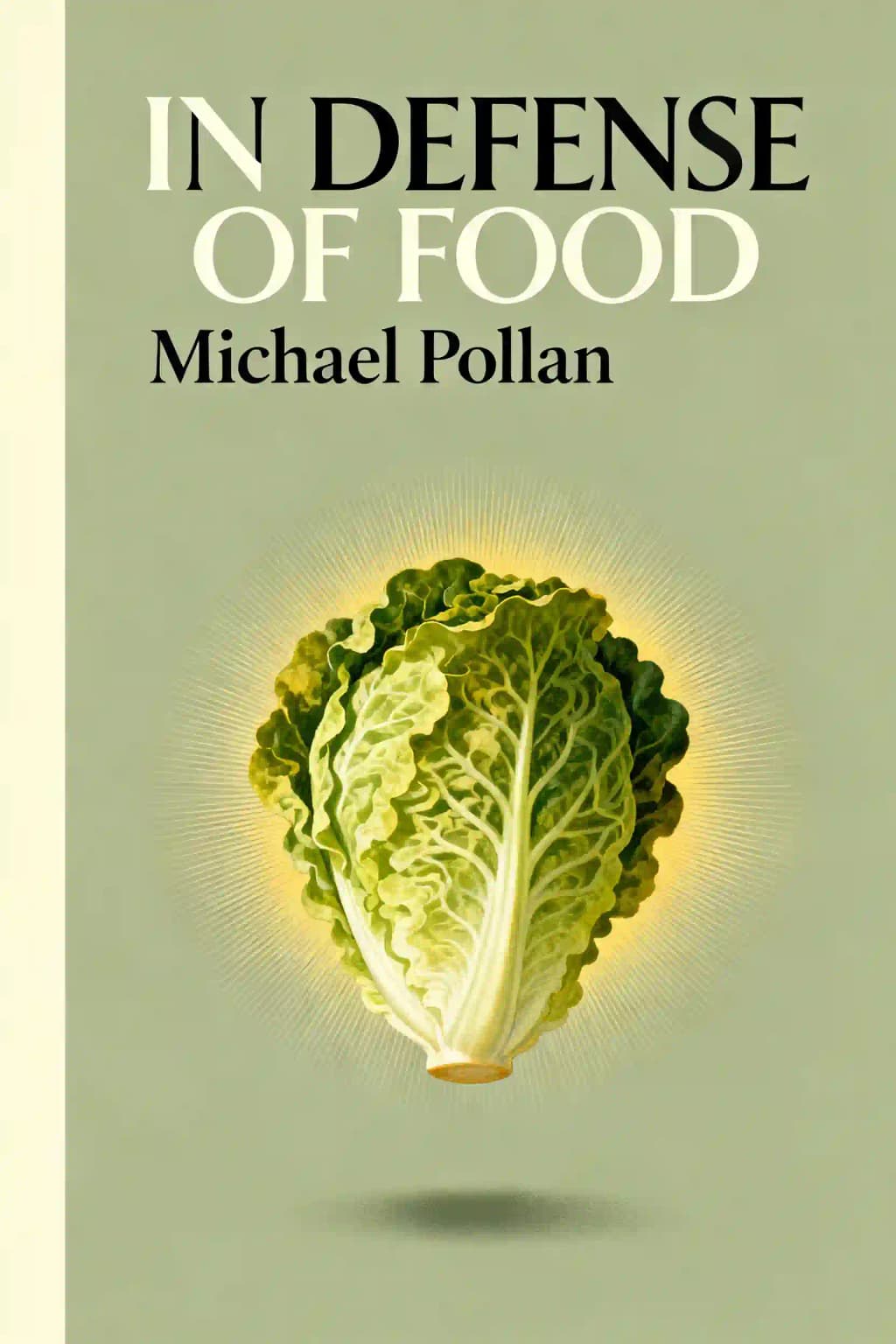
In a world drowning in nutritional advice, Michael Pollan's manifesto cuts through the noise with startling clarity: "Eat food. Not too much. Mostly plants." This deceptively simple seven-word prescription has resonated with millions seeking escape from our national eating disorder. Since its 2008 publication, "In Defense of Food" has become a cultural touchstone, influencing everyone from Michelle Obama's White House garden initiative to Silicon Valley's wellness obsession. Celebrities like Gwyneth Paltrow cite it as inspiration for their own food philosophies, while its principles have quietly infiltrated school lunch programs nationwide. What makes this book revolutionary isn't just its critique of nutritional science, but its radical proposition that traditional food cultures might understand more about healthy eating than all our modern expertise combined. In a nation where the average supermarket contains 45,000 items-most of which our great-grandmothers wouldn't recognize as food-Pollan's call to return to real eating feels both revolutionary and deeply intuitive.
Capítulo 2
The Rise of Nutritionism: How Food Became a Science Project
The 1980s marked a profound shift in American supermarkets. Suddenly, food wasn't just food anymore-it had become a collection of nutrients. Scientific-sounding terms like "cholesterol," "fiber," and "saturated fat" began dominating packaging, suggesting these invisible substances were more important than the foods containing them. This transformation wasn't accidental but represented the triumph of what Pollan calls "nutritionism"-an ideology reducing food to its chemical components.
The roots of this shift trace back to 1977, when Senator McGovern's committee attempted to address America's rising diet-related diseases. Their straightforward initial advice-"reduce consumption of meat"-faced fierce industry backlash, forcing a retreat to the more scientific-sounding language of "reducing saturated fat intake." This subtle change marked a momentous shift: henceforth, dietary guidelines would speak not of whole foods but of nutrients-entities without powerful lobbies in Washington.
By 1982, the National Academy of Sciences had cemented this approach in their report on diet and cancer, focusing on nutrients rather than foods despite objections from panel members who noted the science actually pointed to conclusions about whole foods, not isolated components. Thus began what Pollan calls "the Age of Nutritionism," where terms like polyunsaturated, antioxidants, and phytochemicals colonized the cultural space previously occupied by food itself.
Nutritionism isn't nutrition science but an ideology-a set of shared but unexamined assumptions about how we understand food. Its core premise holds that nutrients, not foods, are what matter. From this flow several other assumptions: that invisible nutrients require expert interpretation; that eating's primary purpose is maintaining physical health; and that scientific authorities must mediate our relationship with food.
This framework suggests the visible world of foods isn't what truly matters-we need a priesthood of experts to guide us toward dietary salvation. Yet cultures that regard food primarily as a source of pleasure, identity, or social connection-rather than just health-often demonstrate better outcomes than Americans with our scientific approach, raising serious questions about whether nutritionism actually benefits our wellbeing.
Capítulo 3
The Perfect Marriage: How Nutritionism Serves Industry
No idea could better serve processed food manufacturers than nutritionism. By suggesting that scientifically engineered foods can be more nutritious than natural ones, it provides the perfect justification for food processing. Margarine exemplifies this perfectly-starting as a cheap butter substitute before being repeatedly reengineered to align with each nutritional trend, adding vitamins here, removing trans fats there, marching on "unfazed and apparently unkillable" despite causing untold health problems.
The path to this processed food paradise required dismantling regulatory obstacles. In 1973, the food industry finally succeeded in overturning the 1938 Food, Drug and Cosmetic Act's "imitation rule," which had required any food resembling a standardized product but not complying with standards to be labeled "imitation"-a term consumers rightfully distrusted. The FDA's new rule allowed products to avoid the dreaded "i-word" if they weren't "nutritionally inferior" to the foods they impersonated.
This regulatory change threw open the door to countless fake low-fat products, with natural ingredients replaced by hydrogenated oils, guar gum, corn starch and other substitutes. The government had essentially redefined food as merely the sum of its recognized nutrients, repositioning adulteration as food science.
Following the 1977 Dietary Goals and the 1982 National Academy report on diet and cancer, the food industry launched into reengineering thousands of popular products. A golden age for food science dawned as "hyphens sprouted like dandelions" in supermarket aisles: low-fat, no-cholesterol, high-fiber. Ingredient labels on formerly simple foods like mayonnaise and yogurt expanded dramatically with additives that earlier generations would have called adulterants.
The industry's transformative reach extended even to animals themselves. Scientists bred leaner pigs and cattle to accommodate lipophobic consumers, repositioning pork as "the new white meat." Egg producers cleverly redeemed their product by feeding flaxseed to hens to boost omega-3 levels in yolks, while genetic engineers worked to introduce fish fats into hamburgers and hot dogs.
Whole foods faced a distinct disadvantage in this new landscape. Unable to "change their nutritional stripes" as readily as processed foods, items like avocados and bananas rose and fell with each nutritional fad while processed competitors simply reformulated. When the Atkins storm hit in 2003, bread and pasta quickly got redesigned with fewer carbs and more protein, while "poor unreconstructed potatoes and carrots were left out in the carbohydrate cold."
Capítulo 4
The Great Fat Experiment: Three Decades of Nutritional Confusion
The thirty-year campaign against dietary fat stands as the largest experiment in applied nutritionism in history. And now we have good reason to believe it not only ruined countless meals but possibly made our health worse.
The scientific retreat from the lipid hypothesis has been quiet but profound. Harvard researchers have systematically dismantled its foundations: few studies have found meaningful links between saturated fat and heart disease; evidence for polyunsaturated fats reducing risk is "slim to nil"; dietary cholesterol shows only "weak and nonsignificant" association with heart disease; and even the demonized egg shows little evidence of harm.
Ironically, the one fat conclusively linked to heart disease is trans fat-precisely what nutritionists encouraged us to consume by switching from butter to margarine. Trans fat raises bad cholesterol, lowers good cholesterol, increases triglycerides, promotes inflammation, and may cause insulin resistance-making it twice as harmful as saturated fat.
The lipid hypothesis never had solid foundations. During the early 20th century when heart disease rates rose, Americans were actually reducing animal fat consumption while increasing vegetable oils. The wartime decline in heart disease could be attributed to rationing of sugar and gasoline (forcing more exercise) rather than just meat and butter.
When McGovern's committee adopted national dietary goals in 1977, they did so despite controversy and an AMA warning about "potential for harmful effects." The attitude was simply "why not?"-overlooking how dramatically changing fat consumption might affect human physiology, including the brain (60% fat) and cell membranes. Thus began one of the most ambitious nutritional experiments in history, as authority over the national menu shifted from tradition and culture to "science"-or more accurately, nutritionism.
Americans did change their eating habits after the new guidelines, replacing fats with carbs at the bottom of the food pyramid. The industrial food supply reformulated everything to be low-fat, giving us Snackwell's and high-fructose corn syrup products galore. Ironically, Americans got remarkably fat on this new low-fat diet-many date the obesity and diabetes epidemic to the late 1970s when we began carb-binging to avoid fat.
While fat as a percentage of calories declined (from 42% in 1977 to 34% in 1995), we never actually reduced our total fat consumption-we just added more carbs to our plates. We did shift from red meat to white and from saturated to polyunsaturated fats as instructed. The simplified message became "eat more low-fat foods," which served everyone's interests: consumers got permission to eat processed foods, manufacturers created profitable new products, and nutrition scientists remained essential experts.
Capítulo 5
Bad Science: The Inherent Limitations of Nutritional Research
To understand nutrition science's failures regarding dietary fat and health, we must recognize that nutrition science itself faces inherent challenges. The scientific tools available are poorly suited to understanding complex systems like food and diet. The reductionist approach-studying nutrients in isolation-removes them from their food context, foods from diet context, and diets from lifestyle context.
Scientists study nutrients individually because science requires isolating variables, but even the simplest food contains countless compounds in dynamic relationships. This reductionist approach encourages a mechanistic view of nutrition that fails to account for individual differences in metabolism, genetic makeup, and gut ecology.
People don't eat nutrients; they eat foods, which behave differently than their component parts. Antioxidants that work in test tubes often fail as supplements, possibly because they need other food components to function properly. A single leaf of thyme contains dozens of complex compounds that interact in ways we barely understand.
Nutrition science also suffers from methodological problems: the zero-sum relationship between foods (eating more of one thing means eating less of another), the difficulty designing controlled trials when removing one nutrient requires substituting another, and unavoidable confounding factors like lifestyle differences between populations. Whether studying Mediterranean diets or supplement takers, researchers struggle to isolate dietary factors from other variables.
The three main research methods-case-control studies, cohort studies, and intervention trials-all have serious flaws. Case-control studies are particularly problematic as patients often change diets after diagnosis or blame their illness on whatever nutrient is currently vilified. Nutritionism's emphasis on personal responsibility ignores that social class is actually a stronger predictor of heart disease than diet or exercise.
When McGovern's committee adopted national dietary goals in 1977, they did so despite controversy and an AMA warning about "potential for harmful effects." The attitude was simply "why not?"-overlooking how dramatically changing fat consumption might affect human physiology, including the brain (60% fat) and cell membranes. Thus began one of the most ambitious nutritional experiments in history, as authority over the national menu shifted from tradition and culture to "science"-or more accurately, nutritionism.
Capítulo 6
The Western Diet and the Diseases of Civilization
In 1982, ten overweight, diabetic Aborigines from Western Australia participated in an experiment where they temporarily returned to their traditional hunter-gatherer lifestyle. After seven weeks in the bush eating only foods they hunted and gathered-seafood, game, insects, and wild plants-rather than their settlement diet of flour, sugar, and processed foods, their health dramatically improved. They lost weight, their blood pressure dropped, and their metabolic abnormalities either improved significantly or completely normalized.
This experiment demonstrates how quickly some effects of the Western diet can be reversed. Similar results have been seen in comparable experiments with Native Americans and native Hawaiians. With two-thirds of Americans overweight or obese, a quarter having metabolic syndrome, and diabetes rates rising sharply since 1990, the question becomes: to what extent are we all like these Aborigines-biologically mismatched with our modern Western diet?
Despite numerous large-scale studies on diet and health, researchers typically only fiddle with individual nutrients while leaving the overall Western dietary pattern untouched. Yet what we do know clearly is that people eating the Western diet suffer substantially higher rates of cancer, cardiovascular disease, diabetes and obesity than those eating traditional diets. When people adopt Western eating patterns, these "diseases of civilization" soon follow.
This pattern was first documented in the early 20th century when medical professionals working with native populations worldwide noted the near absence of chronic diseases common in the West. Pioneers like Albert Schweitzer, Denis Burkitt, Robert McCarrison and dentist Weston Price observed that Western diseases appeared in these populations only after they began eating "more after the manner of the whites," particularly processed foods like refined flour and sugar.
Some dismissed these observations, arguing the differences were genetic or simply the result of longer lifespans in developed countries. But immigrants quickly acquired Western diseases upon moving to Western countries, and when adjusted for age, rates of chronic diseases are significantly higher today than in 1900.
Capítulo 7
From Whole Foods to Refined: The Industrialization of Eating
The industrialization of food processing marked a pivotal shift in human nutrition, dramatically accelerating with the introduction of roller mills around 1870, which replaced traditional stone grinding throughout Europe and America by 1880. Unlike stone mills that merely crushed wheat germ and released its nutritious oils, these new rollers could completely remove the germ and bran, producing snowy-white flour with extended shelf life that could be transported great distances. This technological advance created one of the first modern industrial foods, marketed for its pristine appearance and convenience rather than nutritional value. The new milling process removed up to 80% of the wheat's nutrients, including vital B vitamins, vitamin E, and essential minerals.
The consequences were severe and far-reaching. Nutritionally worthless refined grains led to devastating epidemics of pellagra and beriberi from B vitamin deficiencies, particularly affecting poor communities in the American South and Asia. Though fortification with synthetic vitamins in the 1930s addressed these obvious deficiency diseases, scientists later discovered that refining carbohydrates contributes to a host of chronic conditions like diabetes, heart disease, and cancer. A landmark 2003 study in the American Journal of Clinical Nutrition found that whole grains provide health benefits beyond what their individual nutrients can explain, suggesting "food synergy" where the whole food exceeds the sum of its parts. This research highlighted the importance of fiber, phytochemicals, and the natural matrix of nutrients working together.
The industrialization of our diet has flooded our bodies with glucose and fructose at unprecedented rates. Since 1909, calories from sugar have increased from 13% to 20% of the American diet, with high fructose corn syrup becoming particularly prevalent after its introduction in the 1970s. Combined with refined carbohydrates (another 40%), Americans now consume a diet that is at least half sugars-calories providing virtually nothing but energy. This "national experiment in mainlining glucose" overwhelms insulin processing, contributing to diabetes and metabolic syndrome, with newer populations experiencing more severe impacts than those with longer exposure to refined foods. Native American communities, for example, show particularly high rates of diabetes after transitioning from traditional diets to processed foods.
The industrialization of food has systematically simplified our diet at every level, creating a cascade of nutritional consequences. It begins in the soil, where chemical fertilizers have reduced complex biological systems to a simple NPK (nitrogen, phosphorus, potassium) formula, destroying vital soil microbes and mycorrhizal fungi that help plants absorb nutrients. Plants grown in chemically simplified soil become nutritionally diminished-USDA data confirms declining nutrient content in American produce since the widespread adoption of chemical fertilizers in the 1950s. For instance, modern broccoli contains significantly less calcium and magnesium than it did 50 years ago, while modern wheat varieties contain about 30-40% less protein than heritage varieties. This nutritional decline extends throughout the food chain, affecting the quality of both plant and animal products in our diet.
Capítulo 8
From Leaves to Seeds: The Great Dietary Shift
Our food system has shifted dramatically from leaves to seeds-grains and legumes that efficiently convert sunlight into macronutrients and store well as commodities. But this shift has serious health implications, particularly regarding essential fatty acids.
Omega-3s play a crucial role in heart health by regulating rhythm, preventing arrhythmias, and dampening inflammation. They increase cell membrane permeability and metabolism rates, potentially protecting against insulin resistance, diabetes, and obesity. In contrast, omega-6s promote inflammation, blood clotting, and slower metabolism.
Population studies have linked omega-3 deficiency not just to cardiovascular disease but also to rising rates of depression, suicide, homicide, and learning disabilities. Babies fed formula with omega-3s score higher on mental development tests.
The Western diet's unprecedented proportion of omega-6s (9% of American calories come from linoleic acid alone) may contribute to widespread inflammation disorders. Joseph Hibbeln suggests our massive spending on anti-inflammatory drugs essentially counteracts excessive omega-6 consumption.
This shift from leaves to seeds affects far more than fatty acid ratios-it explains the flood of refined carbohydrates, the drought of micronutrients, and our caloric surplus. It's nearly a comprehensive explanation for the Western diet's health impacts.
While industrial agriculture has dramatically increased food yields, this gain in quantity has compromised quality. Nutrient content in crops has declined significantly since the 1950s-vitamin C down 20%, iron 15%, riboflavin 38%, and calcium 16%. Today you'd need three modern apples to get the iron from one 1940 apple.
This nutritional inflation stems from two causes: industrial farming methods and crop selection focused on yield rather than nutrition. Plants grown with chemical fertilizers develop faster with smaller root systems, giving them less opportunity to accumulate nutrients beyond nitrogen, phosphorus and potassium. Organic crops, forced to defend themselves without synthetic pesticides, produce 10-50% more beneficial phytochemicals.
We've created a disturbing paradox: humans who are simultaneously overfed and undernourished. Even subtle micronutrient deficiencies can damage DNA, potentially causing cancer. Bruce Ames hypothesizes that bodies starved of essential nutrients keep eating in a futile quest to obtain them-creating a destructive feedback loop that's highly profitable for food companies.
Capítulo 9
Not Just What, But How: The Cultural Dimensions of Eating
How a culture eats may matter as much as what it eats. The French paradox isn't just about nutrients but about an entirely different relationship with food. The French eat small portions, rarely snack, share meals with others, and spend more time eating than Americans do. Paul Rozin's research confirms that the French consume smaller portions but spend more time enjoying them, extracting more food experience from fewer calories-possibly explaining why they're slimmer and healthier despite their seemingly indulgent diet.
The French case suggests a trade-off between quantity and quality in eating. While America's food system has historically focused on quantity and price, better food-whether measured by taste or nutritional quality-costs more because it's grown with more care. Those who can afford higher-quality food should buy it, benefiting not only their own health but also the health of food producers and the environment. An important benefit of paying more for better food: you're likely to eat less of it. Calorie restriction has repeatedly been shown to slow aging and prolong lifespan in animals, possibly the strongest link between diet change and cancer prevention.
The concept of "the meal" needs defending in America, where traditional breakfast, lunch, and dinner have been joined by a fourth untitled "eating occasion" that lasts all day. About a fifth of American eating now happens in cars. The family dinner, while still claimed in surveys, has morphed into individualized microwaving sessions where family members eat different foods at different times. Meals serve crucial social functions: civilizing children, teaching manners, modeling eating behaviors, and developing culture itself.
Americans increasingly eat in solitude, which tends to increase consumption. For people prone to overeating, communal meals limit consumption, as we're less likely to overindulge when others are watching. This explains why food marketing encourages eating in front of the TV or in the car. Beyond regulating appetite, shared meals elevate eating from mere fueling to a ritual of family and community-from biology to culture.
Capítulo 10
Escaping the Western Diet: Practical Food Wisdom
Eating slowly isn't just about recognizing fullness, but embracing the "Slow Food" philosophy-the Italian-born movement defending "quiet material pleasure" against "Fast Life." Founded in response to American fast food arriving in Rome in the 1980s, Slow Food seeks to reacquaint people with the satisfactions of well-grown and well-prepared food enjoyed at leisurely communal meals. At its most thoughtful, it offers a coherent protest against the Western diet and increasingly desperate Western way of life, elevating quality over quantity by cultivating taste and rebuilding relationships between producers and consumers.
Fast food reflects American priorities: success-centered lives, long work hours, minimal vacation time, and weak social safety nets. Slow Food suggests that reforming how we eat three times daily might be the wedge that cracks the whole edifice of our hurried lifestyle. Eating slowly means eating with knowledge rather than ignorance, with gratitude rather than indifference, and with deliberate freedom rather than compulsion.
Cooking and gardening are perhaps the most powerful ways to escape the culture of fast food and its implicit values that food should be fast, cheap and easy. Even a modest garden (like the author's 20x10 foot plot) can yield an astonishing amount of produce. Gardening contributes to health before you even eat, turning pointless exercise into purposeful labor that connects both body and mind to food production. It teaches you about plant varieties, microclimates, and pest management while reminding us of our ancient evolutionary bargain with these clever domestic species.
The garden's produce arrives in the kitchen alive, without ingredient labels or health claims, communicating directly through scent, color and taste. When cooking from scratch with fresh ingredients, you enjoy complete knowledge about your food that no amount of supermarket label-reading could match. These acts are subversive because they reclaim control from food industry and nutritionism-the belief that food is primarily about nutrients so complex that only experts can supply them. Growing and cooking reveal food as a web of relationships among living beings, ultimately rooted in soil and nourished by sunlight, where health is simply given.
Traditional food cultures-whether Japanese, Mexican, Indian, or Mediterranean-generally produce healthier people than Western diets. Any traditional diet likely works because it represents accumulated wisdom through cultural evolution. These diets have two dimensions: the foods themselves and how they're eaten. Traditional cuisines reflect local conditions and needs, like spicier foods in warmer climates with antimicrobial properties. Many traditional practices (like combining corn with beans in Latin America or fermenting soybeans in Asia) demonstrate ingenious nutritional wisdom that modern science only later confirms.
The whole dietary pattern matters more than any single "magic bullet" ingredient-attempts to isolate the X-factor in Mediterranean or French diets typically fail because these diets work as integrated systems, not collections of nutrients. Researchers have spent oceans of ink trying to identify the specific component that makes Mediterranean or French diets healthy-is it olive oil? Red wine? Wild greens? But when single foods are extracted from successful dietary patterns, they usually fail to explain the health benefits.