Time management feels harder when you're just busy
Stop drowning in busywork and constant app-switching. Learn how to reclaim your focus with simple frameworks that prioritize progress over perfection.

Best quote from Time management feels harder when you're just busy
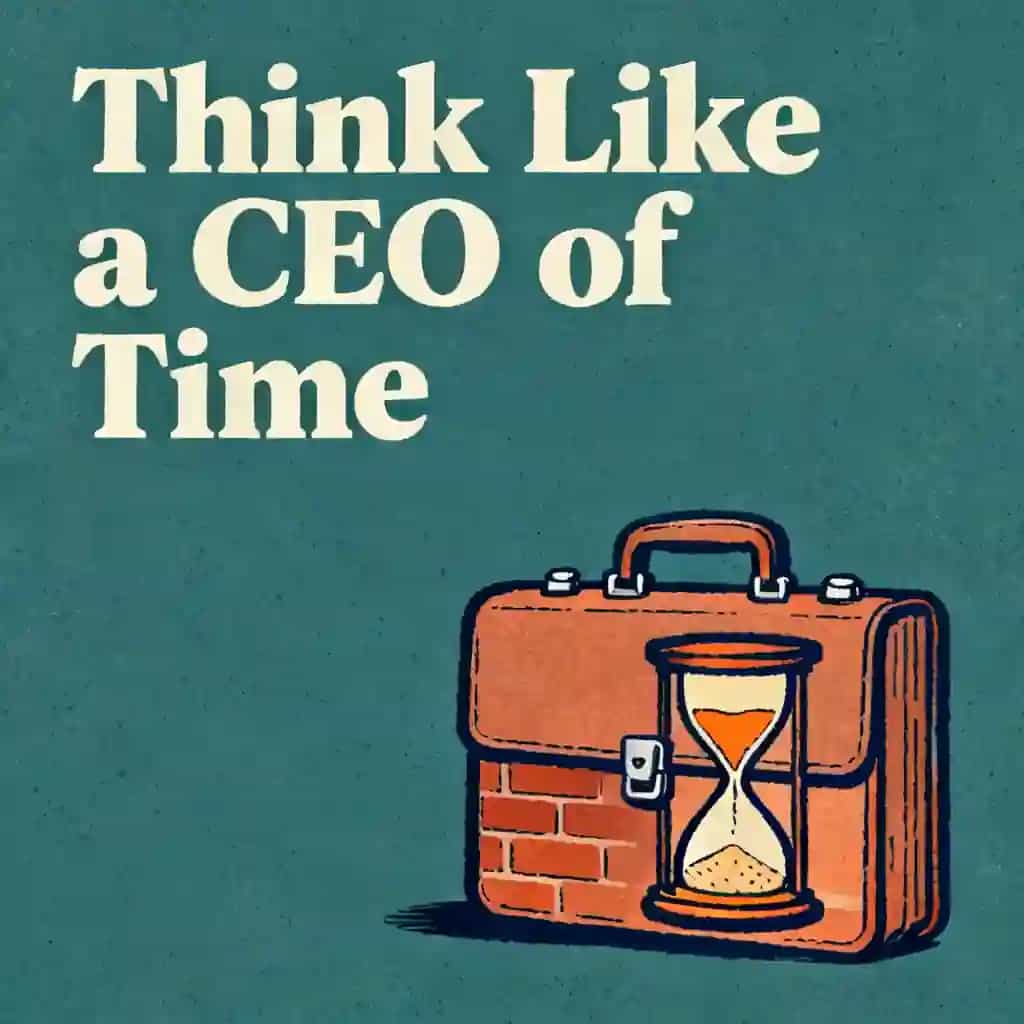
We think time management is about fitting more in, but it’s actually about keeping the wrong things out. It’s about moving from a reactive state—where the world dictates your time—to a proactive state where you dictate it.
Generated by Ken
Time management

Frequently Asked Questions
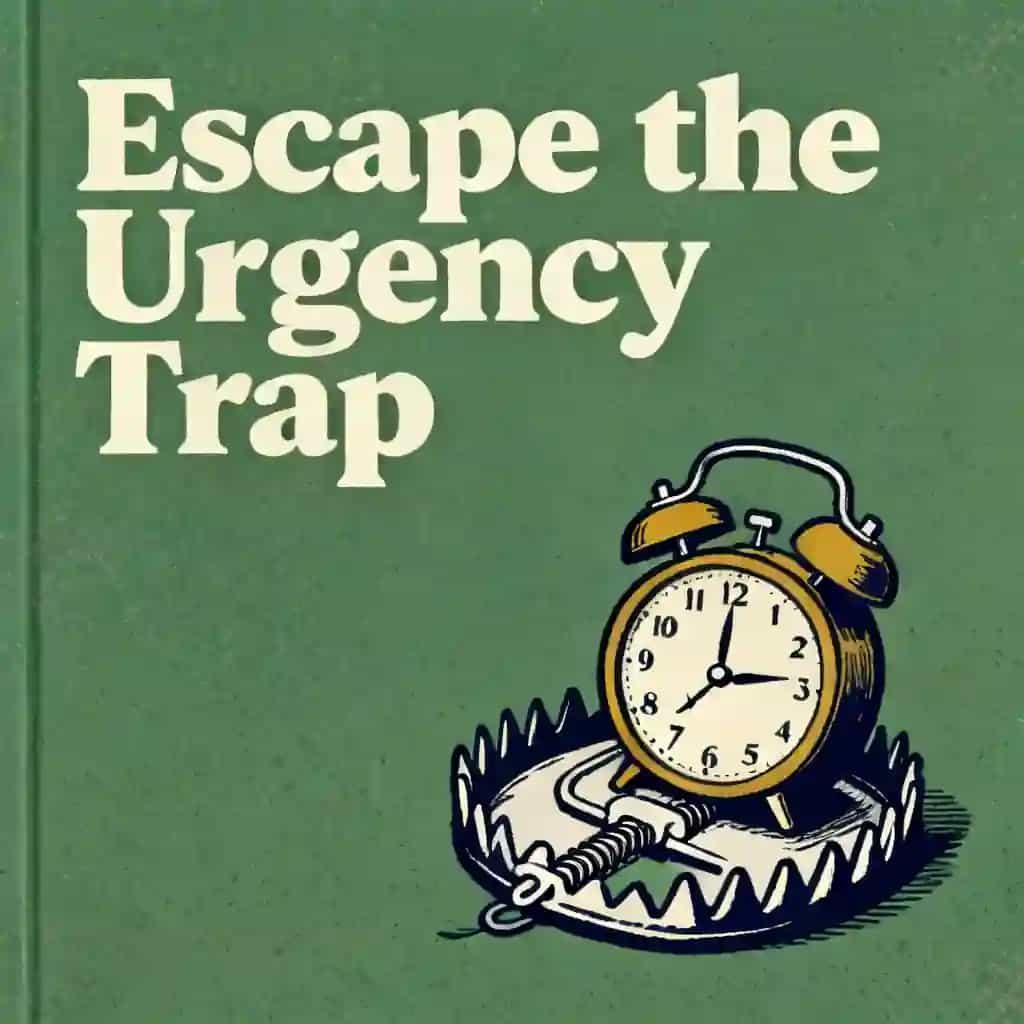
According to the script, approximately 60% of a knowledge worker's time is spent on "work about work," such as switching between apps, responding to notifications, and attending unnecessary meetings. This creates a "procrastination pitfall" where individuals spend their energy in the "Urgent and Not Important" quadrant of the Eisenhower Matrix. This results in a dopamine hit from checking off easy boxes while failing to move the needle on meaningful, long-term goals.
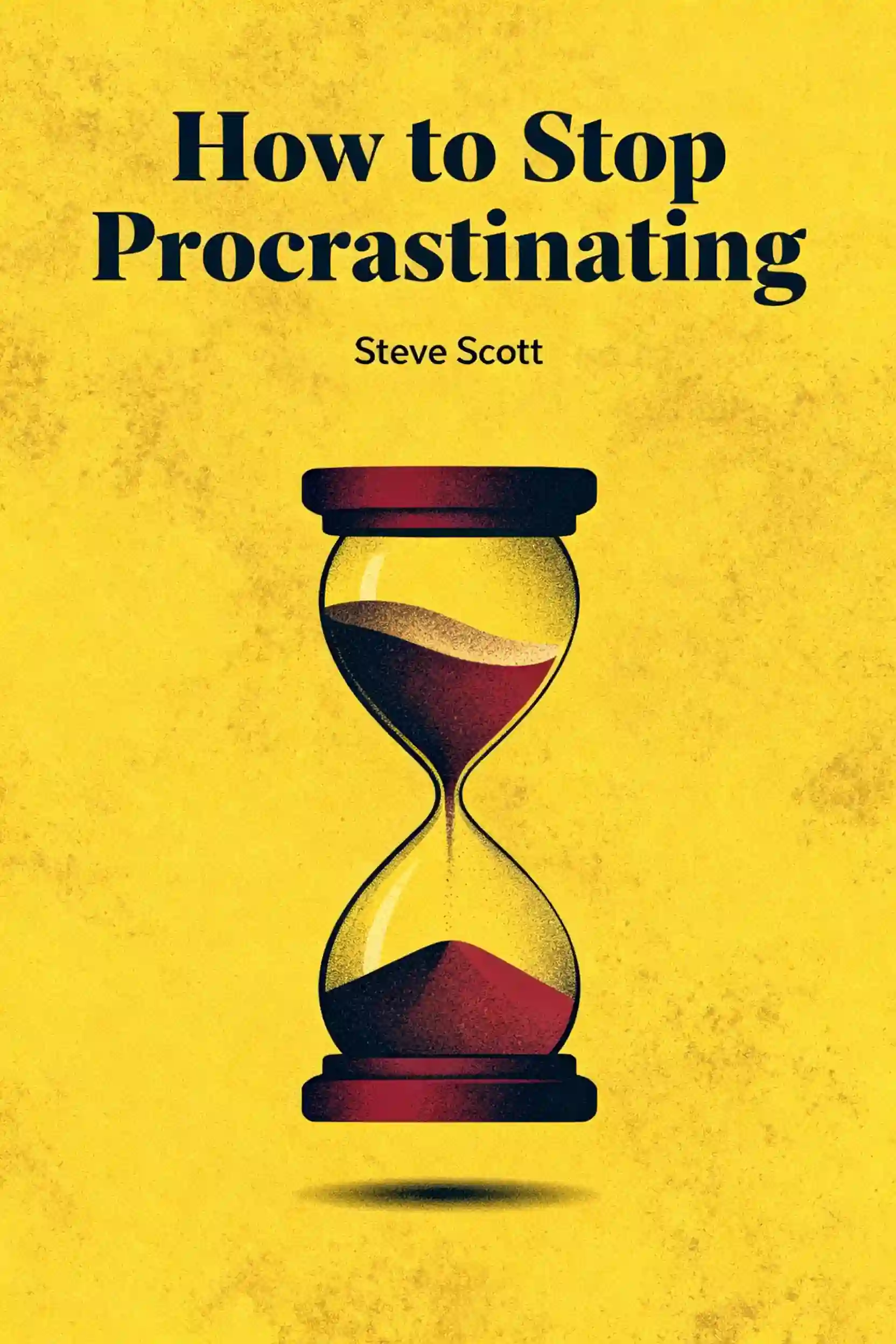
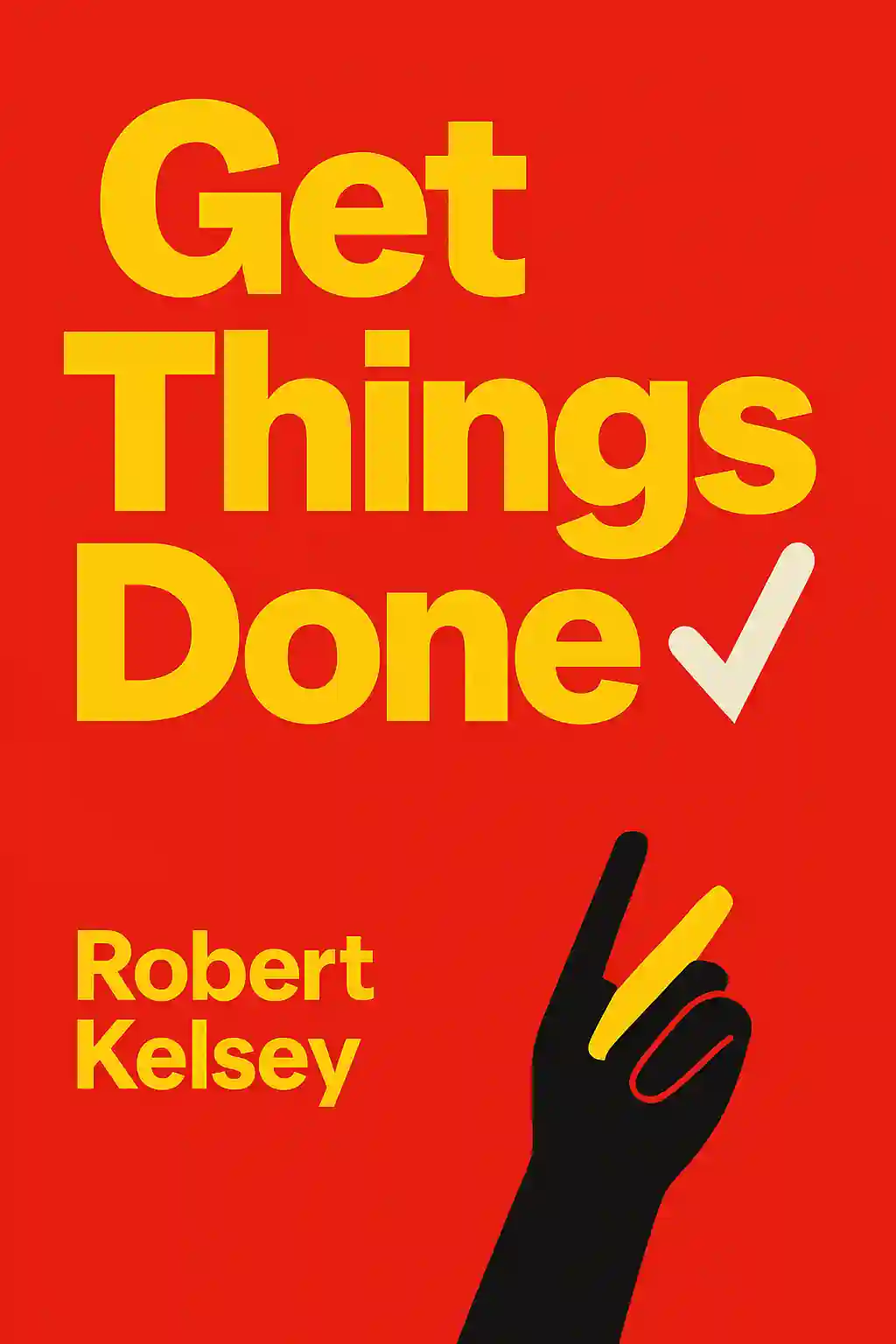
Many people struggle with procrastination because they list outcomes, like "Project X" or "Clean the garage," which the brain perceives as too large and daunting. A "next action" is a concrete, bite-sized step that lowers the barrier to entry, such as "Buy heavy-duty trash bags." By breaking a goal down into these sequential, five-minute wins, you regain a sense of control and reduce the friction required to get started.
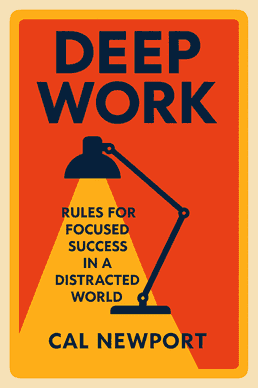
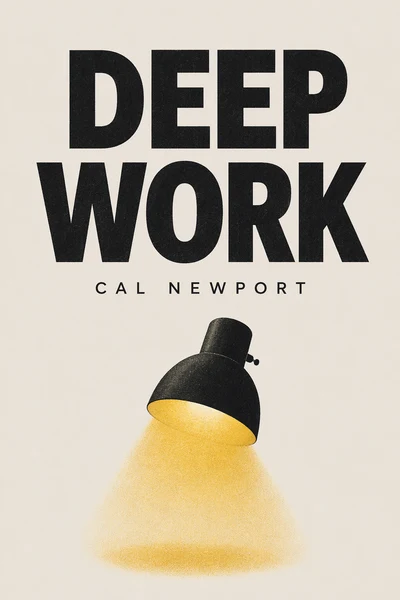
The script highlights Cal Newport’s concept of "Deep Work," noting that every time you check a notification, it takes about twenty minutes to return to a peak state of "flow." To combat this, you should schedule dedicated blocks for deep work where you are completely disconnected from the internet and your phone. Additionally, using "batching"—checking emails only three times a day rather than as they arrive—helps protect your cognitive energy from the "tax" of constant task-switching.
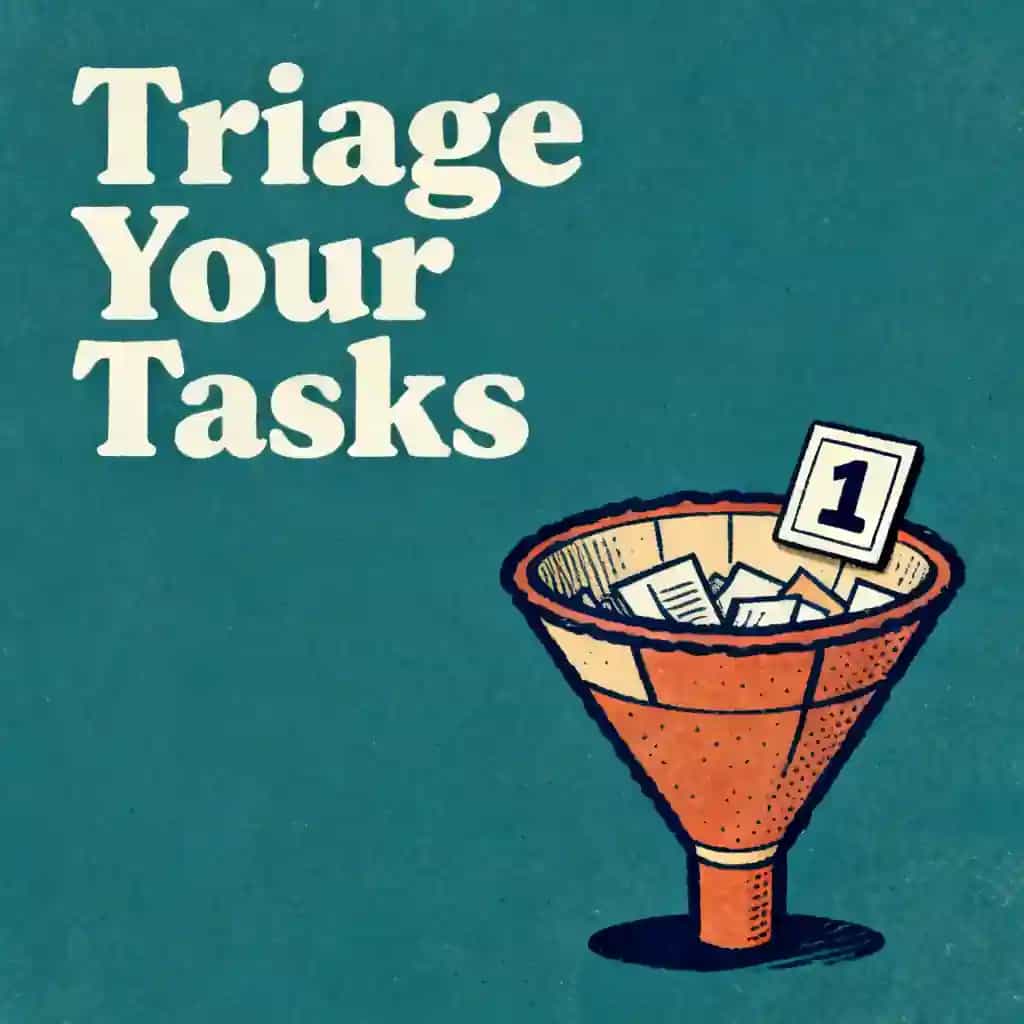
When a list feels physically too long for the day, the script suggests using "Short-Termism" by focusing only on the next four hours and identifying a "Must-Do" for that window. You can also apply the "Rule of Three," selecting only three items that must be accomplished to feel successful. If you are still struggling to start a specific task, the "Five-Minute Rule" can help: commit to working on the task for just five minutes to bypass initial resistance and trigger the "Zeigarnik Effect," which makes the brain want to finish what it has started.
Sustainability relies on "working the system" rather than relying on occasional heroic efforts or raw willpower. Key components include a "Weekly Review" to zoom out and prep for the coming days, and "Environmental Design" to make good habits easy and bad habits hard. By treating your schedule as a collection of sub-systems—like prepping your priority list the night before—you create a frictionless environment that allows you to be 100% "on" during work and 100% "off" during personal time.
From Columbia University alumni built in San Francisco
"Instead of endless scrolling, I just hit play on BeFreed. It saves me so much time."


"I never knew where to start with nonfiction—BeFreed’s book lists turned into podcasts gave me a clear path."


"Perfect balance between learning and entertainment. Finished ‘Thinking, Fast and Slow’ on my commute this week."
"Crazy how much I learned while walking the dog. BeFreed = small habits → big gains."
"Reading used to feel like a chore. Now it’s just part of my lifestyle."

"Feels effortless compared to reading. I’ve finished 6 books this month already."
"BeFreed turned my guilty doomscrolling into something that feels productive and inspiring."

"BeFreed turned my commute into learning time. 20-min podcasts are perfect for finishing books I never had time for."
"BeFreed replaced my podcast queue. Imagine Spotify for books — that’s it. 🙌"

"It is great for me to learn something from the book without reading it."
"The themed book list podcasts help me connect ideas across authors—like a guided audio journey."
"Makes me feel smarter every time before going to work"
 Ask ChatGPT
 Ask Claude
From Columbia University alumni built in San Francisco
"Instead of endless scrolling, I just hit play on BeFreed. It saves me so much time."
"I never knew where to start with nonfiction—BeFreed’s book lists turned into podcasts gave me a clear path."
"Perfect balance between learning and entertainment. Finished ‘Thinking, Fast and Slow’ on my commute this week."
"Crazy how much I learned while walking the dog. BeFreed = small habits → big gains."
"Reading used to feel like a chore. Now it’s just part of my lifestyle."
"Feels effortless compared to reading. I’ve finished 6 books this month already."
"BeFreed turned my guilty doomscrolling into something that feels productive and inspiring."
"BeFreed turned my commute into learning time. 20-min podcasts are perfect for finishing books I never had time for."
"BeFreed replaced my podcast queue. Imagine Spotify for books — that’s it. 🙌"
"It is great for me to learn something from the book without reading it."
"The themed book list podcasts help me connect ideas across authors—like a guided audio journey."
"Makes me feel smarter every time before going to work"
"Instead of endless scrolling, I just hit play on BeFreed. It saves me so much time."
"I never knew where to start with nonfiction—BeFreed’s book lists turned into podcasts gave me a clear path."
"Perfect balance between learning and entertainment. Finished ‘Thinking, Fast and Slow’ on my commute this week."
"Crazy how much I learned while walking the dog. BeFreed = small habits → big gains."
"Reading used to feel like a chore. Now it’s just part of my lifestyle."
"Feels effortless compared to reading. I’ve finished 6 books this month already."
"BeFreed turned my guilty doomscrolling into something that feels productive and inspiring."
"BeFreed turned my commute into learning time. 20-min podcasts are perfect for finishing books I never had time for."
"BeFreed replaced my podcast queue. Imagine Spotify for books — that’s it. 🙌"
"It is great for me to learn something from the book without reading it."
"The themed book list podcasts help me connect ideas across authors—like a guided audio journey."
"Makes me feel smarter every time before going to work"
"Instead of endless scrolling, I just hit play on BeFreed. It saves me so much time."
"I never knew where to start with nonfiction—BeFreed’s book lists turned into podcasts gave me a clear path."
"Perfect balance between learning and entertainment. Finished ‘Thinking, Fast and Slow’ on my commute this week."
"Crazy how much I learned while walking the dog. BeFreed = small habits → big gains."
"Reading used to feel like a chore. Now it’s just part of my lifestyle."
"Feels effortless compared to reading. I’ve finished 6 books this month already."
"BeFreed turned my guilty doomscrolling into something that feels productive and inspiring."
"BeFreed turned my commute into learning time. 20-min podcasts are perfect for finishing books I never had time for."
"BeFreed replaced my podcast queue. Imagine Spotify for books — that’s it. 🙌"
"It is great for me to learn something from the book without reading it."
"The themed book list podcasts help me connect ideas across authors—like a guided audio journey."
"Makes me feel smarter every time before going to work"


![[make-time-by-jake-knapp:c0000] Make Time p1-1](/_next/image?url=https%3A%2F%2Fd1y2du6z1jfm9e.cloudfront.net%2Fassets%2Fpodcast%2Fyellow.png&w=1024&q=50)
![[make-time-by-jake-knapp:c0001] Make Time p1-1](/_next/image?url=https%3A%2F%2Fd1y2du6z1jfm9e.cloudfront.net%2Fassets%2Fpodcast%2Fblue.png&w=1024&q=50)
![[make-time-by-jake-knapp:c0002] Make Time p1-1](/_next/image?url=https%3A%2F%2Fd1y2du6z1jfm9e.cloudfront.net%2Fassets%2Fpodcast%2Fgreen.png&w=1024&q=50)