The Dopamine Trap: Why We Can't Stop Scrolling
How To Stop Mindless Scrolling: episode overview
In this BeFreed audio guide, we explore the behavioral patterns behind our daily digital habits. You will learn how the brain's reward system interacts with modern apps and discover practical, non-clinical strategies to regain control over your screen time. This episode focuses on actionable environmental design to help you build a healthier relationship with your devices.
Create Your Podcast in a Click
Generated by Freedee_BE9DDE1A
Input question
How can I control my dopamine to stop mindlessly scrolling on my phone?
Host voices

What you'll learn about managing screen time
- 1
The Screen Siren's Call
 00:0000:00
Nia: Welcome to the BeFreed Podcast, where we distill the world's best sources into personalized insights you can actually finish. I'm Nia, and today we're diving into a topic that literally touches all of us-usually about 150 times a day! Jackson: And I'm Jackson. We're exploring the question: "Why Are We All So Addicted To Our Screens?" Because let's be honest-how many of us have picked up our phones to check one thing and suddenly realized 30 minutes have vanished into the TikTok void? Nia: Oh my god, I did that last night! I just wanted to check the weather and somehow ended up watching videos of people renovating vans. It's like my brain got hijacked. Jackson: That's exactly what we're unpacking today. We'll connect neuroscience with product design, explore what researchers like Stanford psychiatrist Anna Lembke and attention expert Gloria Mark have discovered, and give you practical tools to regain control.
- 2
Your Brain's "Wanting" Machine
Nia: So Jackson, what's actually happening in our brains when we get stuck in these scroll loops? Because it feels almost... automatic? Jackson: It's fascinating-neuroscientists like Wolfram Schultz discovered that dopamine neurons don't just signal pleasure; they track the difference between what you expected and what you got. It's called "reward prediction error." Nia: Wait, so it's not just about feeling good? Jackson: Exactly! Kent Berridge and Terry Robinson showed there's a split between "wanting" and "liking." You can strongly want something-like checking Instagram-even if the actual enjoyment is minimal. That's why we keep opening apps we don't even enjoy that much. Nia: That explains so much! I've definitely caught myself thinking, "Why am I even on this app right now?" But I keep scrolling anyway. Jackson: Andrew Huberman calls this the "peaks and baselines" problem. When we get those little dopamine hits from notifications or new content, our baseline can actually drop afterward. Then we feel like we need another hit just to feel normal again. Nia: So it's like the brain is saying, "Just one more scroll and I'll feel satisfied"-but that satisfaction never really comes? Jackson: Right! And when technology arranges unpredictable rewards in a never-ending feed, our brains keep that "surprise engine" running. That's not just social media-it's email refresh, news sites, everything.
- 3
The Persuasive Design Playbook
Nia: So our brains are vulnerable to this stuff naturally. But are tech companies deliberately exploiting this? Jackson: It's not quite a conspiracy, but there is a playbook. Nir Eyal's book "Hooked" describes it as: trigger -> action -> variable reward -> investment. The "variable" part taps into that dopamine system we talked about, and "investment"-like maintaining a streak-makes it harder to quit. Nia: I've noticed how apps remove all friction. Like, infinite scroll was designed to keep you from having that moment where you might stop and think, "Do I really want to keep going?" Jackson: Exactly! Aza Raskin, who actually invented infinite scroll in 2006, later said he regretted how easily it could be used to keep people online: "If you don't give your brain time to catch up with your impulses, you just keep scrolling." Nia: That's wild coming from the inventor himself! And I've heard Tristan Harris talk about this "race for attention" too. Jackson: Yes! As a former Google design ethicist, he's shown how design details like notifications and autoplay pull on our psychology. The goal isn't to make one evil product-it's that thousands of designers are all optimizing for the same metrics: time spent, clicks, and how often you return. Nia: And sometimes tech insiders admit it, right? I remember reading that Facebook's founding president Sean Parker described social media as a "social-validation feedback loop" that "exploits a vulnerability in human psychology." Jackson: When the people who built the system are saying that, we should probably listen!
- Chapter 4
The Business Model Behind Your Attention
Nia: So if I'm understanding correctly, this isn't just about addictive design-there's a whole business model driving this? Jackson: Absolutely. Tim Wu's book "The Attention Merchants" traces how media has always given us "free" entertainment in exchange for selling our attention to advertisers. The internet just supercharged this model. Nia: So when the core business metric is how long I stay and how often I return... Jackson: Products naturally evolve toward whatever keeps you scrolling! And now this logic runs through everything-search, news, even productivity tools. You're not just seeing "more stuff"-you're seeing the most engaging stuff for you right now. Nia: It's convenient, but also... kind of terrifying when you think about it. Jackson: And that's before we even talk about what constant connection does to our bodies and minds!
Chapter 5The Body and Mind Under Digital Siege
Jackson: Did you know that using bright screens before bed actually suppresses melatonin and makes it harder to fall asleep? Nia: I've definitely felt "wired" after scrolling in bed, even when I'm physically tired! Jackson: Harvard researchers found that reading on a light-emitting e-reader before bed delayed melatonin production, made it take longer to fall asleep, and reduced alertness the next morning compared to reading a print book. Nia: So my late-night TikTok habit is literally messing with my sleep chemistry. Great. Jackson: There's also something called the "mere presence effect." Just having your phone nearby-even face down and silent-can drain your cognitive resources because part of your brain is working to resist checking it. Nia: Wait, so even when I'm trying to focus on something else, just having my phone on the desk is making it harder? Jackson: Exactly! UC Irvine's Gloria Mark has been studying this for decades. She found that our average focus on any digital item has compressed to about 47 seconds before switching to something else. That's not moral panic-that's observational data. Nia: But I've also heard that screen time itself isn't necessarily the villain? Jackson: Good point. The best large-scale research by Amy Orben and Andrew Przybylski suggests the average association between digital technology use and well-being is actually quite small-explaining at most 0.4% of the variance across populations. Nia: So how I use screens probably matters more than just how much time I spend? Jackson: Precisely! Though the U.S. Surgeon General has still issued advisories about potential mental health risks, especially for youth. The stance is: the science is evolving, but there's enough concern to push for safer defaults.
Chapter 6Breaking the Spell: Practical Solutions
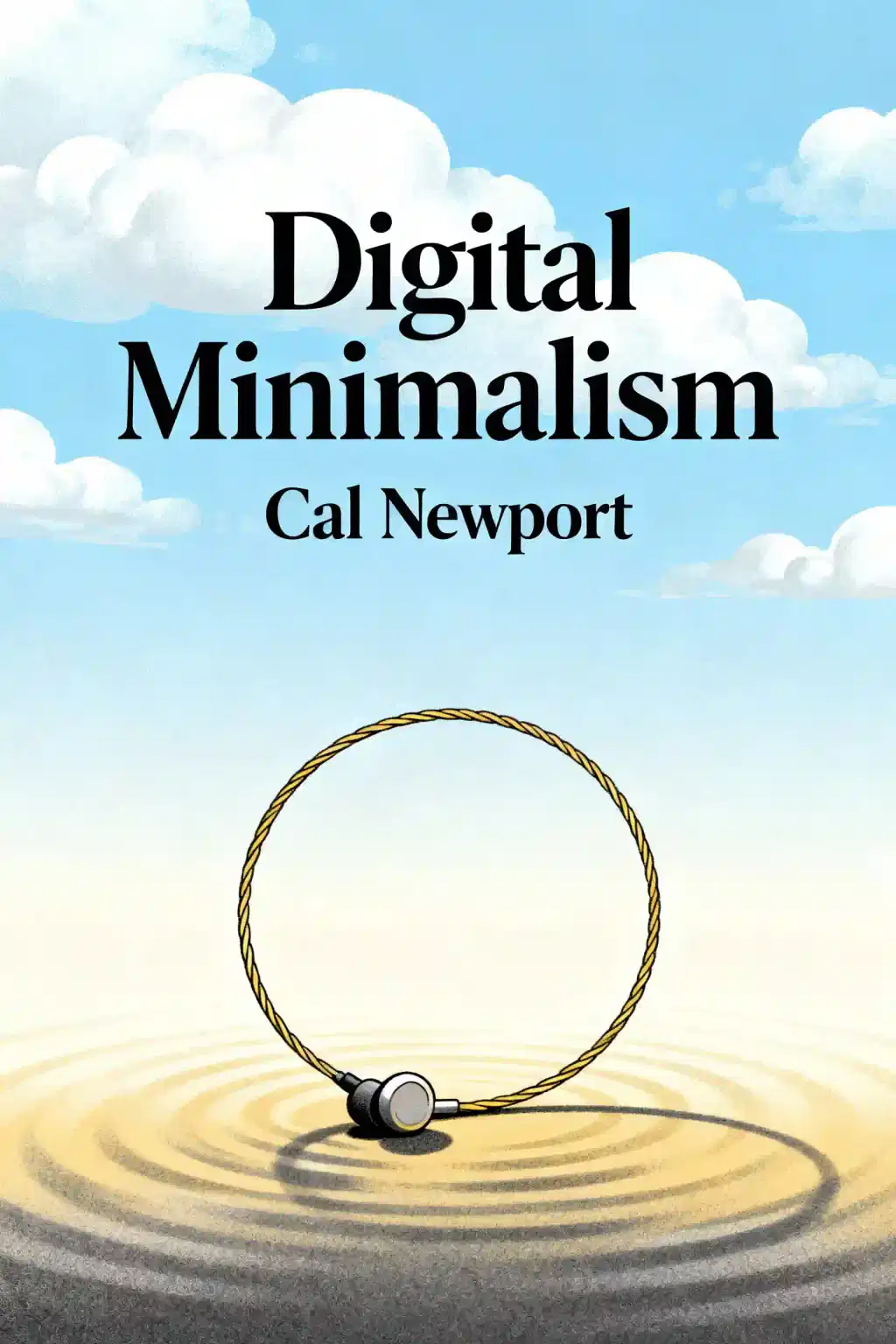
Nia: So what can we actually do about this? I don't want to throw my phone into the ocean, but I'd like to feel less controlled by it. Jackson: First, protect your baseline dopamine. Anna Lembke recommends taking 24-48 hour breaks from high-dopamine activities like short-form video each week. You'll feel a dip before you feel better-that's the "dopamine seesaw" resetting. Nia: I've tried that! The first day is rough, but by day two, I actually start enjoying simpler things again. What else? Jackson: Rebuild your day around traction, not reaction. Block time for focused work and put your phone in another room-remember that "mere presence effect" we talked about? Nia: I've started doing "phone-free mornings" until 10 AM, and it's been life-changing. I actually get to decide what I think about first thing instead of reacting to notifications. Jackson: That's perfect! Also, audit your evenings. Shift screen use earlier, dim and warm your screens after sunset, and ideally switch to offline activities after 9 PM-like reading print books or journaling. Nia: Cal Newport talks about this "digital declutter" concept too, right? Jackson: Yes! Try a 30-day reset, then reintroduce tools based on what truly serves your values. And use friction strategically-move short-form video off your phone, make social media desktop-only, or add delay pages before tempting sites. Nia: I love that idea of adding friction. It's not about banning things-it's about making the choice more conscious. Jackson: Exactly! And don't forget "human glucose" for attention: morning daylight, physical movement, and real-world novelty all satisfy your dopamine system without the algorithm.
Chapter 7Beyond Personal Choices: The Bigger Picture
Nia: These personal strategies are great, but shouldn't we also be asking for better from technology itself? Jackson: Absolutely. Tristan Harris advocates for "humane defaults"-like options to sort feeds chronologically, bedtime nudges, and easy controls to batch notifications. These aren't silver bullets, but they reduce needless attention spikes. Nia: And what about research and transparency? It feels like we're all in this massive experiment without much oversight. Jackson: That's why the Surgeon General has called for opening platform data to independent researchers and enforcing safety audits. Hard to improve what we can't see. Nia: And for kids especially-I've heard about schools going phone-free and parents setting later social media access ages. Jackson: Yes! Communities are testing these approaches, treating design risks as public health questions, not just individual "choices." The 2024 call for warning labels on social media is a blunt tool, but it sends a clear signal.
Chapter 8Reclaiming Your Attention, One Day at a Time
Nia: So if someone's feeling overwhelmed by their screen use, what are the key takeaways they should remember? Jackson: First, recognize you're not broken-you're living at the convergence of a dopamine-tuned brain, infinitely refilling feeds, and business models that evolve toward engagement. Nia: That's actually comforting. It's not just me being weak-willed! Jackson: Second, the same science that makes apps sticky gives us levers to unstick our lives: space your dopamine hits, move your phone to another room during focus time, shift to print before bed. Nia: And make specific commitments-like "no phones at dinner" or "social media only after 5 PM"-instead of vague goals like "use my phone less." Jackson: Exactly! Do these things for a week and feel the difference. Do them for a month and call it your new normal. Because the most radical act in the attention economy isn't quitting everything-it's choosing, on purpose, what gets to shape your mind. Nia: That's your daily dose of smarter from BeFreed Podcast. If your brain liked it, come back tomorrow-we've got more where that came from. I'm your host, Nia. Jackson: And I'm Jackson. Until next time, may your attention be yours again!
Why people search for ways to stop mindless scrolling
As daily screen time increases, many people search for ways to break the habit of doomscrolling and regain their focus. Searchers are often looking for actionable behavioral tips, colloquially known as a 'dopamine detox,' to reduce their reliance on digital devices and replace phone time with more intentional activities.
A practical guide to stopping mindless scrolling
Breaking the scroll cycle requires practical changes to your daily routine. Experts in behavior change recommend starting with small, physical boundaries. For example, implementing a rule to keep your phone out of the bedroom can prevent late-night and early-morning scrolling. Additionally, you can try the 20-20-20 rule to reduce visual fatigue, use app blockers to limit access during work hours, or wear a traditional watch so you don't need to check your phone for the time. By focusing on what you will do offline rather than just trying to avoid your phone, you can naturally build healthier digital boundaries.
Best quote from The Dopamine Trap: Why We Can't Stop Scrolling
The most radical act in the attention economy isn't quitting everything—it's choosing, on purpose, what gets to shape your mind.
Knowledge sources




FAQ
Mindless scrolling is largely driven by the brain's reward system. Modern apps are designed to provide unpredictable, quick hits of dopamine, creating a behavioral loop that makes it difficult to stop engaging with the feed.
Focus on environmental design rather than willpower alone. Try deleting highly engaging apps, setting strict app timers, or keeping your phone in another room to create physical friction between you and the device.
To successfully reduce screen time, replace scrolling with offline activities that do not involve screens. Engaging in hobbies like reading, journaling, coloring, or exercising can help redirect your attention.
From Columbia University alumni built in San Francisco
"Instead of endless scrolling, I just hit play on BeFreed. It saves me so much time."


"I never knew where to start with nonfiction—BeFreed’s book lists turned into podcasts gave me a clear path."


"Perfect balance between learning and entertainment. Finished ‘Thinking, Fast and Slow’ on my commute this week."
"Crazy how much I learned while walking the dog. BeFreed = small habits → big gains."
"Reading used to feel like a chore. Now it’s just part of my lifestyle."

"Feels effortless compared to reading. I’ve finished 6 books this month already."
"BeFreed turned my guilty doomscrolling into something that feels productive and inspiring."

"BeFreed turned my commute into learning time. 20-min podcasts are perfect for finishing books I never had time for."
"BeFreed replaced my podcast queue. Imagine Spotify for books — that’s it. 🙌"

"It is great for me to learn something from the book without reading it."
"The themed book list podcasts help me connect ideas across authors—like a guided audio journey."
"Makes me feel smarter every time before going to work"
From Columbia University alumni built in San Francisco
"Instead of endless scrolling, I just hit play on BeFreed. It saves me so much time."
"I never knew where to start with nonfiction—BeFreed’s book lists turned into podcasts gave me a clear path."
"Perfect balance between learning and entertainment. Finished ‘Thinking, Fast and Slow’ on my commute this week."
"Crazy how much I learned while walking the dog. BeFreed = small habits → big gains."
"Reading used to feel like a chore. Now it’s just part of my lifestyle."
"Feels effortless compared to reading. I’ve finished 6 books this month already."
"BeFreed turned my guilty doomscrolling into something that feels productive and inspiring."
"BeFreed turned my commute into learning time. 20-min podcasts are perfect for finishing books I never had time for."
"BeFreed replaced my podcast queue. Imagine Spotify for books — that’s it. 🙌"
"It is great for me to learn something from the book without reading it."
"The themed book list podcasts help me connect ideas across authors—like a guided audio journey."
"Makes me feel smarter every time before going to work"
"Instead of endless scrolling, I just hit play on BeFreed. It saves me so much time."
"I never knew where to start with nonfiction—BeFreed’s book lists turned into podcasts gave me a clear path."
"Perfect balance between learning and entertainment. Finished ‘Thinking, Fast and Slow’ on my commute this week."
"Crazy how much I learned while walking the dog. BeFreed = small habits → big gains."
"Reading used to feel like a chore. Now it’s just part of my lifestyle."
"Feels effortless compared to reading. I’ve finished 6 books this month already."
"BeFreed turned my guilty doomscrolling into something that feels productive and inspiring."
"BeFreed turned my commute into learning time. 20-min podcasts are perfect for finishing books I never had time for."
"BeFreed replaced my podcast queue. Imagine Spotify for books — that’s it. 🙌"
"It is great for me to learn something from the book without reading it."
"The themed book list podcasts help me connect ideas across authors—like a guided audio journey."
"Makes me feel smarter every time before going to work"
"Instead of endless scrolling, I just hit play on BeFreed. It saves me so much time."
"I never knew where to start with nonfiction—BeFreed’s book lists turned into podcasts gave me a clear path."
"Perfect balance between learning and entertainment. Finished ‘Thinking, Fast and Slow’ on my commute this week."
"Crazy how much I learned while walking the dog. BeFreed = small habits → big gains."
"Reading used to feel like a chore. Now it’s just part of my lifestyle."
"Feels effortless compared to reading. I’ve finished 6 books this month already."
"BeFreed turned my guilty doomscrolling into something that feels productive and inspiring."
"BeFreed turned my commute into learning time. 20-min podcasts are perfect for finishing books I never had time for."
"BeFreed replaced my podcast queue. Imagine Spotify for books — that’s it. 🙌"
"It is great for me to learn something from the book without reading it."
"The themed book list podcasts help me connect ideas across authors—like a guided audio journey."
"Makes me feel smarter every time before going to work"