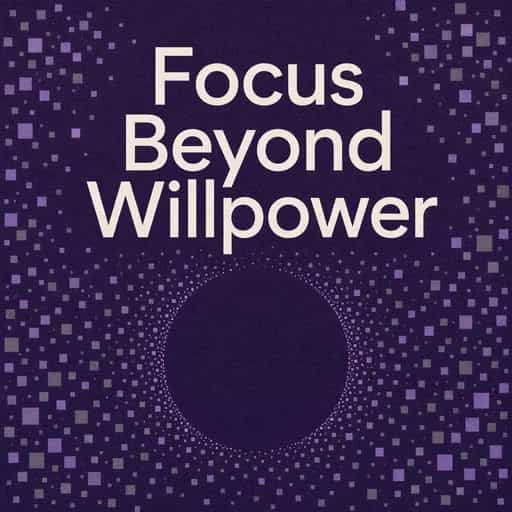
Beyond Willpower: A Science-Backed Dopamine Reset
Stop fighting your brain and start rewiring it. Discover the 'Three Gears' framework to break the loop of mindless scrolling and reclaim your focus through practical, sustainable habits.

Best quote from Beyond Willpower: A Science-Backed Dopamine Reset
It’s not about willpower; it’s about architecture. When you make a bad habit just 20 seconds harder to start, you give your prefrontal cortex enough time to step in and pull the emergency brake.
Generated by Owen
How do I break my poor dopimanurgic habits in a way that actually improves how I feel over time

Frequently Asked Questions
According to recent research from 23 different labs, the idea of willpower as a "muscle" is actually a myth. The script explains that when we are under stress, the prefrontal cortex—the part of the brain responsible for self-control—effectively "goes dark." Rather than trying to "force" better behavior through sheer discipline, the podcast suggests moving away from the concept of willpower and toward a practical playbook that focuses on rewiring the brain's reward software and changing your environment.
"Cheap" dopamine comes from super-stimuli like infinite social media feeds or high-frequency notifications, which create massive spikes in anticipation but often lead to a "reward prediction error" and a subsequent mood crash. In contrast, "high-quality" or "effort-based" dopamine comes from activities like physical movement, finishing a difficult task, or creative expression. These sources provide a steady, sustainable release of the chemical that stabilizes your baseline rather than causing an artificial spike and depletion.
Total deprivation—such as social isolation or severe dietary restrictions—can be detrimental because it cuts off healthy neurochemicals like oxytocin and can lead to intense anxiety or malnutrition. This often triggers a "rebound effect" where the brain views healthy habits as a chore and "bad" habits as a forbidden treasure, leading to a binge once the fast ends. Instead, clinical experts recommend "cutting back, not cutting out," focusing on managing compulsive behaviors rather than trying to eliminate a necessary chemical like dopamine from the system.
Environmental architecture involves designing your physical and digital spaces to add "friction" to bad habits and remove it from good ones. Because the brain follows the path of least resistance, making a habit just 20 seconds harder to start—such as charging your phone in the kitchen instead of next to your bed—gives your prefrontal cortex enough time to "brake" before you act on an impulse. Digitally, you can reduce the "reward value" of your phone by switching it to grayscale mode, which makes flashy notifications and apps look less urgent and exciting to the brain.
The script recommends an "autopsy, not guilt" approach to relapses. Instead of falling into a "shame spiral," which creates stress and drives you back to the habit for relief, you should treat the slip-up as data to identify design flaws in your architecture. By analyzing the timing and triggers of the slip—such as boredom or a specific time of day—you can adjust your environment or schedule to better support your goals, turning the failure into a tool for rewiring your strategy.
From Columbia University alumni built in San Francisco
"Instead of endless scrolling, I just hit play on BeFreed. It saves me so much time."


"I never knew where to start with nonfiction—BeFreed’s book lists turned into podcasts gave me a clear path."


"Perfect balance between learning and entertainment. Finished ‘Thinking, Fast and Slow’ on my commute this week."
"Crazy how much I learned while walking the dog. BeFreed = small habits → big gains."
"Reading used to feel like a chore. Now it’s just part of my lifestyle."

"Feels effortless compared to reading. I’ve finished 6 books this month already."
"BeFreed turned my guilty doomscrolling into something that feels productive and inspiring."

"BeFreed turned my commute into learning time. 20-min podcasts are perfect for finishing books I never had time for."
"BeFreed replaced my podcast queue. Imagine Spotify for books — that’s it. 🙌"

"It is great for me to learn something from the book without reading it."
"The themed book list podcasts help me connect ideas across authors—like a guided audio journey."
"Makes me feel smarter every time before going to work"
From Columbia University alumni built in San Francisco
"Instead of endless scrolling, I just hit play on BeFreed. It saves me so much time."
"I never knew where to start with nonfiction—BeFreed’s book lists turned into podcasts gave me a clear path."
"Perfect balance between learning and entertainment. Finished ‘Thinking, Fast and Slow’ on my commute this week."
"Crazy how much I learned while walking the dog. BeFreed = small habits → big gains."
"Reading used to feel like a chore. Now it’s just part of my lifestyle."
"Feels effortless compared to reading. I’ve finished 6 books this month already."
"BeFreed turned my guilty doomscrolling into something that feels productive and inspiring."
"BeFreed turned my commute into learning time. 20-min podcasts are perfect for finishing books I never had time for."
"BeFreed replaced my podcast queue. Imagine Spotify for books — that’s it. 🙌"
"It is great for me to learn something from the book without reading it."
"The themed book list podcasts help me connect ideas across authors—like a guided audio journey."
"Makes me feel smarter every time before going to work"
"Instead of endless scrolling, I just hit play on BeFreed. It saves me so much time."
"I never knew where to start with nonfiction—BeFreed’s book lists turned into podcasts gave me a clear path."
"Perfect balance between learning and entertainment. Finished ‘Thinking, Fast and Slow’ on my commute this week."
"Crazy how much I learned while walking the dog. BeFreed = small habits → big gains."
"Reading used to feel like a chore. Now it’s just part of my lifestyle."
"Feels effortless compared to reading. I’ve finished 6 books this month already."
"BeFreed turned my guilty doomscrolling into something that feels productive and inspiring."
"BeFreed turned my commute into learning time. 20-min podcasts are perfect for finishing books I never had time for."
"BeFreed replaced my podcast queue. Imagine Spotify for books — that’s it. 🙌"
"It is great for me to learn something from the book without reading it."
"The themed book list podcasts help me connect ideas across authors—like a guided audio journey."
"Makes me feel smarter every time before going to work"
"Instead of endless scrolling, I just hit play on BeFreed. It saves me so much time."
"I never knew where to start with nonfiction—BeFreed’s book lists turned into podcasts gave me a clear path."
"Perfect balance between learning and entertainment. Finished ‘Thinking, Fast and Slow’ on my commute this week."
"Crazy how much I learned while walking the dog. BeFreed = small habits → big gains."
"Reading used to feel like a chore. Now it’s just part of my lifestyle."
"Feels effortless compared to reading. I’ve finished 6 books this month already."
"BeFreed turned my guilty doomscrolling into something that feels productive and inspiring."
"BeFreed turned my commute into learning time. 20-min podcasts are perfect for finishing books I never had time for."
"BeFreed replaced my podcast queue. Imagine Spotify for books — that’s it. 🙌"
"It is great for me to learn something from the book without reading it."
"The themed book list podcasts help me connect ideas across authors—like a guided audio journey."
"Makes me feel smarter every time before going to work"