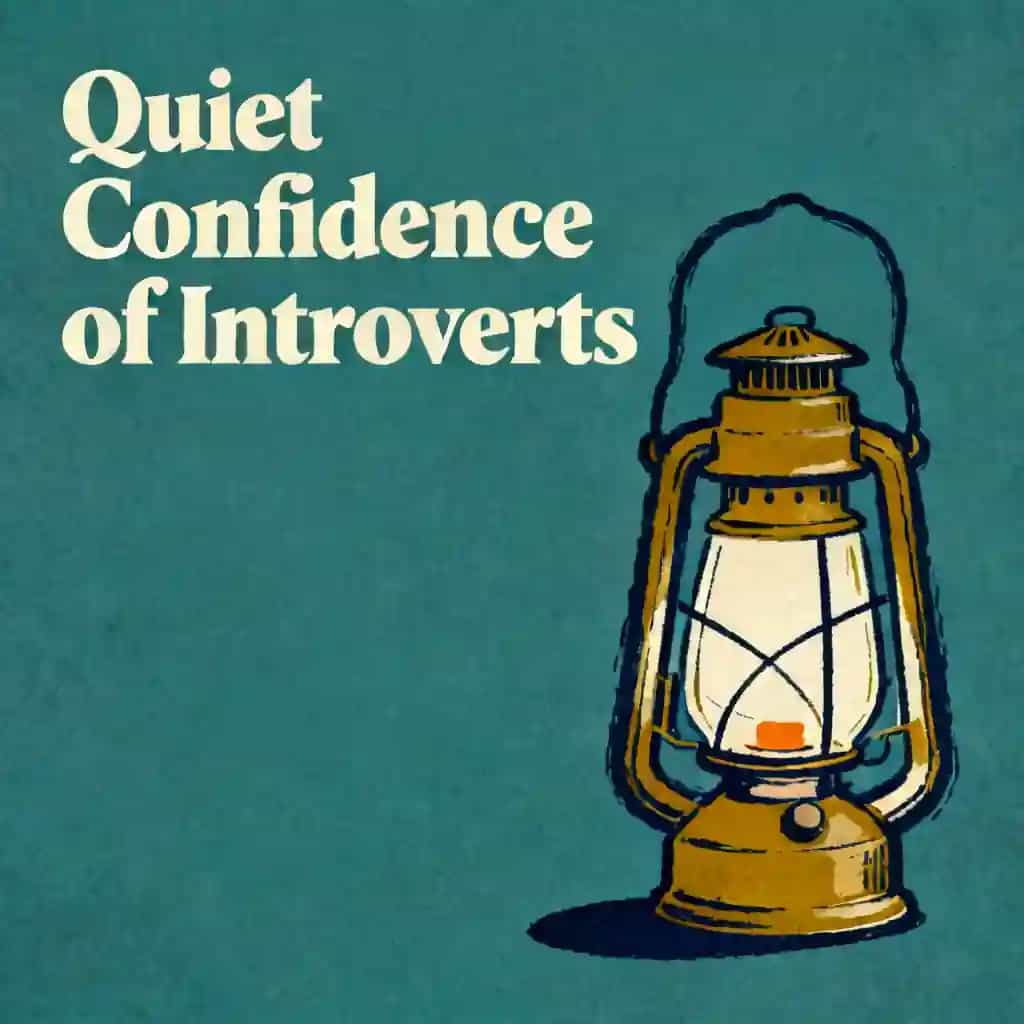
Mastering Dark Confidence: The Introvert's Edge

How To Build Quiet Confidence As An Introvert: episode overview
In this BeFreed audio episode, we explore the foundations of authentic self-assurance for introverted personalities. Rather than trying to be the loudest voice in the room, listeners will discover how to cultivate an aura of competence and connection. The guide covers practical techniques for internal self-assurance and developing executive presence without changing your core personality.
Create Your Podcast in a Click
Generated by Bro
Input question
Learn art of dark confidence
Host voices

What you'll learn about internal self-assurance
- 1
The Quiet Power Within
 00:0000:00
Jackson: Hey there, welcome to today's episode! I've been thinking about something that's been popping up everywhere lately—this concept of "dark confidence." Have you noticed how traditional confidence advice just doesn't seem to work for everyone, especially introverts? Eli: Absolutely. It's fascinating how most confidence advice is completely wrong for a lot of people. We're constantly told that confidence is about smiling more, speaking louder, and essentially becoming this extroverted personality. Jackson: Right! And that just feels... inauthentic for many people. I came across this idea that true confidence isn't about thinking you're the coolest person in the room—it's about not caring whether people like you or not. Eli: That's exactly it. What we're calling "dark confidence" is this deeper, more powerful form of self-assurance that doesn't rely on external validation. It's been the secret weapon of introverts, leaders, and influential people throughout history. Jackson: I'm curious—what makes it "dark" exactly? That sounds almost mysterious or intimidating. Eli: You know, it's called "dark" not because it's negative, but because it operates beneath the surface. It's about commanding respect through presence rather than performance. It's the confidence that doesn't need to announce itself—it's felt rather than heard. Jackson: That's fascinating. So instead of the typical "fake it till you make it" approach, we're talking about something more authentic and powerful. Let's break down how anyone—especially introverts—can develop this kind of unshakable inner confidence that actually transforms how others perceive them.
- 2
The Architecture of Presence
Eli: You know what's really interesting about dark confidence? It's built on three core pillars that most people completely miss. The research from Harvard Business School shows that charisma isn't some mystical quality—it's actually the combination of presence, power, and warmth working together. Jackson: Wait, so you're saying there's actually a formula for this? That's incredible. Break that down for me. Eli: Exactly. Think of it like a three-legged stool. Presence is your ability to be completely here, completely focused on what's happening right now. Power is your capacity to create change—not through force, but through competence and conviction. And warmth is signaling that your power is safe to be around. Jackson: That warmth piece is crucial, isn't it? Because without it, power just comes across as intimidating or arrogant. Eli: Absolutely right. Here's what's fascinating—when you have high power but no warmth, people experience you as cold or threatening. When you have warmth but no power, you're likable but forgettable. But when you combine all three? That's when you get that magnetic quality that draws people in. Jackson: So how does this play out in real life? I'm thinking about those people who just seem to command attention without even trying. Eli: Perfect example—think about someone like Satya Nadella at Microsoft. He doesn't dominate conversations or put on a big show. But when he speaks, people listen. He demonstrates deep competence in his field—that's the power component. He's fully present in interactions, giving people his complete attention. And he shows genuine concern for others' perspectives—that's the warmth. Jackson: That's such a different model from what we usually see. Most confidence training focuses on being louder or more assertive, but this is almost the opposite. Eli: Exactly. Dark confidence operates through what researchers call "embodied authority." It's not about telling people you're confident—it's about inhabiting confidence so completely that others feel it. Your body language, your vocal patterns, even your breathing changes when you truly embody this presence. Jackson: You mentioned breathing—that seems like such a small detail, but I bet it's actually significant. Eli: Oh, it's huge. When someone is truly confident, their breathing is deeper and more controlled. They're not rushing to fill every silence or speaking quickly because they're afraid of being interrupted. There's this quality of unhurried attention that signals they're completely secure in their position. Jackson: I love that phrase—"unhurried attention." It reminds me of those moments when you're talking to someone and you feel like you're the only person in the world to them in that moment. Eli: That's presence in action. And here's what's counterintuitive—this kind of focused attention actually makes you more powerful, not less. When people feel truly seen and heard by you, they become more invested in the interaction. They start to value your opinion more highly. Jackson: So we're not talking about manipulation here, but genuine connection that naturally creates influence? Eli: Exactly. The difference is intent. Manipulative people use these techniques to extract value while pretending to care. People with authentic dark confidence use these same psychological mechanisms, but their warmth is real and their interest in others' wellbeing is genuine. Jackson: That's a crucial distinction. So how do we start building these three pillars in ourselves? Where does someone begin? Eli: The foundation is always competence. You can't fake high-status presence long-term without the substance to back it up. But here's what most people don't realize—competence doesn't just mean technical skills. It means becoming genuinely good at understanding people, at reading situations, at adding real value to interactions. Jackson: So it starts with actually being valuable, not just appearing valuable. Eli: Right. And then you learn to express that value through presence rather than performance. Instead of trying to impress people with what you know, you focus completely on what's happening in the moment. You listen not just to words, but to emotion, subtext, and patterns. Jackson: This is starting to make so much sense. It's like the difference between being a performer on stage versus being a skilled conductor who brings out the best in everyone around them. Eli: That's a perfect analogy. The conductor doesn't need to be the loudest person in the room—they guide the entire orchestra through subtle signals and deep expertise. That's dark confidence in action.
- 3
The Stillness Factor
Jackson: You know what I've been noticing? Some of the most confident people I know have this quality of stillness about them. They're not constantly moving or adjusting or fidgeting. Is that part of what we're talking about here? Eli: You've hit on something really important. Physical stillness is actually one of the most powerful status signals humans recognize. When someone is truly comfortable with themselves and their position, they don't leak nervous energy through constant movement. Jackson: But doesn't that risk coming across as stiff or robotic? Eli: Not at all, and here's why—we're not talking about rigid stillness. We're talking about relaxed control. Think about a cat watching birds. They're completely still, but you can sense the contained energy and focus. That's very different from someone who's frozen with anxiety. Eli: The research on power posing shows that how we hold our bodies actually changes our neurochemistry. When you adopt open, expansive postures—even in private—your testosterone increases and cortisol decreases. You literally become more confident at a biological level. Jackson: So you're saying our posture can actually change our brain chemistry? That's wild. Eli: It's the embodiment principle. Your mind and body aren't separate systems—they're constantly influencing each other. When you consciously adopt the physical patterns of confidence, your psychology follows. But here's the key—it has to feel authentic to you. Jackson: What do you mean by authentic? How do we know if we're doing it right versus just putting on an act? Eli: Great question. Authentic confidence feels grounded and centered, not performed. When you're performing confidence, there's this underlying tension because you're monitoring how you're being perceived. When you're embodying it, you're focused outward on what's actually happening. Jackson: So it's about where your attention is directed? Eli: Exactly. People with dark confidence aren't thinking about themselves—they're thinking about the situation, the other people, the problem to be solved. That outward focus is what creates that magnetic presence others feel. Eli: Here's a practical example. Instead of thinking "I need to appear confident in this meeting," you think "What does this situation need from me right now?" That shift in focus changes everything about how you show up. Jackson: That's such a subtle but powerful reframe. You're moving from self-consciousness to situation-consciousness. Eli: Right. And when you're truly focused on serving the situation rather than managing your image, people sense that authenticity. They feel like they can trust you because you're not playing games—you're genuinely engaged with what matters. Jackson: I'm curious about the voice component of this. I've noticed that people with real authority tend to speak differently. What's happening there? Eli: Voice is huge. People with authentic confidence tend to speak more slowly, with more deliberate pacing. They're not rushing to get their words out before someone interrupts them. They use strategic pauses for emphasis. And their vocal tone tends to be lower and more resonant. Jackson: Is that something you can practice, or does it just naturally happen as you become more confident? Eli: Both. You can definitely practice vocal control—spending just a few minutes a day working on pace, pause, and resonance. But the deeper shift happens when you truly believe you have something valuable to contribute. When you know your words matter, you naturally take more care with how you deliver them. Jackson: It's like the physical expression follows the internal state. Eli: Exactly. But here's what's interesting—you can also work it the other way. By consciously adopting these physical and vocal patterns, you start to internalize the confidence they represent. It's a feedback loop. Jackson: So someone could literally practice their way into genuine confidence? Eli: Absolutely. But—and this is crucial—the practice has to be grounded in actually developing competence and value. If you're just mimicking confident behavior without the substance to back it up, people will sense the incongruence. Jackson: That brings us back to that foundation of genuine competence you mentioned earlier. Eli: Right. Dark confidence isn't a mask you put on—it's the natural expression of someone who knows their worth and is focused on contributing value rather than seeking validation.
- Chapter 4
The Trust Equation
**Jackson:** Let's talk about something that seems really important here—trust. Because if dark confidence is about commanding respect without demanding it, trust must play a huge role in how that works. **Eli:** You're absolutely right. Trust is the foundation that makes everything else possible. And here's what's fascinating—trust in professional settings comes from a very specific equation. It's competence plus reliability plus intimacy, divided by self-orientation. **Jackson:** Break that down for me. What does that look like in practice? **Eli:** Competence is your ability to do what you say you'll do. Reliability is actually doing it consistently over time. Intimacy is the safety people feel in sharing information with you—they know you won't use it against them. And self-orientation is how much the interaction seems to be about your needs versus theirs. **Jackson:** So the less self-focused you appear, the more trustworthy you become? **Eli:** Exactly. People with dark confidence naturally score high on this equation because they're genuinely focused on creating value rather than getting something for themselves. That paradoxically makes them more influential, not less. **Eli:** Think about it—when someone clearly has their own agenda, you're constantly wondering what they really want from you. But when someone seems genuinely interested in the best outcome for everyone, you relax and open up. **Jackson:** That makes so much sense. It's like the difference between talking to a salesperson who's obviously trying to hit their quota versus talking to a consultant who's genuinely trying to solve your problem. **Eli:** Perfect analogy. The consultant might end up making the sale anyway, but it happens naturally because they've built trust first. They're not pushing—they're pulling people toward solutions. **Jackson:** So how do we build this kind of trust? Especially in situations where we don't have an established relationship? **Eli:** It starts with what researchers call "small deposits in the trust bank account." You demonstrate competence through how you handle small interactions. You show reliability by following through on minor commitments. You create intimacy by actually listening and remembering details people share with you. **Jackson:** Those details piece is interesting. I bet most people don't realize how powerful it is when someone remembers something personal you mentioned weeks ago. **Eli:** It's huge. When you bring up someone's niece's birthday party or ask about their presentation that was coming up, you're signaling that they matter enough to you that you actually retained that information. That creates connection at a deep level. **Eli:** But here's the key—you can't fake this. If you don't genuinely care about people, trying to remember details becomes manipulative. The caring has to be real for the technique to work authentically. **Jackson:** So we're back to that authenticity piece. The techniques only work when they're expressions of genuine intent. **Eli:** Right. And this is where dark confidence becomes almost like a superpower. When you genuinely care about creating good outcomes for everyone involved, people sense that. They want to help you succeed because your success serves them too. **Jackson:** It's like you become someone people want to invest in rather than someone they need to protect themselves from. **Eli:** Exactly. And that shift changes everything about how you move through the world. Doors open. Opportunities appear. People seek out your opinion and want you involved in important projects. **Jackson:** But I imagine this takes time to develop. You can't just flip a switch and suddenly have this kind of trustworthiness. **Eli:** Absolutely. It's built through consistent behavior over time. But here's what's encouraging—you can start building it immediately. Every interaction is an opportunity to make a small deposit in someone's trust account. **Jackson:** What would that look like in a typical workday? **Eli:** Following through on small commitments exactly when you said you would. Listening fully when someone's talking instead of planning your response. Asking thoughtful questions that show you're engaged with what they're saying. Acknowledging their expertise in areas where they're strong. **Jackson:** Those all seem so simple, but I bet they're rare enough to really stand out. **Eli:** That's exactly right. Most people are so focused on managing their own image that they miss these opportunities to build real connection. When you shift your focus to genuinely serving others' interests, you become magnetic almost by accident.
Chapter 5The Shadow Side of Power
**Jackson:** Okay, we need to address something important here. We're talking about developing this powerful presence and influence, but there's obviously a potential dark side to this. How do we make sure we're using these abilities ethically? **Eli:** I'm so glad you brought this up. The same psychological mechanisms that create authentic charisma can absolutely be weaponized. Cult leaders are charismatic. Narcissists can be incredibly compelling. The difference isn't in the techniques—it's in the intent and the ethics behind them. **Jackson:** So what's the line between influence and manipulation? **Eli:** Here's the test I use: if people fully understood your intentions and your methods, would they thank you or resent you? Ethical influence serves everyone's interests, including the other person's. Manipulation serves only your interests while pretending to care about theirs. **Jackson:** That's a powerful framework. So it really comes down to whether you genuinely care about the other person's wellbeing. **Eli:** Exactly. And here's what's interesting—manipulation might work once, but authentic charisma builds relationships that create value for decades. When you genuinely serve others' interests, they want to keep working with you. **Eli:** Think about Machiavellian personalities in organizations. They might achieve short-term gains through manipulation, but they create toxic environments. People learn not to trust them. Eventually, their reputation catches up with them. **Jackson:** So the ethical approach is actually more effective long-term? **Eli:** Absolutely. But there's another dimension we need to consider—power dynamics. When you develop this kind of presence and influence, you're taking on responsibility. People will look to you for leadership, whether you asked for it or not. **Jackson:** That's a sobering thought. With great power comes great responsibility, as they say. **Eli:** Right. And this is where self-awareness becomes crucial. You need to regularly examine your own motivations. Are you using your influence to create better outcomes for everyone? Or are you starting to serve your own ego? **Jackson:** How do you maintain that self-awareness? It seems like it would be easy to gradually drift into more self-serving behavior without realizing it. **Eli:** Great question. I think it requires building feedback loops into your life. Trusted people who will tell you the truth about how you're showing up. Regular reflection on whether your actions are serving others or just yourself. And paying attention to how people respond to you over time. **Eli:** If you're becoming more influential but people seem less comfortable around you, that's a red flag. Authentic charisma makes people feel more valued and heard, not less. **Jackson:** So the quality of your relationships is actually a measure of whether you're using these abilities well. **Eli:** Exactly. People should feel better about themselves after interacting with you, not worse. They should feel heard and valued, not diminished or manipulated. **Jackson:** What about situations where you need to deliver difficult messages or make unpopular decisions? How do you maintain that ethical stance when you can't make everyone happy? **Eli:** That's where the competence and authenticity really matter. Sometimes serving someone's best interests means telling them things they don't want to hear. But if they trust your competence and your genuine care for their wellbeing, they can receive difficult feedback. **Eli:** The key is being transparent about your reasoning and making sure your difficult messages are truly in their interest, not just convenient for you. **Jackson:** So it's about being honest about the trade-offs and helping people understand why difficult decisions serve the larger good. **Eli:** Right. And sometimes that means accepting that people won't like you in the short term. Dark confidence includes the ability to prioritize doing right over being liked. **Jackson:** That seems like a crucial distinction. True confidence doesn't need everyone's approval. **Eli:** Exactly. In fact, the need for universal approval often leads to manipulation—telling people what they want to hear rather than what they need to hear. Authentic influence sometimes requires disappointing people in service of better long-term outcomes.
Chapter 6The Introvert's Secret Weapon
**Jackson:** Let's talk about something that's been on my mind throughout this conversation. We started by mentioning that traditional confidence advice doesn't work for introverts, but it seems like dark confidence might actually be perfectly suited to introverted personalities. Is that right? **Eli:** You've hit on something really important. Dark confidence is actually the introvert's natural advantage, but most introverts don't realize it. While extroverts often rely on energy and charisma that comes from external stimulation, introverts have this incredible capacity for depth, focus, and authentic presence. **Jackson:** How so? I think a lot of introverts would be surprised to hear they have natural advantages when it comes to influence and presence. **Eli:** Think about it—introverts are naturally comfortable with silence. They tend to listen more than they speak. They process information deeply before responding. They're often more observant of social dynamics because they're not constantly performing. These are all elements of dark confidence. **Jackson:** That's fascinating. So what looks like social awkwardness might actually be a different kind of social intelligence? **Eli:** Exactly. Introverts often notice things that extroverts miss because they're not busy managing their own performance. They pick up on subtle emotional cues, power dynamics, unspoken tensions. That observational ability is incredibly valuable. **Eli:** And here's what's really interesting—when introverts do speak up, people tend to listen more carefully because they know it's not just noise. There's an assumption that if an introvert is saying something, it's probably worth hearing. **Jackson:** So it's like they have built-in credibility because their words are more selective? **Eli:** Right. But here's where many introverts sabotage themselves—they think they need to become more extroverted to be influential. So they try to talk more, be more animated, fill more space. And it feels exhausting and inauthentic. **Jackson:** Because they're working against their natural strengths instead of leveraging them. **Eli:** Exactly. Dark confidence for introverts is about amplifying what they already do well rather than trying to become someone they're not. It's about owning their natural tendency toward depth and using it strategically. **Jackson:** What would that look like in practice? How does an introvert leverage these natural advantages? **Eli:** First, they stop apologizing for their communication style. Instead of saying "Sorry, I'm not much of a talker," they might say "I prefer to listen first and make sure I understand before responding." That reframes their behavior as thoughtful rather than deficient. **Eli:** Second, they use their observational skills strategically. They notice what others miss and share those insights at key moments. They become known as someone who sees the bigger picture or understands the underlying dynamics. **Jackson:** So they position themselves as the strategic thinker rather than the energetic performer. **Eli:** Right. And third, they use their comfort with silence as a tool. While others are rushing to fill every gap in conversation, introverts can use strategic pauses to let their words land, to create space for others to think, to signal that what they're saying is important. **Jackson:** I love that—turning what feels like a weakness into a strength. But what about networking situations or large group meetings where the extroverted style seems to dominate? **Eli:** This is where introverts need to play to their strengths rather than trying to match extroverted energy. In networking, they focus on having fewer, deeper conversations rather than working the entire room. In meetings, they become known as the person who asks the insightful question or notices the thing everyone else missed. **Eli:** The key is understanding that influence doesn't require being the loudest voice in the room. Sometimes the most powerful person is the one everyone turns to when they need a thoughtful perspective. **Jackson:** So it's about finding your unique way to add value rather than copying someone else's style. **Eli:** Exactly. And here's what's beautiful about this—when introverts embrace their natural approach and develop it strategically, they often become more influential than their extroverted colleagues. Because their influence is based on substance rather than style, it tends to be more lasting. **Jackson:** That makes sense. Substance has staying power in a way that pure charisma doesn't. **Eli:** Right. People might be entertained by high-energy performers, but they rely on thoughtful observers. They seek out the introvert's opinion when decisions really matter because they trust that it's based on careful consideration rather than quick reaction.
Chapter 7The Practical Playbook
**Jackson:** Alright, this has all been fascinating, but I know our listeners are thinking "This sounds great, but how do I actually start developing this?" Let's get practical. What can someone do today to begin building dark confidence? **Eli:** Perfect. Let's break this down into a systematic approach. I'm going to give you a 30-day framework that builds these skills progressively, starting with the foundation and adding layers. **Jackson:** I love that. A step-by-step roadmap is exactly what people need. **Eli:** Days 1-10 are all about building the presence foundation. Every morning, spend 5 minutes practicing what I call "centering"—deep breathing while maintaining aligned posture. This isn't meditation, it's embodiment training. You're teaching your nervous system what calm confidence feels like. **Jackson:** So we're starting with the physical foundation before we work on the interpersonal skills. **Eli:** Exactly. And throughout those first 10 days, you're going to practice the "presence reset." Choose three daily triggers—doorways, notification sounds, meeting transitions—and use them as reminders to check in with your body and attention. Am I present right now, or am I scattered? **Jackson:** That's brilliant. You're building awareness of your own state throughout the day. **Eli:** Right. And here's your measurement tool—at the end of each day, rate your presence on a scale of 1-10. Not your performance, not how others responded, just your subjective experience of being fully present in interactions. **Jackson:** Okay, so that's the first 10 days. What comes next? **Eli:** Days 11-20 are about developing expressive range. This is where you work on vocal modulation—spend 5 minutes each morning practicing speaking at different paces, with strategic pauses, varying your tone. You're expanding your ability to convey meaning through how you speak, not just what you say. **Jackson:** And I assume this isn't about becoming theatrical, but about having more tools to express authentic conviction. **Eli:** Exactly. You're also going to start planning key gestures for important communications. Not choreographed movements, but intentional physical emphasis that supports your most important points. And you're practicing stance and movement patterns that feel grounded and purposeful. **Jackson:** How do people know if they're getting this right versus just looking awkward? **Eli:** Great question. Record yourself at least twice during this period—video calls work perfectly for this. Watch with the sound off first. Does your body language match your message? Do you look engaged and present, or distracted and nervous? **Jackson:** That's smart. The video feedback gives you objective data about how you're coming across. **Eli:** Right. And days 21-30 are about integration and stress-testing. You're bringing all the elements together and practicing maintaining this presence under pressure. This is where you simulate challenging conversations and practice recovering your centered state when things get difficult. **Jackson:** Because it's one thing to be present when everything's going well, and another thing entirely when you're under stress. **Eli:** Exactly. And this is where you start collecting feedback from trusted colleagues. Ask them specifically about changes they've noticed in how you communicate. Are you more engaging? Do you seem more confident? What's different? **Jackson:** So you're getting external validation that the internal work is translating into observable changes. **Eli:** Right. But let's talk about some specific techniques people can implement immediately, even before they start the 30-day program. **Jackson:** Yes, let's give people something they can try today. **Eli:** First technique: the "3-second rule." Before responding to any question or comment, count to three in your head. This does several things—it signals that you're considering your response carefully, it prevents reactive responses, and it creates a sense of gravitas around your words. **Jackson:** That's so simple but I can see how it would immediately change the dynamic of a conversation. **Eli:** Second technique: "mirroring plus depth." When someone shares information with you, first mirror back what you heard, then ask one follow-up question that shows you're thinking about the implications. "So you're saying the project timeline is tight, and you're concerned about quality. What would need to change to give you confidence in the outcome?" **Jackson:** So you're demonstrating that you're not just hearing the surface level, but thinking strategically about what they're telling you. **Eli:** Exactly. Third technique: "values-based framing." When you're advocating for something, explicitly connect it to shared values or larger purposes. Instead of "I think we should do this," try "Given our commitment to quality, I believe this approach serves our clients better because..." **Jackson:** That shifts it from your opinion to a principled position based on shared values. **Eli:** Right. And here's a crucial mistake to avoid—don't try to implement all of these at once. Pick one technique and practice it for a week until it feels natural, then add another. Trying to change everything simultaneously usually results in changing nothing. **Jackson:** That makes sense. It's better to master one thing than to do five things poorly. **Eli:** Exactly. And remember, the goal isn't to become someone else. It's to become the most effective version of yourself. These techniques should feel like natural extensions of who you already are, not performances you put on.
Chapter 8The Ripple Effect
**Jackson:** As we start to wrap up, I want to talk about something that's been occurring to me throughout this conversation. When someone develops this kind of dark confidence, it doesn't just change them—it changes everyone around them. Can you talk about that ripple effect? **Eli:** You're absolutely right, and it's one of the most powerful aspects of this whole approach. When you show up with genuine presence, competence, and care, it actually elevates everyone in your orbit. People feel more valuable, more heard, more capable when they interact with you. **Jackson:** How does that work? What's the mechanism behind that? **Eli:** It's partly mirror neurons—we unconsciously match the emotional and energy states of people around us. When you're genuinely calm and centered, others feel calmer. When you're fully present, they become more present. Your state becomes contagious in the best possible way. **Jackson:** So you're literally helping other people access their own best selves just by how you show up. **Eli:** Exactly. And there's something even deeper happening. When you consistently demonstrate that you see and value people, they start to see and value themselves more highly. Your authentic confidence gives them permission to be more confident too. **Jackson:** That's beautiful. It's like confidence becomes a gift you give to others rather than something you hoard for yourself. **Eli:** Right. And this creates what researchers call "positive spirals" in relationships and organizations. People start bringing their best selves to interactions because they know they'll be seen and appreciated. The overall quality of communication and collaboration improves. **Jackson:** I can see how this would be incredibly valuable in leadership positions, but it seems like it would work at any level of an organization. **Eli:** Absolutely. You don't need formal authority to influence culture. When you consistently show up with this kind of presence and authenticity, people start to seek out your perspective. You become what researchers call an "informal leader"—someone people turn to regardless of their position on the org chart. **Jackson:** And I imagine this extends beyond work relationships too. **Eli:** Definitely. The same principles apply in personal relationships, parenting, community involvement—anywhere you interact with other people. When you're genuinely present and focused on creating value for others, it transforms the quality of those relationships. **Jackson:** But I'm curious about the responsibility aspect of this. Once you develop this kind of influence, are you obligated to use it in certain ways? **Eli:** That's a profound question. I do think there's an ethical responsibility that comes with influence. When people look to you for guidance or reassurance, you have an opportunity—and I'd argue an obligation—to use that influence in service of their growth and wellbeing. **Jackson:** So it's not enough to just not manipulate people. You're actually called to actively contribute to their flourishing. **Eli:** I think that's right. And here's what's interesting—the more you embrace that responsibility, the more influential you become. It's a virtuous cycle. People sense when someone is genuinely invested in their success, and they naturally want to support that person in return. **Jackson:** It's like leadership becomes a form of service rather than a form of power over others. **Eli:** Exactly. And this connects to something we haven't talked much about—the long-term sustainability of this approach. Manipulative influence burns people out, both the manipulator and the people being manipulated. But authentic influence energizes everyone involved. **Jackson:** Because it's based on genuine connection and mutual value creation rather than extraction. **Eli:** Right. When you're focused on serving others' interests alongside your own, the work doesn't feel depleting. It feels meaningful. And the relationships you build through this approach tend to get stronger over time rather than wearing out. **Jackson:** So we're talking about a completely different paradigm for how to move through the world and relate to other people. **Eli:** Exactly. Instead of seeing interactions as competitions where someone wins and someone loses, you see them as opportunities for mutual elevation. Everyone can leave the interaction better than they entered it. **Jackson:** And paradoxically, that approach makes you more successful in traditional terms too—more promotions, more opportunities, more influence. **Eli:** Right, because people want to work with someone who makes them feel valued and capable. They want to include that person in important projects and decisions. Success becomes a natural byproduct of genuine service rather than something you have to fight for. **Jackson:** It reminds me of that old saying—"A rising tide lifts all boats." When you focus on lifting others, you naturally rise as well. **Eli:** That's a perfect metaphor. Dark confidence isn't about being the biggest boat in the harbor. It's about being the tide that lifts everyone else.
Chapter 9The Long Game
**Jackson:** So as we bring this to a close, I want to talk about the long-term vision here. We've covered techniques and frameworks, but I think there's something bigger happening when someone truly embodies this approach to confidence and influence. What does that transformation look like over years, not just weeks or months? **Eli:** You're touching on something really profound. When someone commits to developing authentic dark confidence over the long term, they're essentially choosing to become a different kind of person. Not in terms of their core personality, but in terms of how they relate to themselves and others. **Jackson:** What do you mean by that? How does someone change at that deeper level? **Eli:** Well, think about it this way—most people spend enormous amounts of energy managing their image, seeking validation, protecting their ego. When you develop genuine confidence based on competence and service to others, all that energy gets freed up for more productive purposes. **Jackson:** So you're not constantly worried about how you're being perceived because you're focused on creating value. **Eli:** Exactly. And that shift changes everything about how you move through the world. You become more creative because you're not afraid of failure. You become more collaborative because you're not threatened by others' success. You become more decisive because you're not paralyzed by the need for universal approval. **Jackson:** It sounds almost liberating in a way. **Eli:** It really is. There's this incredible freedom that comes from knowing your worth isn't dependent on others' opinions. You can take risks, speak truth, make difficult decisions because your sense of self isn't constantly under threat. **Jackson:** But I imagine this takes time to develop. You can't just flip a switch and suddenly have this kind of unshakeable confidence. **Eli:** Absolutely. It's built through thousands of small choices over months and years. Each time you choose authenticity over performance, each time you prioritize others' wellbeing alongside your own, each time you act from competence rather than insecurity—you're building this deeper foundation. **Jackson:** And I assume there are setbacks along the way. Times when you revert to old patterns or make mistakes. **Eli:** Of course. The difference is how you handle those setbacks. Instead of seeing them as evidence that you're not cut out for this, you see them as information. What triggered the old pattern? What would you do differently next time? How can you use this experience to become more resilient? **Jackson:** So even failure becomes a tool for growth rather than a source of shame. **Eli:** Right. And over time, you develop what researchers call "psychological safety" within yourself. You know that your worth isn't dependent on being perfect, so you can acknowledge mistakes, learn from them, and move forward without getting stuck in self-recrimination. **Jackson:** That seems like it would make you more effective as a leader and collaborator too. **Eli:** Absolutely. When people see that you can handle your own mistakes with grace, they feel safer being vulnerable around you. They're more likely to admit their own errors, ask for help when they need it, take calculated risks. You create an environment where everyone can perform at their best. **Jackson:** So the personal transformation creates organizational transformation as well. **Eli:** Exactly. And this is where the long-term impact becomes really significant. Over years, someone who embodies these principles becomes a force for positive change in every system they're part of. They raise the standards, improve the culture, develop other people's capabilities. **Jackson:** It's like they become a catalyst for bringing out the best in whatever environment they enter. **Eli:** Right. And here's what's beautiful about this—it's not about becoming someone you're not. It's about becoming the fullest expression of who you already are. Your natural strengths get amplified, your unique perspective gets valued, your authentic self becomes your greatest asset. **Jackson:** So we're not talking about conforming to some external model of confidence, but discovering and expressing your own unique form of strength. **Eli:** Exactly. Dark confidence isn't a one-size-fits-all approach. It's a set of principles that each person expresses in their own way, based on their personality, values, and strengths. **Jackson:** And that authenticity is what makes it so powerful and sustainable. **Eli:** Right. Because it's not an act you have to maintain—it's just who you become. And that person is someone others naturally want to follow, collaborate with, and support. **Jackson:** Well, this has been an incredible exploration. For everyone listening, I hope you're feeling inspired to start this journey of developing your own authentic confidence. Remember, it's not about becoming someone else—it's about becoming the most effective version of yourself. **Eli:** Absolutely. And remember, every expert was once a beginner. Start with one small technique, practice it consistently, and build from there. The transformation happens gradually, but the impact can be profound. **Jackson:** Thanks for joining us today, and thank you to all our listeners for spending this time with us. We'd love to hear about your experiences as you start implementing these ideas, so feel free to reach out and let us know how it's going. **Eli:** Until next time, keep growing, keep learning, and keep bringing your authentic self to everything you do.
What people search for about building quiet confidence
Many introverts search for ways to navigate high-stakes environments without adopting extroverted behaviors. Common queries focus on developing internal self-assurance, mastering body language, and understanding concepts like 'dark confidence'—a popular psychology term often associated with unshakeable, quiet resolve. This guide addresses these interests by focusing on actionable, authentic strategies.
A practical guide to developing quiet confidence
Building self-confidence as an introvert starts with a key mindset shift: viewing your introverted traits as neutral or advantageous, rather than flaws. Quiet confidence does not mean being loud or overbearing; it comes from preparation, experience, and a deep understanding of your role. To improve your self-image, start by setting achievable, small goals using the SMART method. Work on self-acceptance by recognizing your positives and empowering yourself with knowledge. Practical body language techniques—such as maintaining open posture and mindful tempo—can project competence, though it's important to note that the long-term clinical outcomes of practices like 'power posing' are still debated in academic circles. Ultimately, executive presence is a learnable skill stack that relies on authentic connection rather than volume.
Best quote from Mastering Dark Confidence: The Introvert's Edge
True confidence isn't about thinking you're the coolest person in the room—it's about not caring whether people like you or not. It's the confidence that doesn't need to announce itself; it's felt rather than heard.
Knowledge sources











FAQ
Introverts build confidence by setting achievable small goals, embracing their natural traits as strengths, and relying on preparation and experience rather than volume. A key mindset shift involves accepting that quiet competence is just as effective as extroverted charisma.
Developing quiet confidence involves cultivating internal self-assurance without needing external validation. You can achieve this by grooming well, empowering yourself with knowledge, maintaining mindful body language, and focusing on deep understanding of your roles.
Improving self-assurance starts with recognizing your positives, setting small challenges, and practicing self-compassion. Techniques like managing negative thoughts and building a supportive network also help reinforce a strong, quiet inner self.
From Columbia University alumni built in San Francisco
"Instead of endless scrolling, I just hit play on BeFreed. It saves me so much time."


"I never knew where to start with nonfiction—BeFreed’s book lists turned into podcasts gave me a clear path."


"Perfect balance between learning and entertainment. Finished ‘Thinking, Fast and Slow’ on my commute this week."
"Crazy how much I learned while walking the dog. BeFreed = small habits → big gains."
"Reading used to feel like a chore. Now it’s just part of my lifestyle."

"Feels effortless compared to reading. I’ve finished 6 books this month already."
"BeFreed turned my guilty doomscrolling into something that feels productive and inspiring."

"BeFreed turned my commute into learning time. 20-min podcasts are perfect for finishing books I never had time for."
"BeFreed replaced my podcast queue. Imagine Spotify for books — that’s it. 🙌"

"It is great for me to learn something from the book without reading it."
"The themed book list podcasts help me connect ideas across authors—like a guided audio journey."
"Makes me feel smarter every time before going to work"
 Ask ChatGPT
 Ask Claude
From Columbia University alumni built in San Francisco
"Instead of endless scrolling, I just hit play on BeFreed. It saves me so much time."
"I never knew where to start with nonfiction—BeFreed’s book lists turned into podcasts gave me a clear path."
"Perfect balance between learning and entertainment. Finished ‘Thinking, Fast and Slow’ on my commute this week."
"Crazy how much I learned while walking the dog. BeFreed = small habits → big gains."
"Reading used to feel like a chore. Now it’s just part of my lifestyle."
"Feels effortless compared to reading. I’ve finished 6 books this month already."
"BeFreed turned my guilty doomscrolling into something that feels productive and inspiring."
"BeFreed turned my commute into learning time. 20-min podcasts are perfect for finishing books I never had time for."
"BeFreed replaced my podcast queue. Imagine Spotify for books — that’s it. 🙌"
"It is great for me to learn something from the book without reading it."
"The themed book list podcasts help me connect ideas across authors—like a guided audio journey."
"Makes me feel smarter every time before going to work"
"Instead of endless scrolling, I just hit play on BeFreed. It saves me so much time."
"I never knew where to start with nonfiction—BeFreed’s book lists turned into podcasts gave me a clear path."
"Perfect balance between learning and entertainment. Finished ‘Thinking, Fast and Slow’ on my commute this week."
"Crazy how much I learned while walking the dog. BeFreed = small habits → big gains."
"Reading used to feel like a chore. Now it’s just part of my lifestyle."
"Feels effortless compared to reading. I’ve finished 6 books this month already."
"BeFreed turned my guilty doomscrolling into something that feels productive and inspiring."
"BeFreed turned my commute into learning time. 20-min podcasts are perfect for finishing books I never had time for."
"BeFreed replaced my podcast queue. Imagine Spotify for books — that’s it. 🙌"
"It is great for me to learn something from the book without reading it."
"The themed book list podcasts help me connect ideas across authors—like a guided audio journey."
"Makes me feel smarter every time before going to work"
"Instead of endless scrolling, I just hit play on BeFreed. It saves me so much time."
"I never knew where to start with nonfiction—BeFreed’s book lists turned into podcasts gave me a clear path."
"Perfect balance between learning and entertainment. Finished ‘Thinking, Fast and Slow’ on my commute this week."
"Crazy how much I learned while walking the dog. BeFreed = small habits → big gains."
"Reading used to feel like a chore. Now it’s just part of my lifestyle."
"Feels effortless compared to reading. I’ve finished 6 books this month already."
"BeFreed turned my guilty doomscrolling into something that feels productive and inspiring."
"BeFreed turned my commute into learning time. 20-min podcasts are perfect for finishing books I never had time for."
"BeFreed replaced my podcast queue. Imagine Spotify for books — that’s it. 🙌"
"It is great for me to learn something from the book without reading it."
"The themed book list podcasts help me connect ideas across authors—like a guided audio journey."
"Makes me feel smarter every time before going to work"