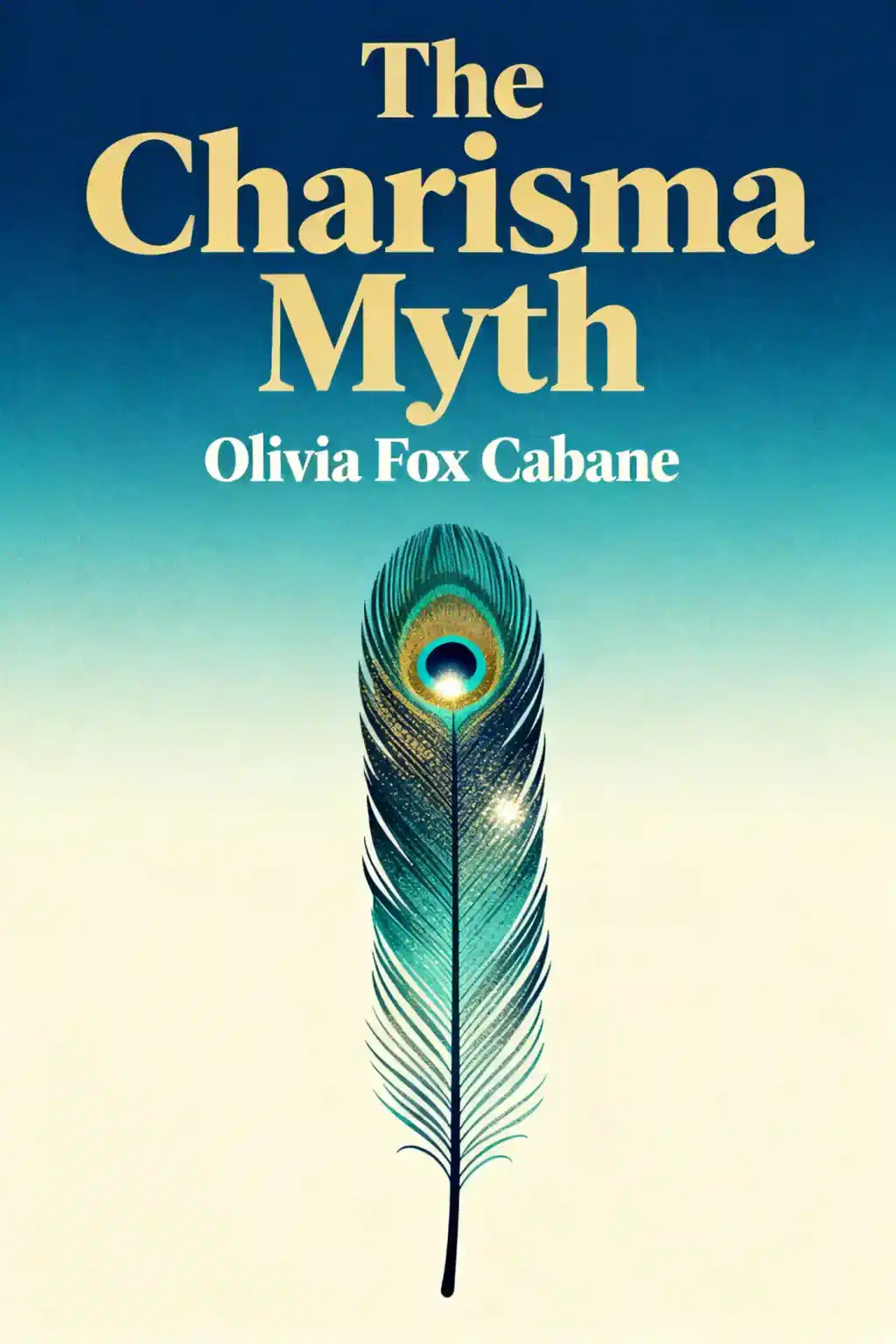
Charisma Myth: How Anyone Can Master the Art and Science of Personal Magnetism

Overview of Charisma Myth
Charisma isn't innate - it's learnable. Olivia Fox Cabane's groundbreaking book dismantles the myth, revealing how presence, power, and warmth create magnetic influence. Embraced by professionals across industries, it offers practical strategies that transformed patient-doctor relationships and leadership dynamics. Discover why charisma's secrets are hiding in plain sight.
- Charisma is a learnable skill combining presence, power, and warmth
- Olivia Fox Cabane identifies four customizable charisma styles: authority, focus, kindness, visionary
- Presence cannot be faked—eliminate distractions to radiate undivided attention
- Power stems from perceived competence, status, and body language cues
- Warmth determines whether others trust your intentions and influence
- Mental discomfort sabotages charisma through subtle body language leakage
- Use "giant hug" visualization and power poses to boost confidence
- Avoid phrases like "don’t worry" that emphasize negative keywords
- Kindness charisma softens difficult conversations through benevolent body language
- Visionary charisma inspires action by painting compelling future possibilities
- Mirror others’ body language unconsciously to build rapid rapport
- Charisma requires aligning internal mental states with external behaviors
About the Author of Charisma Myth
Olivia Fox Cabane is the bestselling author of The Charisma Myth and a globally recognized authority on the science of personal magnetism and leadership development. A former Director of Innovative Leadership at Stanford University’s startup accelerator, StartX, Cabane combines behavioral psychology with practical strategies to teach charisma as a learnable skill.
Her expertise stems from years of coaching Fortune 500 executives and lecturing at institutions like Harvard, Yale, MIT, and the United Nations. The Charisma Myth, a seminal work in self-improvement and professional development, distills decades of research into techniques for cultivating presence, influence, and emotional intelligence.
Cabane’s insights have been featured in The New York Times, The Wall Street Journal, and Forbes, where she was a regular columnist. She is also the coauthor of The Net and The Butterfly, which explores neuroscience-driven methods for breakthrough thinking.
Pro bono, she cofounded KindEarth.tech, mapping sustainable food-tech innovations. Translated into 32 languages, The Charisma Myth has become a global resource for leaders, with its second printing ordered before launch. Cabane, fluent in four languages, was the youngest-ever appointee as a Foreign Trade Advisor to the French government.
FAQs About Charisma Myth
What is The Charisma Myth by Olivia Fox Cabane about?
The Charisma Myth debunks the idea that charisma is innate, arguing it can be learned through actionable techniques. Olivia Fox Cabane breaks charisma into three core components—presence, power, and warmth—and provides science-backed exercises to cultivate each. The book blends behavioral psychology research with practical strategies, teaching readers to project confidence, improve nonverbal communication, and inspire others.
Who should read The Charisma Myth?
This book is ideal for professionals seeking to enhance leadership, public speaking, or networking skills. Entrepreneurs, executives, and anyone in client-facing roles will benefit from its evidence-based methods to build influence. It’s also valuable for introverts aiming to overcome social anxiety and project authentic confidence in personal or professional settings.
Is The Charisma Myth worth reading?
Yes—readers praise its blend of scientific rigor and actionable advice. Cabane’s strategies, tested at institutions like Harvard and MIT, offer concrete tools for improving likability and authority. Critics note some exercises feel gimmicky, but most agree the core principles (e.g., active listening, body language mastery) deliver measurable results in social and professional scenarios.
What are the three components of charisma according to The Charisma Myth?
Cabane identifies presence (full attention on others), power (perceived competence/status), and warmth (benevolence/empathy) as charisma’s pillars. The book teaches how to balance these through techniques like “visualization anchoring” for confidence and “kindness meditation” to amplify approachability. These elements work synergistically to create magnetic interpersonal impact.
How does The Charisma Myth use science to teach charisma?
Cabane cites neuroscience and psychology studies to validate her methods. For example, adopting “power poses” boosts testosterone (confidence) and lowers cortisol (stress), while sustained eye contact triggers oxytocin (trust). The book also explains how mental practices like “mindfulness meditation” rewire the brain for calmer, more focused interactions.
What practical exercises does The Charisma Myth recommend?
Key exercises include:
- The Responsibility Transfer: Visualize handing worries to an imaginary entity to reduce anxiety.
- The Rewind Technique: Mentally replay awkward interactions with positive outcomes.
- Compassion Meditation: Foster warmth by wishing others well.
These tools help internalize charismatic behaviors until they become automatic.
How does The Charisma Myth address criticism that charisma can’t be learned?
Cabane counters skepticism by highlighting controlled studies where researchers dialed charisma up/down like a “switch.” She emphasizes that charismatic traits are skills, not genetic gifts, and provides benchmarks (e.g., improved negotiation outcomes, faster team alignment) to track progress. The book also warns against inauthenticity, urging readers to adapt techniques to their natural style.
What are common criticisms of The Charisma Myth?
Some reviewers find exercises like “big gorilla visualization” overly theatrical or time-consuming. Others argue the focus on individual behavior overlooks systemic barriers to leadership opportunities. However, most concede the core framework—prioritizing presence, vocal modulation, and empathetic listening—remains broadly applicable.
How does The Charisma Myth compare to other leadership books?
Unlike abstract theory-driven guides, Cabane’s work prioritizes immediate, tactical changes (e.g., adjusting posture mid-conversation). It complements How to Win Friends and Influence People with modern neuroscience but is more structured than Quiet’s introvert-focused approach. The blend of academic research and corporate case studies makes it uniquely pragmatic.
What key quotes from The Charisma Myth summarize its ideas?
- “Charisma is a skill, not a trait.”
- “Your mind can’t tell the difference between imagination and reality.” (Used to justify visualization exercises)
- “ Presence is the most critical component of charisma—and the hardest to fake.”
These lines underscore the book’s actionable, psychology-grounded philosophy.
Can The Charisma Myth help with public speaking anxiety?
Absolutely. Cabane’s “spotlight technique” directs focus outward to reduce self-consciousness, while “power breathing” stabilizes heart rate. The book also advises reframing nervousness as excitement and using pauses to project confidence—methods validated by her coaching work with Fortune 500 executives and Stanford entrepreneurs.
How does Olivia Fox Cabane’s background inform The Charisma Myth?
As a Stanford leadership instructor and executive coach for Google and Citigroup, Cabane refined her methods in high-stakes environments. Her fluency in four languages and UN advisory role lend cross-cultural credibility to the strategies, ensuring they work across diverse social and professional contexts.
Feel the book through the author's voice
Turn knowledge into engaging, example-rich insights
Capture key ideas in a flash for fast learning
Enjoy the book in a fun and engaging way
Characters in Charisma Myth
- Olivia Fox CabaneAuthor and expert on the science of charisma
- Marilyn MonroeActress used as a case study for presence
- Benjamin DisraeliBritish politician known for making others feel important
- William GladstonePolitician contrasted against Disraeli's charisma
Key Themes in Charisma Myth
- presence power warmth
- nonverbal communication
- social influence
- body language mastery
- behavioral psychology
Quotes from Charisma Myth
Charisma isn't an innate trait but a learnable skill.
Charisma breaks down into three essential components: presence, power, and warmth.
Physical discomfort significantly impairs charisma.
Charisma begins in the mind.
Body language matters far more than words.
Explore Your Way of Learning
 Quick Summary Mode
Read or listen to Charisma Myth Summary in 8 Minutes
Break down key ideas from Charisma Myth into bite-sized takeaways to understand how innovative teams create, collaborate, and grow.

 Fun Mode
Charisma Myth Lessons Told Through 23-Min Stories
Experience Charisma Myth through vivid storytelling that turns innovation lessons into moments you'll remember and apply.
 Personalize Mode
Experience Charisma Myth in your own learning style
Ask anything, choose your learning style, and co-create insights that truly resonate with you.

From Columbia University alumni built in San Francisco
"Instead of endless scrolling, I just hit play on BeFreed. It saves me so much time."


"I never knew where to start with nonfiction—BeFreed’s book lists turned into podcasts gave me a clear path."


"Perfect balance between learning and entertainment. Finished ‘Thinking, Fast and Slow’ on my commute this week."
"Crazy how much I learned while walking the dog. BeFreed = small habits → big gains."
"Reading used to feel like a chore. Now it’s just part of my lifestyle."

"Feels effortless compared to reading. I’ve finished 6 books this month already."
"BeFreed turned my guilty doomscrolling into something that feels productive and inspiring."

"BeFreed turned my commute into learning time. 20-min podcasts are perfect for finishing books I never had time for."
"BeFreed replaced my podcast queue. Imagine Spotify for books — that’s it. 🙌"

"It is great for me to learn something from the book without reading it."
"The themed book list podcasts help me connect ideas across authors—like a guided audio journey."
"Makes me feel smarter every time before going to work"
From Columbia University alumni built in San Francisco
"Instead of endless scrolling, I just hit play on BeFreed. It saves me so much time."
"I never knew where to start with nonfiction—BeFreed’s book lists turned into podcasts gave me a clear path."
"Perfect balance between learning and entertainment. Finished ‘Thinking, Fast and Slow’ on my commute this week."
"Crazy how much I learned while walking the dog. BeFreed = small habits → big gains."
"Reading used to feel like a chore. Now it’s just part of my lifestyle."
"Feels effortless compared to reading. I’ve finished 6 books this month already."
"BeFreed turned my guilty doomscrolling into something that feels productive and inspiring."
"BeFreed turned my commute into learning time. 20-min podcasts are perfect for finishing books I never had time for."
"BeFreed replaced my podcast queue. Imagine Spotify for books — that’s it. 🙌"
"It is great for me to learn something from the book without reading it."
"The themed book list podcasts help me connect ideas across authors—like a guided audio journey."
"Makes me feel smarter every time before going to work"
"Instead of endless scrolling, I just hit play on BeFreed. It saves me so much time."
"I never knew where to start with nonfiction—BeFreed’s book lists turned into podcasts gave me a clear path."
"Perfect balance between learning and entertainment. Finished ‘Thinking, Fast and Slow’ on my commute this week."
"Crazy how much I learned while walking the dog. BeFreed = small habits → big gains."
"Reading used to feel like a chore. Now it’s just part of my lifestyle."
"Feels effortless compared to reading. I’ve finished 6 books this month already."
"BeFreed turned my guilty doomscrolling into something that feels productive and inspiring."
"BeFreed turned my commute into learning time. 20-min podcasts are perfect for finishing books I never had time for."
"BeFreed replaced my podcast queue. Imagine Spotify for books — that’s it. 🙌"
"It is great for me to learn something from the book without reading it."
"The themed book list podcasts help me connect ideas across authors—like a guided audio journey."
"Makes me feel smarter every time before going to work"
"Instead of endless scrolling, I just hit play on BeFreed. It saves me so much time."
"I never knew where to start with nonfiction—BeFreed’s book lists turned into podcasts gave me a clear path."
"Perfect balance between learning and entertainment. Finished ‘Thinking, Fast and Slow’ on my commute this week."
"Crazy how much I learned while walking the dog. BeFreed = small habits → big gains."
"Reading used to feel like a chore. Now it’s just part of my lifestyle."
"Feels effortless compared to reading. I’ve finished 6 books this month already."
"BeFreed turned my guilty doomscrolling into something that feels productive and inspiring."
"BeFreed turned my commute into learning time. 20-min podcasts are perfect for finishing books I never had time for."
"BeFreed replaced my podcast queue. Imagine Spotify for books — that’s it. 🙌"
"It is great for me to learn something from the book without reading it."
"The themed book list podcasts help me connect ideas across authors—like a guided audio journey."
"Makes me feel smarter every time before going to work"

Download Summary of Charisma Myth
Get the Charisma Myth summary as a free PDF or EPUB. Print it or read offline anytime.


![Olivia Fox Cabane: Build Your Personal Charisma [Entire Talk]](/_next/image?url=https%3A%2F%2Fd1y2du6z1jfm9e.cloudfront.net%2Fassets%2Fpodcast%2Fyellow.png&w=1024&q=50)