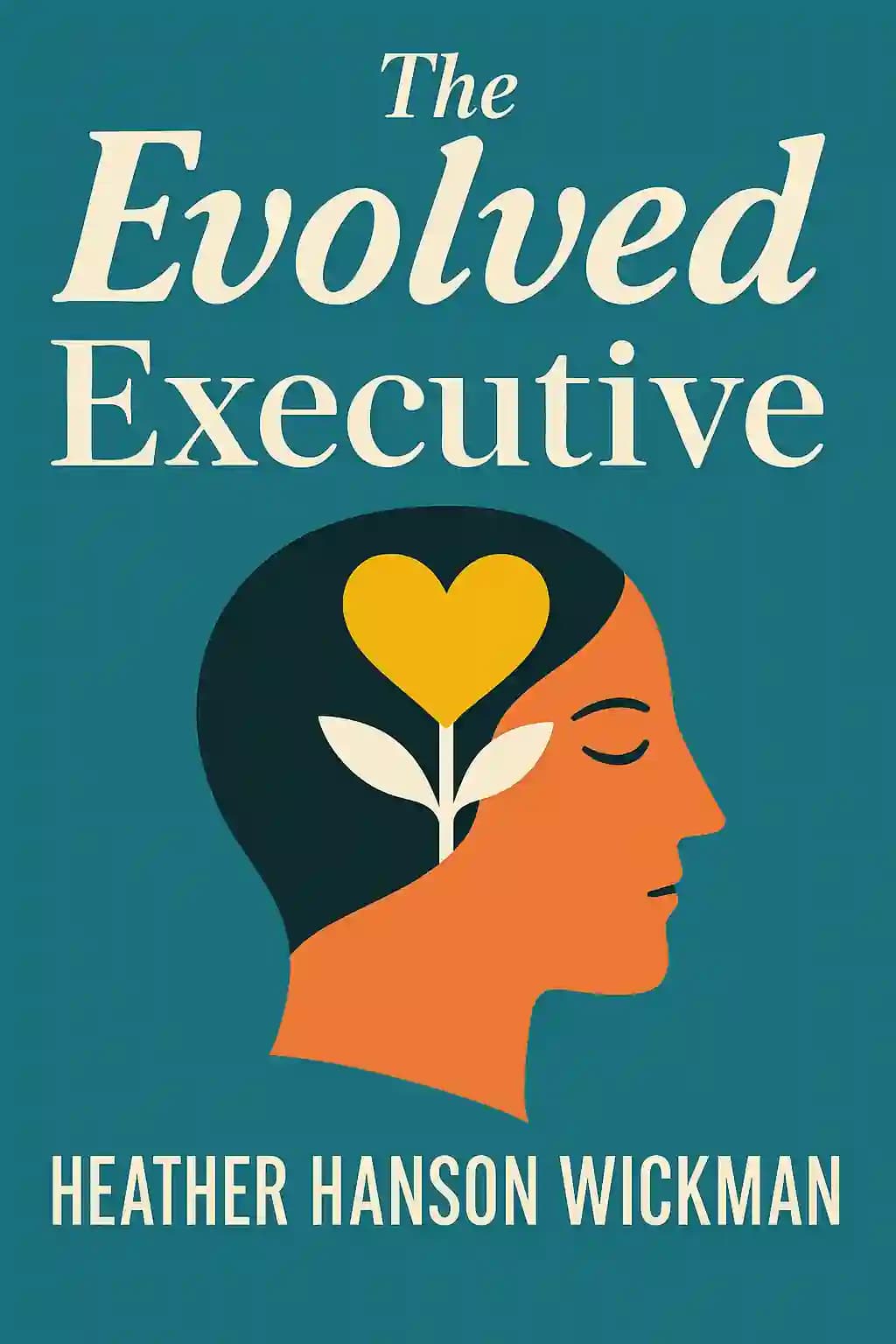
Evolved Executive
The Future of Work Is Love in Action
Evolved Executive 개요
"The Evolved Executive" revolutionizes leadership through love and self-awareness. Featured on Marcel Schwantes' influential podcast, Wickman's approach addresses today's critical workplace challenges. What if the solution to high turnover isn't better benefits, but creating a culture where employees feel genuinely seen?
Evolved Executive의 핵심 주제
- compassionate leadership
- psychological safety
- vulnerability in business
- human-centric workplace
- conscious management
Evolved Executive의 명언
The way we work is broken.
Companies that continue to operate on fear and rigid hierarchies are falling behind.
Evolved executives understand that leadership starts from within.
Old habits die hard.
The rewards are worth it.
Evolved Executive의 등장인물
- Heather Hanson WickmanAuthor and researcher of evolved leadership
저자 소개
Evolved Executive의 저자 소개
Heather Hanson Wickman, PhD, is the author of The Evolved Executive: The Future of Work Is Love in Action and a renowned expert in leadership development and organizational transformation. With a bachelor’s in human resource development, a master’s in HR and industrial relations, and a PhD in organizational systems, she combines academic rigor with real-world experience as a former healthcare executive and founder of Untethered, a coaching organization focused on awakening conscious leadership. Her book, rooted in business and leadership genres, challenges traditional corporate structures by advocating for soulful, purpose-driven workplaces that prioritize empathy, adaptability, and employee empowerment.
Wickman’s insights are shaped by her work coaching C-suite leaders and designing innovative strategies for modern organizations. She is a frequent speaker on topics like servant leadership and systemic change, and her methodologies integrate unconventional modalities such as equine therapy and plant medicine.
Her platform, Untethered, offers transformative retreats and resources for leaders seeking to align their work with deeper values. The Evolved Executive has been praised for its actionable framework to revitalize workplace culture, earning recognition as a trusted guide for executives aiming to lead with compassion and impact.
Evolved Executive 요약 다운로드
Evolved Executive 요약을 무료 PDF 또는 EPUB으로 받으세요. 인쇄하거나 오프라인에서 언제든 읽을 수 있습니다.
이 책에 대한 FAQ
The Evolved Executive presents a leadership model centered on soul, purpose, and love, advocating for servant leadership over traditional fear-based tactics. Heather Hanson Wickman emphasizes self-awareness, mindfulness, and fostering trust to create adaptive, human-centric workplaces. The book provides actionable steps, real-world examples, and exercises to help leaders transition from rigid hierarchies to collaborative, conscious systems.
This book is ideal for executives, HR professionals, and leaders seeking to modernize workplace culture through empathy and innovation. It’s also valuable for individuals interested in organizational psychology, leadership development, or transitioning teams toward flexibility and transparency. Wickman’s insights resonate with those prioritizing employee well-being and sustainable growth.
Yes, reviewers praise its practical framework for addressing workplace stagnation and fostering psychological safety. The blend of academic rigor (rooted in Wickman’s Ph.D. in organizational systems) and accessible storytelling makes it a standout guide for leaders navigating modern workforce challenges. Readers appreciate its focus on actionable steps over abstract theories.
An Evolved Executive is a servant leader who prioritizes stewardship of their team and organization. They cultivate self-awareness, embrace continuous personal growth, and replace fear-driven behaviors (gossip, secrecy) with transparency and trust. Wickman combines scientific principles with an “artistic” emphasis on love-in-action to redefine leadership success.
Key ideas include:
- Servant leadership: Leading by empowering others.
- Mindfulness in business: Being present to foster intentional decisions.
- Fear vs. love: Identifying fear-based patterns (e.g., “Yes Boss” culture) and replacing them with collaboration.
- Horizontal vs. vertical thinking: Prioritizing adaptable networks over rigid hierarchies.
Wickman identifies gossip, secrecy, and blind compliance as signs of fear-dominated cultures. She advocates mindfulness practices, truth-telling, and decentralizing power to build trust. For example, leaders are urged to share information openly and encourage dissent to counteract fear.
Vertical thinking relies on top-down control and fixed processes, while horizontal thinking prioritizes fluid collaboration and employee autonomy. Wickman argues that horizontal frameworks better align with modern workers’ needs for creativity and purpose.
Some reviewers note the book assumes a baseline openness to “soft” leadership styles, which may challenge traditional executives. Others highlight its reliance on readers to actively implement strategies rather than offering quick fixes. However, most praise its innovative approach.
Unlike transactional leadership guides, Wickman’s work integrates emotional intelligence and systemic change. It shares ground with Dare to Lead (Brené Brown) but stands out for its focus on organizational consciousness and measurable steps to eradicate fear-based practices.
- “Fear shows up as gossip, secrecy, and not speaking the truth.”
- “The future of work is love in action.”
These lines encapsulate Wickman’s argument for replacing outdated power dynamics with empathy and accountability.
Leaders can:
- Conduct “fear audits” to identify toxic patterns.
- Implement mindfulness sessions to enhance team presence.
- Redesign workflows to prioritize employee input and well-being.
Case studies in the book show improved retention and innovation post-implementation.
With remote/hybrid work and Gen Z’s demand for purposeful careers, Wickman’s emphasis on trust and adaptability remains critical. The book addresses burnout and disengagement by redefining success through collective growth rather than short-term metrics.
Wickman holds a Ph.D. in organizational systems and co-founded Untethered, a coaching firm. Her 20+ years in HR and leadership development at Kaiser Permanente inform her evidence-based, compassionate approach to organizational change.