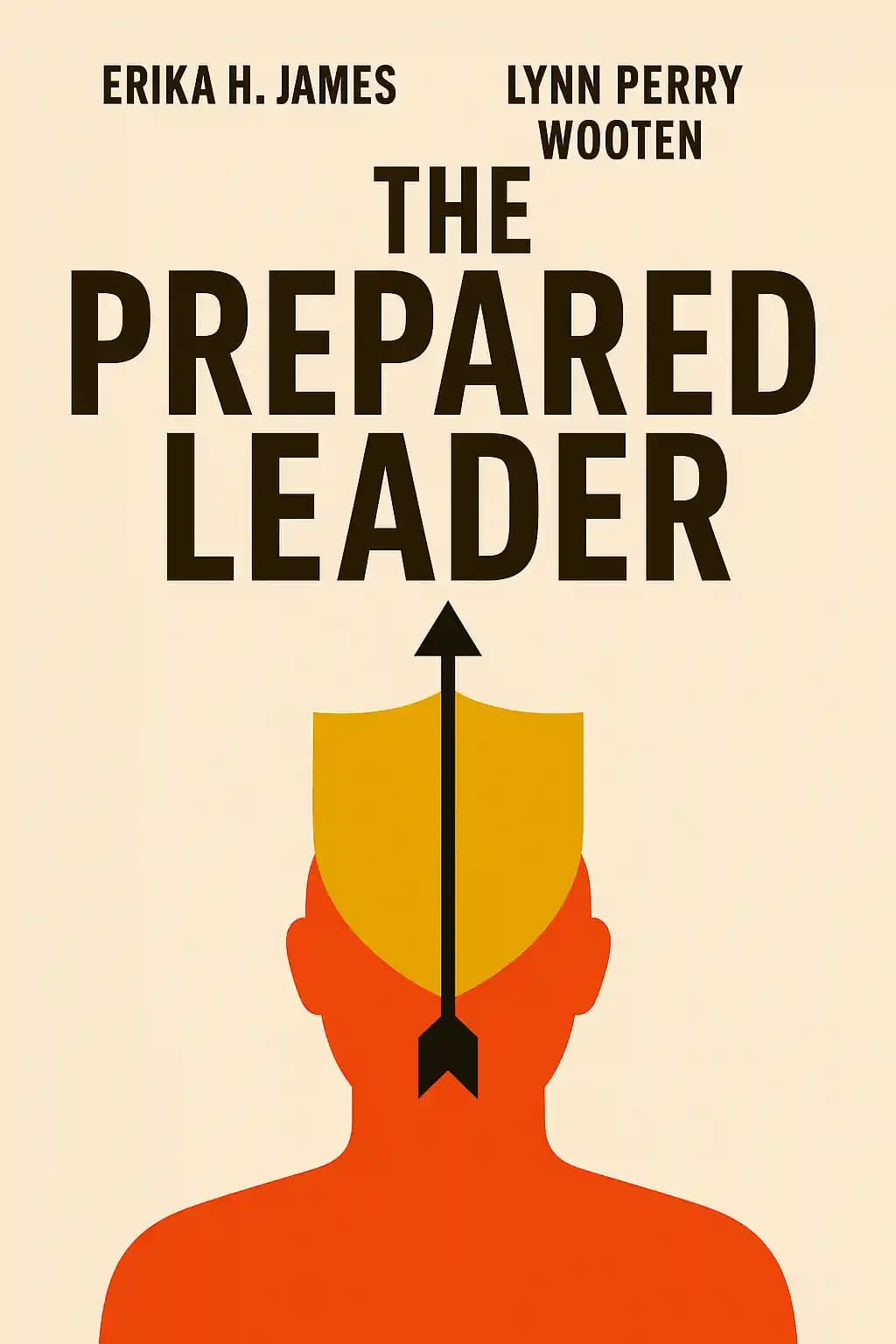
In "The Prepared Leader," Wharton's Dean Erika James and Simmons University President Lynn Wooten reveal why crisis-ready leadership should be your fourth bottom line. What leadership approach united NBA Commissioner Adam Silver and Burger King's CEO during unprecedented chaos? The answer reshapes modern resilience.
Erika H. James and Lynn Perry Wooten, co-authors of The Prepared Leader: Emerge from Any Crisis More Resilient Than Before, are renowned experts in organizational psychology and crisis leadership.
James is the first woman and person of color to lead the Wharton School. She brings decades of research on workplace diversity and resilience strategies honed through executive roles at Emory University and advisory positions with Fortune 500 companies like Morgan Stanley.
Wooten is president of Simmons University and former dean of Cornell’s Dyson School. She integrates her expertise in organizational turnaround and inclusive leadership frameworks.
Their leadership manual blends real-world crisis management case studies with actionable strategies for adaptability, drawing from James’ groundbreaking Women’s Leadership Program and Wooten’s award-winning research on organizational healing. The duo also collaborated on Leading Under Pressure: From Surviving to Thriving Before, During, and After a Crisis, establishing them as essential voices in modern leadership literature.
James, named to Barron’s 100 Most Influential Women in Finance, and Wooten, a celebrated diversity strategist, have seen their frameworks adopted by global institutions and MBA programs.
The Prepared Leader provides strategies for navigating crises through actionable frameworks and real-world case studies. Co-authored by Erika H. James and Lynn Perry Wooten, it outlines five phases of crisis management, decision-making under pressure, and team-building tactics. Examples include the NBA’s COVID-19 response and Burger King’s mid-crisis planning. The book argues that prepared leadership should be a core organizational value, alongside profit and sustainability.
Executives, managers, and aspiring leaders across industries will benefit from this book. It’s particularly valuable for those responsible for crisis preparedness, organizational resilience, or team leadership. The insights apply to both corporate and nonprofit sectors, offering tools for leaders at all levels to thrive during disruptions.
Yes—the book combines academic research with practical tools, making it accessible for busy professionals. Its crisis management frameworks, such as the five-phase model, are backed by case studies from Adam Silver (NBA) and Wonya Lucas (Crown Media). Readers gain actionable steps to build resilience and lead effectively under pressure.
The authors identify preparation, recognition, response, recovery, and reflection as critical phases. Each phase requires distinct skills, such as anticipatory planning during preparation or adaptive decision-making during response. The NBA’s pandemic response exemplifies executing these phases systematically.
The book emphasizes balancing speed and accuracy by leveraging data, diverse perspectives, and pre-established protocols. Burger King CEO José Cil’s approach to planning post-crisis recovery mid-disruption illustrates this principle. Common pitfalls like overconfidence or analysis paralysis are also addressed.
Effective teams require role clarity, psychological safety, and aligned priorities. The authors highlight Wonya Lucas’s success in mobilizing Crown Media’s executive team by fostering trust and clear communication. Strategies for inheriting or restructuring existing teams are also covered.
James and Wooten argue that prepared leadership is as vital as profit, people, and the planet. Organizations must invest in leadership development to ensure long-term resilience. This mindset shift helps companies anticipate crises rather than merely react to them.
Unlike generic leadership guides, this book focuses specifically on crisis contexts, blending academic rigor with corporate and nonprofit examples. It complements classics like Leaders Eat Last but adds a unique emphasis on pre-crisis preparation.
With ongoing global disruptions—from climate events to tech shifts—the book’s frameworks remain critical. Its emphasis on adaptive leadership and continuous learning aligns with modern challenges like AI integration and hybrid work models.
Some readers may find its corporate focus less applicable to small businesses. However, the principles are adaptable, and the authors encourage tailoring strategies to organizational size and industry.
“Prepared leadership should be the fourth ‘P’ in a company’s bottom line.” This underscores the book’s thesis that leadership readiness is a measurable driver of organizational success.
It builds on her research in crisis leadership and diversity, echoing themes from Leading Under Pressure. Her focus on inclusive, forward-thinking strategies remains consistent across publications.
저자의 목소리로 책을 느껴보세요
지식을 흥미롭고 예시가 풍부한 인사이트로 전환
핵심 아이디어를 빠르게 캡처하여 신속하게 학습
재미있고 매력적인 방식으로 책을 즐기세요
Prepared leadership anticipates crises, builds the right systems, and emerges stronger.
We respond with alarm during crises but immediately relax afterward.
Planning for the unlikely and unknowable can be integrated into everyday leadership practice.
How you communicate during this phase is critical.
Without learning capabilities, organizations remain vulnerable to future threats.
Prepared Leader의 핵심 아이디어를 이해하기 쉬운 포인트로 분해하여 혁신적인 팀이 어떻게 창조하고, 협력하고, 성장하는지 이해합니다.
Prepared Leader을 빠른 기억 단서로 압축하여 솔직함, 팀워크, 창의적 회복력의 핵심 원칙을 강조합니다.

생생한 스토리텔링을 통해 Prepared Leader을 경험하고, 혁신 교훈을 기억에 남고 적용할 수 있는 순간으로 바꿉니다.
무엇이든 물어보고, 목소리를 선택하고, 진정으로 공감되는 인사이트를 함께 만들어보세요.

샌프란시스코에서 컬럼비아 대학교 동문들이 만들었습니다
"Instead of endless scrolling, I just hit play on BeFreed. It saves me so much time."
"I never knew where to start with nonfiction—BeFreed’s book lists turned into podcasts gave me a clear path."
"Perfect balance between learning and entertainment. Finished ‘Thinking, Fast and Slow’ on my commute this week."
"Crazy how much I learned while walking the dog. BeFreed = small habits → big gains."
"Reading used to feel like a chore. Now it’s just part of my lifestyle."
"Feels effortless compared to reading. I’ve finished 6 books this month already."
"BeFreed turned my guilty doomscrolling into something that feels productive and inspiring."
"BeFreed turned my commute into learning time. 20-min podcasts are perfect for finishing books I never had time for."
"BeFreed replaced my podcast queue. Imagine Spotify for books — that’s it. 🙌"
"It is great for me to learn something from the book without reading it."
"The themed book list podcasts help me connect ideas across authors—like a guided audio journey."
"Makes me feel smarter every time before going to work"
샌프란시스코에서 컬럼비아 대학교 동문들이 만들었습니다

Prepared Leader 요약을 무료 PDF 또는 EPUB으로 받으세요. 인쇄하거나 오프라인에서 언제든 읽을 수 있습니다.
Picture this: It's March 11, 2020. COVID-19 cases are surging worldwide. NBA Commissioner Adam Silver makes a stunning decision - suspending the entire NBA season despite hundreds of millions in potential revenue losses. This wasn't rash decision-making; it was prepared leadership in action. Silver had consulted experts, built organizational alignment, and prioritized public health over profit. His subsequent creation of the NBA "bubble" would save $1.5 billion while keeping everyone COVID-free. This exemplifies the prepared leader - someone who anticipates crises, builds responsive systems, and emerges stronger when disaster strikes. In our increasingly volatile world, crisis preparation isn't optional - it's essential. The pandemic demonstrated how quickly catastrophe can spread in our interconnected world, collapsing economies and breaking supply chains in mere weeks. Yet despite decades of warnings from experts like Bill Gates, who gave his famous 2015 TED talk about pandemic inevitability, we remained fundamentally unprepared. Why? Because we're trapped in what former World Bank president Jim Yong Kim called the "cycle of panic, neglect, panic, neglect" - responding with alarm during crises but immediately relaxing afterward, allowing critical response mechanisms to atrophy.