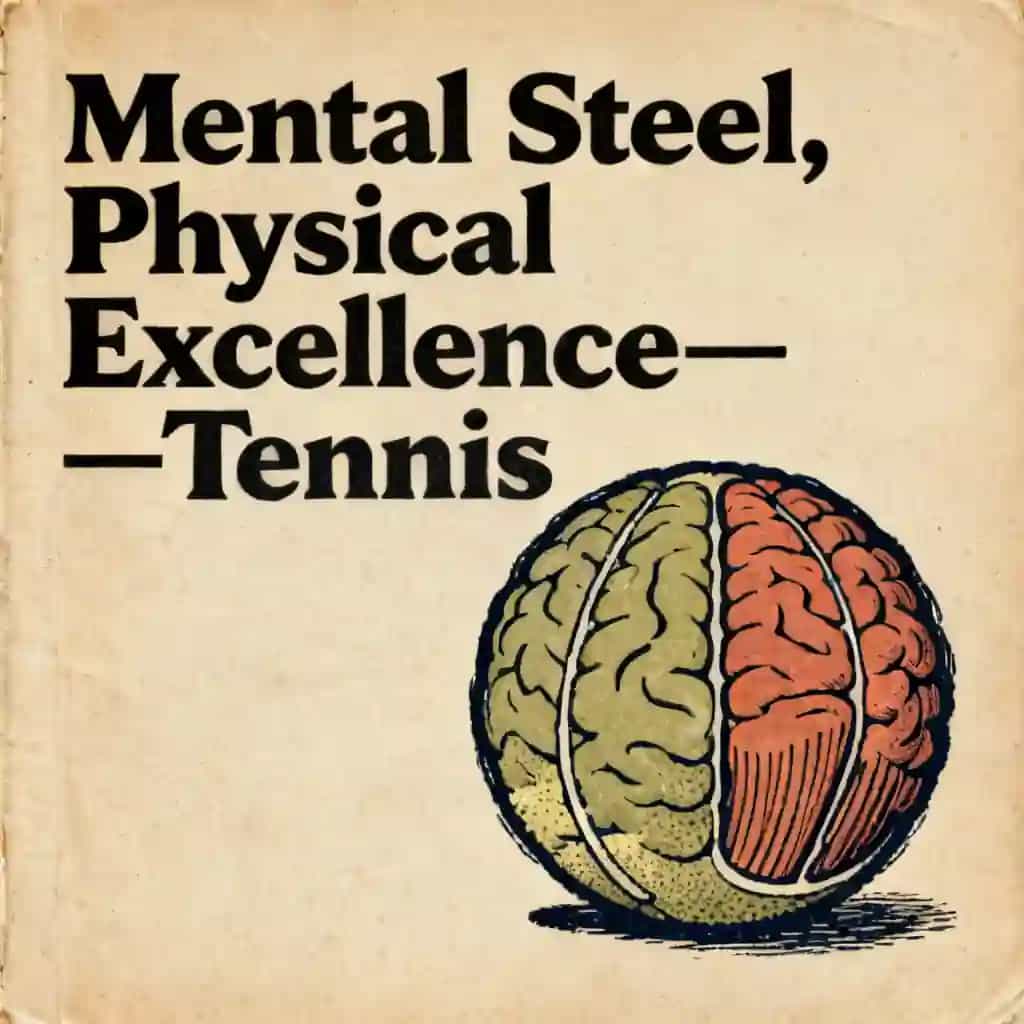
The inner game of tennis by W. Timothy Gallwey Summary

Overview of The inner game of tennis
Beyond tennis, this mental masterpiece has sold over a million copies by revealing how we defeat ourselves before opponents do. Bill Gates calls it "groundbreaking" while Billie Jean King deems it her "tennis bible." What internal battle is holding you back?
- Master the inner game by quieting Self 1's criticism to unlock Self 2's natural ability
- Replace self-judgment with nonjudgmental awareness to enhance performance in tennis and beyond
- Trust Self 2's unconscious competence through calm focus rather than forceful control
- Letting go of conscious effort allows Self 2 to execute skills effortlessly
- True competition means overcoming internal obstacles, not defeating external opponents
- Concentration quiets mental chatter, creating space for Self 2's optimal performance
- Self 1's overthinking disrupts flow; Self 2's intuition achieves peak execution
- Embrace mistakes as feedback without judgment to accelerate skill development
- Winning the inner game requires balancing fierce desire with detached process focus
- The "effortless effort" of Self 2 outperforms Self 1's strained trying
- Build self-trust by allowing Self 2 to learn from both success and failure
- Gallwey's inner game principles transform sports performance into life mastery
About the Author of The inner game of tennis
W. Timothy Gallwey, bestselling author of The Inner Game of Tennis: The Classic Guide to the Mental Side of Peak Performance, is a pioneering figure in performance psychology and modern coaching. Born in 1938 in San Francisco, Gallwey drew from his experience as captain of Harvard University’s tennis team and his study of meditation to develop the revolutionary "Inner Game" methodology.
His work bridges sports, business, and personal development, emphasizing non-judgmental focus and overcoming self-doubt to unlock natural potential.
A former professional tennis instructor, Gallwey expanded his principles into acclaimed titles like The Inner Game of Work and The Inner Game of Golf, which apply his framework to organizational leadership and other disciplines. His books have collectively sold millions of copies worldwide, with The Inner Game of Tennis alone exceeding one million sales since its 1974 debut.
Gallwey’s strategies are widely adopted by Fortune 500 companies, sports coaches, and educators, cementing his legacy as a foundational voice in peak performance training.
FAQs About The inner game of tennis
What is The Inner Game of Tennis by W. Timothy Gallwey about?
The Inner Game of Tennis explores the psychological battle athletes face against self-doubt, lapses in focus, and overthinking. Gallwey introduces the "Inner Game" concept, emphasizing the relationship between Self 1 (conscious critic) and Self 2 (unconscious executor). By fostering trust in one’s natural abilities and practicing nonjudgmental awareness, players achieve "relaxed concentration" for peak performance. The book’s principles extend beyond tennis to personal and professional growth.
Who should read The Inner Game of Tennis?
This book is ideal for athletes, coaches, and professionals seeking to overcome mental barriers like anxiety or self-criticism. It’s equally valuable for non-tennis players interested in mindfulness, stress management, or improving focus in high-pressure contexts. Gallwey’s insights resonate with anyone aiming to harness their unconscious potential for better decision-making and creativity.
Is The Inner Game of Tennis worth reading?
Yes, it’s a timeless guide to mastering mental resilience. Despite its sports focus, its lessons on self-trust, nonjudgmental observation, and reducing overthinking apply broadly. Praised by Bill Gates and translated into 12+ languages, the book’s simplicity and actionable frameworks make it a standout in performance psychology.
Who is W. Timothy Gallwey?
W. Timothy Gallwey (b. 1938) is a former Harvard tennis captain turned pioneer in performance coaching. His "Inner Game" methodology, developed in the 1970s, revolutionized sports training and influenced modern business coaching. He’s authored 10+ books, including The Inner Game of Work, with over a million copies sold worldwide.
What are the key concepts in The Inner Game of Tennis?
- Self 1 vs. Self 2: The critical mind (Self 1) often sabotages the intuitive, capable self (Self 2).
- Nonjudgmental Awareness: Observing actions without labeling them "good" or "bad" reduces mental interference.
- Relaxed Concentration: Effortless focus emerges when Self 1 stops overcontrolling.
- Trust in Natural Learning: Letting the body learn instinctively improves consistency.
How does The Inner Game of Tennis apply to everyday life?
Gallwey’s principles help professionals manage stress, artists overcome creative blocks, and leaders improve decision-making. For example, replacing self-criticism with observational feedback ("The ball went left" vs. "You’re terrible") enhances learning. The book’s approach is widely used in corporate training, music, and education.
What is the “secret to winning” according to Gallwey?
“The secret to winning any game lies in not trying too hard.” Overeffort creates tension, while trusting Self 2’s capabilities leads to fluid performance. This paradox emphasizes letting go of conscious control to unlock innate potential.
How does The Inner Game of Tennis compare to Atomic Habits?
While Atomic Habits focuses on incremental behavior change, Gallwey’s work targets the mental barriers hindering performance. Both emphasize subconscious learning, but The Inner Game prioritizes mindfulness over habit-stacking. Together, they offer complementary strategies for personal growth.
What are common criticisms of The Inner Game of Tennis?
Some reviewers argue its sports-centric examples limit accessibility for non-athletes. Others note the lack of empirical data, though its pre-neuroscience era insights remain influential. Critics acknowledge its repetitive structure but praise its practicality.
What quotes define The Inner Game of Tennis?
- “The opponent within one’s own head is more formidable than the one on the other side of the net.”
- “When the mind is free of any thought or judgment, it is still and acts like a mirror.”
These highlight Gallwey’s emphasis on internal clarity over external rivalry.
Why is The Inner Game of Tennis relevant in 2025?
In an era of burnout and digital distraction, its lessons on mental quieting and focus are critical. Companies use Gallwey’s frameworks to combat workplace stress, while educators apply them to foster student resilience. The book’s emphasis on mindfulness aligns with modern wellness trends.
How can I practice the Inner Game principles?
- Observe Without Judgment: Track actions neutrally (e.g., “My serve landed short”).
- Visualize Success: Imagine ideal outcomes before acting.
- Let Go of Overcontrol: Allow muscle memory to guide repetitive tasks.
- Celebrate Small Wins: Reinforce Self 2’s competence through positive feedback.
Feel the book through the author's voice
Turn knowledge into engaging, example-rich insights
Capture key ideas in a flash for fast learning
Enjoy the book in a fun and engaging way
Key Themes in The inner game of tennis
Quotes from The inner game of tennis
The mental game became recognized as equally important as physical skill.
Self 1 is the conscious, analytical mind that constantly judges.
Performance improves when Self 1 steps back.
When we unlearn how to be judgmental, we discover how to learn.
Trust forms the foundation of true self-confidence.
Characters in The inner game of tennis
Quick Summary Mode - Read or listen to The inner game of tennis Summary in 11 Minutes

Break down key ideas from The inner game of tennis into bite-sized takeaways to understand how innovative teams create, collaborate, and grow.

Flash Card Mode - Top 11 Insights from The inner game of tennis in a Nutshell

Distill The inner game of tennis into rapid-fire memory cues that highlight key principles of candor, teamwork, and creative resilience.

Fun Mode - The inner game of tennis Lessons Told Through 21-Min Stories

Experience The inner game of tennis through vivid storytelling that turns innovation lessons into moments you'll remember and apply.
Personalize Mode - Read or listen to The inner game of tennis Summary in 0 Minutes

Ask anything, pick the voice, and co-create insights that truly resonate with you.

From Columbia University alumni built in San Francisco
"Instead of endless scrolling, I just hit play on BeFreed. It saves me so much time."


"I never knew where to start with nonfiction—BeFreed’s book lists turned into podcasts gave me a clear path."


"Perfect balance between learning and entertainment. Finished ‘Thinking, Fast and Slow’ on my commute this week."
"Crazy how much I learned while walking the dog. BeFreed = small habits → big gains."
"Reading used to feel like a chore. Now it’s just part of my lifestyle."

"Feels effortless compared to reading. I’ve finished 6 books this month already."
"BeFreed turned my guilty doomscrolling into something that feels productive and inspiring."

"BeFreed turned my commute into learning time. 20-min podcasts are perfect for finishing books I never had time for."
"BeFreed replaced my podcast queue. Imagine Spotify for books — that’s it. 🙌"

"It is great for me to learn something from the book without reading it."
"The themed book list podcasts help me connect ideas across authors—like a guided audio journey."
"Makes me feel smarter every time before going to work"
From Columbia University alumni built in San Francisco
"Instead of endless scrolling, I just hit play on BeFreed. It saves me so much time."
"I never knew where to start with nonfiction—BeFreed’s book lists turned into podcasts gave me a clear path."
"Perfect balance between learning and entertainment. Finished ‘Thinking, Fast and Slow’ on my commute this week."
"Crazy how much I learned while walking the dog. BeFreed = small habits → big gains."
"Reading used to feel like a chore. Now it’s just part of my lifestyle."
"Feels effortless compared to reading. I’ve finished 6 books this month already."
"BeFreed turned my guilty doomscrolling into something that feels productive and inspiring."
"BeFreed turned my commute into learning time. 20-min podcasts are perfect for finishing books I never had time for."
"BeFreed replaced my podcast queue. Imagine Spotify for books — that’s it. 🙌"
"It is great for me to learn something from the book without reading it."
"The themed book list podcasts help me connect ideas across authors—like a guided audio journey."
"Makes me feel smarter every time before going to work"
"Instead of endless scrolling, I just hit play on BeFreed. It saves me so much time."
"I never knew where to start with nonfiction—BeFreed’s book lists turned into podcasts gave me a clear path."
"Perfect balance between learning and entertainment. Finished ‘Thinking, Fast and Slow’ on my commute this week."
"Crazy how much I learned while walking the dog. BeFreed = small habits → big gains."
"Reading used to feel like a chore. Now it’s just part of my lifestyle."
"Feels effortless compared to reading. I’ve finished 6 books this month already."
"BeFreed turned my guilty doomscrolling into something that feels productive and inspiring."
"BeFreed turned my commute into learning time. 20-min podcasts are perfect for finishing books I never had time for."
"BeFreed replaced my podcast queue. Imagine Spotify for books — that’s it. 🙌"
"It is great for me to learn something from the book without reading it."
"The themed book list podcasts help me connect ideas across authors—like a guided audio journey."
"Makes me feel smarter every time before going to work"
"Instead of endless scrolling, I just hit play on BeFreed. It saves me so much time."
"I never knew where to start with nonfiction—BeFreed’s book lists turned into podcasts gave me a clear path."
"Perfect balance between learning and entertainment. Finished ‘Thinking, Fast and Slow’ on my commute this week."
"Crazy how much I learned while walking the dog. BeFreed = small habits → big gains."
"Reading used to feel like a chore. Now it’s just part of my lifestyle."
"Feels effortless compared to reading. I’ve finished 6 books this month already."
"BeFreed turned my guilty doomscrolling into something that feels productive and inspiring."
"BeFreed turned my commute into learning time. 20-min podcasts are perfect for finishing books I never had time for."
"BeFreed replaced my podcast queue. Imagine Spotify for books — that’s it. 🙌"
"It is great for me to learn something from the book without reading it."
"The themed book list podcasts help me connect ideas across authors—like a guided audio journey."
"Makes me feel smarter every time before going to work"

Get the The inner game of tennis summary as a free PDF or EPUB. Print it or read offline anytime.