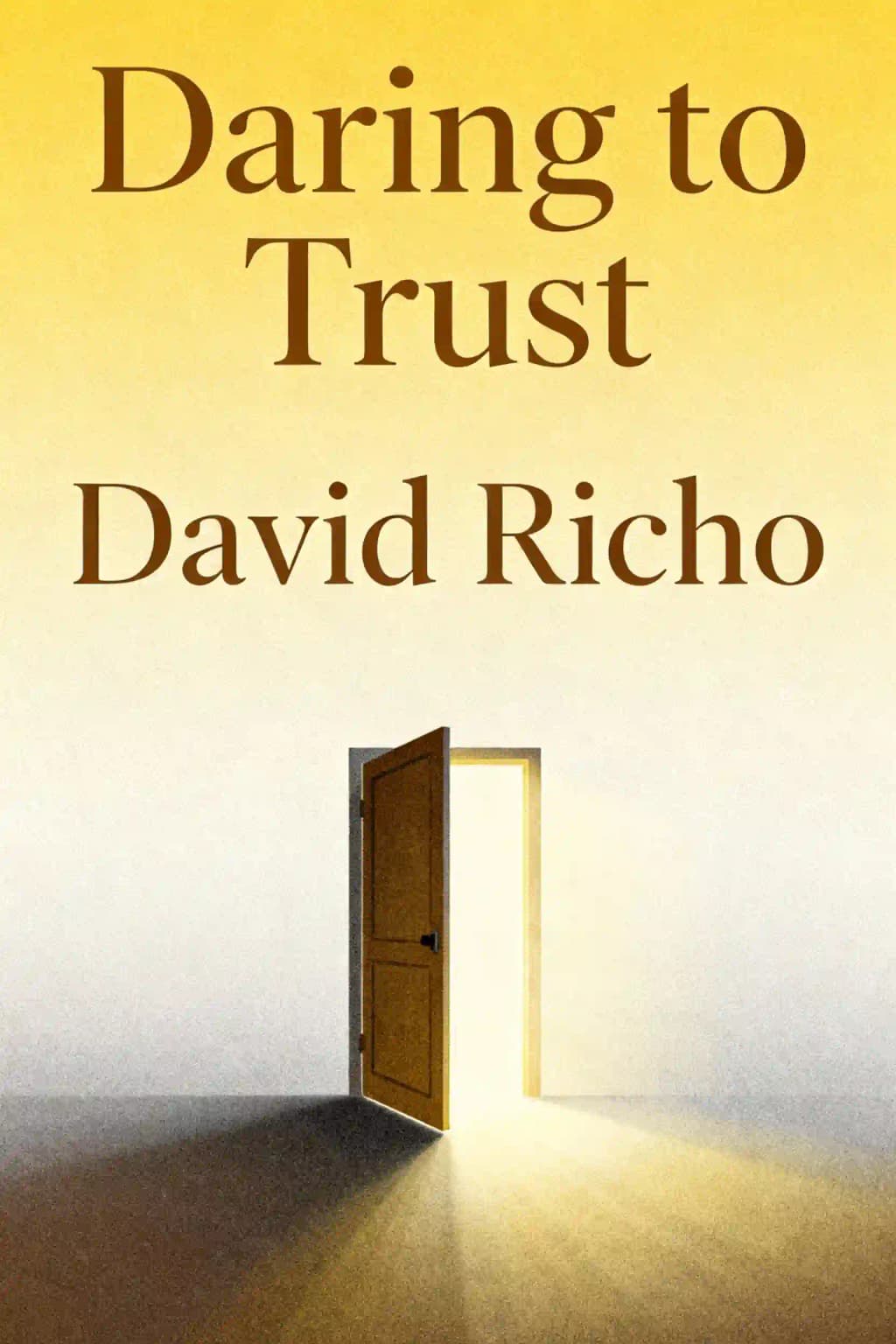
Daring to Trust
Opening Ourselves to Real Love and Intimacy
Overview of Daring to Trust
In "Daring to Trust," psychotherapist David Richo reveals how childhood shapes our ability to trust. Endorsed by spiritual leader Jack Kornfield as "beautifully wise," this guide unpacks the "Five A's" framework that transforms relationships. Can you truly love without first trusting yourself?

Key Themes in Daring to Trust
- emotional attunement
- attachment theory
- interpersonal reliability
- self-soothing techniques
- abandonment fear
Quotes from Daring to Trust
Trust is both our deepest need and our finest risk.
Guarded individuals survived better than gullible ones.
Our deepest need isn't for someone to rescue us, but for someone who remains present during our struggles.
Movement itself counteracts loneliness.
Characters in Daring to Trust
- David RichoAuthor and therapist who developed the framework
About the Author
About the Author of Daring to Trust
David Richo, PhD, MFT, is a psychotherapist and bestselling author of Daring to Trust: Opening Ourselves to Real Love and Connection. He merges Jungian psychology, Buddhist principles, and spiritual wisdom to address themes of trust, vulnerability, and relational healing.
A licensed therapist since 1976, Richo draws from decades of clinical practice and teaching at institutions like UC Berkeley, Pacifica Graduate Institute, and Spirit Rock Meditation Center.
His work bridges psychological depth with accessible mindfulness practices, exemplified in acclaimed titles such as How to Be an Adult in Relationships (a 20th-anniversary bestseller) and The Five Things We Cannot Change.
A sought-after workshop leader featured on podcasts like The Mindful Path and Spiritually-Oriented Podcasts, Richo’s insights resonate globally. His books are widely recommended in therapeutic and spiritual communities, solidifying his reputation as a trusted guide for personal and relational transformation.
Download Summary of Daring to Trust
Get the Daring to Trust summary as a free PDF or EPUB. Print it or read offline anytime.
FAQs About This Book
Daring to Trust explores how trust forms the foundation of healthy relationships and emotional well-being. Psychotherapist David Richo identifies four pillars: trust in oneself, others, life’s unpredictability, and a spiritual path. The book combines psychological insights, Buddhist principles, and practical exercises to address trust issues like fear of commitment or betrayal, offering tools to rebuild security and foster intimacy.
This book is ideal for individuals struggling with trust in relationships, including fear of intimacy or past betrayals. It’s also valuable for therapists, mindfulness practitioners, and readers interested in Jungian psychology or Buddhist approaches to emotional healing. Richo’s blend of self-help strategies and spiritual wisdom appeals to those seeking personal growth or deeper relational connections.
Yes, especially for its actionable frameworks and integration of psychology with spirituality. Readers praise its exercises for rebuilding trust, self-assessment tools, and Richo’s compassionate tone. Critics highlight its relevance for navigating modern relationship challenges, though some may find its spiritual themes abstract. Publishers Weekly calls it a “slim book [with] real-world advice”.
Richo outlines trust in four directions:
- Self: Confidence in one’s worth and decisions.
- Others: Believing in others’ goodwill without naivety.
- Life: Accepting uncertainty and adversity.
- Spiritual: Reliance on a higher power or universal principles.
These pillars aim to reduce fear and create relational safety.
Healthy trust involves mindful vulnerability, acknowledging risks while setting boundaries. Naïve trust ignores red flags or expects unrealistic perfection. Richo emphasizes adult trust balances openness with self-protection, unlike childhood patterns that bypass discernment.
Key practices include:
- Journaling to trace trust issues to childhood experiences.
- Mindfulness meditations to sit with distrust nonreactively.
- Role-playing conversations to assert boundaries.
- Self-inquiry questions like, “What does this need reveal about me?”
These tools aim to deepen self-awareness and relational skills.
Richo advises rebuilding trust through honest communication, accountability, and gradual risk-taking. He stresses self-trust as the foundation: “Safety starts within.” The book rejects forced forgiveness, instead advocating for boundaries and assessing others’ willingness to change.
Richo integrates mindfulness to observe distrust without judgment, compassion toward oneself and others’ imperfections, and non-attachment to rigid outcomes. These principles help readers reframe trust as a present-moment practice rather than a guarantee.
Early experiences of neglect or inconsistent care create “schemas” that distort adult relationships. For example, unmet needs for safety may manifest as clinginess or withdrawal. Richo encourages revisiting childhood patterns to reframe current triggers with self-compassion.
Some readers find the spiritual elements (e.g., trusting a “higher power”) too vague for secular audiences. Others note the exercises require consistent practice to see results. However, most praise its depth, with Portland Book Review stating it “benefits everyone involved”.
Both books emphasize emotional maturity, but Daring to Trust focuses specifically on overcoming fear and insecurity, while How to Be an Adult addresses broader relationship skills like communication. Richo’s later work integrates more Buddhist practices compared to his earlier Jungian focus.
Yes. By reframing anxiety as a signal to explore unmet needs, Richo’s approach reduces shame. Exercises like “trust-building dialogues” help partners co-create security. The book also advises distinguishing between healthy concern and irrational fear rooted in past trauma.