Power: Why Some People Have It—and Others Don't by Jeffrey Pfeffer Summary

Overview of Power
Jeffrey Pfeffer's "Power" shatters workplace myths: success isn't about talent but political savvy. Praised by Jim Collins as "indispensable" and ranked among Thinkers50's top management guides, it reveals why nice guys finish last. Ready to play the real game?
- Power dynamics determine career success more than performance or merit
- Self-promotion beats modesty in gaining visibility and career traction
- Networking’s weak ties prove more valuable than close relationships
- Appearance of power often matters more than actual competence
- Political savvy outperforms technical skill in leadership advancement
- Hierarchies reward rule-breakers who create new power structures
- Power acquisition requires tolerating conflict and strategic self-interest
- Leadership myths fail: likability matters less than perceived authority
- Success justifies power grabs—failure attracts disproportionate blame
- Power preserves health by reducing helplessness-induced stress hormones
- Career acceleration needs ambitious self-reinvention over authenticity
- Power’s health benefits offset by isolation and distorted feedback loops
About the Author of Power
Jeffrey Pfeffer, author of Power: Why Some People Have It—and Others Don’t, is a Stanford University professor and a leading authority on organizational behavior and workplace dynamics. A bestselling author and contrarian thinker, Pfeffer’s work challenges conventional leadership wisdom, emphasizing evidence-based strategies for career advancement and organizational influence. His expertise stems from decades as the Thomas D. Dee II Professor at Stanford’s Graduate School of Business, where his course on power dynamics has shaped MBA students and executives since 1979.
Pfeffer’s prolific career includes 16 books like Leadership B.S. and The Knowing-Doing Gap, along with hosting the Pfeffer on Power podcast and contributing to Fortune and Business 2.0. His research, cited in over 160 articles, informs practices at companies like Southwest Airlines and institutions worldwide.
Power consolidates his insights into actionable frameworks for navigating corporate politics, drawn from case studies and global teaching engagements. The book has become a staple in leadership curricula and corporate training programs, solidifying Pfeffer’s reputation as a pragmatic voice in career strategy.
FAQs About Power
What is Power: Why Some People Have It—and Others Don’t about?
Jeffrey Pfeffer’s Power examines how to build influence in organizations, arguing that merit alone rarely guarantees success. It provides actionable strategies for gaining power, including cultivating visibility, building strategic networks, and mastering organizational politics. The book challenges the “just-world fallacy,” emphasizing proactive self-advocacy over passive reliance on hard work.
Who should read Power: Why Some People Have It—and Others Don’t?
Aspiring leaders, mid-career professionals, and anyone navigating hierarchical workplaces will benefit. Pfeffer’s insights are particularly valuable for roles requiring influence without formal authority, such as product managers or cross-functional leads. Critics note its pragmatic—some say cynical—approach to organizational dynamics.
Is Power: Why Some People Have It—and Others Don’t worth reading?
Yes, for its evidence-based tactics on career advancement. Pfeffer combines academic research (e.g., linking power to longevity) with case studies of figures like Jack Welch. While some criticize its ethical ambiguity, the book’s unflinching look at workplace realities makes it a standout in leadership literature.
What are the 7 qualities for building power according to Pfeffer?
- Ambition
- Energy
- Focus
- Self-knowledge
- Confidence
- Empathy
- Conflict tolerance
Notably, intelligence and job performance are excluded. Pfeffer argues these traits can be developed through deliberate practice.
How does Power address health and longevity?
Low-power roles correlate with higher mortality risks, per a 7,372-subject UK study. Stress from lack of control—not just lifestyle factors—drives this disparity. Pfeffer urges readers to “seek power as if your life depends on it,” linking status to biological resilience.
What is the “just-world hypothesis” critique in Power?
The myth that merit alone ensures success leads people to underestimate political savvy. Pfeffer shows how high performers often fail promotions by avoiding self-promotion or networking. He advises reframing “fairness” as a game with learnable rules.
Does Power recommend unethical behavior?
While Pfeffer acknowledges tactics like flattering superiors or deflecting blame, he frames them as neutral tools. Critics argue this ignores moral consequences, but supporters praise its realism about corporate survival.
How does Power suggest handling setbacks?
Maintain resilience through reputation management and strategic pivots. Examples include Anne’s MBA-era power play (switching classes to access scarcer engineers) and CEOs preemptively ousting rivals.
What career-starting advice does Power offer?
Choose roles with:
- High visibility to decision-makers
- Clear performance metrics you can influence
- Scarce, critical skills (e.g., engineering over general management)
This creates leverage early in one’s career.
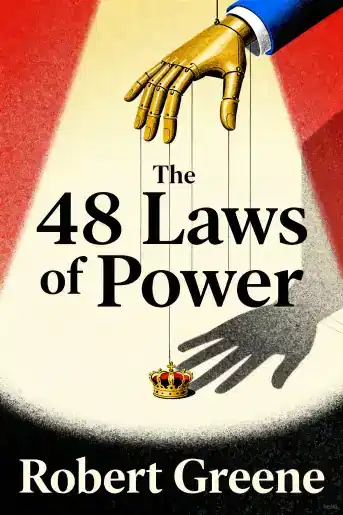
How does Power compare to The 48 Laws of Power?
Both advocate strategic self-interest, but Pfeffer focuses on empirical organizational studies versus historical anecdotes. Power leans corporate; 48 Laws has broader philosophical scope. Ideal for readers seeking data-backed methods over Machiavellian theory.
What modern relevance does Power have in 2025?
As remote work fragments hierarchies, Pfeffer’s emphasis on virtual visibility (e.g., mastering video presence) and cross-functional coalition-building remains critical. The rise of AI-driven promotions amplifies his warning: “Performance reviews rarely reflect reality”.
Can Power’s strategies backfire?
Yes—overconfidence and alienating allies are key pitfalls. Pfeffer cautions to balance assertiveness with occasional humility. His “leave before the party’s over” principle advises exiting roles gracefully to cement legacy.
Feel the book through the author's voice
Turn knowledge into engaging, example-rich insights
Capture key ideas in a flash for fast learning
Enjoy the book in a fun and engaging way
Key Themes in Power
Quotes from Power
Organizations are political arenas.
Nice guys frequently finish last.
Performance alone doesn't guarantee career success.
People prefer what's familiar.
Confidence signals power and competence to others.
Characters in Power
Quick Summary Mode - Read or listen to Power Summary in 9 Minutes

Break down key ideas from Power into bite-sized takeaways to understand how innovative teams create, collaborate, and grow.

Flash Card Mode - Top 10 Insights from Power in a Nutshell

Distill Power into rapid-fire memory cues that highlight key principles of candor, teamwork, and creative resilience.

Fun Mode - Power Lessons Told Through 24-Min Stories

Experience Power through vivid storytelling that turns innovation lessons into moments you'll remember and apply.
Personalize Mode - Read or listen to Power Summary in 0 Minutes

Ask anything, pick the voice, and co-create insights that truly resonate with you.

From Columbia University alumni built in San Francisco
"Instead of endless scrolling, I just hit play on BeFreed. It saves me so much time."


"I never knew where to start with nonfiction—BeFreed’s book lists turned into podcasts gave me a clear path."


"Perfect balance between learning and entertainment. Finished ‘Thinking, Fast and Slow’ on my commute this week."
"Crazy how much I learned while walking the dog. BeFreed = small habits → big gains."
"Reading used to feel like a chore. Now it’s just part of my lifestyle."

"Feels effortless compared to reading. I’ve finished 6 books this month already."
"BeFreed turned my guilty doomscrolling into something that feels productive and inspiring."

"BeFreed turned my commute into learning time. 20-min podcasts are perfect for finishing books I never had time for."
"BeFreed replaced my podcast queue. Imagine Spotify for books — that’s it. 🙌"

"It is great for me to learn something from the book without reading it."
"The themed book list podcasts help me connect ideas across authors—like a guided audio journey."
"Makes me feel smarter every time before going to work"
From Columbia University alumni built in San Francisco
"Instead of endless scrolling, I just hit play on BeFreed. It saves me so much time."
"I never knew where to start with nonfiction—BeFreed’s book lists turned into podcasts gave me a clear path."
"Perfect balance between learning and entertainment. Finished ‘Thinking, Fast and Slow’ on my commute this week."
"Crazy how much I learned while walking the dog. BeFreed = small habits → big gains."
"Reading used to feel like a chore. Now it’s just part of my lifestyle."
"Feels effortless compared to reading. I’ve finished 6 books this month already."
"BeFreed turned my guilty doomscrolling into something that feels productive and inspiring."
"BeFreed turned my commute into learning time. 20-min podcasts are perfect for finishing books I never had time for."
"BeFreed replaced my podcast queue. Imagine Spotify for books — that’s it. 🙌"
"It is great for me to learn something from the book without reading it."
"The themed book list podcasts help me connect ideas across authors—like a guided audio journey."
"Makes me feel smarter every time before going to work"
"Instead of endless scrolling, I just hit play on BeFreed. It saves me so much time."
"I never knew where to start with nonfiction—BeFreed’s book lists turned into podcasts gave me a clear path."
"Perfect balance between learning and entertainment. Finished ‘Thinking, Fast and Slow’ on my commute this week."
"Crazy how much I learned while walking the dog. BeFreed = small habits → big gains."
"Reading used to feel like a chore. Now it’s just part of my lifestyle."
"Feels effortless compared to reading. I’ve finished 6 books this month already."
"BeFreed turned my guilty doomscrolling into something that feels productive and inspiring."
"BeFreed turned my commute into learning time. 20-min podcasts are perfect for finishing books I never had time for."
"BeFreed replaced my podcast queue. Imagine Spotify for books — that’s it. 🙌"
"It is great for me to learn something from the book without reading it."
"The themed book list podcasts help me connect ideas across authors—like a guided audio journey."
"Makes me feel smarter every time before going to work"
"Instead of endless scrolling, I just hit play on BeFreed. It saves me so much time."
"I never knew where to start with nonfiction—BeFreed’s book lists turned into podcasts gave me a clear path."
"Perfect balance between learning and entertainment. Finished ‘Thinking, Fast and Slow’ on my commute this week."
"Crazy how much I learned while walking the dog. BeFreed = small habits → big gains."
"Reading used to feel like a chore. Now it’s just part of my lifestyle."
"Feels effortless compared to reading. I’ve finished 6 books this month already."
"BeFreed turned my guilty doomscrolling into something that feels productive and inspiring."
"BeFreed turned my commute into learning time. 20-min podcasts are perfect for finishing books I never had time for."
"BeFreed replaced my podcast queue. Imagine Spotify for books — that’s it. 🙌"
"It is great for me to learn something from the book without reading it."
"The themed book list podcasts help me connect ideas across authors—like a guided audio journey."
"Makes me feel smarter every time before going to work"

Get the Power summary as a free PDF or EPUB. Print it or read offline anytime.