Do I Make Myself Clear?: A Practical Guide to Writing Well in the Modern Age

Overview of Do I Make Myself Clear?
In "Do I Make Myself Clear?", legendary editor Sir Harold Evans wages war on murky prose. This 416-page manifesto reveals how unclear writing isn't just annoying - it's dangerous. NPR-recommended and praised for its "Ten Shortcuts to Making Yourself Clear" that even preachers swear by.
- Harold Evans advocates editing for clarity before elegance in professional writing
- Passive voice obscures accountability—active verbs sharpen arguments in persuasive texts
- Trim every sentence to its essential truth to combat bureaucratic obfuscation
- Use concrete examples over abstract nouns to make complex ideas accessible
- Storytelling principles outperform technical jargon when explaining specialized subjects
- Organize arguments using Evans’ “inverted pyramid” structure for busy readers
- Identify and eliminate “weasel words” that dilute persuasive power
- Evans’ “Five Editing Layers” framework separates structural and line-level revisions
- Clarity diagnostics: test drafts on non-experts before final publication
- Plain language benefits retention—readers remember stories more than statistics
- Why jargon alienates readers: specificity beats insider terminology in public communication
- Evans redefines “good writing” as measured by audience comprehension, not literary flair
About the Author of Do I Make Myself Clear?
Sir Harold Matthew Evans (1928–2020) was a legendary British editor, journalist, and author celebrated for his transformative impact on investigative journalism and editorial integrity. His book Do I Make Myself Clear reflects his lifelong dedication to precise communication, drawing from his 14-year editorship of The Sunday Times where he pioneered groundbreaking exposés like the thalidomide scandal cover-up and the Kim Philby spy revelations.
Evans’s work spans nonfiction genres, blending meticulous research with narrative flair to address themes of justice, transparency, and democratic accountability.
A knighted media icon, Evans authored bestsellers like The American Century and They Made America, which explore innovation and historical storytelling. As president of Random House and founder of Condé Nast Traveller, he shaped global publishing standards. His fearless reporting earned him recognition as the “greatest British newspaper editor of all time” by industry peers. Evans’s books have sold millions worldwide, cementing his legacy as a defender of press freedom and public-interest journalism.
FAQs About Do I Make Myself Clear?
What is Do I Make Myself Clear? by Harold Evans about?
Do I Make Myself Clear? is a practical guide to writing clearly and effectively in the digital age. Harold Evans, a Pulitzer Prize-winning editor, emphasizes concise communication, active voice, and eliminating jargon. The book includes editing techniques, historical examples, and a 10-point checklist to transform bloated prose into precise writing.
Who should read Do I Make Myself Clear??
This book is ideal for writers, editors, students, and professionals seeking to improve their communication skills. Evans’ actionable advice benefits anyone crafting emails, reports, or creative content, particularly in an era plagued by information overload and unclear digital messaging.
Is Do I Make Myself Clear? worth reading?
Yes, Evans combines decades of editorial expertise with engaging examples, making it a standout resource for mastering clarity. The book’s blend of historical context (e.g., Lucius Adelno Sherman’s sentence analysis) and modern challenges (texting abbreviations like "LMK") ensures relevance across generations.
What is Harold Evans’ 10-point checklist for clear writing?
Evans’ checklist includes strategies like prioritizing strong verbs, avoiding passive voice, and trimming redundancies. For example, he rewrites convoluted sentences like “The decision was made to proceed” to “We decided to proceed,” showcasing immediate improvements.
How does Do I Make Myself Clear? address readability formulas?
The book critiques overreliance on formulas like Flesch-Kincaid, arguing they miss nuances like logical flow or audience needs. Evans agrees with experts like Ginny Redish, stressing that clarity requires more than metrics—it demands empathetic editing.
What are key quotes from Do I Make Myself Clear??
Notable lines include:
- “Vigorous writing demands sentences with muscle, strong active verbs cast in the active voice.”
- “The digital era has cut off the oxygen flow to precise language.” These underscore Evans’ mission to combat lazy communication.
How does Evans’ approach differ from other writing guides?
Unlike strictly technical manuals, Evans blends journalism anecdotes (e.g., editing Henry Kissinger) with actionable frameworks. This dual focus on theory and practice makes complex concepts accessible, setting it apart from dry grammar guides.
What are criticisms of Do I Make Myself Clear??
Some reviewers note Evans’ brief treatment of readability formulas and his occasional dense prose. However, these are minor flaws in an otherwise comprehensive toolkit for aspiring writers.
How can Do I Make Myself Clear? improve business communication?
The book teaches professionals to eliminate corporate jargon (e.g., “synergize paradigms”) in favor of direct language. Evans’ editing examples demonstrate how clarity boosts credibility, whether in emails, pitches, or reports.
Why is Do I Make Myself Clear? relevant in 2025?
In an age of AI-generated content and misinformation, Evans’ emphasis on precision remains vital. The book equips readers to spot ambiguous language in news, social media, and marketing, fostering critical thinking.
How does Evans use historical examples to teach writing?
He analyzes texts from Winston Churchill to legal documents, showing how timeless principles apply today. For instance, dissecting Churchill’s speeches reveals the power of rhythmic cadence and simplicity.
What writing pitfalls does Do I Make Myself Clear? warn against?
Evans highlights overuse of passive voice, nominalizations (“discussion” vs. “discuss”), and vague adjectives. He provides before-and-after edits to illustrate fixes, such as changing “a period of considerable difficulty” to “a crisis”.
Feel the book through the author's voice
Turn knowledge into engaging, example-rich insights
Capture key ideas in a flash for fast learning
Enjoy the book in a fun and engaging way
Characters in Do I Make Myself Clear?
- Harold EvansAuthor and legendary editor of The Sunday Times
- Lucius ShermanAnalytics of Literature author and researcher
- Rudolf FleschCreator of the first readability formula
- Mark ThompsonAuthor of 'Enough Said' on public language
Key Themes in Do I Make Myself Clear?
- sentence structure optimization
- eliminating linguistic clutter
- political rhetoric analysis
- readability metrics
- journalistic editing techniques
Quotes from Do I Make Myself Clear?
Clear writing isn't merely aesthetic-it's moral.
The unclouded face of truth must not suffer wrong.
I would have written something shorter, but I didn't have time.
Fake news spreads six times faster than truth.
Explore Your Way of Learning
 Quick Summary Mode
Read or listen to Do I Make Myself Clear? Summary in 9 Minutes
Break down key ideas from Do I Make Myself Clear? into bite-sized takeaways to understand how innovative teams create, collaborate, and grow.

 Fun Mode
Do I Make Myself Clear? Lessons Told Through 19-Min Stories
Experience Do I Make Myself Clear? through vivid storytelling that turns innovation lessons into moments you'll remember and apply.
 Personalize Mode
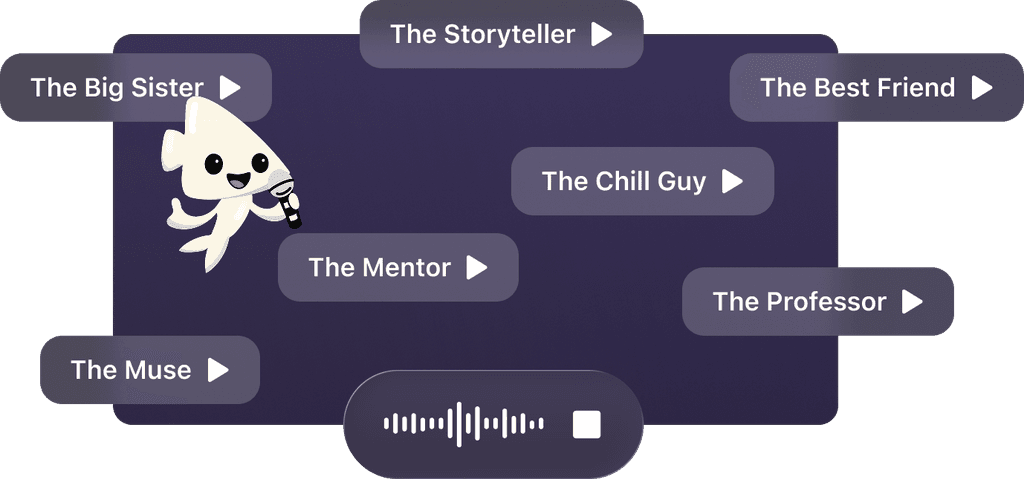
Experience Do I Make Myself Clear? in your own learning style
Ask anything, choose your learning style, and co-create insights that truly resonate with you.
From Columbia University alumni built in San Francisco
"Instead of endless scrolling, I just hit play on BeFreed. It saves me so much time."


"I never knew where to start with nonfiction—BeFreed’s book lists turned into podcasts gave me a clear path."


"Perfect balance between learning and entertainment. Finished ‘Thinking, Fast and Slow’ on my commute this week."
"Crazy how much I learned while walking the dog. BeFreed = small habits → big gains."
"Reading used to feel like a chore. Now it’s just part of my lifestyle."

"Feels effortless compared to reading. I’ve finished 6 books this month already."
"BeFreed turned my guilty doomscrolling into something that feels productive and inspiring."

"BeFreed turned my commute into learning time. 20-min podcasts are perfect for finishing books I never had time for."
"BeFreed replaced my podcast queue. Imagine Spotify for books — that’s it. 🙌"

"It is great for me to learn something from the book without reading it."
"The themed book list podcasts help me connect ideas across authors—like a guided audio journey."
"Makes me feel smarter every time before going to work"
From Columbia University alumni built in San Francisco
"Instead of endless scrolling, I just hit play on BeFreed. It saves me so much time."
"I never knew where to start with nonfiction—BeFreed’s book lists turned into podcasts gave me a clear path."
"Perfect balance between learning and entertainment. Finished ‘Thinking, Fast and Slow’ on my commute this week."
"Crazy how much I learned while walking the dog. BeFreed = small habits → big gains."
"Reading used to feel like a chore. Now it’s just part of my lifestyle."
"Feels effortless compared to reading. I’ve finished 6 books this month already."
"BeFreed turned my guilty doomscrolling into something that feels productive and inspiring."
"BeFreed turned my commute into learning time. 20-min podcasts are perfect for finishing books I never had time for."
"BeFreed replaced my podcast queue. Imagine Spotify for books — that’s it. 🙌"
"It is great for me to learn something from the book without reading it."
"The themed book list podcasts help me connect ideas across authors—like a guided audio journey."
"Makes me feel smarter every time before going to work"
"Instead of endless scrolling, I just hit play on BeFreed. It saves me so much time."
"I never knew where to start with nonfiction—BeFreed’s book lists turned into podcasts gave me a clear path."
"Perfect balance between learning and entertainment. Finished ‘Thinking, Fast and Slow’ on my commute this week."
"Crazy how much I learned while walking the dog. BeFreed = small habits → big gains."
"Reading used to feel like a chore. Now it’s just part of my lifestyle."
"Feels effortless compared to reading. I’ve finished 6 books this month already."
"BeFreed turned my guilty doomscrolling into something that feels productive and inspiring."
"BeFreed turned my commute into learning time. 20-min podcasts are perfect for finishing books I never had time for."
"BeFreed replaced my podcast queue. Imagine Spotify for books — that’s it. 🙌"
"It is great for me to learn something from the book without reading it."
"The themed book list podcasts help me connect ideas across authors—like a guided audio journey."
"Makes me feel smarter every time before going to work"
"Instead of endless scrolling, I just hit play on BeFreed. It saves me so much time."
"I never knew where to start with nonfiction—BeFreed’s book lists turned into podcasts gave me a clear path."
"Perfect balance between learning and entertainment. Finished ‘Thinking, Fast and Slow’ on my commute this week."
"Crazy how much I learned while walking the dog. BeFreed = small habits → big gains."
"Reading used to feel like a chore. Now it’s just part of my lifestyle."
"Feels effortless compared to reading. I’ve finished 6 books this month already."
"BeFreed turned my guilty doomscrolling into something that feels productive and inspiring."
"BeFreed turned my commute into learning time. 20-min podcasts are perfect for finishing books I never had time for."
"BeFreed replaced my podcast queue. Imagine Spotify for books — that’s it. 🙌"
"It is great for me to learn something from the book without reading it."
"The themed book list podcasts help me connect ideas across authors—like a guided audio journey."
"Makes me feel smarter every time before going to work"

Download Summary of Do I Make Myself Clear?
Get the Do I Make Myself Clear? summary as a free PDF or EPUB. Print it or read offline anytime.