Overview of No exit, and three other plays
Three damned souls locked in a room - Jean-Paul Sartre's "No Exit" delivers the chilling revelation that "Hell is other people." This Nobel Prize-winning playwright's 1944 masterpiece continues shocking audiences 80 years later, transforming existential dread into "theatrical perfection."
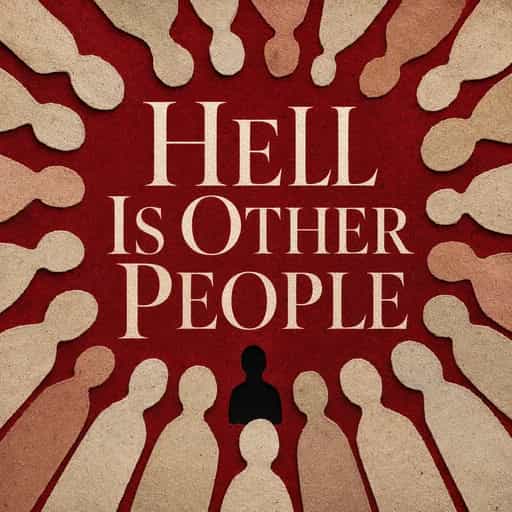
- Sartre's No Exit shows hell is other people judging you eternally
- The famous quote "hell is other people" explains human psychological dependence
- Three dead souls become each other's torturers in Sartre's existentialist masterpiece
- No Exit reveals why we desperately need others for self-validation
- Bad faith helps Sartre's characters avoid responsibility for their crimes
- The locked room represents our inescapable psychological need for other people
- No Exit demonstrates how consciousness requires the judgmental gaze of others
- Sartre exposes three forms of existential self-deception in his famous play
- No Exit explains why freedom and moral responsibility create unbearable anxiety
- The characters use each other to escape confronting their authentic existence
- Sartre's philosophy shows the futility of seeking redemption through other people
- No Exit proves that authentic self-knowledge requires confronting our moral failures
About the Author of No exit, and three other plays
Jean-Paul Sartre (1905-1980) is the French existentialist philosopher and playwright behind No Exit, a groundbreaking dramatic work that explores the psychological torments of human existence. As the leading figure of 20th-century existentialism, Sartre masterfully weaves his philosophical insights about freedom, responsibility, and "bad faith" into this haunting theatrical piece that examines how individuals deceive themselves and manipulate others.
Sartre's revolutionary concept that "existence precedes essence" fundamentally shaped modern philosophy and literature. His philosophical masterpiece Being and Nothingness (1943) established the theoretical foundation for existentialism, while works like Existentialism Is a Humanism made these complex ideas accessible to broader audiences. Beyond philosophy, Sartre produced substantial literary output including novels, plays, and essays that gave dramatic expression to existentialist themes.
No Exit remains one of the most frequently performed philosophical dramas worldwide, with its famous declaration that "Hell is other people" becoming a cultural touchstone for understanding human relationships and self-deception.
FAQs About No exit, and three other plays
What is No Exit by Jean-Paul Sartre about?
No Exit is Jean-Paul Sartre's existentialist play about three deceased characters—Garcin, Inez, and Estelle—trapped together in a single room in Hell for eternity. Rather than facing traditional torture devices, they discover they are meant to psychologically torment each other, leading to Garcin's famous realization that "hell is other people". The play explores themes of freedom, responsibility, and self-deception.
Who should read No Exit by Jean-Paul Sartre?
No Exit appeals to readers interested in existentialist philosophy, modern drama, and psychological exploration. Philosophy students, theater enthusiasts, and anyone questioning personal responsibility and human relationships will find value in Sartre's work. The play is essential for understanding 20th-century existentialism and its influence on the theater of the absurd, making it valuable for literature and philosophy scholars.
Is No Exit worth reading?
No Exit remains a cornerstone of existentialist literature and modern theater, making it absolutely worth reading. The play's claustrophobic psychological drama and profound philosophical insights continue to resonate 80 years after its 1944 debut. Sartre's masterful exploration of self-awareness, personal responsibility, and interpersonal dynamics offers timeless relevance for understanding human nature and moral accountability.
What does "Hell is other people" mean in No Exit?
"Hell is other people" represents Sartre's insight that our greatest torment comes from being perpetually judged and defined by others. In No Exit, the three characters cannot escape each other's scrutiny and judgment, creating psychological torture more effective than any physical punishment. The phrase suggests that our dependence on others' opinions and our inability to control how we're perceived creates our own personal hell.
What are the main themes in No Exit by Jean-Paul Sartre?
No Exit explores existentialist themes including personal responsibility, freedom of choice, and self-deception. The play examines how individuals avoid confronting their true selves and the consequences of their actions. Key themes include the inescapable nature of judgment by others, the burden of absolute freedom, and the impossibility of hiding from one's authentic self when stripped of societal illusions.
What crimes did the characters commit in No Exit?
The three characters in No Exit confess to significant moral crimes that led to their damnation. Garcin mistreated his wife and attempted to flee military service as a coward. Inez seduced her cousin's wife Florence, leading to the cousin's death and ultimately Florence's murder-suicide. Estelle committed adultery, murdered her illegitimate child by drowning, and drove her lover to suicide.
How does No Exit reflect Sartre's existentialist philosophy?
No Exit embodies Sartre's core existentialist principle that "existence precedes essence" and individuals are "condemned to be free". The play demonstrates how people must take responsibility for their choices without predetermined moral guidelines. The characters' eternal confinement forces them to confront their authentic selves without the distractions and self-deceptions available in life, illustrating Sartre's belief in radical personal responsibility.
What is the significance of the setting in No Exit?
The single-room setting in No Exit creates a claustrophobic environment that mirrors psychological entrapment. Furnished in Second Empire style rather than containing torture devices, the plain room forces characters to focus entirely on each other without external distractions. The absence of mirrors symbolizes how individuals must see themselves only through others' eyes, emphasizing themes of judgment and self-perception.
Why don't the characters leave when the door opens in No Exit?
When the door suddenly opens in No Exit, the characters choose to remain because they fear the unknown more than their current torment. Their psychological dependence on each other and terror of facing uncertainty beyond their familiar hell keeps them trapped. This choice illustrates Sartre's point about how people often prefer familiar suffering to the responsibility and risk that come with true freedom.
How did No Exit influence modern theater?
No Exit significantly influenced 20th-century drama and helped establish the theater of the absurd. The play's psychological intensity, philosophical depth, and innovative dramatic structure inspired Samuel Beckett and other absurdist playwrights. Its focus on existential themes, minimal staging, and character-driven psychological conflict created new possibilities for philosophical drama and established Sartre as a crucial figure in modern theater.
Feel the book through the author's voice
Turn knowledge into engaging, example-rich insights
Capture key ideas in a flash for fast learning
Enjoy the book in a fun and engaging way
Characters in No exit, and three other plays
- Joseph GarcinA journalist seeking validation for his courage
- Inez SerranoA blunt postal clerk who understands their hell
- Estelle RigaultA superficial woman obsessed with social niceties
- The ValetThe attendant who introduces the damned to the room
Key Themes in No exit, and three other plays
- existentialist dread
- social gaze
- radical responsibility
- psychological entrapment
- bad faith
Quotes from No exit, and three other plays
Hell is other people!
One always dies too soon — or too late. And yet, life is over, that's all.
So this is hell. I'd never have believed it. You remember all we were told about the torture-chambers, the fire and brimstone, the 'burning marl.' Old wives' tales! There's no need for red-hot pokers. Hell is—other people!
each of us will act as torturer of the two others.
When I can't see myself, I begin to wonder if I really exist.
Explore Your Way of Learning
 Quick Summary Mode
Read or listen to No exit, and three other plays Summary in 9 Minutes
Break down key ideas from No exit, and three other plays into bite-sized takeaways to understand how innovative teams create, collaborate, and grow.

 Fun Mode
No exit, and three other plays Lessons Told Through 22-Min Stories
Experience No exit, and three other plays through vivid storytelling that turns innovation lessons into moments you'll remember and apply.
 Personalize Mode
Experience No exit, and three other plays in your own learning style
Ask anything, choose your learning style, and co-create insights that truly resonate with you.
From Columbia University alumni built in San Francisco
"Instead of endless scrolling, I just hit play on BeFreed. It saves me so much time."


"I never knew where to start with nonfiction—BeFreed’s book lists turned into podcasts gave me a clear path."


"Perfect balance between learning and entertainment. Finished ‘Thinking, Fast and Slow’ on my commute this week."
"Crazy how much I learned while walking the dog. BeFreed = small habits → big gains."
"Reading used to feel like a chore. Now it’s just part of my lifestyle."

"Feels effortless compared to reading. I’ve finished 6 books this month already."
"BeFreed turned my guilty doomscrolling into something that feels productive and inspiring."

"BeFreed turned my commute into learning time. 20-min podcasts are perfect for finishing books I never had time for."
"BeFreed replaced my podcast queue. Imagine Spotify for books — that’s it. 🙌"

"It is great for me to learn something from the book without reading it."
"The themed book list podcasts help me connect ideas across authors—like a guided audio journey."
"Makes me feel smarter every time before going to work"
From Columbia University alumni built in San Francisco
"Instead of endless scrolling, I just hit play on BeFreed. It saves me so much time."
"I never knew where to start with nonfiction—BeFreed’s book lists turned into podcasts gave me a clear path."
"Perfect balance between learning and entertainment. Finished ‘Thinking, Fast and Slow’ on my commute this week."
"Crazy how much I learned while walking the dog. BeFreed = small habits → big gains."
"Reading used to feel like a chore. Now it’s just part of my lifestyle."
"Feels effortless compared to reading. I’ve finished 6 books this month already."
"BeFreed turned my guilty doomscrolling into something that feels productive and inspiring."
"BeFreed turned my commute into learning time. 20-min podcasts are perfect for finishing books I never had time for."
"BeFreed replaced my podcast queue. Imagine Spotify for books — that’s it. 🙌"
"It is great for me to learn something from the book without reading it."
"The themed book list podcasts help me connect ideas across authors—like a guided audio journey."
"Makes me feel smarter every time before going to work"
"Instead of endless scrolling, I just hit play on BeFreed. It saves me so much time."
"I never knew where to start with nonfiction—BeFreed’s book lists turned into podcasts gave me a clear path."
"Perfect balance between learning and entertainment. Finished ‘Thinking, Fast and Slow’ on my commute this week."
"Crazy how much I learned while walking the dog. BeFreed = small habits → big gains."
"Reading used to feel like a chore. Now it’s just part of my lifestyle."
"Feels effortless compared to reading. I’ve finished 6 books this month already."
"BeFreed turned my guilty doomscrolling into something that feels productive and inspiring."
"BeFreed turned my commute into learning time. 20-min podcasts are perfect for finishing books I never had time for."
"BeFreed replaced my podcast queue. Imagine Spotify for books — that’s it. 🙌"
"It is great for me to learn something from the book without reading it."
"The themed book list podcasts help me connect ideas across authors—like a guided audio journey."
"Makes me feel smarter every time before going to work"
"Instead of endless scrolling, I just hit play on BeFreed. It saves me so much time."
"I never knew where to start with nonfiction—BeFreed’s book lists turned into podcasts gave me a clear path."
"Perfect balance between learning and entertainment. Finished ‘Thinking, Fast and Slow’ on my commute this week."
"Crazy how much I learned while walking the dog. BeFreed = small habits → big gains."
"Reading used to feel like a chore. Now it’s just part of my lifestyle."
"Feels effortless compared to reading. I’ve finished 6 books this month already."
"BeFreed turned my guilty doomscrolling into something that feels productive and inspiring."
"BeFreed turned my commute into learning time. 20-min podcasts are perfect for finishing books I never had time for."
"BeFreed replaced my podcast queue. Imagine Spotify for books — that’s it. 🙌"
"It is great for me to learn something from the book without reading it."
"The themed book list podcasts help me connect ideas across authors—like a guided audio journey."
"Makes me feel smarter every time before going to work"

Download Summary of No exit, and three other plays
Get the No exit, and three other plays summary as a free PDF or EPUB. Print it or read offline anytime.