Sartre: hell is other people, and he meant it
We often feel like we're performing rather than living. Explore Jean-Paul Sartre’s 'The Look' to understand why being seen feels like a trap.

Best quote from Sartre: hell is other people, and he meant it
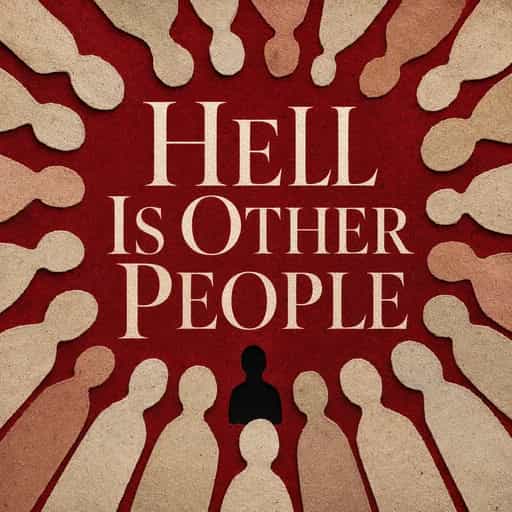
Hell is other people because their ability to look at you and decide who you are is a kind of emotional and mental torture. We are all trapped in a room with no mirrors, forced to see ourselves only through the distorted reflections in everyone else's eyes.
Generated with BeFreed
Sartre: hell is other people, and he meant it






Frequently Asked Questions
Contrary to the popular belief that this phrase refers to people being annoying or mean, Sartre was describing a deeper philosophical struggle. He meant that other people’s existence is a form of mental torture because they have the power to look at you and define who you are. This "Look" turns you from a free subject into an "object" in their world, stripping away your control over your own identity and reputation.
Sartre’s concept of "The Gaze" acts as a blueprint for the digital world, where social media creates a "digital panopticon." Every time we post, we invite the judgment of others to define us, often leading us to perform our lives rather than live them. This creates a "global hall of mirrors" where we become anxious because we cannot control the labels—such as "perfect parent" or "successful professional"—that the public gaze sticks on us.
Bad faith is the act of lying to oneself to avoid the terrifying responsibility of absolute freedom. It occurs when people pretend they have no choice in their actions or when they adopt a rigid role, like a character in a play, to gain approval. In the digital age, this often manifests as "calculated authenticity," where people carefully curate "perfectly messy" or "vulnerable" posts to project a specific image to an audience, which is actually a move away from true authenticity.
The characters stay because they have become inextricably linked to one another's opinions. They have used each other as mirrors for so long that they no longer know who they are without that external judgment. For example, Garcin cannot leave because he is desperate to convince the others he is not a coward; he values their validation more than his own physical freedom, illustrating how we often choose the "hell" of judgment over the weight of being responsible for ourselves.
To "Gaze Back" is to restore balance by asserting that you are a center of consciousness and a subject, not just an object for someone else to label. This involves practicing "lucid self-consciousness," where you take full responsibility for your choices by replacing "I have to" with "I am choosing to." By acting according to your own internal values rather than seeking a "standing ovation" from an audience, the gaze of others loses its power to shame you.
From Columbia University alumni built in San Francisco
"Instead of endless scrolling, I just hit play on BeFreed. It saves me so much time."


"I never knew where to start with nonfiction—BeFreed’s book lists turned into podcasts gave me a clear path."


"Perfect balance between learning and entertainment. Finished ‘Thinking, Fast and Slow’ on my commute this week."
"Crazy how much I learned while walking the dog. BeFreed = small habits → big gains."
"Reading used to feel like a chore. Now it’s just part of my lifestyle."

"Feels effortless compared to reading. I’ve finished 6 books this month already."
"BeFreed turned my guilty doomscrolling into something that feels productive and inspiring."

"BeFreed turned my commute into learning time. 20-min podcasts are perfect for finishing books I never had time for."
"BeFreed replaced my podcast queue. Imagine Spotify for books — that’s it. 🙌"

"It is great for me to learn something from the book without reading it."
"The themed book list podcasts help me connect ideas across authors—like a guided audio journey."
"Makes me feel smarter every time before going to work"
From Columbia University alumni built in San Francisco
"Instead of endless scrolling, I just hit play on BeFreed. It saves me so much time."
"I never knew where to start with nonfiction—BeFreed’s book lists turned into podcasts gave me a clear path."
"Perfect balance between learning and entertainment. Finished ‘Thinking, Fast and Slow’ on my commute this week."
"Crazy how much I learned while walking the dog. BeFreed = small habits → big gains."
"Reading used to feel like a chore. Now it’s just part of my lifestyle."
"Feels effortless compared to reading. I’ve finished 6 books this month already."
"BeFreed turned my guilty doomscrolling into something that feels productive and inspiring."
"BeFreed turned my commute into learning time. 20-min podcasts are perfect for finishing books I never had time for."
"BeFreed replaced my podcast queue. Imagine Spotify for books — that’s it. 🙌"
"It is great for me to learn something from the book without reading it."
"The themed book list podcasts help me connect ideas across authors—like a guided audio journey."
"Makes me feel smarter every time before going to work"
"Instead of endless scrolling, I just hit play on BeFreed. It saves me so much time."
"I never knew where to start with nonfiction—BeFreed’s book lists turned into podcasts gave me a clear path."
"Perfect balance between learning and entertainment. Finished ‘Thinking, Fast and Slow’ on my commute this week."
"Crazy how much I learned while walking the dog. BeFreed = small habits → big gains."
"Reading used to feel like a chore. Now it’s just part of my lifestyle."
"Feels effortless compared to reading. I’ve finished 6 books this month already."
"BeFreed turned my guilty doomscrolling into something that feels productive and inspiring."
"BeFreed turned my commute into learning time. 20-min podcasts are perfect for finishing books I never had time for."
"BeFreed replaced my podcast queue. Imagine Spotify for books — that’s it. 🙌"
"It is great for me to learn something from the book without reading it."
"The themed book list podcasts help me connect ideas across authors—like a guided audio journey."
"Makes me feel smarter every time before going to work"
"Instead of endless scrolling, I just hit play on BeFreed. It saves me so much time."
"I never knew where to start with nonfiction—BeFreed’s book lists turned into podcasts gave me a clear path."
"Perfect balance between learning and entertainment. Finished ‘Thinking, Fast and Slow’ on my commute this week."
"Crazy how much I learned while walking the dog. BeFreed = small habits → big gains."
"Reading used to feel like a chore. Now it’s just part of my lifestyle."
"Feels effortless compared to reading. I’ve finished 6 books this month already."
"BeFreed turned my guilty doomscrolling into something that feels productive and inspiring."
"BeFreed turned my commute into learning time. 20-min podcasts are perfect for finishing books I never had time for."
"BeFreed replaced my podcast queue. Imagine Spotify for books — that’s it. 🙌"
"It is great for me to learn something from the book without reading it."
"The themed book list podcasts help me connect ideas across authors—like a guided audio journey."
"Makes me feel smarter every time before going to work"