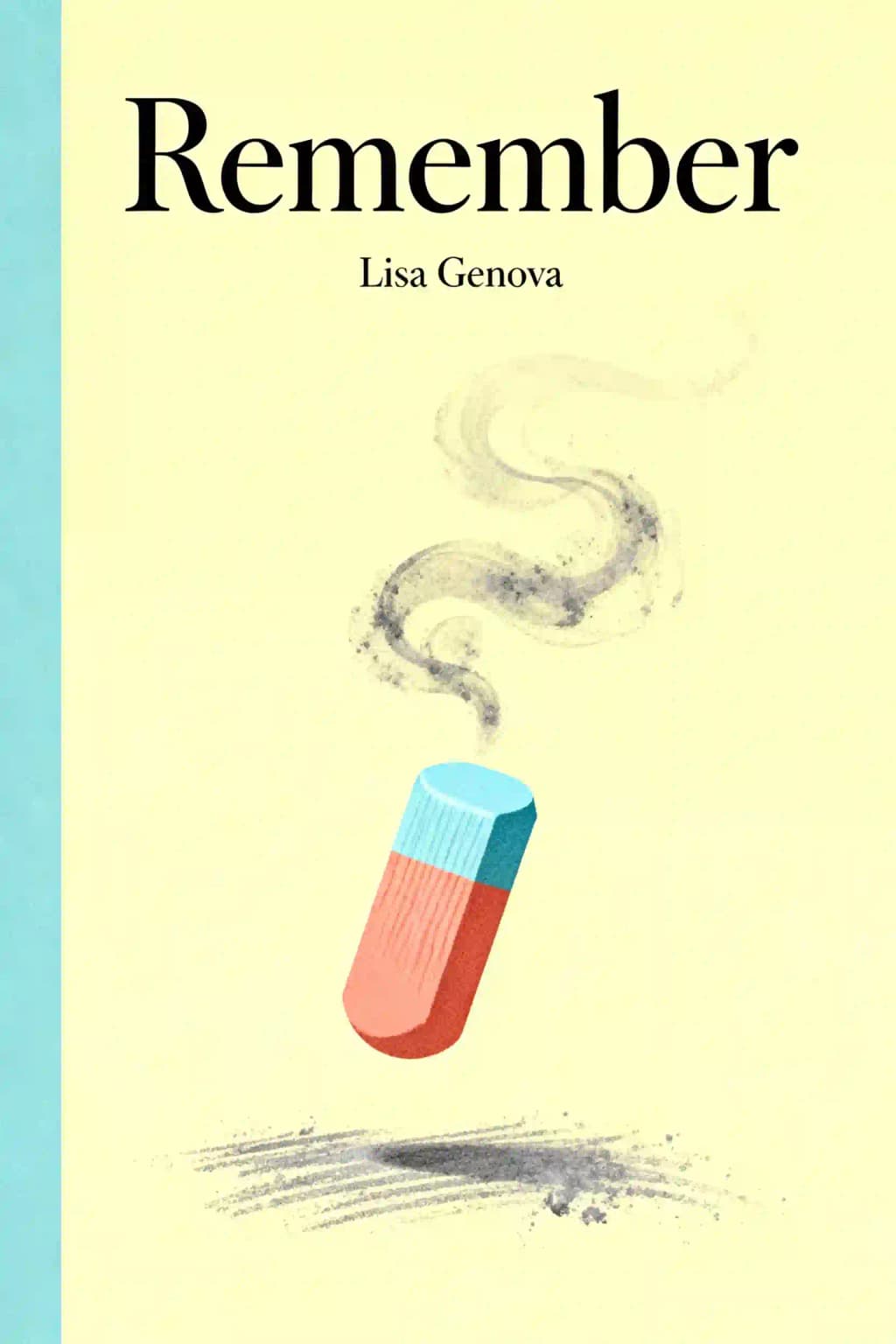
Harvard neuroscientist Lisa Genova reveals why we forget names yet remember trauma. "Remember" demystifies memory science with insights praised by Steven Pinker, offering practical strategies that transformed readers' lives. Sleep more, stress less - your memories aren't failing, they're just being human.
Lisa Genova, neuroscientist and New York Times bestselling author of Remember: The Science of Memory and the Art of Forgetting, combines her expertise in brain science with accessible storytelling to explore memory, Alzheimer’s, and neurological disorders.
A Harvard-trained PhD in neuroscience and former Harvard Medical School instructor, she bridges academic rigor with empathetic narratives, drawing from her work with organizations like the National Alzheimer’s Association and DementiaUSA. Her TED Talks on memory and Alzheimer’s prevention have garnered over 11 million views, and she’s appeared on The Dr. Oz Show, Today, and NPR.
Genova’s acclaimed novels—including Still Alice (adapted into an Oscar-winning film), Left Neglected, and Every Note Played—examine neurodiversity and resilience. Still Alice has sold over 2.6 million copies worldwide and been translated into 37 languages, cementing her reputation as a leading voice in neuroscience literature.
Remember explores the science of memory, explaining how memories form, why we forget, and practical strategies to improve recall. Neuroscientist Lisa Genova breaks down memory types (episodic, semantic, working), distinguishes normal aging-related forgetting from Alzheimer’s, and debunks myths like the reliability of eyewitness accounts. The book blends research with actionable tips, such as enhancing attention and sleep hygiene, to help readers optimize memory.
This book is ideal for anyone curious about neuroscience, students seeking study techniques, or individuals worried about memory lapses. It’s also valuable for caregivers of Alzheimer’s patients, as Genova clarifies the difference between age-related forgetting and dementia. Readers gain science-backed strategies to strengthen memory and reduce anxiety about forgetting.
Yes—Remember translates complex neuroscience into accessible insights, offering practical advice like improving sleep and managing stress to boost memory. Genova’s expertise (a Harvard PhD in neuroscience) and engaging storytelling make it a standout. Reviews highlight its life-changing impact on understanding memory’s strengths and limitations.
Key concepts include:
Genova recommends:
Normal forgetting involves temporarily misplacing keys or names but retaining context (e.g., recognizing you own a car). Alzheimer’s erases memories entirely—forgetting what a car is—and disrupts procedural memory (e.g., driving skills). Genova emphasizes early detection and lifestyle factors that reduce Alzheimer’s risk.
Chronic stress elevates cortisol, damaging the hippocampus (critical for memory formation). Genova notes that acute stress (e.g., exam prep) can enhance focus, but long-term stress impairs recall and increases Alzheimer’s risk. Managing stress through mindfulness or exercise is advised.
Memories morph each time they’re recalled, influenced by language and suggestion. Genova cites studies showing how leading questions can distort details, making eyewitness testimony prone to error. She critiques reliance on such accounts in legal settings.
Genova outlines three stages:
Genova holds a PhD in neuroscience from Harvard, taught neuroanatomy, and authored bestselling novels like Still Alice. Her TED Talks on Alzheimer’s and memory have millions of views, blending scientific rigor with narrative clarity.
Some readers may find the science oversimplified, though Genova intentionally avoids jargon for accessibility. The book focuses on general audiences rather than academics, prioritizing practical takeaways over in-depth theory.
In an era of information overload, Genova’s emphasis on attention and meaningful learning helps combat digital distraction. The book also addresses misinformation’s impact on memory distortion, a critical issue with AI-generated content.
Unlike dense academic texts, Remember uses relatable anecdotes (e.g., forgetting passwords) and actionable advice. It complements Oliver Sacks’ case studies with modern research, offering a balance of storytelling and science.
Feel the book through the author's voice
Turn knowledge into engaging, example-rich insights
Capture key ideas in a flash for fast learning
Enjoy the book in a fun and engaging way
Memory lapses are universal human experiences, yet they often trigger anxiety about cognitive decline.
Memory isn't a single system but a complex network of interconnected processes.
Our brains aren't designed to remember everything-they prioritize what matters most while discarding the mundane.
Each memory physically changes your brain, creating lasting alterations in response to experiences.
Break down key ideas from REMEMBER into bite-sized takeaways to understand how innovative teams create, collaborate, and grow.
Distill REMEMBER into rapid-fire memory cues that highlight key principles of candor, teamwork, and creative resilience.

Experience REMEMBER through vivid storytelling that turns innovation lessons into moments you'll remember and apply.
Ask anything, pick the voice, and co-create insights that truly resonate with you.

From Columbia University alumni built in San Francisco
"Instead of endless scrolling, I just hit play on BeFreed. It saves me so much time."
"I never knew where to start with nonfiction—BeFreed’s book lists turned into podcasts gave me a clear path."
"Perfect balance between learning and entertainment. Finished ‘Thinking, Fast and Slow’ on my commute this week."
"Crazy how much I learned while walking the dog. BeFreed = small habits → big gains."
"Reading used to feel like a chore. Now it’s just part of my lifestyle."
"Feels effortless compared to reading. I’ve finished 6 books this month already."
"BeFreed turned my guilty doomscrolling into something that feels productive and inspiring."
"BeFreed turned my commute into learning time. 20-min podcasts are perfect for finishing books I never had time for."
"BeFreed replaced my podcast queue. Imagine Spotify for books — that’s it. 🙌"
"It is great for me to learn something from the book without reading it."
"The themed book list podcasts help me connect ideas across authors—like a guided audio journey."
"Makes me feel smarter every time before going to work"
From Columbia University alumni built in San Francisco

Get the REMEMBER summary as a free PDF or EPUB. Print it or read offline anytime.
Ever sprinted through your house searching for your phone while actively talking on it? Or introduced yourself to someone you'd met just minutes earlier? Before you spiral into fears of early-onset dementia, take a breath. These moments aren't harbingers of cognitive doom-they're simply your brain doing exactly what it evolved to do. Memory isn't a flawless recording device but a remarkably selective system designed to prioritize what matters while discarding the mundane. We live in an age where every forgotten password feels like a personal failing, yet understanding how memory actually works reveals something liberating: forgetting is a feature, not a bug. Your brain performs millions of complex operations flawlessly each day-walking, talking, recognizing faces-while occasionally dropping trivial details like where you parked. This isn't decline; it's design. Memory isn't one thing but an intricate dance of interconnected processes. When you experience something-a conversation, a sunset, a first kiss-your brain translates these sensory inputs into neural language through encoding. The hippocampus, a seahorse-shaped structure buried deep in your brain, then weaves together these disparate threads into a unified pattern through consolidation. These patterns become stored as physical changes in your neural architecture, strengthening connections between neurons that fired together. Later, retrieval reactivates these networks, reconstructing the experience. Here's what makes this fascinating: memories aren't filed away in a single location like documents in a cabinet. They're distributed throughout your brain in the same regions that processed the original experience. Visual memories live in visual cortex, emotional memories in the amygdala, and so on. When you remember your grandmother's kitchen, you're literally reactivating the same neural networks that processed those sights, smells, and feelings years ago. The real question isn't why we forget so much, but how we remember anything at all in our distraction-saturated world.