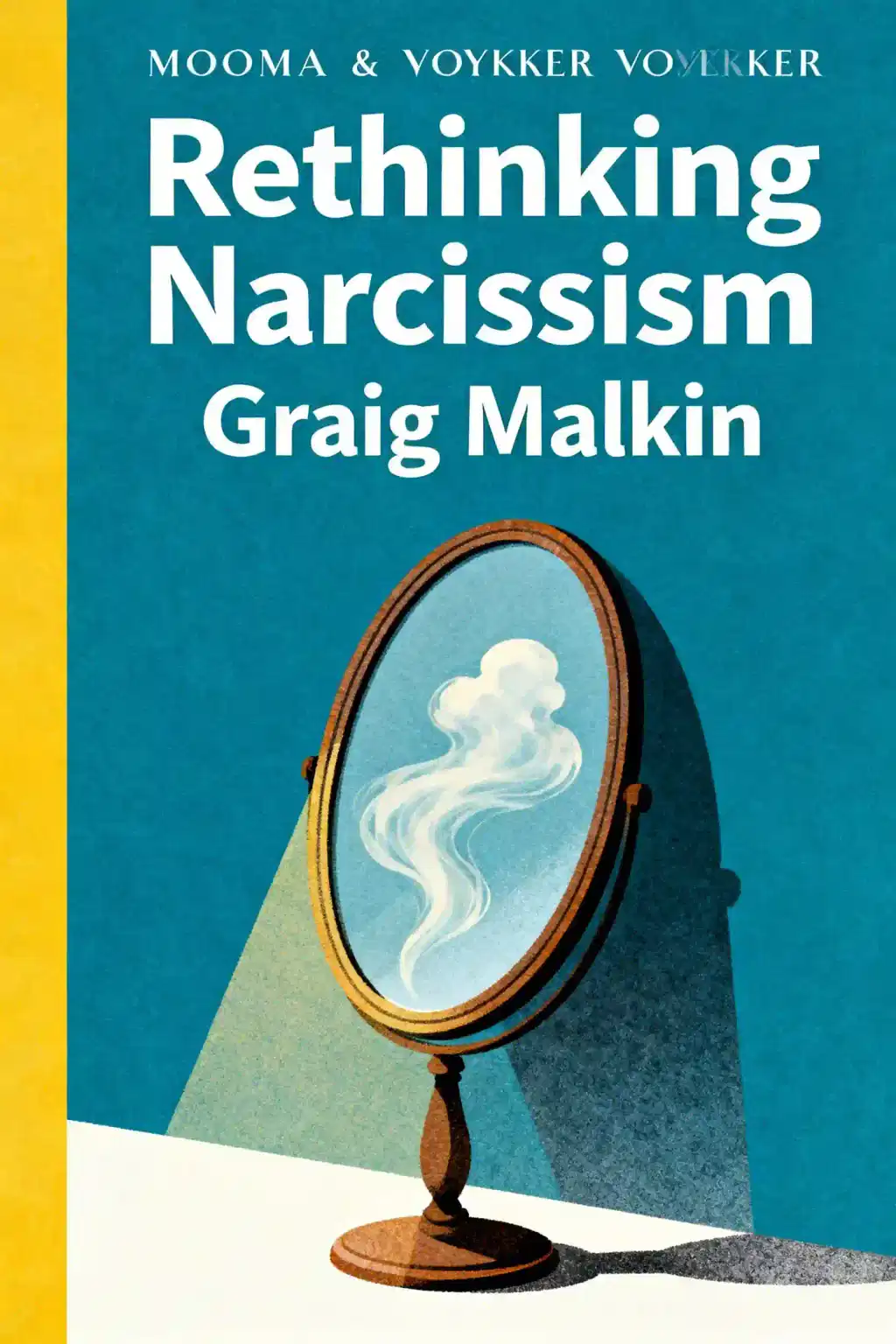
Rethinking Narcissism: The Bad-- and Surprising Good-- About Feeling Special by Craig Malkin Summary

Overview of Rethinking Narcissism
Harvard psychologist Craig Malkin revolutionizes our understanding of narcissism as a spectrum we all inhabit. Beyond TikTok's "NarcTok" trend, this game-changing guide reveals the surprising truth: healthy narcissism exists. Could your empathy actually be hurting your relationships with narcissists?
- Narcissism exists on a spectrum from selflessness to grandiosity, with healthy narcissism as ideal.
- The Narcissism Spectrum Scale (NSS) identifies deficits, healthy traits, and extreme narcissism patterns.
- Healthy narcissism boosts creativity and relationships; extreme narcissism erodes trust through emotional avoidance.
- Emotion phobia and stealth control signal dangerous narcissists requiring boundaries or exit strategies.
- Empathy prompts help narcissists practice mutual respect while pursuing personal goals.
- Authoritative parenting with firm empathy prevents childhood narcissism better than permissiveness.
- Social media fuels narcissism by prioritizing superficial validation over authentic connection.
- Narcissists shield themselves from shame and fear by overcompensating with grandiosity.
- Echoists (low narcissism) must embrace self-worth to avoid toxic relationships with narcissists.
- Movement on the narcissism spectrum is possible through self-reflection and vulnerability.
- “Fantasizing as twins” reveals narcissists’ inability to form separate, equal partnerships.
- Culture shapes narcissism via achievement pressure and “specialness” expectations in parenting.
About the Author of Rethinking Narcissism
Dr. Craig Malkin, clinical psychologist and Harvard Medical School lecturer, is the acclaimed author of Rethinking Narcissism: The Secret to Recognizing and Coping with Narcissists. A leading expert on narcissism and relationships, he redefines the concept as a spectrum rather than a binary label, drawing on 30+ years of clinical experience and research.
His work blends psychological insight with practical strategies, emphasizing the difference between healthy self-worth and destructive entitlement. Malkin co-authored The Dangerous Case of Donald Trump, a New York Times bestseller, and contributes regularly to Time, Psychology Today, and The New York Times. He’s been featured on NPR, CBS Radio, and the Oprah Winfrey Network, and his YouTube channel offers evidence-based guidance on navigating narcissistic dynamics.
President of Cambridge-based YM Psychotherapy and Consultation, Inc., Malkin pioneered the Narcissism Test, a tool widely used in clinical and educational settings. Rethinking Narcissism earned recognition from Oprah Daily as one of “The Best Books to Read If You Have a Narcissist in Your Life,” solidifying its status as a modern psychology classic.
FAQs About Rethinking Narcissism
What is Rethinking Narcissism about?
Rethinking Narcissism by Craig Malkin challenges stereotypes by framing narcissism as a spectrum, ranging from healthy self-confidence to harmful grandiosity. The book introduces the Narcissism Spectrum Scale (NSS) to assess traits, explains how echoism (self-effacement) draws people to narcissists, and offers strategies to foster balanced self-worth in relationships, parenting, and personal growth.
Who should read Rethinking Narcissism?
This book is ideal for anyone seeking to understand narcissism beyond stigma, including therapists, relationship coaches, or individuals navigating interactions with narcissistic partners, family members, or coworkers. It’s also valuable for parents aiming to cultivate healthy self-esteem in children.
Is Rethinking Narcissism worth reading?
Yes—Malkin combines 30+ years of clinical research with actionable advice, debunking myths and providing tools like the NSS. Critics praise its nuanced approach but note some anecdotes lack engagement.
Who is Craig Malkin, author of Rethinking Narcissism?
Craig Malkin is a Harvard Medical School psychologist with over three decades of experience. He’s renowned for redefining narcissism through evidence-based frameworks and frequently contributes to media like Huffington Post.
What is the Narcissism Spectrum Scale (NSS)?
The NSS, developed by Malkin, measures narcissism across three factors: Narcissism Deficits (low self-worth), Healthy Narcissism (balanced self-esteem), and Extreme Narcissism (grandiosity). It helps individuals identify their position on the spectrum to improve self-awareness and relationships.
What is echoism in Rethinking Narcissism?
Echoism describes a fear of seeming narcissistic, leading to excessive selflessness and attraction to narcissists. Malkin explains how echoists enable unhealthy dynamics and offers steps to assert needs without guilt.
How does Rethinking Narcissism suggest dealing with a narcissistic partner?
The book advises using empathy prompts (e.g., “Help me understand…”), setting clear boundaries, and avoiding power struggles. It emphasizes recognizing subtle narcissistic traits rather than overt arrogance.
What are the three types of narcissists described in the book?
Malkin identifies extroverted (attention-seeking), introverted (hypersensitive), and communal (“selfless” but controlling) narcissists. All share a fragile self-image masked by entitlement or martyrdom.
What are the main criticisms of Rethinking Narcissism?
Some readers find patient anecdotes repetitive and desire more strategies for improving healthy narcissism. Others note the NSS isn’t clinically validated but acknowledge its utility for self-reflection.
How does Rethinking Narcissism compare to The Narcissism Epidemic?
Unlike The Narcissism Epidemic, which focuses on societal decline, Malkin’s work offers a balanced view, distinguishing healthy from harmful narcissism and providing relational tools rather than broad cultural critique.
What are key quotes from Rethinking Narcissism?
- “Feeling special isn’t a flaw—it’s fundamental to happiness and resilience.”
- “Echoists don’t just love narcissists; they’re scared of becoming them.”
These lines encapsulate the book’s themes of balanced self-worth and overcoming echoism.
How can Rethinking Narcissism help with parenting?
Malkin advocates authoritative parenting—combining warmth with clear boundaries—to nurture healthy narcissism. He warns against over-praising or dismissing accomplishments, which can fuel insecurity or entitlement.
Feel the book through the author's voice
Turn knowledge into engaging, example-rich insights
Capture key ideas in a flash for fast learning
Enjoy the book in a fun and engaging way
Key Themes in Rethinking Narcissism
Quotes from Rethinking Narcissism
Narcissism, it turns out, isn’t a question of whether you have it, but how much.
Healthy narcissism drives ambition, fuels our sense of purpose, and inspires us to take pride in our accomplishments.
On the low end of the spectrum, you find people who struggle to value themselves, who are overly sensitive, and who consistently put other people’s needs before their own.
At the high end of the spectrum, you find people who are grandiose and entitled, who lack empathy, and who exploit others.
The key to healthy relationships, at home and at work, is finding a balance between the need to feel special and the need to connect.
Characters in Rethinking Narcissism
Quick Summary Mode - Read or listen to Rethinking Narcissism Summary in 9 Minutes

Break down key ideas from Rethinking Narcissism into bite-sized takeaways to understand how innovative teams create, collaborate, and grow.

Flash Card Mode - Top 8 Insights from Rethinking Narcissism in a Nutshell

Distill Rethinking Narcissism into rapid-fire memory cues that highlight key principles of candor, teamwork, and creative resilience.

Fun Mode - Rethinking Narcissism Lessons Told Through 24-Min Stories

Experience Rethinking Narcissism through vivid storytelling that turns innovation lessons into moments you'll remember and apply.
Personalize Mode - Read or listen to Rethinking Narcissism Summary in 0 Minutes

Ask anything, pick the voice, and co-create insights that truly resonate with you.

From Columbia University alumni built in San Francisco
"Instead of endless scrolling, I just hit play on BeFreed. It saves me so much time."


"I never knew where to start with nonfiction—BeFreed’s book lists turned into podcasts gave me a clear path."


"Perfect balance between learning and entertainment. Finished ‘Thinking, Fast and Slow’ on my commute this week."
"Crazy how much I learned while walking the dog. BeFreed = small habits → big gains."
"Reading used to feel like a chore. Now it’s just part of my lifestyle."

"Feels effortless compared to reading. I’ve finished 6 books this month already."
"BeFreed turned my guilty doomscrolling into something that feels productive and inspiring."

"BeFreed turned my commute into learning time. 20-min podcasts are perfect for finishing books I never had time for."
"BeFreed replaced my podcast queue. Imagine Spotify for books — that’s it. 🙌"

"It is great for me to learn something from the book without reading it."
"The themed book list podcasts help me connect ideas across authors—like a guided audio journey."
"Makes me feel smarter every time before going to work"
From Columbia University alumni built in San Francisco
"Instead of endless scrolling, I just hit play on BeFreed. It saves me so much time."
"I never knew where to start with nonfiction—BeFreed’s book lists turned into podcasts gave me a clear path."
"Perfect balance between learning and entertainment. Finished ‘Thinking, Fast and Slow’ on my commute this week."
"Crazy how much I learned while walking the dog. BeFreed = small habits → big gains."
"Reading used to feel like a chore. Now it’s just part of my lifestyle."
"Feels effortless compared to reading. I’ve finished 6 books this month already."
"BeFreed turned my guilty doomscrolling into something that feels productive and inspiring."
"BeFreed turned my commute into learning time. 20-min podcasts are perfect for finishing books I never had time for."
"BeFreed replaced my podcast queue. Imagine Spotify for books — that’s it. 🙌"
"It is great for me to learn something from the book without reading it."
"The themed book list podcasts help me connect ideas across authors—like a guided audio journey."
"Makes me feel smarter every time before going to work"
"Instead of endless scrolling, I just hit play on BeFreed. It saves me so much time."
"I never knew where to start with nonfiction—BeFreed’s book lists turned into podcasts gave me a clear path."
"Perfect balance between learning and entertainment. Finished ‘Thinking, Fast and Slow’ on my commute this week."
"Crazy how much I learned while walking the dog. BeFreed = small habits → big gains."
"Reading used to feel like a chore. Now it’s just part of my lifestyle."
"Feels effortless compared to reading. I’ve finished 6 books this month already."
"BeFreed turned my guilty doomscrolling into something that feels productive and inspiring."
"BeFreed turned my commute into learning time. 20-min podcasts are perfect for finishing books I never had time for."
"BeFreed replaced my podcast queue. Imagine Spotify for books — that’s it. 🙌"
"It is great for me to learn something from the book without reading it."
"The themed book list podcasts help me connect ideas across authors—like a guided audio journey."
"Makes me feel smarter every time before going to work"
"Instead of endless scrolling, I just hit play on BeFreed. It saves me so much time."
"I never knew where to start with nonfiction—BeFreed’s book lists turned into podcasts gave me a clear path."
"Perfect balance between learning and entertainment. Finished ‘Thinking, Fast and Slow’ on my commute this week."
"Crazy how much I learned while walking the dog. BeFreed = small habits → big gains."
"Reading used to feel like a chore. Now it’s just part of my lifestyle."
"Feels effortless compared to reading. I’ve finished 6 books this month already."
"BeFreed turned my guilty doomscrolling into something that feels productive and inspiring."
"BeFreed turned my commute into learning time. 20-min podcasts are perfect for finishing books I never had time for."
"BeFreed replaced my podcast queue. Imagine Spotify for books — that’s it. 🙌"
"It is great for me to learn something from the book without reading it."
"The themed book list podcasts help me connect ideas across authors—like a guided audio journey."
"Makes me feel smarter every time before going to work"

Get the Rethinking Narcissism summary as a free PDF or EPUB. Print it or read offline anytime.