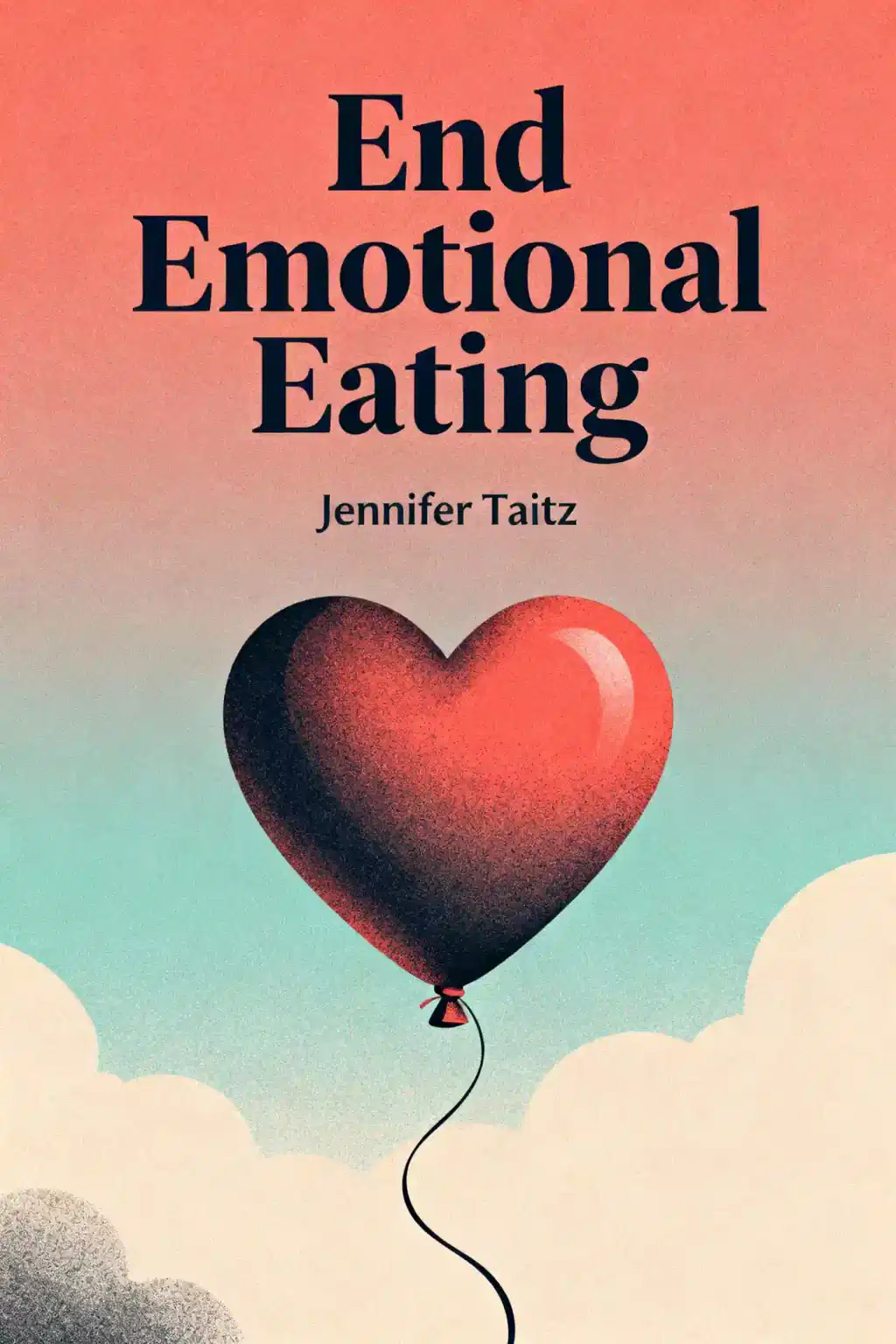
End emotional eating: using dialectical behavior therapy skills to cope with difficult emotions and develop a healthy relationship to food by Jennifer Taitz Summary

Overview of End emotional eating
Dialectical Behavior Therapy meets disordered eating in this award-winning guide that's earned the ABCT's Self-Help Seal of Merit. Dr. Taitz's compassionate approach replaces guilt with mindfulness, winning praise from psychology giants like Dr. Robert Leahy. What emotion is secretly sabotaging your relationship with food?
- Replace emotional eating with DBT’s distress tolerance techniques for lasting change.
- Distinguish emotional hunger from physical cues using mindful awareness practices.
- Practice radical acceptance to navigate cravings without judgment or suppression.
- Build nonfood coping strategies like paced breathing or cold exposure.
- Align food choices with personal values rather than temporary emotions.
- Break emotional eating cycles by journaling triggers and mood patterns.
- Master 15-minute urge-surfing to ride out cravings without acting.
- Transform emotional avoidance into mindful curiosity about bodily sensations.
- Cultivate self-compassion during setbacks using dialectical behavior therapy principles.
- Strengthen mindfulness to disrupt automatic food responses to stress.
- Apply values-based decision making to eating habits and daily choices.
- Develop psychological flexibility through emotional tolerance and purposeful action.
About the Author of End emotional eating
Dr. Jennifer Taitz is a board-certified clinical psychologist and dialectical behavior therapy expert. She is the author of the self-help guide End Emotional Eating: Using Dialectical Behavior Therapy Skills to Cope with Difficult Emotions and Develop a Healthy Relationship to Food.
Specializing in evidence-based strategies for emotional well-being, Taitz draws from her roles as an assistant clinical professor at UCLA’s Department of Psychiatry and founder of LA CBT DBT, a therapy practice focused on time-sensitive, compassion-driven interventions. Her work integrates cognitive behavioral therapy (CBT) and DBT frameworks to address challenges like stress, relationships, and disordered eating.
Taitz is also the author of How to be Single and Happy, a Forbes-recommended book exploring science-backed strategies for thriving in solo life, and a forthcoming title on stress management. Her writing frequently appears in the New York Times and Wall Street Journal, and she has contributed to NPR’s Life Kit and other podcasts.
Both End Emotional Eating and How to be Single and Happy earned the Association for Behavioral and Cognitive Therapies’ Seal of Merit for their research-aligned readability. A portion of proceeds from her books supports organizations combating poverty and gender inequality.
FAQs About End emotional eating
What is End Emotional Eating by Jennifer Taitz about?
End Emotional Eating by Jennifer Taitz teaches evidence-based strategies to break cycles of using food to cope with emotions. Using dialectical behavior therapy (DBT) skills, it focuses on mindfulness, emotion regulation, and distress tolerance to help readers manage urges, understand emotional triggers, and build healthier relationships with food.
Who should read End Emotional Eating?
This book is ideal for individuals struggling with emotional eating, binge eating, or chronic dieting. It’s also valuable for therapists seeking DBT-inspired tools or anyone interested in mindfulness-based approaches to emotional well-being.
Is End Emotional Eating worth reading?
Yes—the book earned the Association for Behavioral and Cognitive Therapies’ Seal of Merit for its research-backed, actionable strategies. Readers praise its focus on root causes (emotions) over dieting, making it a standout resource for long-term behavioral change.
How does End Emotional Eating use DBT to address emotional eating?
Jennifer Taitz integrates DBT skills like urge surfing (observing cravings without acting), mindful awareness, and opposite action to help readers tolerate distress and respond to emotions constructively. These tools aim to replace impulsive eating with intentional coping mechanisms.
What role does mindfulness play in End Emotional Eating?
Mindfulness helps readers recognize emotional triggers and physical hunger cues. Techniques like nonjudgmental observation of cravings and savoring meals are emphasized to reduce autopilot eating and enhance emotional resilience.
What are key quotes from End Emotional Eating?
- “Emotional eating is not about the food; it’s about how you’ve learned to cope with your emotions.”
- “The quicker you accept discomfort, the faster you can move toward meaningful change.”
These highlight the book’s focus on emotional awareness over willpower.
How does End Emotional Eating differ from diet-focused books?
Unlike diet guides, Taitz’s work avoids calorie counts or meal plans. Instead, it targets psychological habits, teaching skills to manage stress, sadness, and boredom without relying on food.
Can End Emotional Eating help with binge eating?
Yes—the book’s DBT strategies, such as distress tolerance and emotion labeling, provide tools to interrupt binge cycles. Readers learn to sit with discomfort and choose alternative actions, reducing reliance on food for emotional relief.
What is “urge surfing” in End Emotional Eating?
Urge surfing involves observing cravings like waves—peaking and fading without action. This technique builds tolerance to emotional triggers, helping readers avoid impulsive eating and regain control.
How does Jennifer Taitz’s expertise inform End Emotional Eating?
As a board-certified DBT specialist and UCLA professor, Taitz blends clinical expertise with relatable examples. Her approach is grounded in peer-reviewed research, ensuring practical, science-backed solutions.
What criticisms exist about End Emotional Eating?
While praised for its innovation, some note the book requires consistent practice of skills, which may challenge those seeking quick fixes. However, its structured exercises and real-world applications are widely endorsed.
How does End Emotional Eating compare to Taitz’s other books?
Unlike How to Be Single and Happy (focused on relationships), this book targets emotional regulation and eating. Both share Taitz’s signature blend of CBT/DBT strategies and accessible storytelling.
Feel the book through the author's voice
Turn knowledge into engaging, example-rich insights
Capture key ideas in a flash for fast learning
Enjoy the book in a fun and engaging way
Key Themes in End emotional eating
Quotes from End emotional eating
It's not about iron discipline but developing skills to sit with temptation.
Pain + Nonacceptance = Suffering.
Emotions trigger eating, which creates more emotions.
We can't command emotions any more than we can control weather.
Characters in End emotional eating
Quick Summary Mode - Read or listen to End emotional eating Summary in 8 Minutes

Break down key ideas from End emotional eating into bite-sized takeaways to understand how innovative teams create, collaborate, and grow.

Flash Card Mode - Top 7 Insights from End emotional eating in a Nutshell

Distill End emotional eating into rapid-fire memory cues that highlight key principles of candor, teamwork, and creative resilience.

Fun Mode - End emotional eating Lessons Told Through 25-Min Stories

Experience End emotional eating through vivid storytelling that turns innovation lessons into moments you'll remember and apply.
Personalize Mode - Read or listen to End emotional eating Summary in 0 Minutes

Ask anything, pick the voice, and co-create insights that truly resonate with you.

From Columbia University alumni built in San Francisco
"Instead of endless scrolling, I just hit play on BeFreed. It saves me so much time."


"I never knew where to start with nonfiction—BeFreed’s book lists turned into podcasts gave me a clear path."


"Perfect balance between learning and entertainment. Finished ‘Thinking, Fast and Slow’ on my commute this week."
"Crazy how much I learned while walking the dog. BeFreed = small habits → big gains."
"Reading used to feel like a chore. Now it’s just part of my lifestyle."

"Feels effortless compared to reading. I’ve finished 6 books this month already."
"BeFreed turned my guilty doomscrolling into something that feels productive and inspiring."

"BeFreed turned my commute into learning time. 20-min podcasts are perfect for finishing books I never had time for."
"BeFreed replaced my podcast queue. Imagine Spotify for books — that’s it. 🙌"

"It is great for me to learn something from the book without reading it."
"The themed book list podcasts help me connect ideas across authors—like a guided audio journey."
"Makes me feel smarter every time before going to work"
From Columbia University alumni built in San Francisco
"Instead of endless scrolling, I just hit play on BeFreed. It saves me so much time."
"I never knew where to start with nonfiction—BeFreed’s book lists turned into podcasts gave me a clear path."
"Perfect balance between learning and entertainment. Finished ‘Thinking, Fast and Slow’ on my commute this week."
"Crazy how much I learned while walking the dog. BeFreed = small habits → big gains."
"Reading used to feel like a chore. Now it’s just part of my lifestyle."
"Feels effortless compared to reading. I’ve finished 6 books this month already."
"BeFreed turned my guilty doomscrolling into something that feels productive and inspiring."
"BeFreed turned my commute into learning time. 20-min podcasts are perfect for finishing books I never had time for."
"BeFreed replaced my podcast queue. Imagine Spotify for books — that’s it. 🙌"
"It is great for me to learn something from the book without reading it."
"The themed book list podcasts help me connect ideas across authors—like a guided audio journey."
"Makes me feel smarter every time before going to work"
"Instead of endless scrolling, I just hit play on BeFreed. It saves me so much time."
"I never knew where to start with nonfiction—BeFreed’s book lists turned into podcasts gave me a clear path."
"Perfect balance between learning and entertainment. Finished ‘Thinking, Fast and Slow’ on my commute this week."
"Crazy how much I learned while walking the dog. BeFreed = small habits → big gains."
"Reading used to feel like a chore. Now it’s just part of my lifestyle."
"Feels effortless compared to reading. I’ve finished 6 books this month already."
"BeFreed turned my guilty doomscrolling into something that feels productive and inspiring."
"BeFreed turned my commute into learning time. 20-min podcasts are perfect for finishing books I never had time for."
"BeFreed replaced my podcast queue. Imagine Spotify for books — that’s it. 🙌"
"It is great for me to learn something from the book without reading it."
"The themed book list podcasts help me connect ideas across authors—like a guided audio journey."
"Makes me feel smarter every time before going to work"
"Instead of endless scrolling, I just hit play on BeFreed. It saves me so much time."
"I never knew where to start with nonfiction—BeFreed’s book lists turned into podcasts gave me a clear path."
"Perfect balance between learning and entertainment. Finished ‘Thinking, Fast and Slow’ on my commute this week."
"Crazy how much I learned while walking the dog. BeFreed = small habits → big gains."
"Reading used to feel like a chore. Now it’s just part of my lifestyle."
"Feels effortless compared to reading. I’ve finished 6 books this month already."
"BeFreed turned my guilty doomscrolling into something that feels productive and inspiring."
"BeFreed turned my commute into learning time. 20-min podcasts are perfect for finishing books I never had time for."
"BeFreed replaced my podcast queue. Imagine Spotify for books — that’s it. 🙌"
"It is great for me to learn something from the book without reading it."
"The themed book list podcasts help me connect ideas across authors—like a guided audio journey."
"Makes me feel smarter every time before going to work"

Get the End emotional eating summary as a free PDF or EPUB. Print it or read offline anytime.