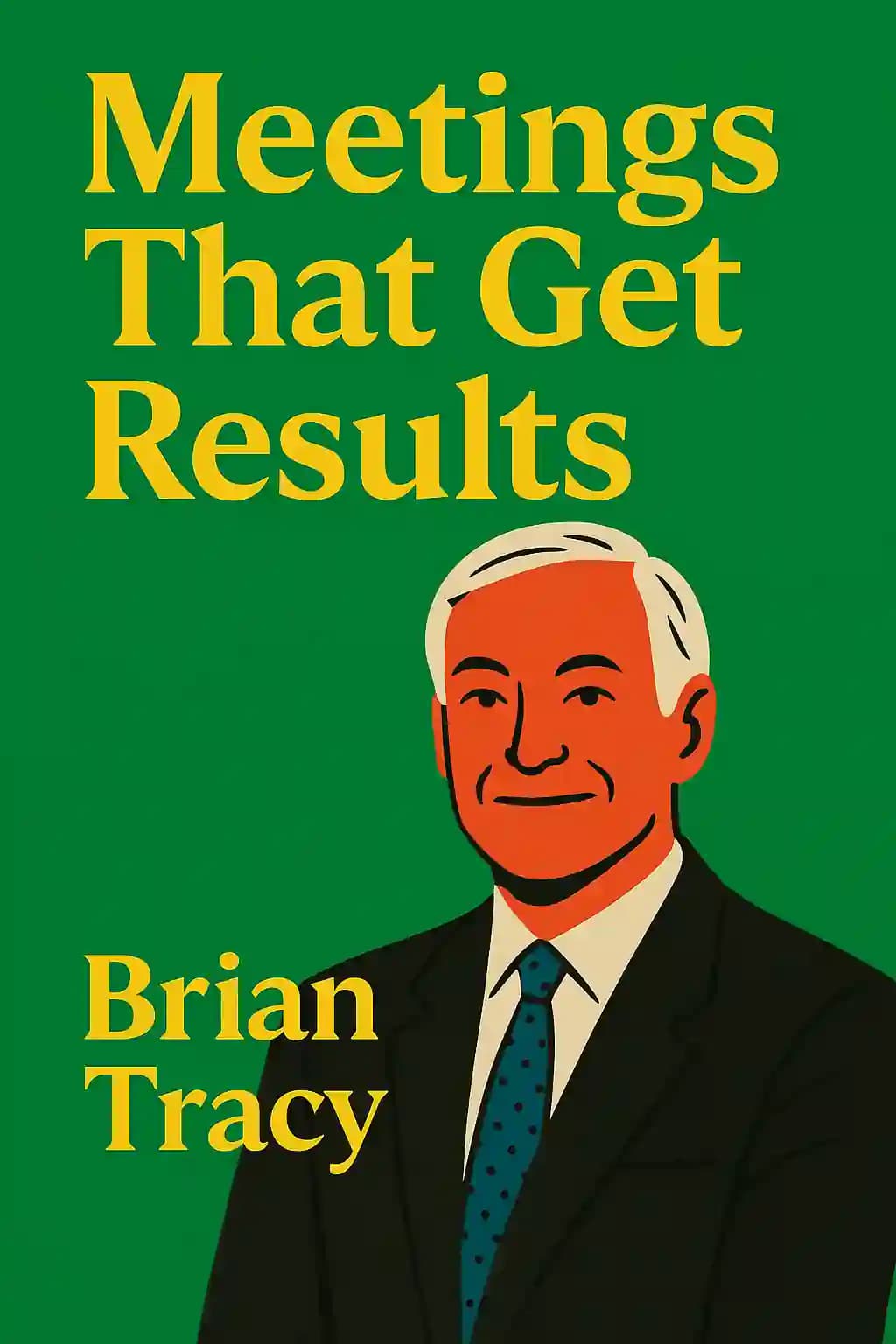
Meetings That Get Results
(The Brian Tracy Success Library)
Overview of Meetings That Get Results
Transform dreaded meetings into powerful productivity engines with Brian Tracy's concise guide. Business leaders praise its structured approach that cuts meeting time by 50%. Even tech giants like Google have adapted Tracy's counterintuitive "no multitasking" rule for maximum team engagement.

Key Themes in Meetings That Get Results
- meeting facilitation
- agenda planning
- executive presence
- organizational communication
- decision making
Quotes from Meetings That Get Results
Meetings represent a fascinating paradox in organizational life.
Meetings aren't just about the time spent in the room-they're about the outcomes generated and actions taken afterward.
The single most important question before scheduling any meeting is deceptively simple: Why are we meeting?
Characters in Meetings That Get Results
- Brian TracyAuthor and expert on professional productivity
- Thomas J. WatsonLegendary IBM chairman
About the Author
About the Author of Meetings That Get Results
Brian Tracy, bestselling author of Meetings That Get Results, is a globally recognized authority in personal and professional development, leadership, and productivity. Born in Charlottetown, Canada, in 1944, Tracy transformed his early sales career and worldwide travels across 80+ countries into a mission to help organizations optimize performance.
His expertise in effective communication and time management stems from decades advising Fortune 500 companies through his firm Brian Tracy International, founded in 1984.
A prolific writer with over 80 translated books—including the iconic Eat That Frog! and No Excuses! The Power of Self-Discipline—Tracy distills complex leadership concepts into actionable strategies. His works, frequently featured in business curricula and corporate training programs, emphasize practical frameworks for decision-making and team efficiency.
Meetings That Get Results extends his legacy of transforming workplace dynamics, leveraging his signature focus on measurable outcomes. Tracy’s books have sold millions of copies worldwide, with translations spanning dozens of languages, cementing his status as a foundational voice in modern business literature.
Download Summary of Meetings That Get Results
Get the Meetings That Get Results summary as a free PDF or EPUB. Print it or read offline anytime.
FAQs About This Book
Brian Tracy's Meetings That Get Results provides actionable strategies to transform unproductive meetings into focused, results-driven sessions. It covers agenda setting, decision-making frameworks, and techniques to assign clear action steps, helping leaders save time and drive organizational efficiency through structured collaboration.
Managers, team leaders, and professionals seeking to optimize workplace meetings will benefit most. The book offers practical tools for anyone facilitating internal discussions, client presentations, or problem-solving sessions, particularly those in corporate or entrepreneurial settings.
Tracy emphasizes defining clear objectives, preparing concise agendas, and enforcing time limits. He advocates assigning responsibilities for action items, summarizing decisions post-meeting, and using layouts that encourage engagement (e.g., circular seating).
It tackles issues like off-topic discussions, lack of closure, and unclear next steps. Solutions include using a "parking lot" system for tangential ideas, setting decision deadlines, and mandating pre-meeting materials to reduce rambling.
The book distinguishes between informational updates (15-minute stand-ups), problem-solving sessions (structured brainstorming), and decision-making meetings (pre-vetted proposals). Each type has tailored agendas and participant guidelines.
Tracy’s "3W Framework" (Who does What by When) ensures action items are documented and tracked. This reduces ambiguity and enables follow-up through shared summaries sent within 24 hours.
While primarily focused on in-person settings, its principles apply to remote collaboration. The emphasis on agendas, timekeeping, and visual aids (like shared digital documents) translates well to platforms like Zoom.
Tracy focuses on leadership-driven efficiency (e.g., assertive agenda control), while Metz emphasizes collaborative facilitation techniques. Tracy’s method suits hierarchical organizations; Metz’s works better for consensus-driven teams.
It advocates the "70% Rule" – if a solution addresses 70% of concerns, implement it and refine later. Tracy also recommends limiting options to three alternatives to prevent analysis paralysis.
Key steps include:
- Distributing decisions/action items within 24 hours
- Using bullet points (not paragraphs) for clarity
- Tagging responsible parties in task management tools
- Scheduling check-ins before adjourning
Techniques include:
- Directing questions to quieter members
- Using "round-robin" speaking orders
- Implementing a 60-second speaking limit per turn
- Privately coaching habitual interrupters post-meeting
Yes – nonprofits, school boards, and community groups can use its frameworks. The chapter on external client meetings specifically addresses adapting strategies for partnership-building and pitch scenarios.





