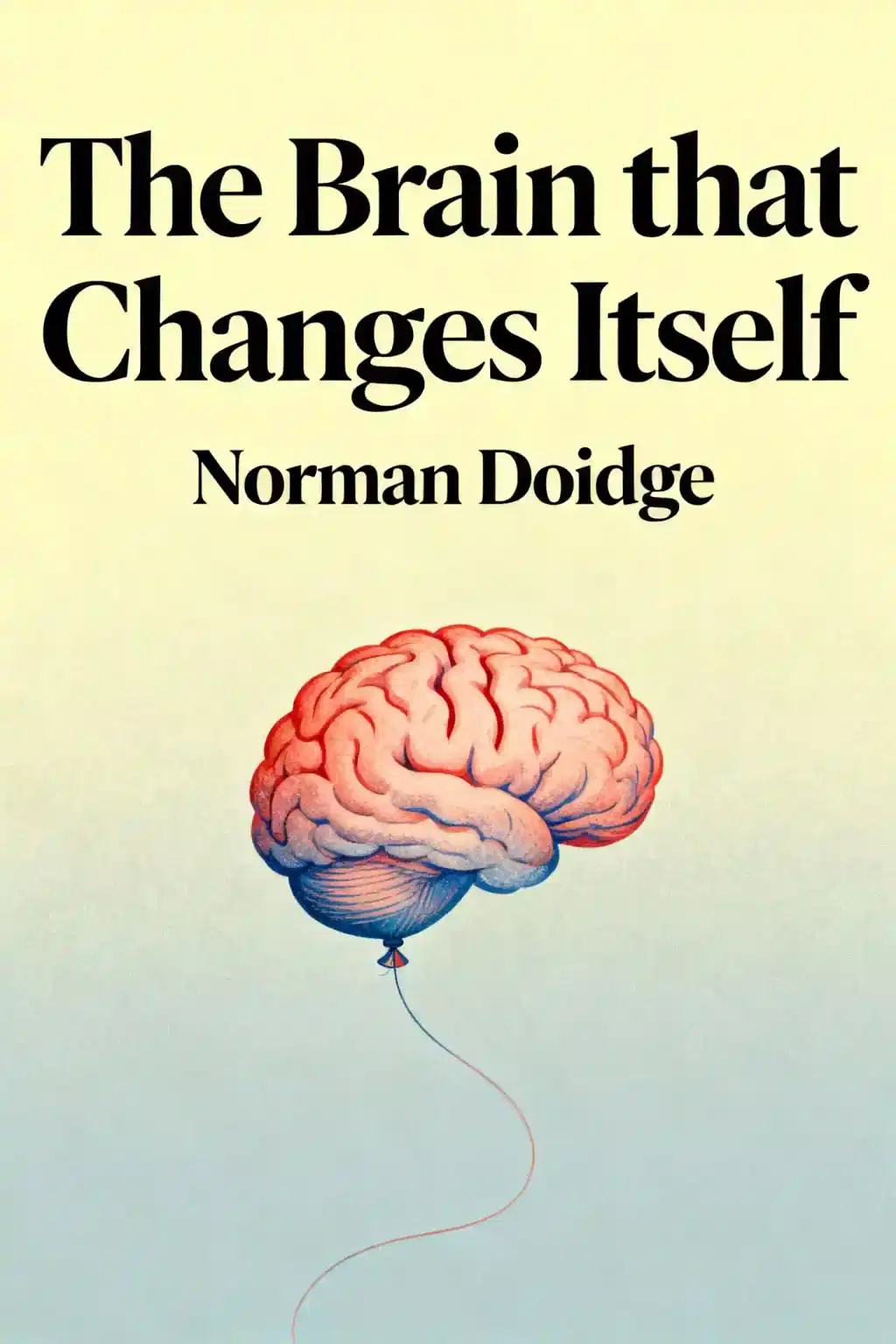
The Brain That Changes Itself: Stories of Personal Triumph from the Frontiers of Brain Science by Norman Doidge Summary

Overview of The Brain That Changes Itself
Discover how your brain rewires itself in this groundbreaking bestseller that Oliver Sacks called "remarkable and hopeful." Named the best brain book among 30,000 titles, it reveals surprising neuroplasticity stories that challenge everything you thought about your mind's limitations.
- Neuroplasticity allows lifelong brain rewiring through mental practice and sensory remapping.
- Stroke recovery is possible by unmasking dormant neural pathways for movement restoration.
- Mental practice rewires the brain as effectively as physical action for skill mastery.
- Phantom limb pain dissipates by retraining brain maps through visual feedback therapy.
- Childhood brain limitations aren’t lifelong sentences due to neuroplastic adaptation potential.
- OCD patterns break via neuroplastic interventions that disrupt compulsive neural loops.
- Structural plasticity enables physical brain changes from learning, not just functional shifts.
- Sexual preferences and porn addiction can be reshaped through neuroplastic reprogramming.
- Blindness can be circumvented through sensory substitution and brain remapping techniques.
- Cognitive decline reverses using neuroplastic exercises that rebuild aging neural networks.
- Love and parenthood trigger massive neuroplastic changes in brain structure and priorities.
- Doidge’s research proves brains self-heal without surgery when harnessing plasticity principles.
About the Author of The Brain That Changes Itself
Norman Doidge, MD, FRCP(C), is a New York Times bestselling author, psychiatrist, and leading authority on neuroplasticity, best known for The Brain That Changes Itself: Stories of Personal Triumph from the Frontiers of Brain Science.
A research faculty member at Columbia University’s Center for Psychoanalytic Training and Research and former University of Toronto professor, Doidge merges clinical expertise with groundbreaking neuroscience insights. His work explores the brain’s adaptability, challenging the notion of fixed neural pathways and showcasing real-world recoveries through neuroplasticity.
A four-time Canadian National Magazine Award winner, Doidge served as editor-in-chief of Books in Canada and contributed to the National Post and Saturday Night. His follow-up, The Brain’s Way of Healing, expands on these themes, offering transformative case studies of non-pharmaceutical interventions.
Translated into over 100 languages, The Brain That Changes Itself has sold over a million copies and was endorsed by the Dana Foundation as the definitive book on brain science for general readers.
FAQs About The Brain That Changes Itself
What is The Brain That Changes Itself by Norman Doidge about?
The Brain That Changes Itself explores neuroplasticity—the brain’s ability to reorganize itself by forming new neural connections. Through patient stories and scientific research, Norman Doidge challenges the outdated belief that the brain is unchangeable, demonstrating how individuals overcome learning disorders, recover from strokes, and improve cognitive function. The book bridges neuroscience with practical applications for healing and personal growth.
Who should read The Brain That Changes Itself?
This book is ideal for students, educators, healthcare professionals, and anyone interested in neuroscience or self-improvement. It offers actionable insights for those managing neurological conditions, caregivers, and individuals seeking evidence-based strategies to enhance memory, emotional resilience, or cognitive performance. Doidge’s accessible storytelling makes complex science engaging for general readers.
Is The Brain That Changes Itself worth reading?
Yes. The book revolutionized public understanding of neuroplasticity, blending rigorous science with compelling narratives. It remains a cornerstone for grasping how habits, therapies, and mental exercises can rewire the brain. Readers praise its hopeful tone and real-world examples, such as blind individuals learning to “see” through sensory substitution.
How does Norman Doidge explain neuroplasticity in the book?
Doidge defines neuroplasticity as the brain’s capacity to adapt structurally and functionally in response to experience. He illustrates this with cases like Cheryl Schiltz, who regained balance after vestibular damage using a neuroplasticity-based device, and stroke patients relearning movement through mental practice. These examples show plasticity isn’t limited to childhood.
What are the key takeaways from The Brain That Changes Itself?
- Brain adaptability: Aging or injured brains can rejuvenate through targeted exercises.
- Experience shapes structure: Learning new skills physically alters neural pathways.
- Therapeutic potential: Non-invasive techniques can treat OCD, depression, and chronic pain.
- Cultural impact: Modern technology may prematurely hardwire developing brains, affecting attention spans.
What critiques exist about The Brain That Changes Itself?
Some scientists argue Doidge oversimplifies complex research or overstates case-study applicability. Critics note early chapters focus on extreme recoveries, potentially creating unrealistic expectations. However, the book’s core thesis—that the brain isn’t static—is widely accepted in contemporary neuroscience.
How does The Brain That Changes Itself compare to Doidge’s later work, The Brain’s Way of Healing?
While both books explore neuroplasticity, The Brain’s Way of Healing emphasizes non-invasive therapies like light, sound, and motion. The sequel details newer research, including laser treatments for Parkinson’s and neurostimulation for autism, complementing the first book’s foundational theories.
Can The Brain That Changes Itself help with anxiety or depression?
Yes. Doidge highlights therapies like cognitive-behavioral retraining and mindfulness, which leverage plasticity to reduce symptoms. For example, OCD patients using “exposure and response prevention” weaken anxiety-linked neural pathways, demonstrating how mental exercises can remodel emotional responses.
What iconic quotes from the book are often cited?
- “The brain is a far more open system than we ever imagined.”
- “Mental activity alone can change brain structure.”
These lines underscore the book’s central theme: conscious effort can physically reshape the brain, empowering readers to take charge of their cognitive health.
How does the book address aging and cognitive decline?
Doidge argues that mental stimulation slows age-related decline. Activities like learning instruments or languages strengthen compensatory neural networks. Case studies show elderly individuals reversing memory loss through computerized brain-training programs, challenging the inevitability of dementia.
What real-world applications of neuroplasticity does Doidge highlight?
- Stroke rehabilitation: Patients regain speech via constraint-induced therapy.
- Learning disabilities: Children improve reading skills with Fast ForWord software.
- Chronic pain: Retraining sensory perception reduces phantom limb pain.
These applications demonstrate plasticity’s role in clinical settings.
Why is The Brain That Changes Itself still relevant in 2025?
As AI and VR reshape learning and therapy, Doidge’s work remains a framework for understanding human-machine neuroplastic partnerships. The book’s principles underpin modern treatments like neurofeedback for ADHD and brain-computer interfaces for paralysis, ensuring its ongoing scientific and cultural impact.
Feel the book through the author's voice
Turn knowledge into engaging, example-rich insights
Capture key ideas in a flash for fast learning
Enjoy the book in a fun and engaging way
Key Themes in The Brain That Changes Itself
Quotes from The Brain That Changes Itself
The brain is a far more open system than anyone ever imagined, and nature has gone to great lengths to help us perceive and take in the world around us.
What if everything we've been taught about the brain is wrong?
The brain circuits that fire together wire together.
Her comprehension operated only in 'lag time'.
Thinking and learning can turn our genes on or off.
Characters in The Brain That Changes Itself
Quick Summary Mode - Read or listen to The Brain That Changes Itself Summary in 9 Minutes

Break down key ideas from The Brain That Changes Itself into bite-sized takeaways to understand how innovative teams create, collaborate, and grow.

Flash Card Mode - Top 10 Insights from The Brain That Changes Itself in a Nutshell

Distill The Brain That Changes Itself into rapid-fire memory cues that highlight key principles of candor, teamwork, and creative resilience.

Fun Mode - The Brain That Changes Itself Lessons Told Through 23-Min Stories

Experience The Brain That Changes Itself through vivid storytelling that turns innovation lessons into moments you'll remember and apply.
Personalize Mode - Read or listen to The Brain That Changes Itself Summary in 0 Minutes

Ask anything, pick the voice, and co-create insights that truly resonate with you.

From Columbia University alumni built in San Francisco
"Instead of endless scrolling, I just hit play on BeFreed. It saves me so much time."


"I never knew where to start with nonfiction—BeFreed’s book lists turned into podcasts gave me a clear path."


"Perfect balance between learning and entertainment. Finished ‘Thinking, Fast and Slow’ on my commute this week."
"Crazy how much I learned while walking the dog. BeFreed = small habits → big gains."
"Reading used to feel like a chore. Now it’s just part of my lifestyle."

"Feels effortless compared to reading. I’ve finished 6 books this month already."
"BeFreed turned my guilty doomscrolling into something that feels productive and inspiring."

"BeFreed turned my commute into learning time. 20-min podcasts are perfect for finishing books I never had time for."
"BeFreed replaced my podcast queue. Imagine Spotify for books — that’s it. 🙌"

"It is great for me to learn something from the book without reading it."
"The themed book list podcasts help me connect ideas across authors—like a guided audio journey."
"Makes me feel smarter every time before going to work"
From Columbia University alumni built in San Francisco
"Instead of endless scrolling, I just hit play on BeFreed. It saves me so much time."
"I never knew where to start with nonfiction—BeFreed’s book lists turned into podcasts gave me a clear path."
"Perfect balance between learning and entertainment. Finished ‘Thinking, Fast and Slow’ on my commute this week."
"Crazy how much I learned while walking the dog. BeFreed = small habits → big gains."
"Reading used to feel like a chore. Now it’s just part of my lifestyle."
"Feels effortless compared to reading. I’ve finished 6 books this month already."
"BeFreed turned my guilty doomscrolling into something that feels productive and inspiring."
"BeFreed turned my commute into learning time. 20-min podcasts are perfect for finishing books I never had time for."
"BeFreed replaced my podcast queue. Imagine Spotify for books — that’s it. 🙌"
"It is great for me to learn something from the book without reading it."
"The themed book list podcasts help me connect ideas across authors—like a guided audio journey."
"Makes me feel smarter every time before going to work"
"Instead of endless scrolling, I just hit play on BeFreed. It saves me so much time."
"I never knew where to start with nonfiction—BeFreed’s book lists turned into podcasts gave me a clear path."
"Perfect balance between learning and entertainment. Finished ‘Thinking, Fast and Slow’ on my commute this week."
"Crazy how much I learned while walking the dog. BeFreed = small habits → big gains."
"Reading used to feel like a chore. Now it’s just part of my lifestyle."
"Feels effortless compared to reading. I’ve finished 6 books this month already."
"BeFreed turned my guilty doomscrolling into something that feels productive and inspiring."
"BeFreed turned my commute into learning time. 20-min podcasts are perfect for finishing books I never had time for."
"BeFreed replaced my podcast queue. Imagine Spotify for books — that’s it. 🙌"
"It is great for me to learn something from the book without reading it."
"The themed book list podcasts help me connect ideas across authors—like a guided audio journey."
"Makes me feel smarter every time before going to work"
"Instead of endless scrolling, I just hit play on BeFreed. It saves me so much time."
"I never knew where to start with nonfiction—BeFreed’s book lists turned into podcasts gave me a clear path."
"Perfect balance between learning and entertainment. Finished ‘Thinking, Fast and Slow’ on my commute this week."
"Crazy how much I learned while walking the dog. BeFreed = small habits → big gains."
"Reading used to feel like a chore. Now it’s just part of my lifestyle."
"Feels effortless compared to reading. I’ve finished 6 books this month already."
"BeFreed turned my guilty doomscrolling into something that feels productive and inspiring."
"BeFreed turned my commute into learning time. 20-min podcasts are perfect for finishing books I never had time for."
"BeFreed replaced my podcast queue. Imagine Spotify for books — that’s it. 🙌"
"It is great for me to learn something from the book without reading it."
"The themed book list podcasts help me connect ideas across authors—like a guided audio journey."
"Makes me feel smarter every time before going to work"

Get the The Brain That Changes Itself summary as a free PDF or EPUB. Print it or read offline anytime.