BeFreed
    Categories>History & Society>San Francisco: City of Perpetual Reinvention

    San Francisco: City of Perpetual Reinvention

    22 min
    |
    |
    Jan 1, 2026
    History & SocietyTechnology

    Discover how San Francisco evolved from an 800-person settlement to a global tech hub through multiple transformations—from the Gold Rush to counterculture movements to tech innovation—all while maintaining its spirit of reinvention.

    San Francisco: City of Perpetual Reinvention
    Choose how it's told

    One episode. Many ways to hear it.

    Same ideas from San Francisco: City of Perpetual Reinvention. Pick the voice, depth, and pace that fits you. Switch anytime.

    Transcript & chapters

    Chapter 1

    The City That Reinvents Itself

    Did you know that before San Francisco became the tech hub we know today, it was once a tiny settlement of just 800 people that exploded to 50,000 virtually overnight? I'm talking about the 1848 Gold Rush—just one of the dramatic transformations that have repeatedly reinvented this resilient city. From Spanish missionaries naming it after Saint Francis in 1776, to surviving an earthquake that destroyed 80% of the city in 1906, to becoming ground zero for counterculture in the 1960s and the LGBTQ rights movement in the 1970s—San Francisco has constantly shed its skin and emerged anew. Today we'll journey through the fascinating history of this city by the bay, where innovation and reinvention aren't just buzzwords—they're baked into its very foundations.

    Chapter 2

    When Dreamers Became Builders

    The transformation from Gold Rush boomtown to tech capital didn't happen overnight—it took visionary entrepreneurs who understood that the real gold lay not in the hills, but in human imagination. The story begins in earnest during the 1930s and 1940s, when a Stanford professor named Frederick Terman started encouraging his brightest students to stay in the Bay Area rather than heading east to established companies. Terman's philosophy was revolutionary for its time: create an ecosystem where academia, industry, and innovation could cross-pollinate freely.

    This wasn't just academic theory—it was deeply personal. When two of his students, Bill Hewlett and Dave Packard, approached him about starting a company in 1938, Terman didn't just encourage them; he helped them secure their first contract and even assisted with finding their legendary garage workspace. That $538 garage rental in Palo Alto would later be designated as the birthplace of Silicon Valley, but what made it special wasn't the location—it was the mindset that innovation could flourish anywhere ambitious people gathered.

    The genius of this early ecosystem wasn't just about technology; it was about creating what researchers now call "innovation networks." Unlike traditional industrial centers that relied on massive factories and rigid hierarchies, the Bay Area was developing something entirely different—a web of interconnected relationships where ideas, talent, and capital could flow freely between organizations. When Fairchild Semiconductor was founded in 1957 by eight defectors from Shockley Semiconductor, they weren't just changing jobs; they were establishing a new cultural norm where brilliant people could pursue better opportunities without stigma.

    This culture of movement and reinvention became the Valley's secret weapon. By the 1960s, it was common for engineers to hop between companies, carrying knowledge and networks with them like seeds spreading across fertile ground. Each job change didn't just benefit the individual—it strengthened the entire ecosystem by creating what economists call "knowledge spillovers." When an engineer moved from Fairchild to Intel, or later from Intel to Apple, they brought technical expertise, industry connections, and innovative thinking patterns that enriched their new company while maintaining ties to their former colleagues.

    The physical landscape reinforced this collaborative culture. Unlike the East Coast's industrial cities with their clear geographic boundaries between work and life, the Bay Area's sprawling suburban campuses encouraged a different kind of interaction. Companies like Hewlett-Packard pioneered the open office concept and management by walking around, creating environments where serendipitous encounters could spark breakthrough innovations. The famous HP Way wasn't just about employee benefits—it was about fostering the kind of creative collision that happens when smart people feel free to share ideas across traditional boundaries.

    Chapter 3

    The Counterculture Connection

    What many people don't realize is how deeply the 1960s counterculture movement influenced Silicon Valley's DNA. This wasn't just coincidental timing—there was a profound philosophical alignment between the hippie ethos of questioning authority and the hacker mentality of breaking down barriers. Both movements shared a fundamental belief that existing systems were flawed and that small groups of passionate individuals could create better alternatives.

    The connection became explicit when Stewart Brand launched the Whole Earth Catalog in 1968, creating what he called "access to tools" for people seeking alternatives to mainstream society. Brand's catalog didn't just sell products; it curated a worldview that celebrated individual empowerment through technology. The catalog's influence on early personal computer pioneers was enormous—Steve Jobs famously called it "one of the bibles of my generation" and credited it with inspiring Apple's user-friendly design philosophy.

    This counterculture influence manifested in practical ways that shaped the industry's development. The Homebrew Computer Club, founded in 1975, embodied the era's communal spirit by bringing together engineers, hobbyists, and dreamers who shared technical knowledge freely. Unlike traditional corporate R&D departments with their strict secrecy, Homebrew meetings were celebrations of open collaboration where members demonstrated their latest creations and shared circuit designs without expecting anything in return.

    The club's egalitarian ethos attracted an eclectic mix of participants, from Berkeley graduate students to Lockheed engineers to high school dropouts with an intuitive understanding of electronics. This diversity wasn't accidental—it reflected the counterculture's rejection of credentialism and its faith in individual creativity over institutional authority. When Steve Wozniak demonstrated the Apple I computer at a Homebrew meeting in 1976, he wasn't trying to start a company; he was sharing a cool project with fellow enthusiasts who appreciated elegant engineering.

    The influence extended beyond technical collaboration to fundamental business philosophy. Many early tech companies adopted flat organizational structures, casual dress codes, and employee stock options—practices that seemed radical in the corporate world of the 1970s but felt natural to founders who had absorbed counterculture values. The idea that work could be meaningful, that employees should share in company success, and that innovation required creative freedom weren't just progressive HR policies; they were expressions of deeply held beliefs about human potential and social organization.

    Even the industry's approach to marketing reflected counterculture sensibilities. Apple's famous "Think Different" campaign wasn't just clever advertising—it was a manifesto that positioned technology as a tool for individual expression and social transformation. The personal computer revolution succeeded not just because the technology became cheaper and more powerful, but because it aligned with cultural values that celebrated creativity, individualism, and the democratization of tools previously available only to large institutions.

    Chapter 4

    The Venture Capital Revolution

    The emergence of modern venture capital transformed Silicon Valley from a collection of innovative companies into a self-reinforcing engine of entrepreneurship. This wasn't just about money—it was about creating an entirely new model for how innovation gets funded, developed, and scaled. The traditional approach to business financing, dominated by banks and established corporations, was poorly suited to the high-risk, high-reward nature of technology startups.

    The breakthrough came when former Fairchild executives like Eugene Kleiner and Tom Perkins started Kleiner Perkins in 1972, bringing an insider's understanding of technology to the investment process. Unlike traditional financiers who focused primarily on financial metrics, these venture capitalists could evaluate the technical feasibility of ambitious projects and provide strategic guidance based on their own entrepreneurial experience. They weren't just passive investors; they were active partners who helped entrepreneurs navigate the challenges of building companies in emerging markets.

    This hands-on approach created what economists call "smart money"—capital that comes bundled with expertise, networks, and credibility. When Kleiner Perkins invested in Genentech in 1976, they weren't just providing funding for biotechnology research; they were signaling to the broader investment community that this new field had commercial potential. The firm's reputation helped Genentech attract additional investors, recruit top scientists, and establish partnerships with pharmaceutical companies that might otherwise have been skeptical of a startup's capabilities.

    The venture capital model also solved a crucial timing problem that had historically limited innovation. Traditional corporate R&D operated on predictable timelines with incremental improvements to existing products, while breakthrough innovations often required years of development before generating revenue. Venture capital provided patient money that could support entrepreneurs through the "valley of death" between initial concept and market success, enabling them to pursue transformative ideas that established companies considered too risky.

    The geographic concentration of venture capital firms along Sand Hill Road created powerful network effects that accelerated the entire ecosystem's development. When entrepreneurs pitched their ideas to multiple firms in the same area, information about promising technologies and market opportunities spread quickly through the investment community. This density also made it easier for venture capitalists to collaborate on larger deals and share due diligence efforts, reducing the time and cost of evaluating potential investments.

    Perhaps most importantly, the venture capital model institutionalized a tolerance for failure that was essential for fostering innovation. Unlike bank loans that required personal guarantees or corporate investments that could damage executives' careers, venture capital explicitly acknowledged that most startups would fail while a few would generate extraordinary returns. This mathematical approach to risk encouraged entrepreneurs to pursue ambitious projects and gave them permission to fail fast and learn quickly rather than pursuing incremental improvements to existing solutions.

    Chapter 5

    The Network Effect Economy

    The rise of personal computing and the internet transformed Silicon Valley from a hardware-centric manufacturing hub into the nerve center of a new kind of economy based on networks, platforms, and data. This shift wasn't just technological—it represented a fundamental change in how value gets created and captured in the modern economy. Companies like Google, Facebook, and Amazon didn't succeed by making better products; they succeeded by creating platforms that became more valuable as more people used them.

    The network effect phenomenon had profound implications for how companies approached growth and competition. Traditional businesses faced diminishing returns as they scaled—each additional customer became more expensive to acquire and serve. But network-based businesses experienced increasing returns where each new user made the service more valuable for existing users. When Google's search algorithm improved based on user behavior data, or when Facebook's social graph became more useful as more friends joined, these companies weren't just growing; they were strengthening their competitive moats with every interaction.

    This dynamic created what economists call "winner-take-all" markets where small advantages in user adoption could compound into dominant market positions. The first social network to achieve critical mass in a geographic region could attract new users simply because their friends were already there, making it extremely difficult for competitors to gain traction. Similarly, the search engine with the most users could collect more data to improve its algorithms, creating a self-reinforcing cycle of improvement and adoption.

    Silicon Valley companies became masters at designing systems that encouraged these network effects through careful attention to user experience and viral growth mechanisms. LinkedIn succeeded not because it was the first professional networking site, but because it made sharing connections valuable for both parties and created tools that helped users import their existing contact lists. Twitter's retweet feature wasn't just a convenience; it was a growth engine that helped interesting content spread rapidly through the network while exposing new users to the platform's value.

    The platform economy also enabled new forms of entrepreneurship that didn't require massive capital investment or technical expertise. When Apple launched the App Store in 2008, it created opportunities for individual developers and small teams to reach millions of customers without building their own distribution channels. Similarly, Amazon's marketplace allowed small retailers to access the company's logistics network and customer base, while Uber and Airbnb enabled ordinary people to monetize their cars and homes through sophisticated technology platforms.

    This democratization of access to markets and customers represented a fundamental shift in economic power from large corporations to networks of smaller participants. Instead of vertical integration where companies controlled every aspect of production and distribution, successful platforms created horizontal ecosystems where value was created through collaboration between independent participants. The platform owner provided the infrastructure and rules, while participants contributed content, services, and innovation that made the entire system more valuable.

    Chapter 6

    The Global Innovation Magnet

    Silicon Valley's transformation into a global innovation hub wasn't just about attracting the best American talent—it became a magnet for ambitious individuals from around the world who saw the Bay Area as the place where impossible dreams could become reality. This international dimension created a unique cultural mixing bowl where different perspectives, experiences, and approaches to problem-solving could combine in unexpected ways.

    The numbers tell a remarkable story about the Valley's global reach. By the 1990s, nearly half of all Silicon Valley startups had at least one immigrant founder, and this percentage has continued to grow in subsequent decades. These weren't just individual success stories; they represented entire networks of international talent that connected Silicon Valley to innovation ecosystems in India, China, Israel, and dozens of other countries. When entrepreneurs like Jerry Yang from Taiwan co-founded Yahoo, or Sergey Brin from Russia co-founded Google, they weren't just building American companies—they were creating global platforms that reflected their international perspectives and connections.
    The immigration of technical talent created what researchers call "brain circulation" rather than traditional brain drain. Unlike previous waves of immigration where talented individuals left their home countries permanently, Silicon Valley entrepreneurs often maintained strong ties to their countries of origin, creating bridges for investment, partnerships, and knowledge transfer. When Indian engineers returned to Bangalore or Chinese entrepreneurs moved back to Shenzhen, they brought Silicon Valley expertise and networks that helped establish those cities as major technology centers.

    This global connectivity became a competitive advantage for Silicon Valley companies seeking to expand into international markets. Having founders and employees with deep cultural knowledge and personal networks in key markets made it easier to navigate local regulations, understand customer preferences, and establish partnerships with local companies. Google's success in international markets wasn't just about having superior technology; it was about having teams that understood how search behavior varied across different cultures and languages.

    The Valley's educational institutions played a crucial role in attracting and developing international talent. Stanford and UC Berkeley became global brands that attracted the world's brightest students, many of whom stayed in the area after graduation to work for established companies or start their own ventures. The universities' research programs also created opportunities for international collaboration that brought cutting-edge scientific knowledge from around the world to Bay Area companies.

    The cultural impact of this international talent pool extended far beyond business success to reshape Silicon Valley's fundamental character. The region's famous tolerance for risk-taking and unconventional thinking was reinforced by the presence of immigrants who had already demonstrated their willingness to leave familiar environments in pursuit of opportunity. The combination of American entrepreneurial culture with international perspectives created a unique environment where diverse approaches to innovation could flourish and cross-pollinate.

    Chapter 7

    The Resilience Playbook

    What can other regions learn from Silicon Valley's remarkable ability to reinvent itself through multiple economic cycles and technological disruptions? The answer isn't simply about copying specific policies or institutions, but rather understanding the underlying principles that create adaptive capacity in innovation ecosystems.

    The first principle is what researchers call "productive failure"—the ability to extract maximum learning from unsuccessful experiments while minimizing the social and economic costs of failure. Silicon Valley normalized failure as an essential part of the innovation process rather than a career-ending disaster. Entrepreneurs who failed at their first startup weren't blacklisted; they were often more attractive to investors and employees because they had learned valuable lessons about what doesn't work. This cultural shift required changes in everything from bankruptcy laws to social attitudes about risk-taking.

    The second principle involves maintaining what economists call "combinatorial diversity"—bringing together people with different skills, backgrounds, and perspectives in environments where they can collaborate effectively. The Valley's success came not from having the world's best computer scientists or the most experienced business executives, but from creating spaces where these different types of expertise could combine in novel ways. The legendary garage startups worked because they mixed technical brilliance with business acumen and market intuition in small, focused teams.

    Building effective innovation ecosystems also requires what urban planners call "institutional thickness"—a dense network of supporting organizations that can provide specialized services to entrepreneurs and growing companies. Silicon Valley developed this infrastructure over decades, including everything from patent attorneys who understood technology to executive search firms that specialized in startup recruiting. These supporting services reduced the friction of starting and scaling companies while allowing entrepreneurs to focus on their core innovations.

    The geographic dimension of innovation clustering remains crucial even in an era of remote work and global communications. Physical proximity still matters for the kind of spontaneous interactions and relationship-building that fuel breakthrough innovations. The challenge for other regions isn't to recreate Silicon Valley's exact model, but to identify their own unique advantages and build innovation ecosystems that leverage local strengths while learning from global best practices.

    Perhaps most importantly, successful innovation regions require long-term commitment from multiple stakeholders who understand that building innovation ecosystems is a generational project rather than a quick fix. The venture capitalists, university leaders, and government officials who shaped Silicon Valley's development often invested decades of their careers in building relationships and institutions that wouldn't pay off until years later. This patient capital approach—applied to human and social capital as well as financial capital—remains essential for regions seeking to build sustainable innovation economies.

    The playbook isn't about copying Silicon Valley's model exactly, but about understanding how to create the conditions where innovation can flourish in different cultural and economic contexts. The most successful emerging innovation hubs—from Tel Aviv to Bangalore to Shenzhen—have combined universal principles of innovation ecosystem development with their own unique cultural and institutional advantages.

    Chapter 8

    The Future of Innovation

    As we look toward the future, Silicon Valley faces new challenges that will test its legendary adaptability once again. The region's success has created problems of prosperity—housing costs that push out middle-class families, traffic congestion that slows the movement of people and ideas, and growing inequality that threatens the social cohesion that historically supported risk-taking and collaboration.

    Yet the same innovative spirit that transformed a sleepy agricultural region into the world's technology capital continues to generate new solutions to these challenges. Companies are experimenting with remote work models that could reduce pressure on local housing markets while maintaining the collaborative culture that drives innovation. Urban planners are exploring new approaches to transportation and housing density that could make the region more sustainable and inclusive.

    The next wave of innovation will likely be shaped by global challenges that require the kind of ambitious thinking and collaborative problem-solving that Silicon Valley pioneered. Climate change, aging populations, and economic inequality demand technological solutions that combine scientific breakthrough with social innovation—exactly the kind of multidisciplinary collaboration that the Valley has historically excelled at fostering.

    What remains constant is the fundamental insight that drove Frederick Terman's early vision: innovation flourishes when brilliant people have the freedom to pursue ambitious ideas in environments that support both individual creativity and collaborative problem-solving. Whether that happens in the same garages and office parks that launched the personal computer revolution, or in new forms of physical and virtual spaces we haven't yet imagined, the essential elements remain the same.

    The story of Silicon Valley reminds us that the most powerful innovations often come from unexpected combinations of technology, culture, and human ambition. As we face the challenges and opportunities of the 21st century, we can draw inspiration from a region that has repeatedly proven that with enough creativity, persistence, and collaborative spirit, even the most audacious dreams can become reality.

    Thanks for joining me on this journey through the remarkable history of Silicon Valley. I'd love to hear your thoughts on what other regions or innovations you'd like to explore together. Feel free to reach out and share your ideas—after all, the best conversations happen when diverse perspectives come together, just like they have in the Valley for generations.

    Best quote from San Francisco: City of Perpetual Reinvention

    “

    The transformation from Gold Rush boomtown to tech capital didn't happen overnight—it took visionary entrepreneurs who understood that the real gold lay not in the hills, but in human imagination.

    ”
    J

    Generated by Jackson

    Input question

    the history of SF

    Host voices
    Jacksonplay
    Knowledge sources
    A short history of nearly everything
    Exhalation
    Ringworld
    From the Earth to the Moon
    Sapiens
    Metropolis

    From Columbia University alumni | built in San Francisco

    BeFreed Brings Together A Global Community Of Curious Minds

    4.7

    avg rating

    7.84k+ App Rating

    BeFreed Community

    Seriously I haven’t even explored this app fully yet but from using it the last few days I am so impressed... BeFreed is on a different level from any other learning app I have used. This makes it ultra engaging and can actually improve your concentration which is great for all the doom scrollers!

    @ladyInfinity

    I bought BeFreed exactly 23 days ago, and I have used it every single day since. It has completely embedded itself into my daily workflow and learning habit.

    @jayallen

    The truth is, the app has exceeded all my expectations. I can ask it to generate audio on any topic, whatever it may be, and the result is impressive. My professional field is a specialization in psychotherapy and it is multidisciplinary; however, the answers are very accurate.

    @Raguipa

    What I appreciate most is how much it's reduced my scrolling – I'm spending less time searching and more time absorbing information. The combination of full audiobooks, podcasts, the learning plans are brilliant.

    @colonyofcreatorsNGO

    I have been a PhotoReading Accelerated Learning Instructor for the past 24 years... books and reading and learning are my thing, and BeFreed has done a great job in providing an innovative approach to disseminating and delivering information in an easy to consume way.

    @BeFreed user

    It is not just a book summary app, I have used the 'fun reading' option and it's a much better summary and way to grasp ideas the traditional way, that alone is worth this deal.

    @austinakon

    I love this app. Used it for several days and I cannot stop listening. Such a great way to start.

    @jcrules328

    I really like the program; I have already tested it for around one month, and I feel that it's an amazing gem. It works so well because I can use BeFreed to create my own topics, and the voice is so good with unlimited choice of narrations.

    @DanielCZ

    Seriously I haven’t even explored this app fully yet but from using it the last few days I am so impressed... BeFreed is on a different level from any other learning app I have used. This makes it ultra engaging and can actually improve your concentration which is great for all the doom scrollers!

    @ladyInfinity

    I bought BeFreed exactly 23 days ago, and I have used it every single day since. It has completely embedded itself into my daily workflow and learning habit.

    @jayallen

    The truth is, the app has exceeded all my expectations. I can ask it to generate audio on any topic, whatever it may be, and the result is impressive. My professional field is a specialization in psychotherapy and it is multidisciplinary; however, the answers are very accurate.

    @Raguipa

    What I appreciate most is how much it's reduced my scrolling – I'm spending less time searching and more time absorbing information. The combination of full audiobooks, podcasts, the learning plans are brilliant.

    @colonyofcreatorsNGO

    I have been a PhotoReading Accelerated Learning Instructor for the past 24 years... books and reading and learning are my thing, and BeFreed has done a great job in providing an innovative approach to disseminating and delivering information in an easy to consume way.

    @BeFreed user

    It is not just a book summary app, I have used the 'fun reading' option and it's a much better summary and way to grasp ideas the traditional way, that alone is worth this deal.

    @austinakon

    I love this app. Used it for several days and I cannot stop listening. Such a great way to start.

    @jcrules328

    I really like the program; I have already tested it for around one month, and I feel that it's an amazing gem. It works so well because I can use BeFreed to create my own topics, and the voice is so good with unlimited choice of narrations.

    @DanielCZ

    I love the fact that I can get useful, condensed, information and ideas in a 8 - 15 minute podcast style audio. I'm not a general fan of podcasts because of all the fluff, but this cuts through all that.

    @BeFreed user

    I am finishing up my doctorate, and have to read a lot of unfamiliar material... With BeFreed, you simply enter a prompt, and the app finds source material for you and generates an audio podcast. I find the process in BeFreed to be more streamlined than NotebookLM.

    @Brad

    I often search YouTube for something to listen to whilst making breakfast, when I'm out walking, commuting, etc, and BeFreed has provided an even more targeted approach, without the adverts and the fluff!

    @BeFreed user

    The absolute best part about this platform is its versatility. There is literally no subject that is off-topic. It handles whatever you throw at it... It is rare to find an learning tool with zero limitations that actually delivers on its promises.

    @jayallen

    BeFreed is fantastic. The user-friendly design means I spend less time navigating and more time learning. The mix of audiobooks, podcasts, and learning plans is a genius combo that has completely changed my daily routine.

    @BeFreed user

    At the start I needed a while to understand how to create podcasts in italian language and boom! It is so great! I can ask to explain every argument and it does so well and so smartly!

    @matteo77

    BeFreed has become my daily app for audio books tools... What I like the most is the way you put your text and come with an audio that you can listen on the go.

    @kotanzu1

    I love the fact that I can get useful, condensed, information and ideas in a 8 - 15 minute podcast style audio. I'm not a general fan of podcasts because of all the fluff, but this cuts through all that.

    @BeFreed user

    I am finishing up my doctorate, and have to read a lot of unfamiliar material... With BeFreed, you simply enter a prompt, and the app finds source material for you and generates an audio podcast. I find the process in BeFreed to be more streamlined than NotebookLM.

    @Brad

    I often search YouTube for something to listen to whilst making breakfast, when I'm out walking, commuting, etc, and BeFreed has provided an even more targeted approach, without the adverts and the fluff!

    @BeFreed user

    The absolute best part about this platform is its versatility. There is literally no subject that is off-topic. It handles whatever you throw at it... It is rare to find an learning tool with zero limitations that actually delivers on its promises.

    @jayallen

    BeFreed is fantastic. The user-friendly design means I spend less time navigating and more time learning. The mix of audiobooks, podcasts, and learning plans is a genius combo that has completely changed my daily routine.

    @BeFreed user

    At the start I needed a while to understand how to create podcasts in italian language and boom! It is so great! I can ask to explain every argument and it does so well and so smartly!

    @matteo77

    BeFreed has become my daily app for audio books tools... What I like the most is the way you put your text and come with an audio that you can listen on the go.

    @kotanzu1

    See more on how BeFreed is discussed
    Start your learning journey, now
    BeFreed app
    BeFreed

    Learn Anything, Personalized

    DiscordLinkedIn
    Featured book summaries
    Crucial ConversationsThe Perfect MarriageInto the WildNever Split the DifferenceAttachedGood to GreatSay Nothing
    Trending categories
    Self HelpCommunication SkillRelationshipMindfulnessPhilosophyInspirationProductivity
    Celebrities' reading list
    Elon MuskCharlie KirkBill GatesSteve JobsAndrew HubermanJoe RoganJordan Peterson
    Award winning collection
    Pulitzer PrizeNational Book AwardGoodreads Choice AwardsNobel Prize in LiteratureNew York TimesCaldecott MedalNebula Award
    Featured Topics
    ManagementAmerican HistoryWarTradingStoicismAnxietySex
    Best books by Year
    2025 Best Non Fiction Books2024 Best Non Fiction Books2023 Best Non Fiction Books
    Featured authors
    Chimamanda Ngozi AdichieGeorge OrwellO. J. SimpsonBarbara O'NeillWinston ChurchillCharlie Kirk
    BeFreed vs other apps
    BeFreed vs. Other Book Summary AppsBeFreed vs. ElevenReaderBeFreed vs. ReadwiseBeFreed vs. Anki
    Learning tools
    Knowledge VisualizerAI Podcast Generator
    Information
    About Usarrow
    Pricingarrow
    FAQarrow
    Blogarrow
    Careerarrow
    Partnershipsarrow
    Ambassador Programarrow
    Directoryarrow
    BeFreed
    Try now
    © 2026 BeFreed
    Term of UsePrivacy Policy
    BeFreed

    Learn Anything, Personalized

    DiscordLinkedIn
    Featured book summaries
    Crucial ConversationsThe Perfect MarriageInto the WildNever Split the DifferenceAttachedGood to GreatSay Nothing
    Trending categories
    Self HelpCommunication SkillRelationshipMindfulnessPhilosophyInspirationProductivity
    Celebrities' reading list
    Elon MuskCharlie KirkBill GatesSteve JobsAndrew HubermanJoe RoganJordan Peterson
    Award winning collection
    Pulitzer PrizeNational Book AwardGoodreads Choice AwardsNobel Prize in LiteratureNew York TimesCaldecott MedalNebula Award
    Featured Topics
    ManagementAmerican HistoryWarTradingStoicismAnxietySex
    Best books by Year
    2025 Best Non Fiction Books2024 Best Non Fiction Books2023 Best Non Fiction Books
    Learning tools
    Knowledge VisualizerAI Podcast Generator
    Featured authors
    Chimamanda Ngozi AdichieGeorge OrwellO. J. SimpsonBarbara O'NeillWinston ChurchillCharlie Kirk
    BeFreed vs other apps
    BeFreed vs. Other Book Summary AppsBeFreed vs. ElevenReaderBeFreed vs. ReadwiseBeFreed vs. Anki
    Information
    About Usarrow
    Pricingarrow
    FAQarrow
    Blogarrow
    Careerarrow
    Partnershipsarrow
    Ambassador Programarrow
    Directoryarrow
    BeFreed
    Try now
    © 2026 BeFreed
    Term of UsePrivacy Policy

    More like this

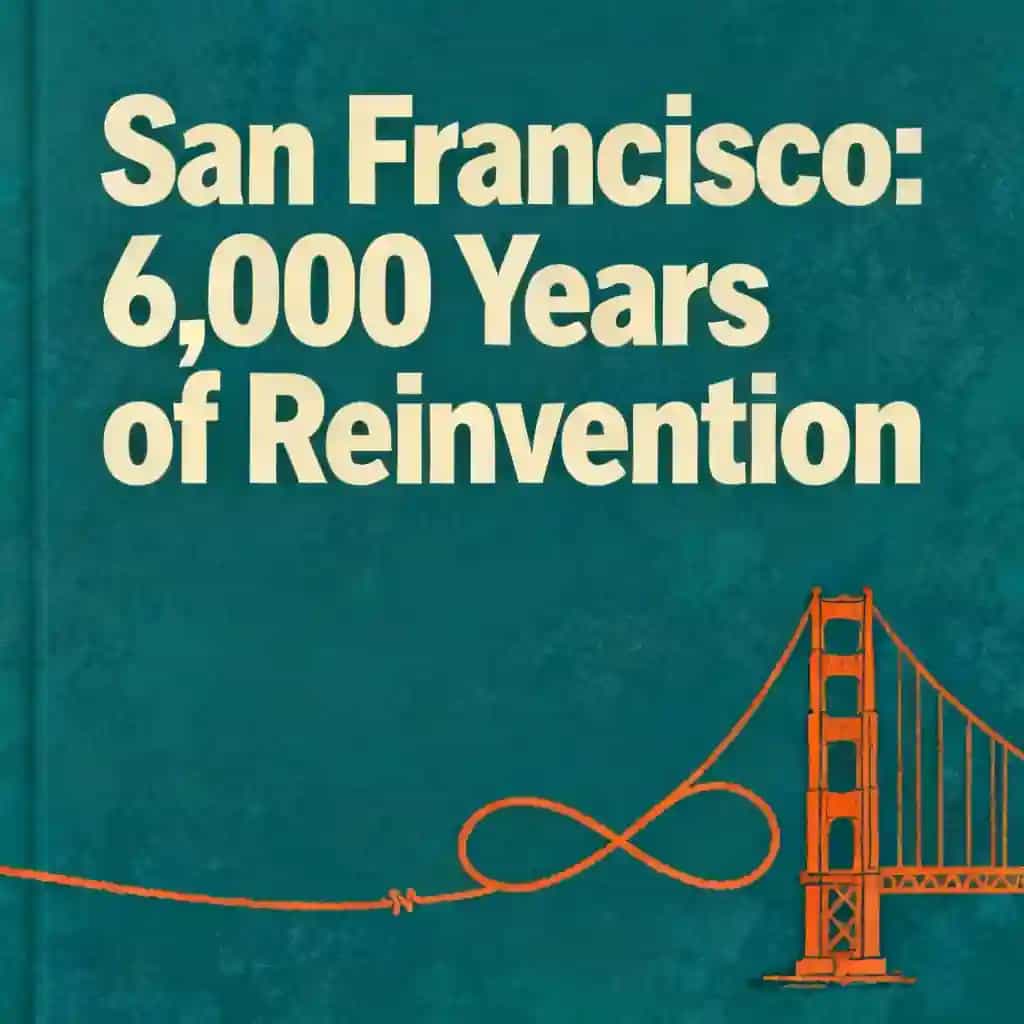
    San Francisco: 6,000 Years of Reinvention book cover
    History of San Francisco - WikipediaA Brief History of San Francisco: Everything You Need to KnowTimeline of San FranciscoGold Rush Transforms San Francisco (U.S. National Park Service)
    6 sources
    San Francisco: 6,000 Years of Reinvention
    From Ohlone trading networks to Gold Rush chaos to tech revolution - explore how San Francisco became America's capital of transformation through disaster, diversity, and the courage to constantly reimagine what's possible.
    8 min
    San Francisco: The City of Reinvention book cover
    San Francisco: 6,000 Years of ReinventionHistory of San FranciscoSan Francisco | HISTORY
    6 sources
    San Francisco: The City of Reinvention
    How did a foggy outpost become a global center of gravity? Trace San Francisco’s journey from an indigenous hub to a modern metropolis.
    1123 min
    San Francisco: From Gold Rush to Tech Revolution book cover
    History of San Francisco - WikipediaSan Francisco - Urbanization, Gold Rush, Tech Hub | BritannicaSan Francisco History: 10 Ways to Experience It - Visit CaliforniaSan Francisco's Role in the 1906 Earthquake Recovery
    6 sources
    San Francisco: From Gold Rush to Tech Revolution
    Journey through San Francisco's incredible transformation from a Spanish outpost to global tech capital. Discover how earthquakes, cultural revolutions, and waves of dreamers shaped the city that keeps reinventing the future.
    12 min
    San Francisco: From Gold Rush to Silicon Valley book cover
    History of San Francisco - WikipediaA Brief History of San Francisco: Everything You Need to KnowTimeline of San FranciscoSan Francisco | History, Population, Climate, Map, & Facts
    6 sources
    San Francisco: From Gold Rush to Silicon Valley
    Explore how a tiny Spanish settlement transformed into America's reinvention capital through gold rush chaos, counterculture revolution, and tech innovation. A fascinating journey of resilience and endless transformation.
    12 min
    San Francisco: From Gold Rush to Tech Revolution book cover
    A Brief History of San Francisco: Everything You Need to KnowHistory of San Francisco - WikipediaTimeline of San FranciscoSan Francisco - History.com
    6 sources
    San Francisco: From Gold Rush to Tech Revolution
    Journey through the incredible transformation of San Francisco from a tiny Spanish mission to a global powerhouse. Discover how earthquakes, gold rushes, counterculture movements, and tech booms shaped the City by the Bay.
    11 min
    San Francisco: From Gold Rush to Tech Revolution book cover
    A Brief History of San Francisco: Everything You Need to KnowHistory of San Francisco - WikipediaSan Francisco | History, Population, Climate, Map, & FactsTimeline of San Francisco
    6 sources
    San Francisco: From Gold Rush to Tech Revolution
    Explore how San Francisco transformed from Native American settlements to Spanish missions, through the wild Gold Rush boom, devastating 1906 earthquake, counterculture revolution, and finally into the tech capital of the world.
    11 min
    From Gold Rush to Tech Rush: San Francisco's Story book cover
    History of San Franciscosource 2source 3San Francisco History - Timeline of Important Dates
    6 sources
    From Gold Rush to Tech Rush: San Francisco's Story
    Explore how a tiny settlement exploded into one of the world's most influential cities. From 1849's Gold Rush boom to Silicon Valley's tech revolution, discover the rebellious spirit that keeps reinventing San Francisco.
    9 min
    From Gold Rush to Silicon Valley Revolution book cover
    History of San Francisco - WikipediaSan Francisco - History | BritannicaSan Francisco History - Facts, Timeline & FoundingHistory of San Francisco | San Francisco Travel
    6 sources
    From Gold Rush to Silicon Valley Revolution
    Discover how San Francisco transformed from fruit orchards to tech capital in just 7 years (1969-1976), birthing 5 entire industries through rebels, visionaries, and the perfect storm of innovation that changed the world forever.
    10 min

    Recommended Learning Plans

    The 2030 Tech Convergence
    LEARNING PLAN

    The 2030 Tech Convergence

    As AI, longevity science, and energy infrastructure converge, the global economy is undergoing a fundamental shift. This plan is essential for leaders and innovators who need to navigate the practical integration of autonomous agents, biotech breakthroughs, and sustainable scaling.

    1 h 30 m•3 Sections
    The Glass Revolution: From Sand to Super-Science
    LEARNING PLAN

    The Glass Revolution: From Sand to Super-Science

    This plan explores how a simple material transformed human perception and global connectivity. It is ideal for history enthusiasts, science students, and curious minds interested in the intersection of material science and technological progress.

    2 h•4 Sections
    Silicon, Software, and Market Psychology
    LEARNING PLAN

    Silicon, Software, and Market Psychology

    This learning plan provides a comprehensive look at the intersection of technological evolution and financial markets. It is essential for investors, tech leaders, and entrepreneurs who want to understand the structural and psychological forces that govern the digital economy.

    3 h•4 Sections
    City of Steel and Steam
    LEARNING PLAN

    City of Steel and Steam

    This plan provides a deep dive into the engineering and human operations that power modern refineries. It is ideal for aspiring chemical engineers, energy sector professionals, or anyone curious about the industrial backbone of the modern world.

    1 h 30 m•3 Sections
    The Fashion Freak's Rebellion Roadmap
    LEARNING PLAN

    The Fashion Freak's Rebellion Roadmap

    This roadmap is designed for aspiring stylists and fashion enthusiasts who want to move beyond surface-level trends and understand the industry's rebellious DNA. It bridges the gap between historical couture and modern digital influence, providing the cultural context needed to truly speak the language of fashion.

    2 h•4 Sections
    The Evolution of Human Expression
    LEARNING PLAN

    The Evolution of Human Expression

    This plan provides a deep philosophical dive into how human creativity has mirrored cultural shifts over millennia. It is ideal for art historians, philosophers, and curious minds looking to understand the intersection of technology, spirituality, and visual culture.

    2 h 30 m•5 Sections
    The 1900s: From Empires to Information
    LEARNING PLAN

    The 1900s: From Empires to Information

    This learning plan provides a comprehensive overview of the most transformative century in human history, tracing the journey from imperial rule to a hyper-connected digital society. It is ideal for history enthusiasts and students seeking to understand the origins of modern geopolitical conflicts and technological advancements.

    2 h•4 Sections
    Digital Transformation: Systems Over Software
    LEARNING PLAN

    Digital Transformation: Systems Over Software

    This plan is essential for leaders and entrepreneurs who feel stuck in reactive cycles and want to build scalable operations. It bridges the gap between simply using digital tools and architecting a business that improves itself through systems thinking.

    2 h•4 Sections