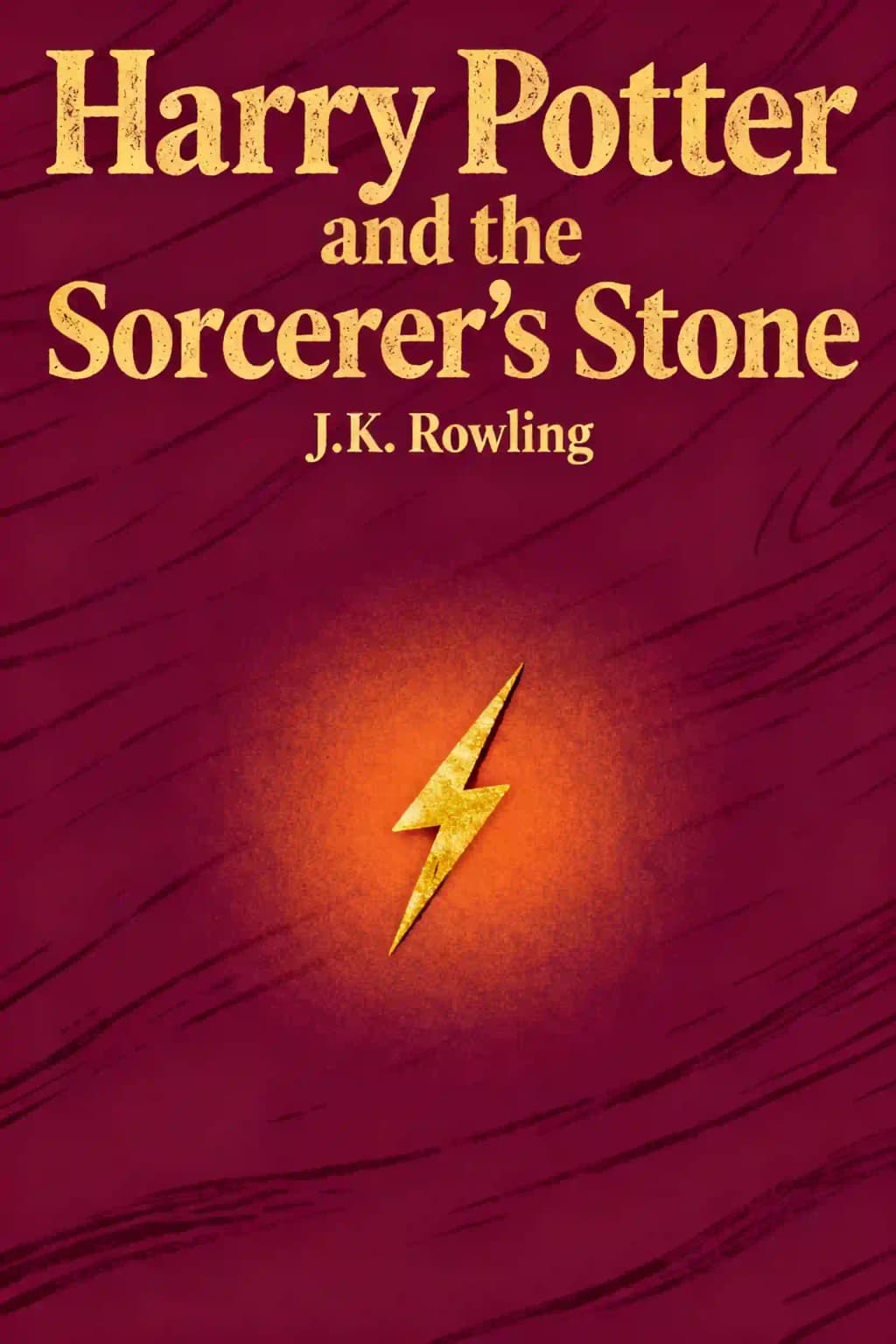
Harry Potter and the Sorcerer's Stone
Overview of Harry Potter and the Sorcerer's Stone
Enter Hogwarts with the book that sparked a global phenomenon - translated into 80+ languages, challenged for its "magic," and launched a billion-dollar franchise. What childhood wonder awaits in the pages Stephen King himself admires?

Key Themes in Harry Potter and the Sorcerer's Stone
- hidden magical identity
- overcoming childhood neglect
- wizarding school life
- destiny and prophecy
- good versus evil
Quotes from Harry Potter and the Sorcerer's Stone
Harry-yer a wizard.
Daddy's gone mad, hasn't he?
Don' make me say it again.
Characters in Harry Potter and the Sorcerer's Stone
- Harry PotterAn orphaned boy who discovers he is a wizard
- Uncle VernonHarry's magic-fearing and ill-tempered uncle
- Dudley DursleyHarry's spoiled and pampered cousin
- HagridA giant gamekeeper who reveals Harry's identity
- Aunt PetuniaHarry's neglectful aunt who hides his past
About the Author
About the Author of Harry Potter and the Sorcerer's Stone
J.K. Rowling (born Joanne Rowling, July 31, 1965, in Yate, England) is the internationally bestselling author of Harry Potter and the Sorcerer’s Stone, a landmark fantasy novel that launched a global literary phenomenon.
A master of world-building and character-driven storytelling, Rowling drew inspiration from her background in classical literature and her early career at Amnesty International to craft the Harry Potter series’ themes of courage, identity, and the battle between good and evil.
Her seven-book fantasy saga—including subsequent titles like Harry Potter and the Chamber of Secrets and Harry Potter and the Prisoner of Azkaban—has been translated into 84 languages and adapted into a blockbuster film franchise. Beyond the wizarding world, Rowling writes the Cormoran Strike crime series under the pseudonym Robert Galbraith.
Harry Potter and the Sorcerer’s Stone alone has sold over 120 million copies worldwide, with the entire series surpassing 600 million sales and inspiring theme parks, stage plays, and a generational fandom.
Download Summary of Harry Potter and the Sorcerer's Stone
Get the Harry Potter and the Sorcerer's Stone summary as a free PDF or EPUB. Print it or read offline anytime.
FAQs About This Book
Harry Potter and the Sorcerer's Stone follows 11-year-old Harry Potter, who discovers he’s a wizard and attends Hogwarts School of Witchcraft and Wizardry. There, he uncovers a plot involving the titular magical stone, which grants immortality, and confronts the dark wizard Voldemort disguised as Professor Quirrell. The story introduces themes of courage, friendship, and the struggle between good and evil.
This book appeals to middle-grade readers, young adults, and families seeking imaginative storytelling. Fans of fantasy, coming-of-age tales, and themes like loyalty and self-discovery will enjoy it. Educators and parents may also value its role in encouraging reading habits, as studies show it reignited interest in literature among children.
Yes—it’s a cultural phenomenon praised for its world-building and relatable characters. The book has been credited with boosting literacy rates and remains one of the best-selling novels of all time. While some religious groups criticized its magical themes, its universal messages about bravery and morality resonate across generations.
Key themes include the battle between good (Harry, Dumbledore) and evil (Voldemort), the importance of friendship (Harry, Ron, Hermione), and self-discovery. Symbolism like the Mirror of Erised—which reflects one’s deepest desires—explores human vulnerability and ambition.
Voldemort, weakened and bodiless, seeks the Sorcerer’s Stone to regain power. He manipulates Professor Quirrell into helping him, culminating in a confrontation where Harry’s touch burns Quirrell due to his mother’s sacrificial protection. This sets up the series’ central conflict.
The Mirror of Erised reveals one’s deepest desires: Harry sees his deceased parents, while Quirrell sees himself handing the Stone to Voldemort. Dumbledore later explains its purpose—to tempt and test individuals—which becomes pivotal in Harry’s retrieval of the Stone.
Hogwarts serves as a sanctuary for Harry, offering his first sense of belonging. Its enchanted halls, magical classes, and house rivalries (Gryffindor vs. Slytherin) establish the series’ core setting. The school also symbolizes safety versus external threats.
Some religious groups condemned the book for promoting witchcraft, leading to bans and protests. Critics also argued its early simplicity compared to later series depth. Despite this, it remains a benchmark in children’s literature.
The book sparked a global franchise, including films, merchandise, and theme parks. It revitalized children’s reading habits, with 51% of young readers reporting newfound enjoyment of books. Its success also pioneered the YA fantasy genre’s commercial boom.
- “It takes a great deal of bravery to stand up to our enemies, but just as much to stand up to our friends.” (Dumbledore’s wisdom on moral courage).
- “You’re a wizard, Harry.” (Hagrid’s iconic reveal of Harry’s identity)
It introduces key elements like Voldemort’s survival, Harry’s connection to him via his scar, and lingering threats to Hogwarts. Characters like Snape and Malfoy hint at deeper conflicts, while the Sorcerer’s Stone’s destruction foreshadows future battles over magical artifacts.
The Stone symbolizes immortality and temptation. Its protection by magical obstacles represents teamwork, while its destruction underscores Dumbledore’s belief that eternal life is a dangerous pursuit. Historically, alchemists sought the real Philosopher’s Stone, tying the fantasy to real-world lore.
The 2001 film closely follows the book’s plot but streamlines subplots like Norbert the dragon. Key scenes—such as the Mirror of Erised and the final confrontation—are visually faithful, though the book offers richer character insights.
Recommended for ages 8–12, though darker themes (e.g., Voldemort’s violence) may require guidance. Its accessible writing and universal themes make it suitable for family reading or classroom discussions.
Start with Sorcerer’s Stone, followed by Chamber of Secrets, Prisoner of Azkaban, and so on through Deathly Hallows. Chronological reading ensures plot coherence and character development across J.K. Rowling’s seven-book arc.