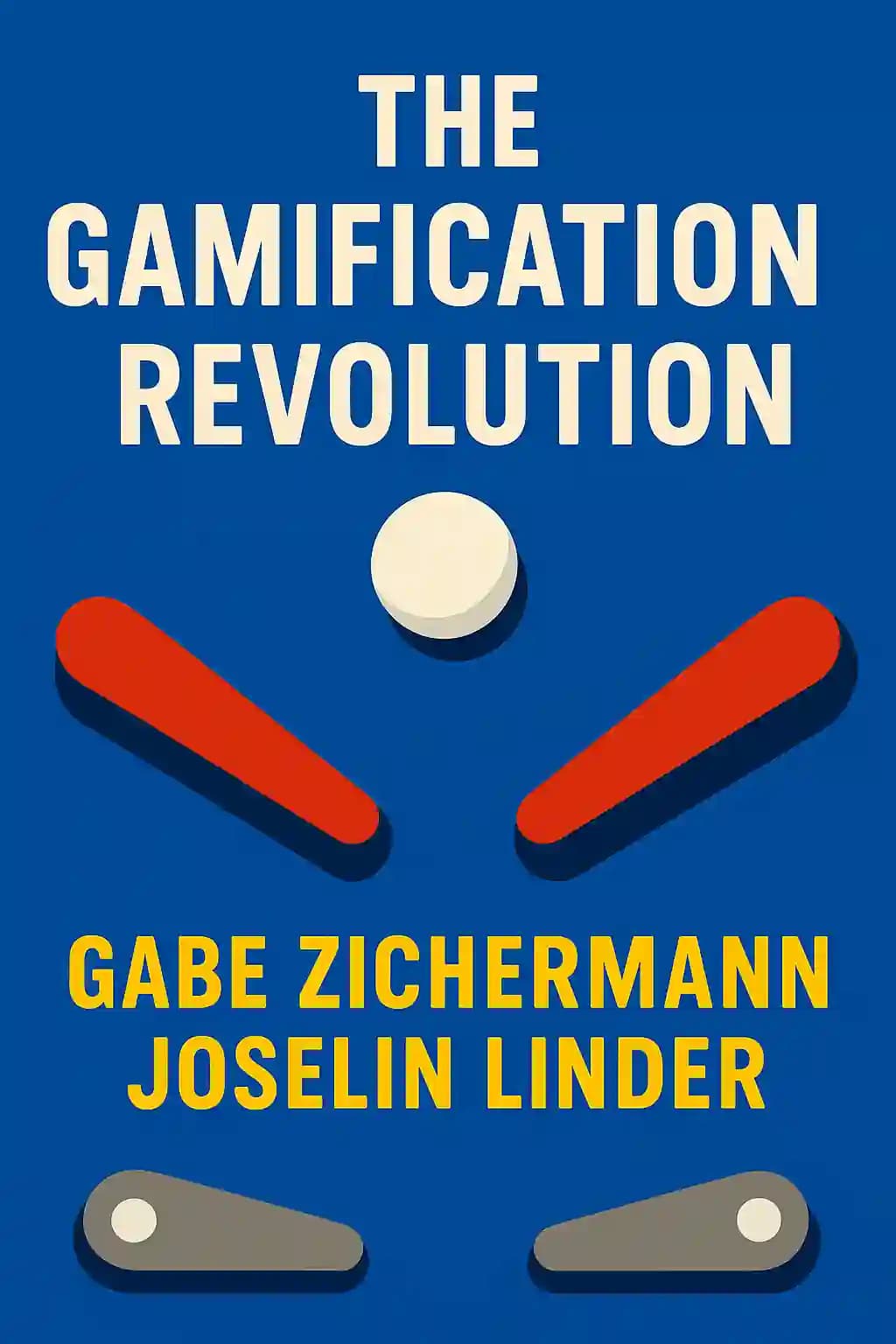
The Gamification Revolution How Leaders Leverage Game Mechanics To Crush The Competition
Overview of The Gamification Revolution How Leaders Leverage Game Mechanics To Crush The Competition
Transform your business with "The Gamification Revolution," where Zichermann reveals how companies leverage game mechanics to boost engagement and crush competition. Did you know major corporations increased productivity 40% using these strategies? Discover why Silicon Valley executives consider this the secret weapon of customer loyalty.

Key Themes in The Gamification Revolution How Leaders Leverage Game Mechanics To Crush The Competition
- game mechanics
- customer engagement
- behavioral motivation
- user-centered design
- incentive structures
Quotes from The Gamification Revolution How Leaders Leverage Game Mechanics To Crush The Competition
Driving isn't fun enough anymore.
Gamification provides this focus, cutting through the noise.
The revolution will be gamified.
Give customers what they want...as long as they do something for me.
Characters in The Gamification Revolution How Leaders Leverage Game Mechanics To Crush The Competition
- Gabe ZichermannAuthor and expert on gamification strategies
- Joselin LinderCo-author of The Gamification Revolution
- Nicolas AppertConfectioner who invented canning via a challenge
- Premal ShahCEO of Kiva who discusses attention competition
- Matt MaclaurinLeader of eBay's EPIC design lab
About the Author
About the Author of The Gamification Revolution How Leaders Leverage Game Mechanics To Crush The Competition
Gabe Zichermann and Joselin Linder, co-authors of The Gamification Revolution: How Leaders Leverage Game Mechanics to Crush the Competition, are pioneering voices in behavioral design and game-driven engagement strategies.
Zichermann, CEO of Gamification Corp and founder of industry hub Gamification.co, has shaped corporate training and customer loyalty programs for Fortune 500 companies through his bestsellers Gamification by Design and Game-Based Marketing (co-written with Linder). A frequent TEDx speaker and host of the GameRev podcast, he chairs the annual GSummit for gamification professionals.
Linder brings narrative rigor from her work at NPR and AOL, blending psychological insights with real-world case studies from Nike, SAP, and Microsoft. Their collaborative works explore how status dynamics, Eustress (positive stress), and reward systems drive modern business outcomes.
The Gamification Revolution has become required reading in MBA programs and corporate training initiatives. GetAbstract recommends their framework for managers and HR leaders seeking to boost engagement metrics, noting its adoption by United Airlines and IBM for workforce optimization.
Download Summary of The Gamification Revolution How Leaders Leverage Game Mechanics To Crush The Competition
Get the The Gamification Revolution How Leaders Leverage Game Mechanics To Crush The Competition summary as a free PDF or EPUB. Print it or read offline anytime.
FAQs About This Book
The Gamification Revolution explores how businesses can leverage game mechanics—like points, quests, and status systems—to boost customer loyalty, employee engagement, and organizational performance. Co-authored by Gabe Zichermann and Joselin Linder, it blends psychological insights with case studies from companies and governments to demonstrate gamification’s transformative potential in non-entertainment contexts.
This book is essential for entrepreneurs, marketers, HR professionals, and managers seeking innovative strategies to motivate teams and retain customers. It also appeals to designers and behavioral psychologists interested in applying game-based principles to real-world challenges.
Yes—it offers actionable frameworks for designing engagement-driven systems, backed by examples from diverse industries. The authors’ focus on balancing psychological theory with practical implementation makes it a valuable resource for professionals navigating the evolving landscape of consumer and employee motivation.
Core ideas include:
- Earning status: Using rewards to drive participation (e.g., loyalty programs).
- Epic meaning: Framing tasks as part of a larger narrative to boost engagement.
- Behavioral design: Structuring systems around intrinsic human motivations like achievement and competition.
The book advocates integrating mechanics like quests (goal-oriented tasks), leaderboards, and badges into workflows. For example, companies might gamify training programs to increase completion rates or design customer journeys with milestone rewards to foster brand loyalty.
The authors caution against superficial gamification, emphasizing that systems must align with users’ intrinsic motivations to avoid backlash. They stress the importance of iterative testing and avoiding over-reliance on points without meaningful rewards.
With remote work and AI reshaping industries, the book’s strategies for digital engagement remain relevant. Its frameworks help organizations adapt to hybrid environments by fostering collaboration and accountability through game-inspired tools.
- “Game thinking means making challenges more positive rather than negative”
- “The success of a game initiative hinges on prioritizing players’ needs”
Unlike technical manuals, Zichermann and Linder focus on storytelling and real-world applications, making complex concepts accessible. It complements drier academic works by emphasizing actionable strategies over pure theory.
Yes—the book highlights cost-effective tactics like social recognition systems and incremental challenges. For example, a café might gamify customer referrals with a “barista rank” system to drive repeat visits.
It addresses concerns about manipulation, advocating for transparency in reward systems. The authors urge designers to balance business goals with user well-being, avoiding exploitative mechanics.
As AI and automation reduce human interaction, its human-centric engagement strategies help businesses maintain authentic connections. Updated examples in later editions keep it aligned with emerging tech trends.