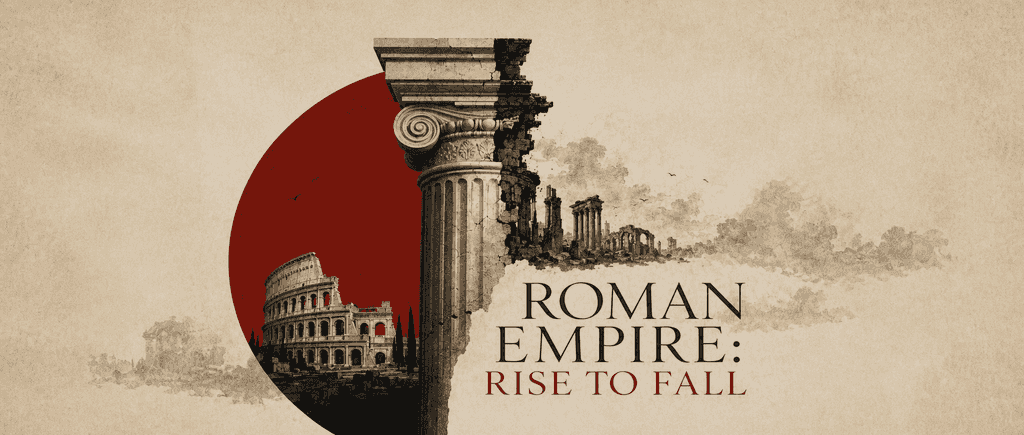
Roman Empire history from Augustus to the fall
How did a republic become an empire? Explore the rise of the Pax Romana and the shift from citizens to emperors that shaped the ancient world forever.

Melhor citação de Roman Empire history from Augustus to the fall
Augustus managed to turn decades of chaotic civil war into two centuries of peace by hiding the new Empire inside the shell of the old system, technically 'restoring' the Republic while collecting absolute power.
Generated by Cameron Smith
Complete history of the roman empire

Perguntas frequentes
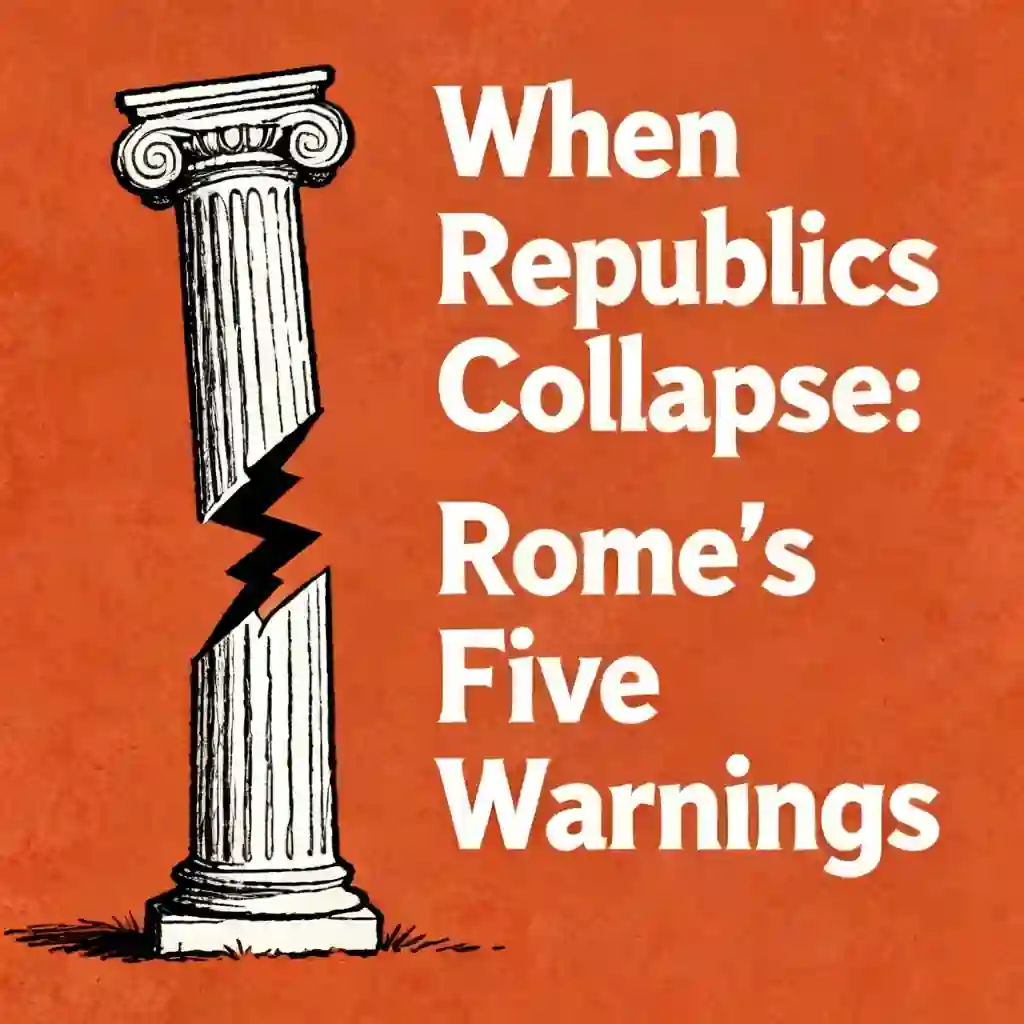
Augustus used the title princeps, meaning "first citizen," as a strategic branding move to avoid the deep-seated Roman hatred for the word rex (king). By collecting traditional Republican offices—such as the powers of a tribune and a censor—he was able to exercise absolute authority while maintaining the outward appearance of the old Republic. This allowed him to transition the state into an empire without triggering the public backlash that usually accompanied the rise of a monarch.
Augustus shifted the military's loyalty away from individual generals by taking control of their pay through the fiscus, his personal imperial fund. By managing the "imperial provinces" where the fighting occurred, he ensured that he was the one signing the soldiers' paychecks and providing for their retirement. This "follow the money" strategy meant that soldiers looked to the emperor, rather than their immediate commanders, for their livelihood and future security.
The "Year of the Four Emperors" (AD 69) was a period of brutal civil war following the death of Nero, where four different leaders—Galba, Otho, Vitellius, and Vespasian—rose and fell in quick succession. This chaos served as a wake-up call, revealing that the Empire was essentially a collection of provinces held together by the military. It proved that the true power to appoint an emperor resided with the legions and their commanders rather than the Senate or dynastic tradition.
The "Five Good Emperors" maintained stability by replacing hereditary succession with a system based on merit. Instead of passing power to biological sons—who had previously turned out to be unstable leaders like Caligula or Nero—each emperor would adopt a capable, proven leader to be his successor. This period, which saw the Empire reach its physical peak under Trajan, only ended when Marcus Aurelius reverted to the old way by allowing his natural son, Commodus, to inherit the throne.
While AD 476 is traditionally cited as the "official" end when the Germanic chieftain Odoacer deposed Romulus Augustulus, the Empire did not truly disappear. The Eastern half, known as the Byzantine Empire, continued to thrive for another thousand years with its capital at Constantinople. These citizens still considered themselves "Romans," followed Roman law, and preserved the state's traditions until the final fall of the city in 1453.
Criado por ex-alunos da Universidade de Columbia em San Francisco
"Instead of endless scrolling, I just hit play on BeFreed. It saves me so much time."


"I never knew where to start with nonfiction—BeFreed’s book lists turned into podcasts gave me a clear path."


"Perfect balance between learning and entertainment. Finished ‘Thinking, Fast and Slow’ on my commute this week."
"Crazy how much I learned while walking the dog. BeFreed = small habits → big gains."
"Reading used to feel like a chore. Now it’s just part of my lifestyle."

"Feels effortless compared to reading. I’ve finished 6 books this month already."
"BeFreed turned my guilty doomscrolling into something that feels productive and inspiring."

"BeFreed turned my commute into learning time. 20-min podcasts are perfect for finishing books I never had time for."
"BeFreed replaced my podcast queue. Imagine Spotify for books — that’s it. 🙌"

"It is great for me to learn something from the book without reading it."
"The themed book list podcasts help me connect ideas across authors—like a guided audio journey."
"Makes me feel smarter every time before going to work"
Criado por ex-alunos da Universidade de Columbia em San Francisco
"Instead of endless scrolling, I just hit play on BeFreed. It saves me so much time."
"I never knew where to start with nonfiction—BeFreed’s book lists turned into podcasts gave me a clear path."
"Perfect balance between learning and entertainment. Finished ‘Thinking, Fast and Slow’ on my commute this week."
"Crazy how much I learned while walking the dog. BeFreed = small habits → big gains."
"Reading used to feel like a chore. Now it’s just part of my lifestyle."
"Feels effortless compared to reading. I’ve finished 6 books this month already."
"BeFreed turned my guilty doomscrolling into something that feels productive and inspiring."
"BeFreed turned my commute into learning time. 20-min podcasts are perfect for finishing books I never had time for."
"BeFreed replaced my podcast queue. Imagine Spotify for books — that’s it. 🙌"
"It is great for me to learn something from the book without reading it."
"The themed book list podcasts help me connect ideas across authors—like a guided audio journey."
"Makes me feel smarter every time before going to work"
"Instead of endless scrolling, I just hit play on BeFreed. It saves me so much time."
"I never knew where to start with nonfiction—BeFreed’s book lists turned into podcasts gave me a clear path."
"Perfect balance between learning and entertainment. Finished ‘Thinking, Fast and Slow’ on my commute this week."
"Crazy how much I learned while walking the dog. BeFreed = small habits → big gains."
"Reading used to feel like a chore. Now it’s just part of my lifestyle."
"Feels effortless compared to reading. I’ve finished 6 books this month already."
"BeFreed turned my guilty doomscrolling into something that feels productive and inspiring."
"BeFreed turned my commute into learning time. 20-min podcasts are perfect for finishing books I never had time for."
"BeFreed replaced my podcast queue. Imagine Spotify for books — that’s it. 🙌"
"It is great for me to learn something from the book without reading it."
"The themed book list podcasts help me connect ideas across authors—like a guided audio journey."
"Makes me feel smarter every time before going to work"
"Instead of endless scrolling, I just hit play on BeFreed. It saves me so much time."
"I never knew where to start with nonfiction—BeFreed’s book lists turned into podcasts gave me a clear path."
"Perfect balance between learning and entertainment. Finished ‘Thinking, Fast and Slow’ on my commute this week."
"Crazy how much I learned while walking the dog. BeFreed = small habits → big gains."
"Reading used to feel like a chore. Now it’s just part of my lifestyle."
"Feels effortless compared to reading. I’ve finished 6 books this month already."
"BeFreed turned my guilty doomscrolling into something that feels productive and inspiring."
"BeFreed turned my commute into learning time. 20-min podcasts are perfect for finishing books I never had time for."
"BeFreed replaced my podcast queue. Imagine Spotify for books — that’s it. 🙌"
"It is great for me to learn something from the book without reading it."
"The themed book list podcasts help me connect ideas across authors—like a guided audio journey."
"Makes me feel smarter every time before going to work"