Capítulo 1
When Rome Ruled the World: A Climate and Disease History
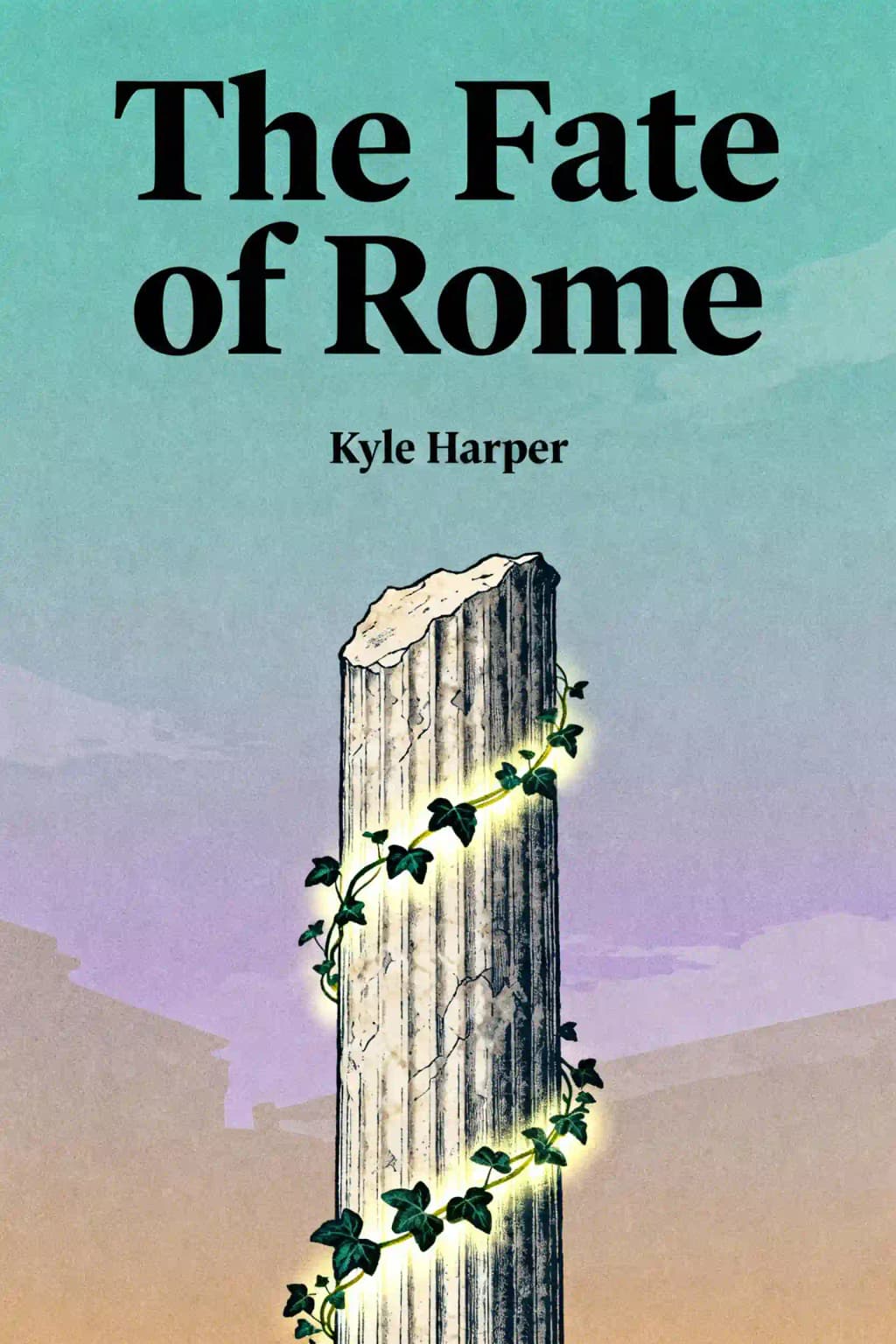
The Eternal City's empire spanned three continents, uniting diverse peoples under a single political system that seemed destined to last forever. At its height, Rome's dominion stretched from the misty forests of Britain to the scorching deserts of Egypt, encompassing nearly a quarter of humanity. What makes Rome's story so captivating isn't just its unprecedented rise, but its dramatic fall-the greatest regression in human history. While we've long debated the causes of Rome's collapse, Kyle Harper's groundbreaking research reveals a hidden culprit: nature itself. The empire that mastered the Mediterranean world ultimately found itself at the mercy of microscopic pathogens and shifting climate patterns. This perspective transforms our understanding of Rome from a purely political story to an ecological drama where human ambition collided with environmental realities. Harper's work has earned praise from scholars across disciplines, with The New Yorker calling it "revolutionary" and The Wall Street Journal declaring it "essential reading for anyone interested in climate change's long history." As climate anxiety grows in our own era, Rome's environmental struggles offer a sobering reminder that even the mightiest civilizations remain vulnerable to nature's whims.
Capítulo 2
The Perfect Storm: Climate Prosperity and Rome's Golden Age
Rome's rise from humble village to Mediterranean superpower remains one of history's most remarkable achievements. The Romans began as relative latecomers to power politics, overshadowed by Etruscans, Greeks, and Phoenicians. What set them apart was their exceptional approach to citizenship and governance-they liberally bestowed citizenship on former enemies, created mechanisms for incorporating conquered peoples, and established a grand bargain where local elites administered territories in exchange for stability and prosperity. This political innovation allowed Rome to transform naked conquest into sustainable governance.
By the reign of Augustus (27 BCE-14 CE), Rome had achieved unprecedented dominance, truly making the Mediterranean "mare nostrum" (our sea). The empire's population swelled to an estimated 75 million people-approximately one-quarter of humanity-with Rome itself becoming the first city to reach one million inhabitants, a milestone that wouldn't be matched until London around 1800. This demographic explosion wasn't merely impressive; it was transformative, creating the most densely populated, urbanized, and interconnected society the world had yet known.
What made this extraordinary growth possible? Rome's expansion coincided with a remarkably favorable climate phase now called the Roman Climate Optimum (RCO), spanning roughly 200 BCE to 150 CE. During this period, the Mediterranean basin enjoyed warm, wet, and stable conditions ideal for agricultural productivity. Tree rings from Alpine elevations show temperatures peaked in the mid-first century, even exceeding those of the last 150 years. Cave formations throughout the Mediterranean unanimously confirm exceptional warmth during the early empire.
Most remarkably, the Roman Climate Optimum brought increased precipitation across both northern and southern Mediterranean regions. In North Africa, Rome's granary, increased rainfall supported agriculture in areas now dominated by desert. The empire's breadbasket in Egypt benefited from reliable Nile floods, as El Nino events occurred rarely-perhaps once every 20 years-ensuring consistent harvests. Even Rome itself experienced unusual flooding patterns, with floods occurring in spring and summer rather than winter, a pattern completely absent in medieval and modern times.
This climate prosperity transformed the Mediterranean into a giant greenhouse, enabling unprecedented agricultural expansion. Wheat yields increased, olives and grapes grew in previously inhospitable regions, and cultivation limits extended dramatically. Archaeological evidence shows olive-crushing installations at elevations 500-700 meters above modern cultivation limits. The warming climate allowed olives and grapes to grow in previously inhospitable regions, with archaeological evidence showing olive-crushing installations at elevations 500-700m above modern cultivation limits.
The Romans themselves noticed these favorable conditions. Pliny the Elder observed beech trees migrating to higher elevations and the northward expansion of vines and olives. Alpine glacier retreats during this period provide unambiguous physical evidence of warming, with glaciers receding for hundreds of years after 500 BCE. This climate prosperity wasn't just luck-it was the foundation upon which Rome's extraordinary social and economic development rested.
Capítulo 3
Disease Ecology: The Dark Side of Roman Success
While Rome flourished economically, its citizens were paradoxically "rich but sick." The empire created a disease ecology of unprecedented scale, fostering dense urban concentrations, facilitating movement across diverse geographical regions, and transforming environments on a scale unseen between the Neolithic and Industrial Revolutions. Life expectancy was brutally short-likely between twenty and thirty years at birth, with infant mortality possibly reaching 30%. Even emperors suffered similar mortality patterns as their subjects. Marcus Aurelius and Faustina lost twelve of their fourteen children despite their privileged status.
Skeletal evidence reveals a physically diminished population: Romans were remarkably short compared to both their Iron Age predecessors and early medieval successors. In Britain, the Roman conquest proved a health catastrophe, with average male height around 164 cm and female height about 154 cm. In Italy, similar patterns emerged, with femur lengths showing significant decline during the Roman period before rebounding in medieval times.
Why were Romans so unhealthy despite their prosperity? The empire experienced its own version of the "Antebellum Paradox"-a cruel undertow where progress brings biological reversals. Just as the Industrial Revolution initially worsened health conditions before improvements in income and public health could offset overcrowding, the Roman Empire's precocious leap in social development brought biological setbacks.
Cities became magnets for migrants who lacked immunity to local disease pools, creating an urban graveyard effect. Despite impressive aqueducts, sewers, and public toilets, sanitation remained woefully inadequate. Rome alone produced over 100,000 pounds of human excrement daily, incompletely removed from the city. Private waste disposal was particularly problematic-domestic toilets often weren't linked to sewer lines, and cesspits dominated in Roman houses. Unsurprisingly, Romans were heavily infested with intestinal parasites like roundworm and tapeworm, with empire expansion only aggravating their prevalence.
The seasonal pattern of Roman mortality reveals the fingerprint of specific pathogens. The summer-autumn mortality spike points to two primary killers: gastrointestinal diseases and malaria. Malaria was not just one disease among others-it insidiously teamed with other pathogens, causing severe malnutrition and leaving victims vulnerable to other infections. Galen knew the deadly quotidian form that particularly struck children, causing physical stunting and weakened immunity in survivors.
While endemic diseases like malaria ravaged Rome from within, the empire's extensive trade networks were creating pathways for new pathogens from beyond its borders. The Roman Empire catalyzed unprecedented global connectivity, particularly through the Indian Ocean trade routes. When Rome annexed Egypt, it brought them to the borders of Nubian and Arabian kingdoms, with Roman roads and canals connecting the Nile to the Red Sea boosting commerce.
The scale of trade exploded-Strabo noted ships sailing from Myos Hormos to India increased from 20 to 120 vessels yearly. Roman consumerism drove this "commercial explosion" carrying luxury goods like silk, spices, ivory, and gems. Pliny estimated this eastern trade drained 100 million sesterces yearly from the empire-about 22,000 pounds of gold. A single cargo ship, the Hermapollon, carried goods valued at 7 million sesterces, including 544 tons of pepper.
This shrinking world created mutual awareness between Rome and Han China, with Chinese records noting the "Da Qin" (Rome) to their west. By the time of Marcus Aurelius, western traders had reached as far as Thailand. However, this unprecedented connectivity created a "superconductor" for emerging infectious diseases, particularly from Central Africa's evolutionary hothouse of pathogens.
Capítulo 4
The Antonine Plague: First Strike Against Imperial Prosperity
In AD 162, when Galen first journeyed to Rome, a massive military mobilization was heading east to confront Parthia's King Vologaeses IV. The campaign demonstrated Rome's "escalation dominance"-its ability to concentrate overwhelming force. The Romans reshaped the landscape by building a canal to enhance supply lines, deployed legions across 3600 kilometers, and assembled veteran leadership from across the empire.
The war ended in a Roman rout, but victory was soon overshadowed when Avidius Cassius allowed his armies to sack Seleucia on the Tigris despite its surrender. During the plunder, Romans believed a pestilential vapor was unleashed from a temple chest that soon "polluted everything with contagion and death, from the frontiers of Persia all the way to the Rhine and to Gaul." This story became the official explanation for what would be known as the Antonine Plague, marking an epoch in both Roman and natural history.
The Antonine Plague triggered widespread religious responses across the empire. Apollo's temples at Didyma and Claros became centers of desperate communication, with at least seven stone-engraved oracles surviving from towns seeking divine intervention. These inscriptions reveal Apollo's dramatic pronouncements about the "powerful disaster" and his instructions for ritual purifications, fumigations, libations, and protective statues of himself "shooting with his arrows from afar at the unfertile plague."
The pathogen responsible was likely smallpox, though without molecular confirmation, uncertainties remain. Galen, antiquity's greatest physician who treated "countless" victims, described the disease through his humoral framework as an excess of black bile with symptoms including fever, black pustular rash, conjunctival irritation, tracheal ulceration, and black or bloody stools. Survivors showed black extrusive pustules covering their bodies that dried, scabbed, and fell off like scales, leaving scars behind-a clinical picture closely matching smallpox infection.
The Antonine Plague's devastating impact can be seen in case studies like Soknopaiou Nesos, where 32% of adult males died in just two months during a secondary wave. The military suffered severely, with chronicles reporting the army "reduced to near extinction" by 172 CE. An inscription from central Greece shows unusual recruitment from typically exempt towns, while veteran discharge records from legio VII Claudia suggest 15-20% mortality during the initial pandemic wave.
The economic impact was profound. Imperial silver mining collapsed, causing monetary crisis. In Egypt, provincial coinage was debased starting in 164-65 CE, with complete cessation of silver coinage from Alexandria during 170-80 CE. Nominal prices doubled as currency lost half its purchasing power. Land values plummeted due to contracted demand, and agricultural rents dropped significantly to a new equilibrium that persisted for decades.
Most estimates place total mortality between 10-20% across the empire, with an epidemiological model suggesting 22-24%. Even at 10% mortality, the pandemic claimed 7-8 million lives from the empire's 75 million population, making it the worst disease event in human history to that point.
Despite this devastating blow, the empire showed resilience. The population rebounded in subsequent generations, though never reaching its previous peak. The shock tested imperial systems, causing fiscal crisis and famine, but the empire's fabric held. More subtle effects included the hastened "provincialization" of the empire as talent from the provinces gained unprecedented opportunities under Marcus Aurelius.
Capítulo 5
The Third Century Crisis: Climate Change and the Plague of Cyprian
On April 21st, AD 248, Rome celebrated its 1000th birthday with three days of elaborate festivities featuring thirty-two elephants, sixty lions, ten tigers, six hippopotami, one rhinoceros, and countless other exotic beasts-along with a thousand pairs of gladiators. These ceremonies, rooted in ancient traditions yet reimagined under imperial authority, carried associations with averting pestilence while showcasing Rome's enduring power. The spectacle was a magnificent imperial display orchestrated by Emperor Philip the Arab, though participants couldn't know they were witnessing the last secular games Rome would ever celebrate.
Despite initial stability, within a year of Rome's millennium celebration, the empire began unraveling with unprecedented severity. The crisis that emerged in the late 240s was catastrophic-a comprehensive breakdown of the frontier system, collapse of the monetary regime, and emergence of rival emperors within Roman territories. The margin of resilience had been eroded, but contemporaries recognized the sudden environmental shocks behind the crisis.
Christians coined the metaphor that they lived in "the old age of the world," a concept elaborated during the crisis. While emperors blamed Christians for failing to worship the gods properly, Christians like Cyprian of Carthage argued the world itself had grown senescent. Where Tertullian had recently celebrated civilization's vitality, Cyprian now lamented: "The world has grown old and does not stand in the vigor whereby it once stood... In winter there is not such an abundance of rains... The summer sun burns less bright... and the ripening fruit does not hang from autumn trees."
Natural archives confirm these observations. The Roman Climate Optimum ended in the later second century, giving way to the Late Roman Transition-a period of climatic instability lasting three centuries. Solar variability was the primary cause, with beryllium isotope records showing a precipitous drop in solar radiation in the AD 240s. Alpine glaciers that had retreated during warmer centuries now advanced again, and cooling was documented across Spain, Austria, and Thrace.
The most devastating immediate effect was severe drought across the Mediterranean's southern rim. In North Africa, Cyprian's defense of Christianity addressed a society reeling from aridity, with failed rains, barren earth, and food shortages that the rich exploited for profit. Similar drought conditions struck Palestine, where rabbinic texts record desperate prayers for rain.
Egypt served as the empire's insurance policy against climate variability. But the Romans' environmental luck had run out. Analysis of Nile flood records reveals two distinct phases: favorable conditions from Augustus until about AD 155, followed by increasingly erratic floods. The Nile's behavior correlated with the El Nino-Southern Oscillation (ENSO). During the Roman Climate Optimum, El Nino events occurred rarely-perhaps once every 20 years-ensuring reliable Egyptian harvests. But during the Roman Transitional Period, ENSO events increased dramatically to every three years, devastating agricultural productivity just when Rome needed it most.
In AD 244-246, catastrophe struck with consecutive failed Nile floods. Officials in Oxyrhynchus took unprecedented emergency measures-ordering registration of all private grain within 24 hours and making compulsory purchases at twice the normal price. By 248, the crisis continued with desperate shortages and officials refusing to manage the food supply. The bishop of Alexandria described the riverbed as "parched as the desert."
As climate shocks weakened the empire, a devastating pandemic delivered another blow. The Plague of Cyprian was a transcontinental catastrophe with horrifying symptoms and massive mortality. The disease's clinical profile was terrifying: acute onset with fatigue, bloody stool, fever, esophageal lesions, vomiting, conjunctival hemorrhaging, and severe infections in extremities, followed by debilitation, hearing loss, and blindness. Multiple witnesses emphasized its unprecedented nature and extraordinary speed, describing it as an unfamiliar disease that struck "abruptly" and spread "faster than expected," moving "like fire" through households.
The pandemic originated in Ethiopia, moving northwest through the empire over 2-3 years, striking Alexandria before reaching coastal centers and penetrating deep into imperial territories. Contemporary accounts suggest awareness of contagion, noting the disease could be transmitted "through clothes or simply by sight." The mortality was devastating-Alexandria's population reportedly declined by approximately 62%, with one Athenian historian claiming 5,000 deaths daily.
While identification remains speculative, the evidence points to either pandemic influenza or more likely a viral hemorrhagic fever like Ebola. Following severe drought and climate perturbations of the 240s CE, this exotic pathogen found fertile ground in the weakened empire. Unlike the Antonine Plague, the empire's depleted reserves couldn't withstand this blow-in its aftermath, "anarchy was loosed on the world."
Capítulo 6
Imperial Recovery and the Barbarian Challenge
The empire's structure, which had functioned effectively in AD 248 under Philip, rapidly disintegrated after the Plague of Cyprian struck. Between AD 248 and 268, imperial legitimacy collapsed as usurpers repeatedly seized power. The frontier defenses crumbled simultaneously on all major fronts in the early 250s, allowing devastating barbarian incursions deep into previously secure territories. Emperor Valerian's capture by Shapur I in AD 260 marked the ultimate humiliation. The empire fractured into three separate states-Gaul, the Palmyrene East, and Gallienus's shrinking central core.
The fiscal system imploded alongside military defeats. The ancient silver denominations disappeared, replaced by increasingly debased antoniniani that lost virtually all silver content. Prices fluctuated wildly, coin hoards proliferated, and eventually the currency's fiduciary value collapsed completely, ending a thousand-year epoch of silver money.
The generation between Philip's death and Claudius II's ascension in AD 268 marked profound endings throughout Roman society. Census records, private endowments, public inscriptions, and traditional economic patterns simply ceased. This ground-clearing created space for revolutionary transformation.
Though advertised as "restoration," the new imperial system represented fundamental revolution. Gallienus had fatefully barred senators from military commands, breaking centuries of aristocratic control over the legions. This opened the door for professional soldiers like Claudius II to seize power. Most consequentially, the empire fell under the control of military officers from the Danubian frontier-specifically Upper Moesia and Lower Pannonia. This small region, constituting just 2% of imperial territory, would produce nearly three-quarters of all Roman emperors until AD 610.
Emperor Aurelian (AD 270-75) reconquered Rome's breakaway territories, built protective walls around Rome, reformed the coinage, and promoted the worship of Sol invictus (the unconquered Sun god). After parading Zenobia, Palmyra's defeated queen, through Rome's streets, he proclaimed himself "restorer of the world."
The barracks emperors' most consequential innovation was the elevation of gold as the currency of military loyalty. When Claudius II rewarded his soldiers in gold coins-necessitated by silver currency's collapse-he established what one scholar calls "the beginning of late antiquity." These gold payments became institutionalized: emperors personally distributed gold at accession, soldiers swore loyalty oaths, and additional payments came every five years to prevent restlessness.
The third-century crisis profoundly transformed Rome's religious landscape. As early as AD 249, Emperor Decius required universal sacrifice from all citizens, possibly responding to the westward-moving pestilence. The ancient mind connected plague with divine anger, prompting the minting of "Apollo the Healer" coins and consultation of the Sibylline books. Christians were scapegoated for the disasters, with pagan philosopher Porphyry later blaming them for the health catastrophes.
Yet remarkably, Christianity expanded explosively during this period. From perhaps 100,000 adherents by AD 200, Christians grew to an estimated 15-20% of Egypt's population by AD 300. The plague paradoxically accelerated conversion-Christians' fearlessness toward death, sacrificial care for the sick (which reduced mortality rates), and creation of kinship-like networks among strangers proved powerfully attractive during crisis.
Capítulo 7
The Late Roman Climate Transition and Hun Invasions
The chapter opens with Claudian's poem "The Old Man of Verona," celebrating a farmer whose simple life remained untouched by Fortune's upheavals. The poignancy of this idyll is heightened by its timing around AD 400-just before Visigothic armies tore through the Po Valley, shattering rural tranquility. Events accelerated rapidly: the Rhine frontier collapsed in 406, Stilicho was executed in 408, and Rome itself was sacked in 410. This pivotal generation witnessed the western Roman Empire's irreversible disintegration.
Environmental change cooperated with human initiative in rebuilding the late empire. Though the Roman Climate Optimum would never return, the fourth century saw unexpected climate stabilization. After AD 266, no major volcanic events occurred for over 150 years, while solar output reached its Roman-era maximum around AD 300 and maintained high levels through the fifth century. This warming period caused Alpine glaciers to retreat significantly.
The physical climate during the imperial renaissance was favorable but fickle. This pattern mirrored the biological history of the fourth century. Late Roman society still groaned under an oppressive mortality regime, with the disease ecology of the early empire enduring. The empire remained densely urbanized and thickly connected, resulting in bleak health outcomes.
Despite numerous localized outbreaks, the fourth century notably lacked catastrophic mortality events with interregional reach. Most epidemics remained highly constrained geographically. War and climate fluctuations regularly triggered mortality events on local scales, with food shortages and disease outbreaks forming a deadly partnership.
The Eurasian steppe-a vast ecological zone stretching from Hungary to Mongolia-was about to intrude dramatically into western history. To Mediterranean inhabitants, the steppe existed beyond time and history, populated by nomads barely considered human. Ammianus described them living in wagons, eating meat and milk, and roaming "boundless wastes."
In the fourth century, central Asian turmoil reverberated eastward and westward. A Sogdian merchant letter from around AD 313 describes apocalyptic scenes in China as the Xwn (Huns) overran the Han capital. These Huns-likely affiliated with the earlier Xiongnu-were about to swing their violence westward, functioning essentially as armed climate refugees on horseback. Tree ring evidence reveals the worst multi-decadal drought of the last two millennia struck central Asia from AD 350-370, forcing nomadic migrations westward. By AD 370, Hun warbands had crossed the Volga, bringing revolutionary cavalry tactics and devastating composite reflex bows with 150-meter range.
The Hunnic invasion shattered the Gothic-dominated order north of the Black Sea. In 376, some 100,000 Gothic refugees sought asylum inside Roman borders. Roman mismanagement of this humanitarian crisis sparked rebellion, culminating in the catastrophic Battle of Adrianople in 378, where Emperor Valens and up to 20,000 elite troops perished-the worst military loss in Roman history. This disaster forced the empire to experiment with settling entire barbarian groups on Roman soil under native commanders, beginning the serious barbarization of the army.
The "Gothic problem" flared up when Alaric united the Goths in 395, harassing the empire for greater concessions. Despite Stilicho's brief stabilization as generalissimo of the west (395-408), the western empire's control collapsed between 405-410. A series of simultaneous invasions broke Rome's frontier control: new Gothic forces in 405, then Vandals, Alans, and Suevi crossing the Rhine on December 31, 406, permanently occupying parts of Gaul and Spain. These weren't mere raids but migrations of entire peoples, driven westward by the Huns' relocation to the Hungarian plain. The crisis culminated when Alaric's forces, after three years of holding Rome hostage, sacked the eternal city on August 24, 410-the first foreign capture since 390 BC, sending shockwaves throughout the empire.
Capítulo 8
The Justinianic Plague: Nature's Final Blow
In the fifth and early sixth centuries, as political entropy prevailed in the western provinces, the eastern imperial administration tightened its grip. The centralization begun by Diocletian and Constantine continued concentrating power in the capital, bureaucracy, court, and ultimately the divinely chosen emperor himself. This autocratic model flourished in the prosperous eastern provinces, where the empire still appeared boundless in the early sixth century.
Justinian's reign (527-565 CE) began with extraordinary accomplishments. Within his first decade, he made peace with Persia, reconquered vast western territories, codified Roman law, overhauled fiscal administration, and launched history's grandest building spree. Despite being portrayed negatively by his aristocratic opponents who wrote much of the historical record, Justinian demonstrated remarkable talent in selecting capable subordinates. His achievements included the monumental Corpus iuris civilis, which systematized a millennium of Roman law, and architectural marvels like the Hagia Sophia with its unprecedented 182-foot dome.
As the last great Roman environmental engineer, Justinian reshaped landscapes for flood control, carved new river channels, built bridges, repaired aqueducts, and constructed enormous water cisterns. His boldest enterprise was recovering the western provinces. By 534, his general Belisarius had conquered the Vandals in North Africa. Italy proved more challenging-though initially successful by 540, resistance continued into the 550s before the Lombard invasion of 568 permanently disrupted Roman control.
In 540, Khusro I of Persia launched a devastating invasion, sacking Antioch before Belisarius forced him to retreat. Then in 541, disaster struck when plague arrived at Pelusium, reaching Constantinople by spring 542, casting a shadow over Justinian's remaining 23 years of rule.
The Justinianic pandemic's agent, Yersinia pestis, evolved to become an extraordinarily lethal pathogen through a series of genetic acquisitions. The bacterium belongs to the Enterobacteriaceae family, with most Yersinia species being harmless to humans. Y. pestis evolved from Y. pseudotuberculosis approximately 55,000 years ago through three critical plasmid acquisitions that transformed it into a pandemic threat by enabling it to block flea digestive tracts, causing starving fleas to bite desperately and spread the bacterium.
The strain of Y. pestis that caused the first pandemic originated in western China, with its closest known relatives found in marmots and ground squirrels in the Xinjiang region. The plague first appeared at Pelusium on the eastern Nile delta, entering the Roman Empire via the Indian Ocean trade routes. The final catalyst was likely the dramatic climate change of the 530s-540s-the coldest decades in the late Holocene, triggered by massive volcanic eruptions-which altered rodent populations and flea behavior, allowing Y. pestis to explore new geographical routes and ultimately reach the empire's shores.
Two radically different contemporaries-Procopius of Caesarea and John of Ephesus-provided our most vivid accounts of the Justinianic Plague. Procopius, a classically trained legal advisor to General Belisarius, approached the plague with secular detachment, documenting its pathology and social impact while considering theological debates "insane stupidity." John, a Syrian-born Miaphysite monk, interpreted the pandemic through a Biblical lens as divine punishment, describing God's wrath falling upon cities "like a wine-press" that "pitilessly trampled and squeezed all their inhabitants."
Constantinople received warnings of the approaching pestilence for "one or two years" before it finally arrived in late February 542. The first imperial response came in a March 1st edict addressing debt collection amid the mounting deaths. The plague's initial victims were the homeless, but deaths quickly escalated from five thousand to sixteen thousand per day. Officials initially counted corpses at harbors, crossroads, and gates, tallying 230,000 before abandoning the count. John estimated over 300,000 perished-roughly 50-60% of the capital's half-million population.
Social collapse followed. Markets closed despite abundant goods, creating an artificial famine. Money couldn't be changed. People wore identification tags on their necks or arms. The imperial palace was devastated, with Emperor Justinian himself contracting but surviving the disease.
The city became saturated with corpses. Families initially tried to bury their dead, but soon the situation overwhelmed them. Justinian appointed his clerk Theodoros to organize an emergency response. Pits were dug around the city, then filled. Bodies were dragged to the shore and ferried across the strait. Military towers in Sykai filled with corpses "in a tangled heap," and as John graphically described, the dead were cross-hatched in layers "like hay in a stack," with bodies "trodden upon by feet and trampled like spoiled grapes."
Capítulo 9
Legacy: Nature's Triumph and Human Resilience
Unlike smallpox, which confers strong immunity, plague bacteria provided only partial and temporary protection to survivors. The plague's persistence stemmed from two biological advantages: its limited immunity effect and its ability to hide in animal reservoirs between human outbreaks. This allowed Y. pestis to sustain itself for two centuries, creating not a single event but a chain explosion of recurring mortality. The first pandemic stretched from AD 541 to 749, with plague periodically emerging from its reservoirs in sudden, explosive outbursts that defied the traditional "wave" metaphor.
Constantinople dominated the first period of plague persistence until around AD 620. The capital experienced major outbreaks in 542, 558, 573, 586, 599, possibly 619, 698, and 747. The city served as both victim and vector-a relay station gathering germs from across the empire and an engine of metastatic dispersal. After the initial outbreak, plague reappeared in the capital sixteen years later, with Agathias noting that men suffered more than women, possibly because rodent populations had recovered in commercial zones.
The first pandemic concluded with a furious finale in the 740s, wider in geographic reach than any outbreak since the initial visitation. Starting in the caliphate, it spread across its southern territories before leaping northward to Sicily and Italy via slave ships that traversed the same sea lanes once used by Roman grain fleets. Rome experienced its first plague outbreak in sixty-five years, then the disease raced eastward along the Mediterranean's northern rim, reaching Constantinople by 747. The mortality was so severe that the emperor had to repopulate the city through forced migration. This final outbreak followed the contours of a new, medieval Mediterranean, symbolically marking the end of the first pandemic as a new order dawned in the west around the Carolingian kings.
The rise of Y. pestis marked a landmark catastrophe in human history, with the two plague pandemics bookending the middle ages being the most severe biological disasters in relative terms. The initial wave reversed two centuries of demographic expansion instantly, while persistent recurrences strangled recovery hopes. Models suggest that with normal pre-plague growth rates of 0.1% annually, 50% mortality in the initial wave, and subsequent smaller outbreaks (10% mortality every 15 years), populations remained severely depressed. The combination of plague and climate change-the Late Antique Little Ice Age-sapped the Roman Empire's strength, leaving survivors with the terrifying sense that time itself was drawing to a close.
Pope Gregory the Great embodied the final vestiges of imperial Rome. Born in war-torn Rome shortly after Belisarius recaptured the city, Gregory was the scion of a patrician line with estates in Sicily and connections across the Mediterranean. He spent seven years in Constantinople as a papal diplomat, becoming godfather to Emperor Maurice's son despite failing in his mission to secure military aid. Gregory witnessed the quiet dissolution of the Roman senate, a body that had existed for over a millennium. His papacy began amid natural disaster-devastating floods in 589 when the Tiber spilled over Rome's walls, followed by the plague of 590 that killed his predecessor. Observing devastation spreading from the East, Gregory concluded, "By all these things, as the end of the world draws near, you know that the affliction is general."
Rome's empire balanced between fragility and resilience, with forces of dissolution eventually prevailing. Yet the empire's fall wasn't due to some intrinsic flaw working itself out over time, nor avoidable missteps. As Gibbon marveled, the wonder is not that Rome fell but that it "had subsisted so long." Despite relentless adversity, the empire endured until its mortal frame could bear no more, leaving rich soil from which proud new civilizations would arise.
The Roman experience may represent not the final scene of a lost world, but the opening act of an unfolding drama that feels uncomfortably familiar-a precociously global civilization where nature's revenge makes itself felt despite persistent illusions of control. As we face our own environmental challenges, Rome's story reminds us that the long, intertwined history of humanity and nature is full of paradox and surprise, and that even the mightiest civilizations remain vulnerable to microscopic enemies and shifting climate patterns.