Capítulo 1
The Philosophy That Challenges Everything You Thought You Knew About Selfishness
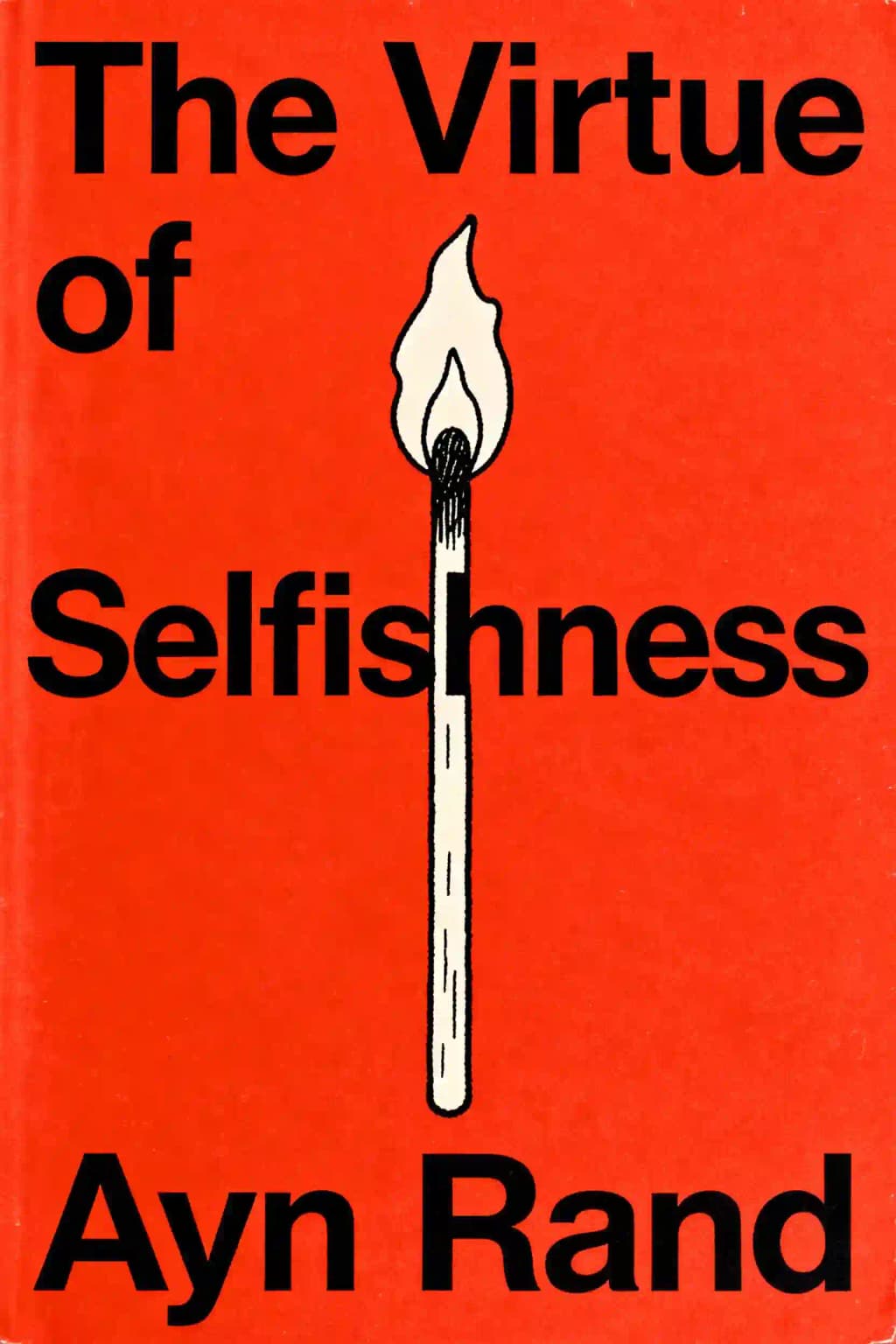
What if everything you've been taught about selfishness is wrong? Ayn Rand's provocatively titled "The Virtue of Selfishness" has been challenging conventional moral thinking since its publication in 1964. The book remains both controversial and influential, with figures ranging from tech entrepreneurs like Peter Thiel to politicians like Paul Ryan citing its influence. Despite being written decades ago, its ideas continue to spark heated debate in philosophy departments, business schools, and political circles worldwide. In a culture that often celebrates self-sacrifice as the highest virtue, Rand boldly argues that rational self-interest-not self-sacrifice-is the foundation of a moral life. Whether you find her ideas revolutionary or repugnant, one thing is certain: they force us to question assumptions about ethics that most of us have never thought to examine.
Capítulo 2
Reclaiming "Selfishness" from Moral Confusion
Why would anyone use the word "selfishness" to describe virtue? Rand explains that she chose this title precisely because it challenges our most deeply held assumptions. The popular understanding of selfishness conjures images of brutal people trampling over others to get what they want. Yet the actual definition simply means "concern with one's own interests"-a morally neutral concept.
This confusion represents what Rand calls a devastating "package-deal" that has stunted moral development throughout human history. The ethics of altruism has created a false dichotomy: either you sacrifice yourself for others (good) or you're a brutal exploiter (evil). This leaves no conceptual space for rational, principled pursuit of one's own interests while respecting others.
The attack on selfishness, Rand argues, is fundamentally an attack on human self-esteem. By surrendering the concept of legitimate self-interest, we surrender the moral foundation for valuing ourselves. When self-concern becomes synonymous with evil, we're left with an impossible choice: be moral by becoming a martyr, or pursue happiness by becoming a monster.
But rational self-interest isn't determined by blind desires or random whims. Just as humans must discover principles for physical survival rather than acting on impulse, we must discover rational principles to guide our self-interest. This is why Rand advocates not just any selfishness, but rational selfishness-a morality based on the requirements of human life and flourishing, guided by reason rather than emotion or social convention.
This distinction is crucial. The brute who exploits others isn't truly selfish in Rand's view-he's actually self-destructive, acting against his genuine long-term interests. True selfishness requires understanding what actually benefits your life as a rational being, which includes recognizing the value of honest relationships and respecting others' rights.
Capítulo 3
The Foundation of Objectivist Ethics
What makes humans different from other living beings? Unlike animals guided by automatic instincts, humans have no innate code of survival. Our consciousness requires active, volitional effort. While animals survive through automatic sensory mechanisms and limited learning, humans must discover through reason what benefits or endangers our lives.
This is our fundamental distinction: our survival depends on conceptual knowledge-mental integrations of perceptual data through a process of abstraction. This process isn't automatic but requires the faculty of reason, which we must choose to exercise. The choice "to think or not" is, metaphysically, the choice of life or death.
No instincts tell us how to make fire, forge tools, or build shelter. Only a volitional process of thought can provide such knowledge. We bear responsibility for initiating and sustaining our thinking process, discovering how to validate concepts, correct errors, and apply logic. Nature provides no automatic guarantee of mental efficacy-our consciousness is a machine of which our own will must be the spark plug and driver.
Our survival requires specific actions determined by our nature. While we're free to make wrong choices, we're not free to succeed with them. This is why humans need ethics-not as mystical fantasy or social convention, but as an objective, metaphysical necessity for survival.
The standard of value in Objectivist ethics is human life-that which is required for survival as a rational being. Since reason is our basic survival tool, that which supports rational life is good; that which opposes it is evil. The two essentials for rational survival are thinking and productive work.
Those who refuse to think survive as mental parasites dependent on those who do think. Those who attempt to survive by force or fraud are parasites who exist by destroying the productive. Neither approach is sustainable-humans cannot live like animals on the range of the moment but must integrate choices across our lifespan.
The three cardinal values of Objectivist ethics are Reason, Purpose, and Self-Esteem, with their corresponding virtues: Rationality, Productiveness, and Pride. Rationality means a commitment to the fullest perception of reality and constant expansion of knowledge. Productiveness recognizes that productive work is how the mind sustains life. Pride is moral ambitiousness-earning the right to hold oneself as one's highest value by achieving moral perfection.
The basic social principle of Objectivist ethics is that each person is an end in himself, not a means to others' ends. We must live for our own sake, neither sacrificing ourselves to others nor others to ourselves. The achievement of our own happiness is our highest moral purpose.
Capítulo 4
Mental Health versus Mysticism and Self-Sacrifice
What constitutes mental health? The standard is the same as for physical health: human survival and well-being. A mind is healthy when it provides control over reality to support life. Self-esteem marks this control-the consequence of a mind committed to reason, our basic survival tool.
Pride must be earned through effort and achievement, while humility requires only abstaining from thinking. Self-sacrifice, the core of mystical morality, means mind-sacrifice. A sacrifice means surrendering a higher value for a lower one; if one gives up something less valued for something more valued, this is not sacrifice but gain.
In a rational hierarchy of values, things are valued according to their importance to one's life and well-being. Neurosis involves a distorted value structure where one values things leading to self-destruction. The creed of self-sacrifice demands surrendering happiness, desires, values, judgment, and ultimately one's mind.
An irrational morality forces people to believe they must choose between being virtuous or happy, idealistic or successful. This establishes a lethal dichotomy: making oneself able to live versus worthy of living. Under an anti-life morality, one becomes worthy of living to the extent one makes oneself unable to live.
Many defenders of traditional morality admit people aren't expected to be fully moral-hypocrisy becomes our protector against moral convictions. The victims include children who withdraw into autism from religious terror, adolescents who flee into homosexuality after being taught sex is evil, and those who give up solving problems because they're told earth is a realm of misery where happiness is impossible.
Psychologists and psychiatrists bear grave responsibility when they remain silent about these destructive doctrines, claiming philosophical and moral issues don't concern them.
Capítulo 5
When Helping Others Is Rational
Altruism distorts ethics by making self-sacrifice the central moral issue, leading to lack of self-esteem, disrespect for others, a nightmare view of existence, and moral indifference. By teaching that valuing others means sacrificing oneself, altruism destroys authentic benevolence and goodwill.
The rational principle of conduct is the opposite of sacrifice: always act according to your hierarchy of rational values, never sacrificing greater values to lesser ones. Love and friendship are profoundly personal, selfish values-expressions of self-esteem and responses to one's own values in another person.
A rational person recognizes their own life as the source of all values and capacity to value. The respect felt toward other humans is egoistic-valuing them because they're of the same species as oneself. One grants strangers initial goodwill based on their human potential, then judges them by the moral character they actualize.
Help to strangers should be limited to emergencies-temporary, unexpected events where survival is impossible without assistance. This doesn't create a moral duty to address all human suffering. Poverty and illness are normal risks of existence, not metaphysical emergencies. One's obligation to others is maintaining a social system that leaves people free to achieve values.
Altruist ethics is based on a "malevolent universe" metaphysics that sees disasters as the norm. But insurance companies' success proves catastrophes are exceptions. A rational person's moral purpose is their own happiness-helping others is incidental, an exception rather than a primary concern.
Capítulo 6
The Myth of Conflicting Human Interests
A rational person knows that values must be produced through effort, never imagining having unearned claims on others. When facing competition, they either meet it or choose another path, knowing that skilled performance never goes unappreciated in a free society.
Only passive, parasitical people with "metaphysical humility" see competitors as threats, viewing themselves as interchangeable mediocrities fighting for causeless favor in a static universe. The rational person knows life isn't lived by "luck" or "breaks," and that no specific goal is irreplaceable-only the people one loves are irreplaceable.
Even in love there are no conflicts among rational people. Love isn't a static quantity to be divided but an unlimited response to be earned. If two people love the same person, what that person feels for one isn't determined by or taken from the other. If she chooses one, the "loser" couldn't have had what the "winner" earned. Only among the irrational, where love is divorced from standards of value, do blind choices and accidental conflicts prevail.
The question about two people applying for the same job ignores reality (neither is automatically entitled to it), context (competition makes jobs possible), responsibility (no one has the right to desire something without understanding what makes it possible), and effort (whoever gets the job earned it). In a free society, one can avoid the irrational; in a non-free society, no pursuit of interests is possible.
Capítulo 7
What True Selfishness Actually Means
The claim that "everyone is selfish" because people do what they want confuses motivation with ethics. The issue of selfishness versus self-sacrifice arises in the ethical context of who should be the intended beneficiary of one's actions-oneself or others. Egoism holds that humans are ends in themselves; altruism holds that humans are means to others' ends.
To be genuinely selfish requires knowing what constitutes one's self-interest through reason, establishing a hierarchy of values, and refusing to sacrifice higher values to lower ones. A rational selfish person knows that pursuing contradictions or defying reality is self-destructive and therefore not in their interest. While others may benefit from their actions, their benefit isn't the primary goal.
Even extreme examples like dying for a loved one can be selfish when life without that value would be meaningless to the person. The selfishness of an action is determined objectively by the standard and goal behind it, not by one's feelings. If someone renounces a value in favor of another's wishes whom they value less, that's self-sacrifice-regardless of whether they "want" to do it.
The "everyone is selfish" argument makes a crude equivocation between motivated behavior and selfish behavior, evading the central ethical question of what should motivate humans. Genuine selfishness-a consistent concern with discovering and achieving one's actual interests through rational judgment-represents a profound moral achievement that most people don't achieve.
Capítulo 8
The Essential Role of Pleasure in Human Life
Pleasure is not a luxury but a profound psychological need. It serves as the metaphysical reward for successful action, just as pain signals failure or destruction. Through enjoyment, we experience that life is worth living and worth maintaining.
Pleasure functions as both emotional payment for achievement and incentive to continue acting. It gives us direct experience of our own efficacy and competence to deal with reality. While pain contains the implicit feeling "I am helpless," pleasure contains the feeling "I am in control of my existence."
By letting us experience that life is a value and that we ourselves are values, pleasure serves as the emotional fuel of existence. Like the body's pleasure-pain mechanism that signals health or injury, consciousness has a similar barometer indicating what benefits or harms life. However, as beings of volitional consciousness with no innate ideas, we must choose the values that guide our actions. Our emotional mechanism will work according to whatever values we select, determining what we seek for pleasure.
If we make an error in our choice of values, our emotional mechanism won't correct us-it has no will of its own. We can program our emotional mechanism but cannot change its nature. The things we seek for pleasure reveal our character and soul, reflecting our self-esteem and view of existence.
There are five interconnected areas for experiencing life's enjoyment: productive work, human relationships, recreation, art, and sex. Productive work is most fundamental, providing the sense of efficacy necessary to enjoy other values. The person of self-esteem takes profound pleasure in productive mental work and constant growth, while different souls seek routine familiarity, unconsciousness, or even destruction.
A rational person is motivated by love of values, while a neurotic is motivated by fear. This difference affects both what they seek for pleasure and the quality of pleasure they experience. In human relationships, recreation, art, and sex, a person's choices reveal their deepest values and character.
The greatest pleasure is pride in one's achievements and character, with romantic love being the highest union of pride and admiration, celebrated through sex. We fall in love with someone who reflects our deepest values, making our choice of partner and approach to sex psychologically revealing.
Capítulo 9
When Compromise Is Impossible
Compromise means an adjustment of conflicting claims through mutual concessions, where both parties have valid claims and values to offer, agreeing on some fundamental principle. One may compromise on concretes or particulars that implement a mutually accepted basic principle-like bargaining over a price while both accepting the principle that the buyer must pay for the product. For instance, a seller might reduce their asking price while a buyer increases their offer until they reach a mutually satisfactory amount, or business partners might adjust profit-sharing percentages while maintaining the core agreement of their partnership.
But compromise is impossible when fundamental principles clash. There can be no compromise between a property owner and a burglar-offering even a single teaspoon would constitute total surrender by recognizing the burglar's "right" to one's property. Similarly, there can be no compromise between freedom and government controls, or between life and death, truth and falsehood, or reason and irrationality. For example, one cannot partially accept censorship while claiming to support free speech, or partially endorse fraud while claiming to value honesty. These are fundamental contradictions that negate the very principles at stake.
What many people today call "compromise" is actually the betrayal of principles-unilateral surrender to groundless, irrational claims. This stems from ethical subjectivism, which holds that desires or whims are irreducible moral primaries, that all desires have equal moral validity, and that human coexistence requires giving in to anything and compromising with anyone. This mindset leads to situations where people abandon their values incrementally, justifying each concession as necessary for social harmony or practical necessity. Consider an honest businessman gradually accepting small instances of fraud because "everyone does it," or a journalist softening criticism of wrongdoing to maintain access to sources.
Integrity means loyalty to rational principles, not subjective whims. Accepting a lesser job isn't compromise; surrendering to irrational demands is. Working for an employer with different ideas isn't compromise; pretending to share those ideas is. A scientist can work at an institution while disagreeing with some of its policies, but fabricating data to please superiors would be an unacceptable compromise of principles. The excuse that compromise is temporary is invalid-each betrayal makes reclaiming integrity harder, ultimately making it impossible. Every concession to irrationality establishes a precedent that erodes one's commitment to principle, making each subsequent surrender easier until principles become mere empty words.
The key distinction lies in understanding whether a compromise involves negotiable specifics within agreed-upon principles, or whether it requires abandoning fundamental values. True compromise requires both parties to share basic premises and values, allowing them to find common ground through mutual adjustment of details and implementation.
Capítulo 10
The Danger of Moral Neutrality
The fundamental principle for leading a rational life in an irrational society is: One must never fail to pronounce moral judgment. Moral agnosticism-the idea that one must never distinguish good from evil-corrupts both cultures and individual character. When you abstain equally from praising virtues and condemning vices, you betray the good and encourage evil.
Pronouncing moral judgment carries enormous responsibility. Like a judge in court, one must possess unimpeachable character and unbreached integrity. One may err in knowledge but must never evade available evidence or allow personal feelings to obstruct judgment. The court of appeal for one's judgments is objective reality-a person reveals their own moral character by what they praise or condemn.
Fear of this responsibility drives most people toward moral neutrality, expressed in "Judge not, that ye be not judged." But this merely exchanges moral blank checks with others. As long as people must make choices, there can be no escape from moral values or moral judgment. Abstaining from condemning evil makes one an accessory to it.
The proper principle is: "Judge, and be prepared to be judged." This doesn't mean becoming a missionary or offering unsolicited judgments, but it does require knowing one's own moral evaluations clearly and speaking up when silence would imply sanction of evil. Moral judgment protects one's perception and rationality. Evading it leads to sanctioning and spreading evil, ultimately betraying all values and surrendering to thugs who face no moral opposition.
Capítulo 11
The Rights of Individuals versus Collectives
Rights are moral principles defining proper social relationships and establishing the boundaries of legitimate human interaction. Just as individuals need moral codes to guide their actions and ensure survival, societies require clear moral principles to organize systems that remain compatible with human nature and individual autonomy. While a society can temporarily evade reality through mob rule or dictatorship, such approaches ultimately achieve nothing except destructive force and societal collapse, as demonstrated repeatedly throughout history in places like Revolutionary France or Soviet Russia.
Since only individuals can think, choose, and act, only individuals can possess rights. The concept of "collective rights" represents a fundamental contradiction. Any group's legitimate rights derive solely from its members' individual rights through voluntary association and explicit contractual agreement. This principle applies across all organizational forms: business corporations, professional associations, labor unions, religious institutions, and political parties in free societies all rest on the bedrock of individual rights, personal choices, and voluntary agreements. For example, a corporation's right to own property stems from the individual property rights of its shareholders, not from any mystical collective entity.
A group, as such, has no independent rights beyond those of its constituent members. An individual neither gains additional rights by joining groups nor surrenders existing ones through association. Individual rights form the only moral foundation for all legitimate associations; groups rejecting this principle, whether street gangs or authoritarian political movements, are merely operating on raw force rather than rights.
The dangerous notion that rights belong primarily to groups rather than individuals implies that some people have the "right" to dispose of others based purely on numerical superiority or group identity. This doctrine can only be justified through various forms of mysticism, whether religious ("Divine Right of Kings"), racial (ethnic supremacy), or collectivist (society as a supernatural super-organism). Each of these variations attempts to override individual rights with some form of group authority.
A free nation's territorial rights are derived directly from its citizens' individual rights, not vice versa. Its government serves as an agent with specifically delegated rights to protect citizens from force and fraud, both domestic and foreign. When a constitution explicitly places individual rights beyond the reach of political majorities, citizens can safely participate in and abide by majority decisions within this carefully limited sphere of legitimate government action. This arrangement preserves both individual liberty and practical governance, as exemplified by constitutional republics like the early United States.
The protection of individual rights thus serves as both the moral foundation and practical prerequisite for any truly free and prosperous society. History shows that societies flourish to the extent they recognize and protect individual rights, while those embracing collectivism inevitably decline into various degrees of tyranny and economic failure.
Capítulo 12
The Proper Role of Government
A government is an institution holding exclusive power to enforce certain rules of social conduct within a geographical area. People need such an institution because while social existence offers the benefits of knowledge and trade, it requires the protection of individual rights. Since rights can only be violated by physical force, and the retaliatory use of force cannot be left to individual discretion, a proper government places the retaliatory use of force under objective control through defined laws.
The fundamental difference between private action and governmental action is that government holds a monopoly on legal force. Under a proper system, a private individual may do anything not legally forbidden, while a government official may do only what is legally permitted-thus subordinating "might" to "right."
A government's proper functions include: police to protect from criminals, armed services to protect from foreign invaders, and law courts to settle disputes according to objective laws. The source of government authority is "the consent of the governed," making government the servant, not ruler, of citizens.
The understanding of government's proper function is recent, dating to America's Founding Fathers, who devised a legal system based on objectively valid principles to maintain freedom without depending on officials' moral character. The American system of checks and balances was an incomparable achievement, with the Constitution serving as a limitation on government power, not on private individuals.
Today, a moral and political inversion has occurred where government, instead of protecting rights, has become their most dangerous violator-establishing slavery rather than guarding freedom, initiating force rather than protecting against it, creating uncertainty through non-objective laws, and approaching rule by brute force where government may do anything while citizens act only by permission.