Capítulo 1
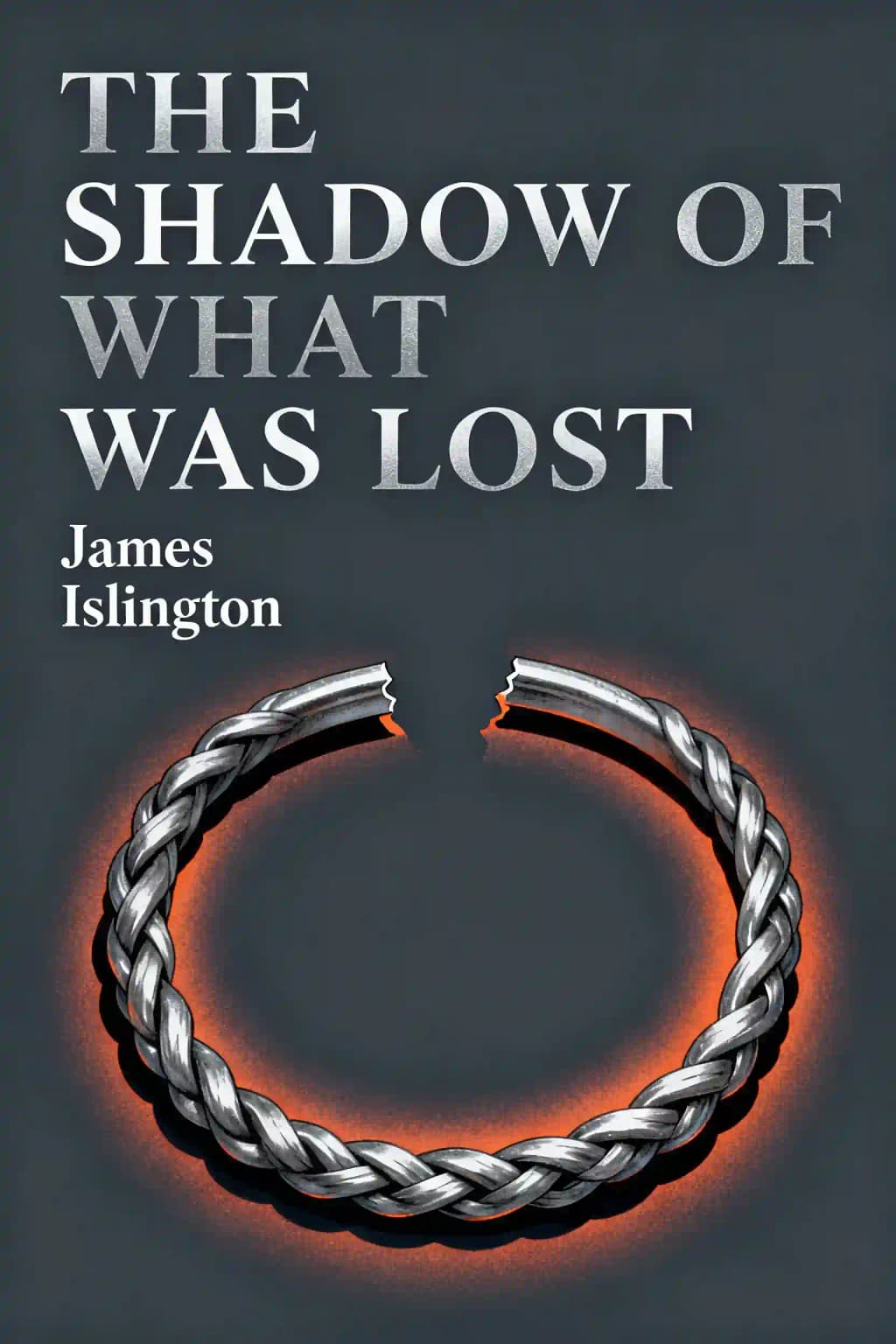
The Shadow of What Was Lost: A Journey Through Darkness and Destiny
The Shadow of What Was Lost has become a modern fantasy phenomenon since its publication, captivating readers with its intricate magic system and morally complex characters. Author James Islington, who cites influences like Robert Jordan and Brandon Sanderson, initially self-published this debut novel before it was picked up by Orbit Books in 2016. The book has since developed a devoted following, particularly among fantasy readers who appreciate complex worldbuilding and ethical dilemmas. It's frequently recommended alongside works like The Stormlight Archive and The Wheel of Time, with readers praising its ability to subvert traditional fantasy tropes while delivering a satisfying, immersive experience. Let's dive into this epic tale of memory, identity, and the shadows of the past.
Capítulo 2
A World Divided by Fear and Power
The kingdom of Andarra exists in a precarious balance. Twenty years ago, the Augurs-powerful beings who could read minds and see the future-were blamed for a devastating war and subsequently hunted to extinction. Now, those with lesser magical abilities, called the Gifted, live under the strict Tenets of the Treaty that severely limit their powers. They must attend special schools where they learn to control their abilities, and upon reaching adulthood, they must pass the Trials or be marked as Shadows-outcasts with black veins etched across their faces, stripped of their memories and forced to live on society's margins.
This world's social hierarchy is brutally clear: normal humans at the top, the strictly controlled Gifted in the middle, and the Shadows at the bottom. The Administration, led by Administrators who wear distinctive white uniforms, enforces these divisions with religious zeal. They monitor the Gifted through metal torcs called Shackles that suppress their abilities outside school grounds.
The fear driving this system runs deep. Regular people fear the Gifted might use their powers against them. The Gifted fear failing their Trials and becoming Shadows. And everyone fears what might lie beyond the mysterious Boundary to the north-a magical barrier said to protect the lands from an ancient evil defeated two thousand years ago in the Eternity War.
This complex social structure creates constant tension. When young Davian witnesses a fellow student named Leehim being transformed into a Shadow for using his Gift outside school, the scene is both a public warning and a personal nightmare. Davian himself cannot access his Gift despite bearing the Mark, and with the Trials approaching in just three weeks, he faces the same terrible fate. The cruelty of the system becomes evident when Leehim, newly transformed and with no memory of his former life, is simply given some coins and sent away, forever marked as less than human.
"People fear what they cannot fully control," Elder Ilseth Tenvar explains to Davian after rescuing him from bullies in town. This simple statement encapsulates the entire social dynamic of Andarra-a society built on fear rather than understanding, where power must be contained rather than celebrated.
Capítulo 3
Secrets, Lies, and Hidden Abilities
In this world of strict boundaries, Davian harbors a dangerous secret. Though he cannot access the Gift as others do, he possesses an ability that would mark him for execution if discovered-he can detect when someone is lying. This truth-detection ability resembles the powers of the forbidden Augurs, making Davian's very existence a crime punishable by death under the Treaty.
"If they found out what you can do, they'd kill you," his friend Wirr warns him. "The Treaty is explicit about that. No exceptions."
Only Wirr knows Davian's secret, creating a bond of trust between them that becomes crucial when Elder Ilseth Tenvar approaches Davian with an urgent warning: Davian must flee the school immediately. Tenvar claims that the Northwarden-a powerful political figure-is coming for him specifically, though he won't explain why. He gives Davian a mysterious bronze vessel with instructions to travel north to find someone with a matching wolf symbol tattooed on their wrist.
This moment of decision reveals another layer of secrets. Wirr insists on accompanying Davian despite the danger, showing unexpected loyalty. Their escape from the school marks the beginning of their journey, but also the beginning of revelations. Neither boy is exactly who they appear to be, and the world they thought they understood is far more complex and dangerous than they imagined.
Meanwhile, Asha, Davian's close friend (and secret crush), wakes to horror the morning after their departure. The entire school has been massacred-students, teachers, and staff brutally murdered. Only Asha survives, found by Elders from another school who transform her into a Shadow against her will, erasing her memories of the massacre. This parallel storyline creates dramatic irony-readers know Davian and Wirr escaped just in time, while Asha believes they died with everyone else.
The narrative brilliantly interweaves these threads of hidden identities and abilities. Davian's truth-detection, Wirr's mysterious background, and Asha's forgotten memories all represent pieces of a larger puzzle. Each character navigates a world where revealing one's true nature can be fatal, yet concealing it carries its own dangers. As Wirr later admits, "Secrets have a way of coming out at the worst possible time."
Capítulo 4
The Journey North: Trials and Revelations
Davian and Wirr's journey north becomes a gauntlet of challenges that test their abilities, friendship, and moral boundaries. Their first obstacle comes at the border between Andarra and Desriel, where they must hire smugglers to cross the heavily guarded river. The encounter introduces them to the wider world's dangers-Hunters who kidnap Gifted for profit, smugglers who betray their clients, and the constant threat of discovery by Administrators.
When they're betrayed by their smuggler Anaar, Davian discovers another ability-he somehow makes Anaar forget about the valuable Vessel during a handshake. This moment foreshadows Davian's true nature, though neither he nor Wirr understand its significance yet.
As they travel deeper into Desriel, the boys encounter a mysterious figure named Caeden, imprisoned and beaten by Desrielite soldiers. When they free him, they discover he bears the wolf tattoo from the Vessel, confirming he's their target. However, Caeden has no memories of his past or why he was imprisoned. His amnesia creates an intriguing dynamic-he's simultaneously the goal of their quest and a new mystery to solve.
The journey also forces Davian to confront moral dilemmas he never faced in school. When attacked by a Hunter named Gorron, Davian instinctively kills him in self-defense. The aftermath reveals the psychological toll of taking a life, even justifiably:
"I feel... dirty," Davian admits, trembling. "I just killed someone, Wirr. I took someone's life."
This moment marks Davian's loss of innocence, a necessary step in his evolution from sheltered student to someone capable of facing the dangers ahead. It also prompts philosophical discussions between the friends about the Tenets and whether some restrictions on the Gift might actually be justified-conversations that foreshadow Wirr's eventual role in reshaping these laws.
Meanwhile, Asha's parallel journey takes her to Tol Athian, the fortress of the Gifted, where she builds a new identity while secretly yearning to discover what happened to her friends. Her path intersects with Duke Elocien Andras, the Northwarden, who takes a surprising interest in her. Under his protection, she becomes a Representative for Tol Athian at court, a position that gives her unprecedented access and influence for someone marked as a Shadow.
These journeys north-Davian and Wirr toward the mysterious figure they were sent to find, and Asha toward political power in the capital-set the stage for revelations that will change everything they understand about themselves and their world.
Capítulo 5
The Mysteries of Deilannis and Ancient Powers
The journey takes a dramatic turn when the companions-now including Caeden and their guide Taeris Sarr-must pass through Deilannis, an ancient abandoned city shrouded in mist and legend. This haunting place becomes a pivotal setting where past and present collide.
Deilannis is unlike anywhere else in the world-a place where the normal rules of Essence (the energy that powers magic) don't apply. The city is home to terrifying creatures called Orkoth that hunt intruders, and the very air feels wrong, as if time itself functions differently within its boundaries.
During their journey through the misty streets, tragedy strikes. Davian is separated from the group and encounters a horrifying eyeless creature that somehow recognizes him, speaking his name before disappearing. In the chaos, their companion Nihim sacrifices himself to save Davian, using his final moments to reveal a shocking truth: Taeris has been waiting for Davian, believing him to be prophesied to stop Aarkein Devaed from destroying the world.
Before Davian can process this revelation, he's thrown into a void-like state where his mind nearly shatters. When he regains consciousness, he finds himself in an entirely different Deilannis-one from thousands of years in the past. There he meets Malshash, a mysterious figure who reveals that Davian's Gifted Mark has disappeared because "the Tenets don't exist yet." This temporal displacement becomes both a danger and an opportunity, as Malshash offers to teach Davian about his true nature as an Augur.
The sections in ancient Deilannis provide crucial worldbuilding, revealing the origins of the current political situation. Through Davian's training with Malshash, readers learn about the full capabilities of Augurs-reading minds, extracting memories, shapeshifting, and manipulating Essence in ways the Gifted cannot. These abilities explain why Augurs were so feared and why they were hunted to extinction after the war.
Meanwhile, Davian's companions believe him dead and continue their journey to the capital, unaware that he's actually displaced in time, gaining knowledge and abilities that will prove crucial when they reunite. This separation creates dramatic tension while allowing each character's development to progress along different but complementary paths.
The mysteries of Deilannis highlight the novel's central theme of forgotten knowledge. The abandoned city represents all that has been lost to time-powers, wisdom, and truths that could save the world if only they could be recovered. As Malshash tells Davian, "Sometimes the most dangerous thing is not what we don't know, but what we've forgotten."
Capítulo 6
Political Intrigue and the Coming Storm
As the companions reach Ilin Illan, the capital city of Andarra, the narrative shifts from journey to political intrigue. Here, the personal quests of the characters intersect with larger political forces, revealing that their individual stories are pieces of a much broader conflict.
The political landscape is complex and fraught with tension. King Andras rules with increasing paranoia, dissolving the Assembly to gain absolute power during what he perceives as wartime. Duke Elocien Andras, the Northwarden, works behind the scenes to prepare for an invasion he believes is coming, based on visions from Augurs he secretly protects. The Gifted at Tol Athian remain isolated, reluctant to help defend a society that has oppressed them. And beneath it all, the Shadows organize under their mysterious leader, the Shadraehin, forming a potential third force in the coming conflict.
Wirr's true identity is revealed during this section-he is actually Torin Wirrander Andras, third in line for the Andarran throne and son of Duke Elocien. More importantly, his bloodline connects him to the Vessel that created the Tenets, giving him the potential to change these laws once he inherits his father's position. This revelation explains why he was hidden at the school in Caladel and why enemies might have targeted him.
"My father sent me to Caladel because he knew what I was," Wirr explains to Davian. "He wanted me to understand what it was like to be Gifted, to live under the Tenets... so that one day, I could change them."
Meanwhile, Asha discovers a group of Augurs hidden within the palace, protected by Duke Elocien. These Augurs have foreseen an attack on the city by strange soldiers they call "the Blind"-warriors in black helmets without eyeholes who move with perfect coordination. Their visions show the city falling to these invaders, but the Duke insists that even battles they know will be lost must be fought to weaken the enemy.
The political machinations reach a crescendo when reports arrive that the Blind have decimated General Jash'tar's forces and are marching on the city. In an emergency meeting, Duke Elocien and Representatives from the Gifted schools urge King Andras to change the Tenets to allow the Gifted to fight. The king's violent refusal, insisting they can defend the city with remaining forces, reveals the depth of his paranoia and possibly outside influence on his mind.
This section brilliantly weaves personal stakes with political consequences. Each character must navigate loyalties to friends, family, and larger principles while preparing for a conflict that threatens to destroy everything they know. The political intrigue serves not merely as background but as a crucial element that shapes the characters' choices and reveals their true values when tested.
Capítulo 7
The Battle for Ilin Illan
The invasion of Ilin Illan by the Blind represents the novel's climactic sequence, where all storylines converge in a desperate battle for survival. This isn't merely a physical conflict but the culmination of political tensions, personal journeys, and ancient prophecies.
The Blind prove to be terrifying opponents-soldiers in black armor who move with inhuman speed and strength, scaling walls effortlessly and shrugging off arrow volleys. More disturbing still is their ability to turn Andarran defenders into "Echoes"-people whose minds are gone but whose bodies remain animated, turning against their former comrades.
As the First Shield falls, Asha arrives with a hundred Shadows bearing magical Vessels stolen from Administration's stockpile. This unexpected alliance between Shadows and regular soldiers provides a temporary reprieve, as the Shadows unleash devastating attacks of light, wind, and fire against the invaders. The moment symbolizes how old divisions must be set aside to face the greater threat.
The battle sequences are rendered with visceral intensity, capturing both the chaos of warfare and the personal cost to those involved. When General Parathe's second-in-command reveals himself as an Echo and kills his superior, the horror of the situation becomes clear-the enemy can be anyone, and no one can be fully trusted.
In a pivotal moment, Duke Elocien sacrifices himself to save his son Wirr from an Echo's blade. As he dies, he makes Wirr promise not to heal him but instead use his remaining Essence to change the Tenets so the Gifted can fight. This sacrifice represents the culmination of Elocien's character arc-from the man who created the oppressive Tenets to someone willing to die to change them.
The battle reaches its darkest hour when the Blind breach Tol Athian itself, supposedly the most secure location in the city. As all seems lost, with the defenders running out of Essence and the enemy preparing for their final assault, salvation comes from an unexpected source.
Caeden appears between the opposing forces, having claimed the legendary sword Licanius from the Wells of Mor Aruil. When the Blind refuse his offer to retreat, he decimates their entire force effortlessly, revealing power far beyond anything previously seen. This display both saves the city and raises disturbing questions about who or what Caeden truly is.
The battle's aftermath leaves the characters and the city forever changed. The strict divisions between Gifted, Shadows, and regular humans have begun to dissolve in the face of shared trauma. The Tenets have been rewritten to allow the Gifted more freedom while maintaining protections for non-Gifted. And the survivors must reckon with the knowledge that this attack was merely the beginning of something much larger.
Capítulo 8
Identity, Memory, and the Weight of the Past
At its philosophical core, The Shadow of What Was Lost explores how identity is shaped by memory and how the past-both remembered and forgotten-influences the present. This theme manifests most prominently through Caeden, whose amnesia creates a fascinating exploration of whether a person is defined by their actions or their intentions.
Throughout the novel, Caeden struggles to reconcile the person he believes himself to be with the fragments of memory that occasionally surface. He's haunted by the possibility that he might have committed terrible crimes in his forgotten past, yet his present actions consistently demonstrate compassion and self-sacrifice.
"What if I really am what they say I am?" he asks Davian at one point. "What if I did those things?"
Davian's response encapsulates one of the novel's central messages: "Even if you did, you're not that person anymore. You get to choose who you are now."
This philosophical question reaches its devastating climax in the novel's final revelation. After saving Ilin Illan from the Blind, Caeden travels to the Wells of Mor Aruil to restore specific memories. There, he learns the horrifying truth: he is Tal'kamar, the very person who arranged to have his own memories erased by taking the Waters of Renewal. Before his memories faded completely, he slaughtered an entire village-thirty-one people-to prevent word of his presence reaching his enemies.
This revelation forces readers to reconsider everything they thought they knew about Caeden. Is he a hero who saved the city, or a villain responsible for countless deaths throughout history? Can a person truly change if they don't remember their past sins? The novel refuses to provide easy answers, instead inviting readers to grapple with these complex questions themselves.
The theme of memory and identity extends to other characters as well. Asha, transformed into a Shadow against her will, fights to recover her stolen memories of the massacre at Caladel. Her journey represents the human need to know the truth, even when that truth is painful. Davian's discovery of his Augur abilities forces him to reconsider everything he thought he knew about himself. And Wirr must reconcile his identity as both a prince of Andarra and a Gifted person-two roles that his society has deemed incompatible.
Through these intertwined journeys, the novel suggests that identity is not fixed but fluid, shaped by choices as much as by history. As Nihim tells Caeden during their night watch, "A man needs to know what he believes before he can really know who he is."
Capítulo 9
The Shadow of Prophecy and Free Will
The novel's title-The Shadow of What Was Lost-carries multiple meanings, but perhaps most significant is the way it refers to prophecy and predestination. Throughout the story, characters struggle with the tension between prophecy and free will, between what has been foreseen and what might be changed.
The Augurs' ability to see the future raises profound questions about determinism. If the future can be seen, is it fixed? Or can knowing the future allow one to change it? This philosophical dilemma becomes practical when Duke Elocien must decide whether to send troops against the Blind despite knowing they will be defeated.
"Even battles we know will be lost must be fought," he explains to Asha, "to weaken the enemy."
The pre-war Augurs' Journal that Asha discovers provides a glimmer of hope-it contains visions of disasters that never occurred, suggesting that even seemingly certain futures might be averted. This discovery introduces the possibility that destiny might be changed through knowledge and action, a theme that will likely develop further in subsequent books.
The ancient prophecy about Aarkein Devaed's return also casts a long shadow over the characters' choices. Alchesh, a powerful Augur from the Eternity War era, prophesied that the Boundary would eventually fail and Devaed would return. For centuries, people took this seriously, manning forts and checking the Boundary regularly. But as time passed without incident, many began to believe the prophecy was merely the product of madness.
This waning vigilance creates dramatic irony-readers see signs of the prophecy's fulfillment that many characters dismiss or ignore. The deteriorating Boundary, the appearance of sha'teth (shadow creatures), and the invasion of the Blind all point to Devaed's imminent return, yet political leaders remain focused on immediate concerns rather than ancient threats.
The novel suggests that prophecies, like memories, can be both burden and guide. They offer warnings about potential futures but can also create fatalism or complacency. True wisdom lies in recognizing prophecy's value without becoming enslaved to it-using foreknowledge as a tool rather than accepting it as inevitable fate.
As Nihim explains to Caeden, discussing the concept of the Great Design: "Faith requires questioning... and a man needs to know what he believes before he can really know who he is." This applies equally to prophecy-one must question and interpret rather than blindly accept.
Capítulo 10
The Price of Power and the Nature of Sacrifice
Throughout The Shadow of What Was Lost, characters face difficult choices about power-when to use it, when to restrain it, and what price they're willing to pay for it. These choices reveal their true character and drive the narrative forward.
The novel presents various forms of power: the Gifted's ability to manipulate Essence, the Augurs' more extensive abilities, political authority, and military might. Each comes with limitations and costs. The Gifted must obey the Tenets or face becoming Shadows. Augurs risk madness from seeing too much of the future or becoming changed by the memories they Read. Political leaders face constant challenges to their authority. And military power proves insufficient against enemies with supernatural abilities.
Sacrifice emerges as a central theme connected to power. Nearly every significant character makes meaningful sacrifices during the story. Nihim sacrifices his life to save Davian in Deilannis. Duke Elocien dies protecting his son Wirr. Taeris gives up his chance to "go home, sins forgiven" to help Davian. And Caeden ultimately sacrifices his very identity by taking the Waters of Renewal, though his reasons remain mysterious.
These sacrifices aren't merely plot devices but explorations of what people value most when forced to choose. As Malshash tells Davian before sending him back through time: "It was worth it. It changed me. And I am so very sorry." This cryptic statement suggests that some sacrifices, though painful, transform us in necessary ways.
The novel also examines the corrupting potential of power. The Tenets were created precisely because unchecked power-even in the hands of well-intentioned Gifted-led to abuse and eventually war. Yet the complete suppression of the Gifted's abilities leaves them unable to defend against genuine threats like the Blind. The story suggests that the healthy use of power requires balance-neither complete freedom nor total restriction.
This theme reaches its apex when Wirr and Davian rewrite the Tenets. Rather than simply removing all restrictions, they create three new Tenets that allow the Gifted more freedom while maintaining protections for non-Gifted. This balanced approach represents the novel's nuanced view of power-acknowledging both its necessity and its dangers.
Capítulo 11
Legacy of Light and Shadow
The Shadow of What Was Lost concludes with a world fundamentally changed yet facing greater threats than ever. The battle for Ilin Illan has been won, but Caeden's warning that "this is only the beginning" and his devastating discovery about his true identity set the stage for deeper conflicts to come.
The novel's final chapters weave together resolution and new beginnings. The immediate threat of the Blind has been defeated, but the Boundary continues to weaken. The Tenets have been rewritten, but the social divisions they created will take longer to heal. Davian has embraced his Augur abilities, but must now decide whether to join the sig'nari at Tol Shen or forge his own path. And Caeden, despite saving the city, must confront the horrifying truth that he may be both humanity's greatest hope and its greatest threat.
These unresolved elements create a satisfying conclusion that still invites readers to continue the journey. The characters have grown significantly from their initial positions-Davian from a powerless student to a confident Augur, Wirr from a secretive friend to the new Northwarden responsible for changing the Tenets, and Asha from a Shadow without memories to a political player with growing influence. Yet each still has room to develop further as they face new challenges.
The novel's final image-Caeden collapsing in anguish after learning his true identity-perfectly encapsulates the book's central themes. It represents the pain of confronting one's past, the question of whether redemption is possible for terrible acts, and the shadow that forgotten history casts over the present. It leaves readers with profound questions about identity and morality that transcend the fantasy setting and resonate with real-world ethical dilemmas.
As the first book in a trilogy, The Shadow of What Was Lost masterfully balances immediate satisfaction with lingering questions. It delivers a complete story arc while establishing a rich world with history and conflicts that extend far beyond a single volume. The intricate magic system, morally complex characters, and philosophical depth promise that subsequent books will continue to challenge and engage readers on multiple levels.
In the end, the novel suggests that true heroism lies not in perfect knowledge or unlimited power, but in making difficult choices with limited information and accepting the consequences. As Davian reflects near the end, "We do what we can with what we have." This humble yet profound insight may be the most valuable lesson the characters-and readers-take from their journey through the shadow of what was lost.