Capítulo 4
The Aftermath: Trauma and Silence
In the days following Khalil's death, Starr retreats into silence and trauma. She scrubs her hands raw trying to remove Khalil's blood, suffers nightmares, and experiences panic attacks triggered by police sirens or even the sound of a hairbrush dropping - the same object mistaken for a gun by Officer One-Fifteen. This vivid portrayal of trauma symptoms shows how police violence leaves psychological wounds that extend far beyond the immediate incident.
Starr's silence isn't just about trauma; it's also about fear. Her father insists they keep her identity as the witness secret, worried about retaliation from both police and King, the neighborhood drug lord who had connections to Khalil. This enforced silence becomes another burden for Starr to carry: "That's the problem. We let people say stuff, and they say it so much that it becomes okay to them and normal for us. What's the point of having a voice if you're gonna be silent in those moments you shouldn't be?"
The media's portrayal of Khalil compounds Starr's distress. News reports focus on his alleged drug dealing and possible gang connections rather than his humanity. A television anchor describes him as "a suspected drug dealer" while showing his mugshot instead of his school picture. This character assassination mirrors real-world cases where Black victims of police violence are posthumously put on trial in the court of public opinion.
Meanwhile, at Williamson Prep, Starr's white friend Hailey organizes a "protest" that's really just an excuse to skip class, treating Khalil's death as an abstract political issue rather than the loss of someone Starr loved. When Hailey casually refers to Khalil as "that drug dealer," Starr must decide whether to continue her silence or reveal her connection to him - a choice that would merge her carefully separated worlds.
Thomas brilliantly illustrates how trauma compounds when victims aren't allowed to grieve openly. Starr attends Khalil's funeral but can't publicly acknowledge her special connection to him. She creates an anonymous Tumblr called "The Khalil I Know" to share personal photos and memories, a small act of resistance against the dehumanizing narratives in mainstream media. This period of enforced silence becomes increasingly unbearable as Starr realizes that her voice might be the only thing that can bring justice for Khalil.
Capítulo 5
Finding Her Voice: Starr's Journey to Activism
Starr's transformation from silent witness to outspoken activist forms the emotional core of the novel. This journey begins with small acts of resistance - creating her anonymous Tumblr about Khalil, confronting friends who make insensitive comments, and finally agreeing to testify before a grand jury. Each step requires tremendous courage as she faces potential backlash from multiple directions.
The pivotal moment comes when Starr agrees to a television interview arranged by April Ofrah from Just Us for Justice. Despite careful coaching to stick to sympathetic talking points, Starr goes off-script to defend Khalil's character, explaining that he only sold drugs because King threatened his mother's life. When asked what she would say to Officer One-Fifteen if he were present, she delivers her most powerful statement: "I'd ask him if he wished he shot me too."
This public testimony marks Starr's decision to fully embrace her voice regardless of consequences. She reflects, "This is bigger than me and Khalil. This is about Us, with a capital U; everybody who looks like us, feels like us, and is experiencing this pain with us despite not knowing me or Khalil. My silence isn't helping Us." By speaking out, she reclaims narrative control from media outlets that dehumanized Khalil and challenges the systemic racism that allowed his killer to go free.
Starr's activism culminates during protests following the grand jury's decision not to indict Officer One-Fifteen. In a powerful scene, she joins protesters on Carnation Street where Khalil died, chanting "A hairbrush is not a gun!" When police fire tear gas at the peaceful protesters, Starr picks up a canister and throws it back - an image captured on newspaper front pages with the headline "The Witness Fights Back." This physical act of resistance symbolizes her complete transformation from someone who stayed silent to protect herself into someone willing to risk everything for justice.
Thomas portrays this evolution with nuance, showing that activism isn't a straight path but a series of difficult choices with real consequences. Starr faces death threats, her father's store is burned down in retaliation, and her family ultimately decides to move out of Garden Heights for safety. Yet even as they leave, Starr commits to continuing her fight: "I'll never forget. I'll never give up. I'll never be quiet."
Capítulo 6
Family as Foundation: The Carter Family Dynamic
At the heart of this story about injustice and activism lies a powerful portrait of a loving, complex Black family. The Carter household provides both literal and emotional shelter for Starr amid the trauma and chaos following Khalil's death. Thomas presents a refreshingly positive image of Black fatherhood through Maverick "Big Mav" Carter, a former gang member who took a prison sentence to protect his family and now runs a successful neighborhood grocery store. He grounds his parenting in Black history and political consciousness, teaching his children about the Black Panthers' Ten-Point Program and Malcolm X's philosophy.
Lisa Carter, Starr's mother, balances Maverick's revolutionary idealism with practical protection, working as a nurse while pursuing advancement opportunities that could help move the family to safety. Their relationship shows a partnership of equals who sometimes disagree but ultimately support each other's dreams. When they argue about moving out of Garden Heights, Lisa powerfully asserts, "I'll do what I gotta do for my babies," highlighting how parental love drives their decisions.
The sibling relationships between Starr, her older half-brother Seven, and younger brother Sekani provide moments of both conflict and comfort. Seven's protective nature extends beyond his immediate family to his half-sisters who live with his abusive mother, showing how family bonds transcend household boundaries. When Kenya challenges Starr's claim to Seven as her brother, Starr firmly responds, "Our brother. He's mine too," asserting that family is defined by love rather than perfect circumstances.
Extended family plays a crucial role through Uncle Carlos, a police detective who helped raise Starr during Maverick's incarceration. His presence complicates the narrative around policing, showing that good individuals can exist within problematic systems. The tension between Carlos and Maverick over parenting approaches eventually resolves into mutual respect, modeling how men can overcome ego to prioritize children's wellbeing.
The Carter family home becomes a literal gathering place for community healing. After Khalil's funeral, neighbors come to share memories. When DeVante, a young gang member seeking escape, needs protection, the Carters take him in without hesitation. Even rival gang members gather in their living room to discuss a unified response to the grand jury decision. This open-door policy reflects Maverick's philosophy that "Our people need to support each other, you know what I'm saying? That's the only way we gon' survive."
Through the Carters, Thomas presents a counter-narrative to stereotypes about Black families, showing strength, wisdom, and love as the foundation that enables Starr to find her voice and purpose.
Capítulo 7
The Meaning of THUG LIFE: Systemic Injustice and Its Impacts
Early in the novel, Khalil explains Tupac Shakur's concept of "THUG LIFE" as an acronym for "The Hate U Give Little Infants Fucks Everybody." This philosophy - that society's mistreatment of youth eventually affects the entire community - becomes the thematic framework for understanding systemic injustice throughout the story.
The novel illustrates this cycle through multiple characters caught in systems not designed for their success. Khalil turns to drug dealing not from moral failure but because his grandmother has cancer, his mother is addicted to drugs, and legitimate employment opportunities are scarce in Garden Heights. DeVante joins a gang because "I hated selling drugs, but I hated seeing my family go hungry more." These aren't simply individual choices but responses to structural limitations.
The criminal justice system exemplifies this cycle of harm. When Starr is interviewed by detectives about Khalil's shooting, they focus on his alleged criminal activity rather than the officer's actions, putting the victim on trial. The grand jury's decision not to indict Officer One-Fifteen despite clear evidence of wrongdoing demonstrates how the legal system often fails to deliver justice for Black communities. As Starr's mother observes after the interview, "This is gonna be some bullshit."
Thomas shows how media narratives perpetuate these injustices by dehumanizing Black victims. News reports emphasize Khalil's alleged drug dealing while humanizing Officer One-Fifteen through sympathetic interviews with his father. This biased framing shapes public perception and ultimately influences legal outcomes. When Hailey defends the officer saying "his life matters too," she reveals how these narratives create false equivalencies between victims and perpetrators.
Economic systems also reinforce this cycle. Garden Heights lacks investment, forcing residents to travel to other neighborhoods for basic services. When riots break out after the grand jury decision, businesses are destroyed, further depleting community resources. Yet Thomas resists simplistic portrayals of poverty by showing the neighborhood's resilience through small business owners like Maverick and Mr. Lewis who invest in their community despite challenges.
The novel's conclusion powerfully demonstrates Tupac's philosophy. The hatred given to young people like Khalil - through police brutality, economic disinvestment, and media vilification - eventually affects everyone through civil unrest, destroyed neighborhoods, and broken trust between communities and institutions. Yet Thomas also shows how breaking this cycle begins with individual voices like Starr's speaking truth to power, creating ripple effects that might eventually lead to systemic change.
Capítulo 8
Friendship Across Boundaries: Race, Loyalty and Growth
The novel explores friendship across racial and socioeconomic lines through Starr's relationships with her Williamson friends Maya and Hailey, her Garden Heights friend Kenya, and her white boyfriend Chris. These connections become testing grounds for authentic allyship and understanding as Khalil's death forces conversations about race that Starr previously avoided.
Starr's friendship with Hailey unravels as microaggressions accumulate. When Starr confronts Hailey about unfollowing her Tumblr after she posted about Emmett Till, Hailey claims she doesn't remember why but later admits it was because of "all that Black stuff." This revelation, combined with Hailey's insensitive comments about Khalil being "just a drug dealer" and previous racist jokes about fried chicken, leads to their friendship's collapse. Through this relationship, Thomas shows how racism, even from well-meaning white people, creates unbridgeable divides when left unaddressed.
In contrast, Maya, who is Chinese American, becomes a stronger ally after acknowledging that she too has enabled Hailey's racism by staying silent when Hailey made jokes about her eating cat. This shared recognition of harm leads to what they jokingly call a "minority alliance" - a friendship based on mutual respect and willingness to confront uncomfortable truths. Their relationship demonstrates how solidarity can form across different marginalized identities.
Starr's complex friendship with Kenya reveals intra-community dynamics. Initially competitive over Seven (Starr's brother, Kenya's half-brother), they gradually develop mutual respect. Kenya challenges Starr's reluctance to speak up about Khalil, while Starr helps Kenya see possibilities beyond her abusive home environment. Their reconciliation at the novel's end, as they clean up debris from the riots together, symbolizes healing within the community.
The most developed relationship is between Starr and her boyfriend Chris, whose interracial romance faces challenges from both families. Chris's well-intentioned claim that he "doesn't see color" frustrates Starr: "If you don't see my Blackness, you don't see me." Their breakthrough comes when Chris stops trying to minimize their differences and instead asks Starr to help him understand her experiences. This shift from colorblindness to cultural awareness allows their relationship to deepen as Chris supports Starr's activism, even joining her during the protests despite his discomfort in Garden Heights.
Through these varied friendships, Thomas illustrates that authentic connection across differences requires acknowledging inequalities rather than pretending they don't exist. True allies like Chris and Maya listen, learn, and stand alongside rather than speaking over or remaining comfortably silent.
Capítulo 9
The Power of Community: Rebuilding from Ashes
In the novel's final act, Thomas presents a powerful vision of community resilience in the face of destruction. After King and his gang burn down Maverick's grocery store in retaliation for Starr's testimony, the neighborhood breaks its code of silence. Multiple witnesses, including Mr. Reuben and Ms. Yvette, tell police they saw King start the fire - an unprecedented act of collective courage that leads to his arrest.
The morning after the fire, neighbors arrive uninvited to help clean up the debris. Mr. Lewis, whose barbershop was also destroyed, offers his property to Maverick, encouraging him to rebuild a larger store "this neighborhood can be proud of." These acts of solidarity demonstrate how community bonds can strengthen rather than fracture under pressure.
Thomas balances this optimism with realism about the challenges facing Garden Heights. The Carters ultimately decide to move to a safer neighborhood, recognizing that their children's immediate safety must take priority. Yet this isn't portrayed as abandonment - Maverick plans to rebuild his store and continue investing in the community even while living elsewhere. As he tells Starr, "We ain't gotta live there to change things, baby. We just gotta give a damn."
The novel's conclusion shows how community extends beyond geographic boundaries. DeVante, inspired by Starr's courage, decides to testify against King to protect Kenya's family. Seven chooses to attend a local community college to remain close to his half-sisters who still live with their abusive mother. These choices reflect a commitment to community welfare that transcends self-interest.
In the final scene, as neighbors work together clearing debris from the burned store, Starr reflects on Khalil and countless other victims of police violence: "It'll never be right that they're not here. But I think it'll change one day... because there will always be someone ready to fight. Maybe it's my turn." This recognition that justice work continues across generations places individual activism within a larger community struggle for equity and dignity.
Through this portrayal of community resilience, Thomas offers hope without minimizing the real challenges facing neighborhoods like Garden Heights. The power to rebuild - both physically and socially - comes not from outside saviors but from within the community itself, through collective action and mutual support.
Capítulo 10
A Voice That Cannot Be Silenced: The Legacy of Speaking Truth
As the novel concludes, Starr has transformed from a girl who carefully monitored her words to avoid drawing attention into someone who understands that her voice is her most powerful weapon. This evolution reflects the book's central message about the moral imperative to speak truth even when systems of power prefer silence.
Starr's final promise to Khalil - "I'll never forget. I'll never give up. I'll never be quiet" - serves as both personal commitment and universal call to action. By finding her voice, she honors not just Khalil but all victims of injustice whose stories have been distorted or erased. Her journey from witness to activist mirrors the real-world evolution of the Black Lives Matter movement, which began with individual testimonies that collectively challenged dominant narratives about policing and race in America.
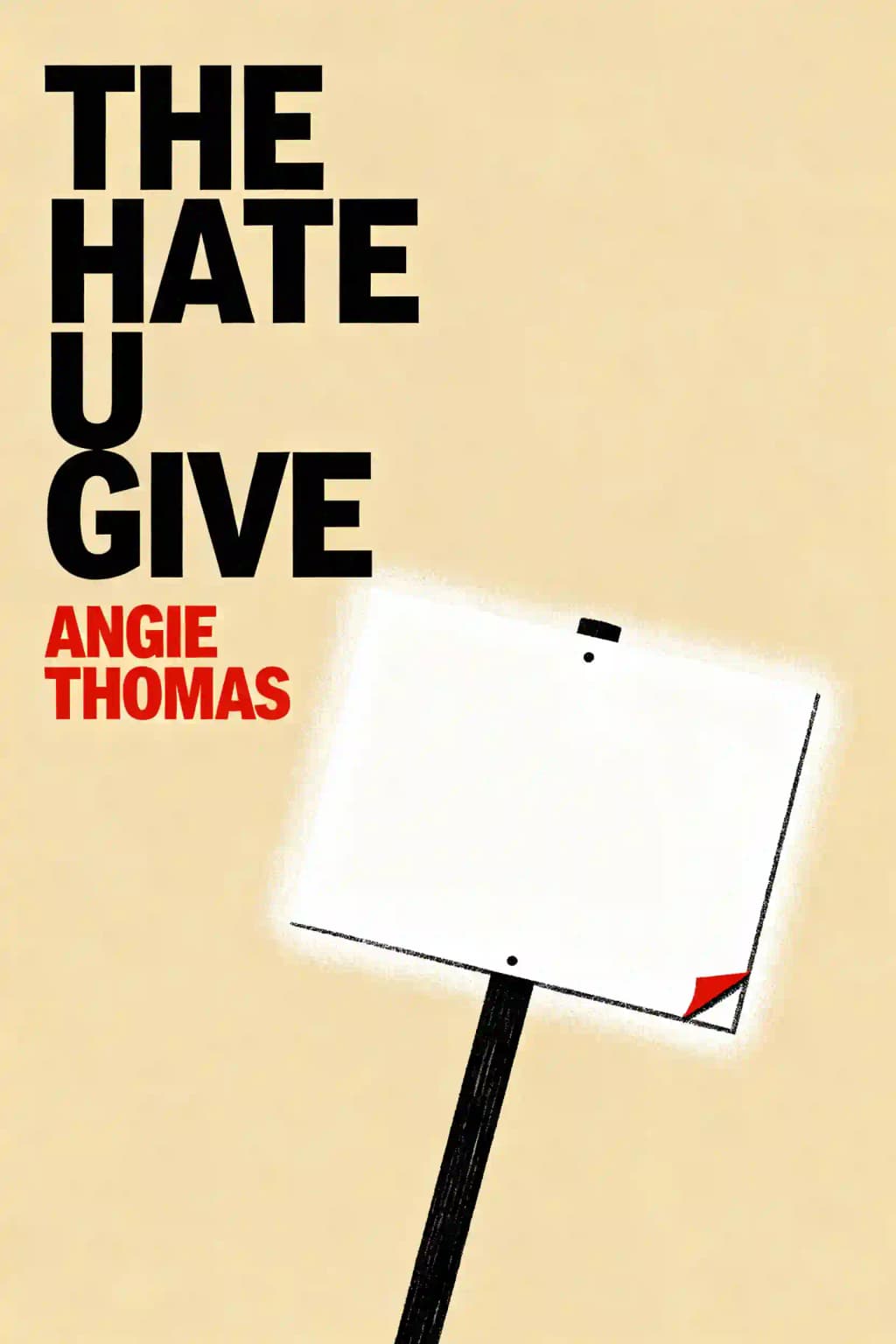
The novel's title, taken from Tupac's "THUG LIFE" acronym, reminds readers that silence in the face of injustice perpetuates cycles of harm that eventually affect everyone. Speaking truth becomes not just a personal choice but a social responsibility. As Starr's mother tells her, "Sometimes you can do everything right and things will still go wrong. The key is to never stop doing right."
Thomas leaves readers with the understanding that justice work is ongoing rather than a destination. The grand jury's failure to indict Officer One-Fifteen reflects real-world cases where legal systems have failed to hold police accountable. Yet the community's response - peaceful protests, mutual support, and collective testimony against King - demonstrates that power ultimately resides in unified voices that refuse to be silenced.
In our current moment of continued racial reckoning, The Hate U Give remains profoundly relevant. Through Starr's journey, readers are invited to examine their own complicity in systems of injustice and consider how they might use their voices to challenge these systems. The novel's enduring message is that change begins when individuals refuse to accept the status quo and instead speak their truth, even when - especially when - powerful forces would prefer they remain silent.