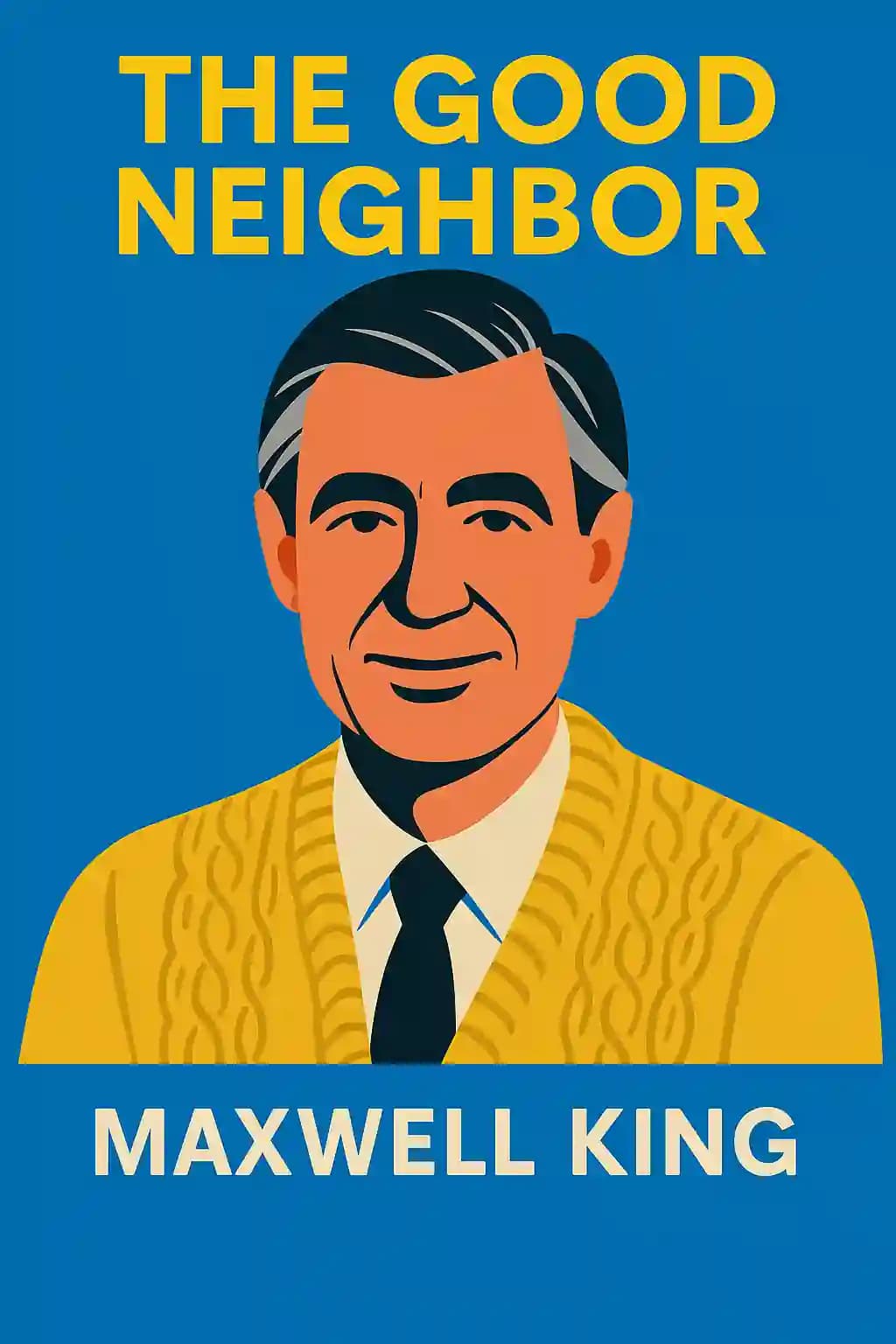
Good Neighbor
The Life and Work of Fred Rogers
Visão geral de Good Neighbor
The first biography of Fred Rogers reveals how a bullied boy became America's beloved neighbor. When a child broke away to hug him on Oprah's show, America witnessed what LeVar Burton calls "radical kindness" - a revolutionary approach to childhood still desperately needed today.

Temas principais em Good Neighbor
- childhood development
- public broadcasting history
- emotional intelligence
- media ethics
- radical kindness
Citações de Good Neighbor
This encouragement to take risks built Fred's confidence.
Personagens de Good Neighbor
- Fred RogersThe soft-spoken creator and host of his show
- Maxwell KingThe author and biographer of the book
- Joanne ByrdA talented pianist and Fred's wife
- Fred McFeelyFred's maternal grandfather and early mentor
- Nancy RogersFred's mother who instilled kindness and service
Baixar resumo de Good Neighbor
Obtenha o resumo de Good Neighbor como PDF ou EPUB gratuito. Imprima ou leia offline a qualquer momento.
Perguntas Frequentes Sobre Este Livro
Maxwell King’s biography explores Fred Rogers’ journey from a sheltered childhood to creating Mister Rogers’ Neighborhood, highlighting how his experiences with bullying, family wealth, and artistic passions shaped his empathetic approach to children’s education. The book details Rogers’ advocacy for emotional intelligence, his use of puppetry, and his enduring impact on public media.
This book appeals to educators, parents, and fans of Fred Rogers seeking insights into his philosophy of child development. It’s also valuable for readers interested in media history or stories of resilience, offering lessons on empathy and authenticity.
Yes—it provides a nuanced portrait of Rogers’ life, blending personal struggles with his unwavering commitment to children’s well-being. While some critics note uneven pacing, the book’s exploration of Rogers’ ethical framework makes it compelling.
Raised in an affluent but isolating environment, Rogers faced bullying for his weight and introverted nature. These experiences fueled his later focus on addressing childhood loneliness and self-worth through television.
Rogers emphasized emotional validation, often repeating, “You are special just the way you are”. He integrated psychology and spirituality to teach empathy, resilience, and self-acceptance, rejecting commercialized children’s programming.
Key quotes include:
- “You rarely have time for everything you want in this life, so you need to make choices from a deep sense of who you are”.
- “Be the best of what you are”—reflecting his belief in purposeful living.
King acknowledges debates about Rogers’ avoidance of overt conflict resolution in episodes but highlights his intentional focus on emotional stability. The biography counters claims of naivety by detailing Rogers’ strategic advocacy for public funding.
Rogers, an ordained minister, framed his message through universal values like kindness rather than doctrine. His Golden Rule philosophy (“Do unto others...”) informed episodes tackling topics like divorce and disability.
The book underscores Rogers’ authenticity—his on-screen persona matched his off-screen life. King details how Rogers studied child psychology to craft direct, unhurried dialogues that made children feel heard.
Some reviewers note uneven structure and excessive focus on Rogers’ early life. However, the biography is praised for humanizing Rogers while contextualizing his cultural impact.
Unlike shorter retrospectives, King’s work draws on deep archival research and interviews, offering new details about Rogers’ creative process and conflicts with network executives.
The Good Neighbor positions Rogers as a pioneer in educational media whose emphasis on emotional literacy remains relevant amid modern childhood crises. His advocacy influenced policies like the V-chip legislation and PBS funding.