Capítulo 1
The Curmudgeon Who Found His Heart
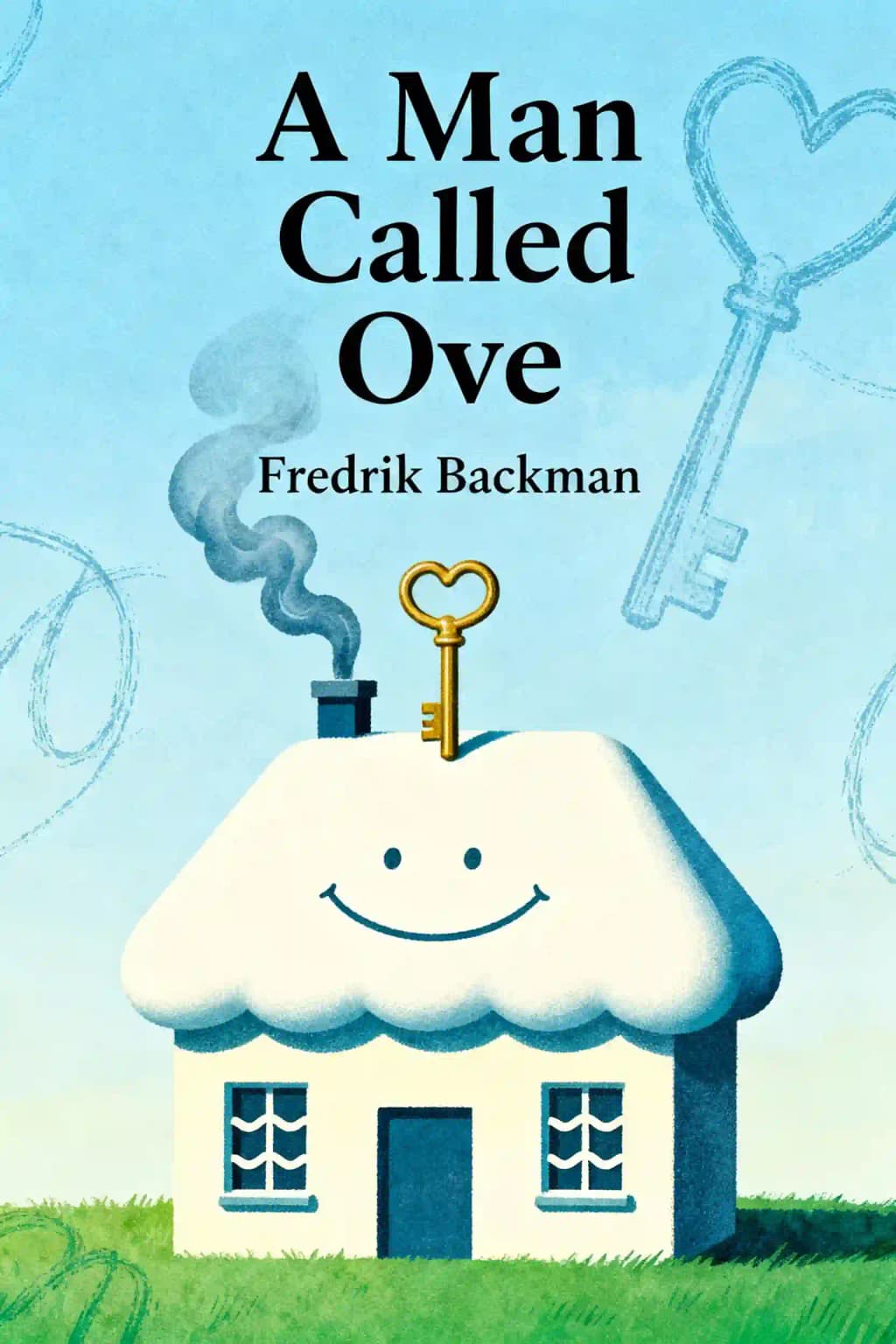
*A Man Called Ove* has become a global sensation, selling over 7 million copies worldwide and being translated into more than 40 languages. This Swedish phenomenon was adapted into an Oscar-nominated film in 2015, and Tom Hanks recently starred in the American remake titled "A Man Called Otto." The book's universal appeal lies in its exploration of grief, community, and unexpected connections. Barack Obama included it in his 2015 summer reading list, praising its "poignant exploration of grief and redemption." What makes a story about a grumpy old man so compelling that it transcends cultural boundaries and touches hearts across the globe?
Capítulo 2
The Rigid Man and His Principles
At fifty-nine, Ove embodies the archetype of the neighborhood curmudgeon, a man whose life is governed by an unwavering adherence to routine and principle. He patrols his residential area with military precision each morning at precisely six o'clock, following the same route he has walked for decades. His inspection ritual is meticulous: kicking the traffic sign precisely three times to ensure stability, checking each garage door's security, maintaining detailed records of vehicles in guest parking to enforce the strict 24-hour limit, and scrutinizing the recycling room with the intensity of a health inspector examining a restaurant kitchen. Even the neighborhood cats know to avoid his path during these morning rounds.
Ove's rigidity extends to every aspect of his life, from his brand loyalty to his financial principles. He drives only Saabs, considering all other car manufacturers inferior, and can recite the mechanical specifications of every Saab model since 1947. His frugality is legendary among neighbors - he believes in doing things properly or not at all, and refuses to pay a three-kronor surcharge on principle, preferring to buy two flowers for 50 kronor rather than one for 25 plus the fee. When a local shop changed its payment system to card-only, Ove boycotted it for three months, walking an extra mile to the next store that still accepted cash. His interactions with technology reveal his deep-seated disdain for modern conveniences - he storms into an electronics store demanding "a computer" while rejecting tablets and laptops as inadequate imposters, insisting that a proper computer must have a tower "like computers are supposed to have."
Behind this inflexibility lies a deep-seated belief in responsibility and competence, forged through years of practical experience. Ove's worldview divides people into two distinct categories: those who can back up trailers, fix radiators, and build houses with their hands, and those who cannot. He harbors particular contempt for "men in white shirts" - bureaucrats who make rules without understanding their real-world implications. This disdain manifests in his frequent confrontations with authorities, from parking enforcement to building inspectors. When he sees a scraping sound outside his home and discovers new neighbors struggling to back up a trailer, he doesn't hesitate to take over, expertly maneuvering it while mentally noting their incompetence with disgust, muttering about "people these days" who can't perform basic tasks.
What makes Ove's rigidity more than mere stubbornness is how it stems from his profound sense of duty and the lessons learned from his father. When he helps neighbors despite his constant complaints, it's because his principles demand it - a moral obligation that overrides his desire for solitude. "Men are what they are because of what they do. Not what they say," his father taught him - a lesson Ove carries through life like a sacred torch. This distinction between words and actions defines his character; he may grumble constantly about the deterioration of society and people's increasing helplessness, but his hands remain busy fixing, building, and maintaining the world around him. Whether it's repairing a bicycle for a neighborhood child or installing a security system for an elderly neighbor, Ove's actions consistently betray the caring heart beneath his crusty exterior.
Capítulo 3
The Love Story at the Heart of Grief
Behind Ove's cantankerous exterior lies a love story of extraordinary depth. When we meet Ove, he's a man hollowed by grief, methodically planning his suicide six months after his wife Sonja's death. His daily visits to her grave reveal the tenderness he reserves only for her: "I miss you," he whispers, caressing her gravestone. This isn't merely a man who lost his spouse-it's a man who lost his purpose, his color, his reason for being.
Their unlikely romance began on a train when Ove impulsively boarded going in the wrong direction after spotting a woman with "brown hair, blue eyes, red shoes, and a yellow clasp." Sonja brought vibrancy to his monochrome existence-her bright red cardigan "made the rest of the world look as if it were made in grayscale." While she loved abstract concepts like literature and music, Ove understood tangible things-screwdrivers and oil filters. She danced through life; he kept his hands firmly in his pockets.
The depth of their connection emerges through small, intimate details. Sonja would fold her index finger into Ove's palm when they held hands-a private gesture he misses acutely after her death. She filled bookshelves he built with novels about feelings he couldn't understand. When she became pregnant, his practical response-"We'll have to get a Saab station wagon, then"-perfectly encapsulated his way of expressing love through practical considerations.
Their love faced devastating challenges. A bus accident in Spain left Sonja paralyzed and resulted in the loss of their unborn child. While doctors offered pessimistic prognoses, Sonja refused to surrender to despair, declaring, "We can busy ourselves with living or with dying." Ove channeled his rage into action-rebuilding their home with ramps and accommodations, fighting bureaucracy for her rights, even constructing a ramp at her school when officials refused. Through it all, Sonja remained his purpose: "Every human being needs to know what she's fighting for... And Ove fought for her."
When Sonja died, she whispered, "Everything will be fine, darling Ove." But without her, nothing was. As the narrator poignantly observes: "Ove didn't die when Sonja left; he simply stopped living."
Capítulo 4
The Formation of a Character
Ove's childhood shaped his worldview in profound ways. After his mother's early death when he was just six years old, Ove was raised by his railway-worker father-a quiet, principled man with leather-tough hands who worked the night shift maintaining the tracks. His father taught him two fundamental lessons that would echo throughout his life: "only a swine thinks size and strength are the same thing" and "we don't fight in this family." Their modest existence centered on practical skills and simple pleasures: feeding birds in their small garden, playing cards by lamplight on winter evenings, and understanding the intricate workings of engines.
The pivotal moment in young Ove's life came when his father received a damaged Saab 92 from his railway director-a gesture that would shape Ove's lifelong devotion to the brand. That night, as father and son worked together under the dim garage light, dismantling and rebuilding the engine piece by piece, Ove learned not just about cars, but about precision, dedication, and the value of doing things properly. This was the night Ove decided he would never drive any car but a Saab-a loyalty that would define him for decades to come.
At sixteen, tragedy struck when Ove's father died in a railway accident, crushed between two cargo cars on a foggy morning. He left Ove with little more than that beloved Saab, a ramshackle house with peeling paint, and his cherished wristwatch-a simple timepiece that represented everything his father stood for. Displaying the stubborn integrity that would become his hallmark, Ove refused all charity, even returning his father's unearned wages to the railway company. He immediately took a job with the railway, working the same tracks his father had maintained, abandoning his education despite being one of the brightest students in his class.
These formative experiences instilled in Ove a fierce independence and deep-seated distrust of authority figures. This distrust crystallized years later when his childhood home burned down, and bureaucrats in pristine white shirts offered him a reduced "market price" for his land. The hatred boiled inside him as they discussed numbers and regulations-this wasn't just property to him, this was where he'd grown up, where his father had taught him about life and Saabs, where every floorboard held a memory. But facing the full force of institutional power, he had no choice. He signed their document with a clenched fist in his pocket, another lesson learned about the callousness of authority.
The final piece of Ove's character formation came through a confrontation with Tom, a coworker who had falsely accused him of theft and then stole his father's watch. Something fundamental snapped in Ove that day. Naked and dripping from the shower, he marched across the workers' accommodation, confronted Tom in front of everyone, retrieved his watch, and knocked him out with a single, precise punch. That was the moment Ove decided what kind of man he would be-one who stood his ground, who wouldn't be walked over again.
These experiences created a man defined by self-reliance, unwavering principles, and a deep suspicion of those who wielded power without understanding responsibility. As Sonja, who would later become his wife, explained to others, men like Ove were caught in the wrong time-they were simple men who needed simple things: a solid roof over their heads, a quiet street, the right car, a faithful woman, and a job where they could see the purpose in their labor. For them, dignity wasn't found in grand gestures or modern complexities, but in the ability to rely on oneself and stand firm in one's principles.
Capítulo 5
Unexpected Connections
Ove's carefully ordered isolation begins to crack when a pregnant foreign woman named Parvaneh and her "lanky husband" Patrick back their trailer into his mailbox. What starts as an irritating disruption evolves into the central relationship that pulls Ove back into life. Parvaneh possesses a stubborn persistence that matches Ove's own, refusing to be deterred by his gruff exterior.
Their relationship develops through a series of reluctant interactions. When Parvaneh needs driving lessons, she manipulates Ove into teaching her. During one lesson, when she repeatedly stalls the car and faces harassment from drivers behind them, Ove delivers what she'll always remember as his loveliest compliment: "You've given birth to two children and soon you'll squeeze out a third. You fled war and persecution, learned a new language, got an education, and hold together a family of incompetents. I'll be damned if I've seen you afraid of anything before now."
Parvaneh's daughters form their own connections with Ove. The three-year-old Nasanin gives him a drawing where he's the only figure depicted in vibrant colors while everything else is black. "You're the funniest thing she knows. That's why she always draws you in color," Parvaneh explains, leaving Ove stunned by the word "always"-the implication that this child has been thinking about him, drawing him, repeatedly. The seven-year-old shows him her house-building computer game and eventually calls him "Granddad" at her birthday party-a moment that leaves Ove speechless with emotion.
Beyond Parvaneh's family, Ove reluctantly accumulates a community of misfits. There's Jimmy, the overweight young man next door whom Sonja used to bring home-cooked meals; Adrian, a young postman who knew Sonja as the teacher who believed in him; and Mirsad, a young gay man rejected by his father. When Mirsad appears at Ove's door seeking shelter, Ove's initial protest that he's "not running a damned hotel" gives way when he catches sight of Sonja's photo on the wall. So instead of dying that day, Ove wakes the next morning with not only a cat but also "a bent person" living in his house.
Even the cat-a scraggly, one-eared creature Ove initially chases away-becomes an unlikely companion. After rescuing the injured animal from a snowdrift, Ove insists it will live in his house "over his dead body," yet soon finds himself feeding it tuna and taking it on his inspection rounds. At Sonja's grave, he introduces the cat: "This is the Cat Annoyance. It's living with us now." Defensively, he adds, "So it wasn't me who broke him. He was already broken." As Ove kneels in the snow whispering "I miss you," the cat gently rests its head in his palm-a moment of unexpected connection between two broken beings.
Capítulo 6
The Battle Against Bureaucracy
Throughout the novel, Ove wages war against faceless bureaucracy-"men in white shirts" who make decisions without understanding their human impact. This battle becomes literal when Social Services attempts to place his former friend Rune, now suffering from Alzheimer's, in a care facility against his wife Anita's wishes.
Ove's history with bureaucracy is fraught. After the bus accident in Spain that paralyzed Sonja, he wrote countless letters to authorities demanding accountability, only to be stonewalled. When the council refused to build a ramp at Sonja's school, Ove built it himself. These experiences left him with a deep distrust of officials and systems.
When confronted with the white-shirted bureaucrat attempting to take Rune away, Ove employs creative resistance. He strategically parks a trailer to block the official's car, citing the "motor vehicles prohibited" sign. When the man smugly reminds Ove that "a decision is a decision" and suggests he "watch some TV instead" of fighting the system, Ove turns the tables through community organizing.
The resistance culminates in a showdown at Anita and Rune's house. When the official arrives with nurses to take Rune away, he finds unexpected opposition. Anita blocks the doorway, demanding, "What sort of love is it if you hand someone over when it gets difficult?" As the man tries pushing past her, Ove steps forward declaring, "And so will I," followed by Parvaneh, Patrick, Jimmy, Anders, Adrian, and Mirsad all pledging to help care for Rune.
The journalist Lena appears with documentation of bureaucratic irregularities in the man's department, while Patrick reveals they have the man's bank statements, travel records, and compromising web history. Faced with exposure, the bureaucrat retreats without Rune-a rare victory against the system that had so often defeated Ove.
This battle represents more than just helping a neighbor; it's Ove finding purpose in fighting the same forces that had taken so much from him and Sonja. As he tells her gravestone: "You'll just have to wait a bit longer for me up there. I don't have time to die right now... because there's a bloody war on."
Capítulo 7
The Legacy of Friendship and Rivalry
Ove's complex relationship with his neighbor Rune forms a crucial subplot that mirrors the broader themes of pride, stubbornness, and the deep bonds that can form even through conflict. Once inseparable allies who founded the Residents' Association together, they became bitter rivals for reasons that, like many long-standing feuds, had become obscured by time and pride. Their neighborly competition escalated through increasingly absurd battles that consumed years of their lives: When Ove meticulously laid paving stones, Rune responded by building a fence; Ove countered with an even higher fence, prompting Rune to install a small pool. The neighborhood watched as they fought over everything from proper tree planting techniques to snow clearance protocols, lawn mower specifications, and most notably, the infamous "battle of the water pump" that became local legend.
Their choice of automobiles served as silent chronicles of their lives' trajectories and deepest hopes. Ove's progression through various Saab models reflected his devotion to Sonja, each upgrade carefully chosen to better accommodate her wheelchair and maintain her independence. Meanwhile, Rune's succession of increasingly larger Volvos represented his desperate hope for a growing family. The heartbreaking moment when Rune finally abandoned this dream was marked by his purchase of a sporty BMW - a car with room for "only two people and a handbag." Ove recognized this as more than a simple vehicle change; it was the moment "a part of Rune had given up forever."
The true poignancy of their rivalry emerges through Sonja's perceptive observation that their shared tragedy - the children they couldn't have - drove them apart when it could have brought them closer. Both men carried profound disappointments: Ove lost his unborn child in the devastating bus accident that left Sonja wheelchair-bound, while Rune watched his relationship with his only son deteriorate until the young man moved to America at twenty, maintaining only the most minimal contact. The impact on Rune was visible and devastating - he seemed to physically diminish, as if he "crumpled with a deep sigh and never really breathed properly again."
When Rune develops Alzheimer's and faces the threat of institutionalization, Ove is forced to confront his complicated feelings about his former friend. The revelation that Anita hadn't informed Sonja about Rune's condition, believing that Sonja and Ove "had enough troubles of their own," strikes Ove with the force of physical pain. This realization becomes a catalyst for change, as he understands how deeply Sonja would have been wounded by this exclusion. His subsequent fury at the bureaucrats attempting to separate Anita and Rune transforms into a proxy battle - fighting for them becomes a way to win the victories he couldn't achieve for Sonja.
The culmination of their story arrives when Ove, after successfully preventing Rune's removal to a care facility, sits with his old friend in the living room for a private conversation. Anita, listening from outside, hears something that had become rare and precious - Rune's genuine laughter. This reconciliation, though limited by Rune's condition and arriving later than ideal, symbolizes Ove's emotional growth beyond the petty rivalries that once defined their relationship, suggesting that true friendship can survive even the most bitter conflicts.
Capítulo 8
Finding Reasons to Live
Ove's suicide attempts form a darkly comic thread throughout the novel. Each carefully planned death is interrupted by some neighborhood crisis requiring his attention-a cat needing rescue, a pregnant woman needing a ride to the hospital, a young gay man needing shelter. These interruptions, initially frustrating to Ove, gradually become the very reasons he continues living.
His preparations are meticulous-covering the floor with plastic sheets to protect it from real estate agents, positioning a stool in the center of the room, selecting the perfect drill bit, measuring the ceiling twice to find the exact center for the hook from which he'll hang himself. He even unlocks the door so they won't need to break it down and turns his wife's photograph toward the shed so she won't have to watch.
At the train station, he calculates a five-foot drop to the tracks, positioning himself to be hit by the side of the train rather than traumatizing the driver with a head-on collision. But when a man collapses onto the tracks, Ove jumps down to save him, then stands facing the oncoming train himself. At the last moment, he steps aside, unable to traumatize the young driver: "Fair enough that Ove no longer wants his life. But the sort of man who ruins someone else's... damn it, Ove is not that sort of man."
Gradually, Ove's reasons for living multiply. He postpones suicide to help Parvaneh with driving lessons, to fix Patrick and Parvaneh's radiator ("it's just been bloody mayhem"), to shelter Mirsad, to feed the cat, and ultimately to fight for Rune and Anita. Each delay represents a thread connecting him back to life and community.
When Ove learns the man he saved at the train tracks had a brain disease that would have killed him within years if not discovered after his fainting spell, he discards the thank-you letter but places the enclosed family photo on his refrigerator beside Nasanin's drawing of him-small acknowledgments of his impact on others' lives.
At Sonja's grave, Ove confesses: "I just thought I'd have more time, somehow. To do... everything." This poignant admission reveals how grief had narrowed his vision to the past, while his new connections gradually pull his focus toward the future-toward Parvaneh's unborn baby, the children who call him "Granddad," and the community that increasingly relies on his expertise and principles.
Capítulo 9
The Enlarged Heart
In the novel's climax, Ove confronts burglars attempting to break into a neighbor's home when he suddenly feels a stabbing pain in his chest. At the hospital, the young doctor diagnoses Ove with an enlarged heart, causing Parvaneh to burst into hysterical laughter at the irony. This medical condition becomes the perfect metaphor for Ove's transformation-the grumpy man whose heart was supposedly too small has, in fact, been suffering from a heart too large for his own good.
After his hospitalization, life unfolds in new seasons. Ove carries photos of Parvaneh's chubby four-month-old boy everywhere. Neighbors seek his expertise with home repairs, and though he grumbles about their incompetence, he privately admits to Sonja's grave that "it can be quite nice having something to get on with." Parvaneh's children grow "disrespectfully fast"-the three-year-old becomes six, teaching Ove to use text smileys, while her sister turns ten and hosts pajama parties.
Four years after their first meeting, Parvaneh discovers Ove has peacefully passed away, the cat resting its head in his palm. His meticulously organized affairs reveal over 11 million kronor to be distributed among Parvaneh's children and Jimmy's daughter. Despite Ove's instructions for no funeral "fuss," over three hundred people attend with candles engraved "Sonja's Fund"-a charity Parvaneh creates for orphaned children.
The novel ends with Parvaneh showing Ove's house to a young couple. When the reluctant husband mentions his Saab, she knows Ove's home has found its rightful new owner-a perfect circle completing Ove's legacy. His principles, his care for things built to last, and his enlarged heart continue through the community he reluctantly created and the lives he touched.
In the end, Ove's story reminds us that grief doesn't diminish our capacity for connection-it may even expand it. As the narrator observes: "Death is a peculiar thing that most people live as if it doesn't exist, yet it often drives our living." Through Ove, we learn that sometimes the most profound act of love is simply finding reasons to continue living when the person who gave your life meaning is gone.