Drucker's five essential questions revolutionized organizational thinking, distilling decades of wisdom into one framework. Warren Buffett credits these principles for strategic clarity, while Jim Collins built "Good to Great" on this foundation. What's your organization's blind spot that these questions will illuminate?
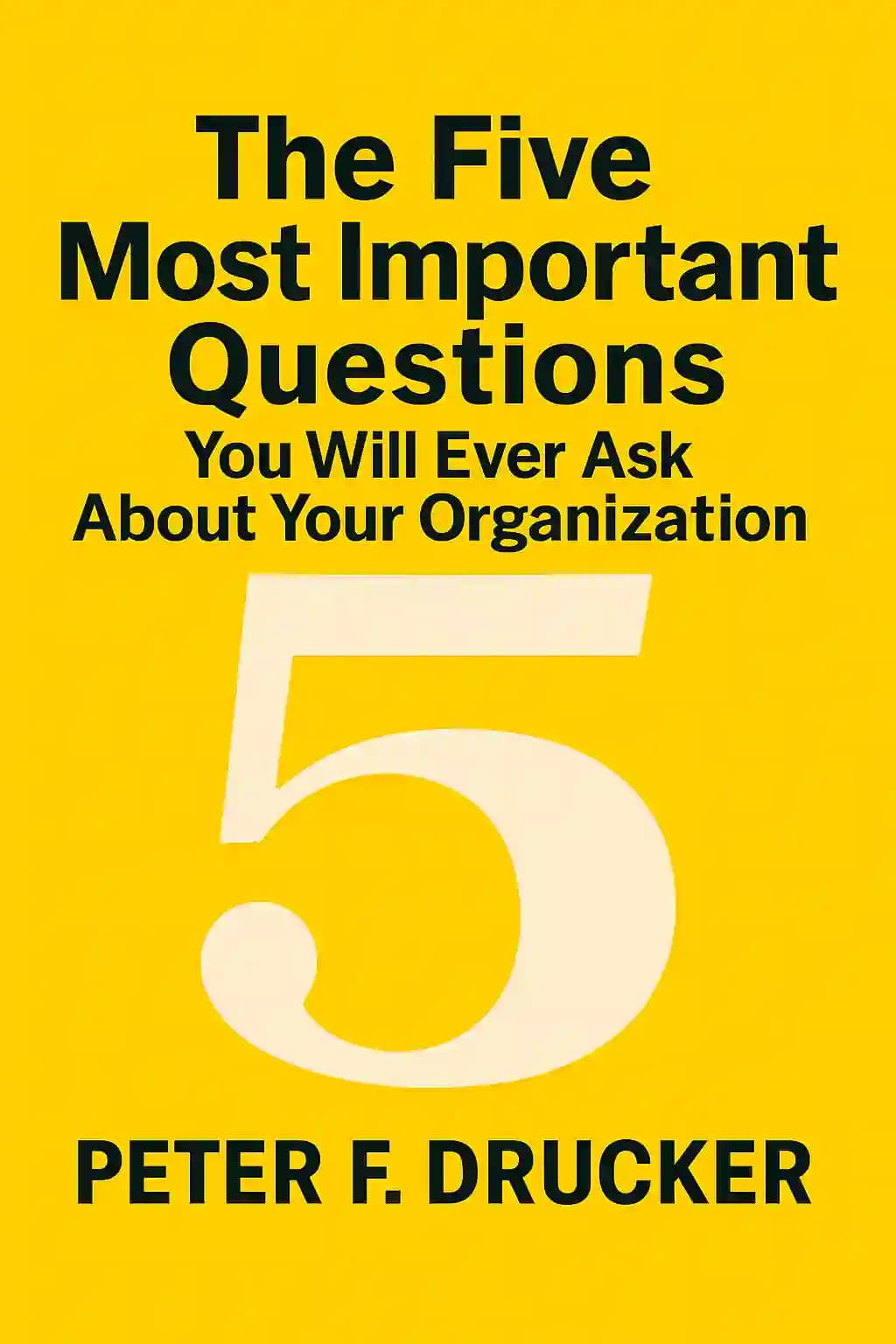
Peter F. Drucker (1909–2005), author of The Five Most Important Questions You Will Ever Ask About Your Organization, was a visionary management thinker and social philosopher widely regarded as the "inventor of modern management." As a professor, consultant, and prolific writer, Drucker revolutionized business leadership with his human-centered approach, emphasizing decentralization, employee empowerment, and ethical organizational practices.
His insights stemmed from decades advising Fortune 500 companies like General Motors and shaping executive education through the Drucker School of Management at Claremont Graduate University.
A foundational voice in leadership strategy, Drucker authored 39 influential books including The Effective Executive and Innovation and Entrepreneurship, which remain essential reading in MBA programs worldwide. His concepts like "knowledge worker" and "management by objectives" continue to define corporate governance. Translated into 37 languages, his works have sold millions of copies, cementing his legacy as the 20th century’s most enduring business theorist.
Peter F. Drucker’s book provides a framework for organizational self-assessment through five core questions: mission, customer focus, customer value, measurable results, and strategic planning. Designed to clarify purpose and drive performance, it helps leaders align their teams, refine goals, and adapt to changing environments. The workbook-style approach encourages actionable reflection.
CEOs, managers, nonprofit leaders, and entrepreneurs seeking to refine their organization’s direction will benefit most. It’s ideal for teams needing to reassess priorities or navigate transitions. Drucker’s insights are equally valuable for startups and established entities aiming to balance core values with innovation.
Yes. Drucker’s principles remain foundational for modern leadership, offering timeless tools for organizational agility. The emphasis on mission-driven strategies and customer-centricity aligns with today’s focus on sustainability and stakeholder value. The inclusion of commentary from thought leaders like Jim Collins adds contemporary relevance.
A mission statement must reflect three elements: opportunities the organization addresses, competence in delivering solutions, and commitment to sustained action. Drucker stresses that it should be concise enough to “fit on a t-shirt” while inspiring long-term vision.
Drucker argues that results must be quantifiable, customer-focused, and tied to the mission. Metrics should track both short-term outcomes (e.g., revenue growth) and long-term impact (e.g., community trust). The book warns against vanity metrics that don’t drive meaningful progress.
Nonprofits can use the framework to balance social impact with operational efficiency. For example, redefining “customers” as donors, beneficiaries, and partners ensures all stakeholders’ values are addressed. The plan phase helps convert abstract missions into grant-ready initiatives.
Collins, Kotler, and others expand Drucker’s ideas with modern case studies. Collins links mission clarity to sustained success, while Kotler emphasizes data-driven customer insights. Their contributions bridge classic theory with 21st-century challenges like digital transformation.
Some argue the model oversimplifies complex organizational dynamics, particularly in rapidly changing industries. Critics note that smaller teams may struggle with the intensive self-assessment process. However, most agree its structured approach outweighs these limitations.
Plans should include specific milestones, assigned responsibilities, and flexibility for feedback. Drucker highlights “abandonment” of outdated practices as a first step, freeing resources for innovation. Regular reviews ensure alignment with evolving customer needs.
While The Effective Executive focuses on individual productivity, this book tackles organizational strategy holistically. Both share themes of decisiveness and customer-centricity, but Five Questions offers a more structured toolkit for team-wide alignment.
Sinta o livro através da voz do autor
Transforme conhecimento em insights envolventes e ricos em exemplos
Capture ideias-chave em um instante para aprendizado rápido
Aproveite o livro de uma forma divertida e envolvente
What is our mission?
Who is our customer?
What does the customer value?
What are our results?
What is our plan?
Divida as ideias-chave de The Five Most Important Questions You Will Ever Ask About Your Organization (J-B Leader to Leader Institute/PF Drucker Foundation) em pontos fáceis de entender para compreender como equipes inovadoras criam, colaboram e crescem.
Destile The Five Most Important Questions You Will Ever Ask About Your Organization (J-B Leader to Leader Institute/PF Drucker Foundation) em dicas de memória rápidas que destacam os princípios-chave de franqueza, trabalho em equipe e resiliência criativa.

Experimente The Five Most Important Questions You Will Ever Ask About Your Organization (J-B Leader to Leader Institute/PF Drucker Foundation) através de narrativas vívidas que transformam lições de inovação em momentos que você lembrará e aplicará.
Pergunte qualquer coisa, escolha a voz e co-crie insights que realmente ressoem com você.

Criado por ex-alunos da Universidade de Columbia em San Francisco
"Instead of endless scrolling, I just hit play on BeFreed. It saves me so much time."
"I never knew where to start with nonfiction—BeFreed’s book lists turned into podcasts gave me a clear path."
"Perfect balance between learning and entertainment. Finished ‘Thinking, Fast and Slow’ on my commute this week."
"Crazy how much I learned while walking the dog. BeFreed = small habits → big gains."
"Reading used to feel like a chore. Now it’s just part of my lifestyle."
"Feels effortless compared to reading. I’ve finished 6 books this month already."
"BeFreed turned my guilty doomscrolling into something that feels productive and inspiring."
"BeFreed turned my commute into learning time. 20-min podcasts are perfect for finishing books I never had time for."
"BeFreed replaced my podcast queue. Imagine Spotify for books — that’s it. 🙌"
"It is great for me to learn something from the book without reading it."
"The themed book list podcasts help me connect ideas across authors—like a guided audio journey."
"Makes me feel smarter every time before going to work"
Criado por ex-alunos da Universidade de Columbia em San Francisco

Obtenha o resumo de The Five Most Important Questions You Will Ever Ask About Your Organization (J-B Leader to Leader Institute/PF Drucker Foundation) como PDF ou EPUB gratuito. Imprima ou leia offline a qualquer momento.
A small homeless shelter in Detroit was failing despite good intentions and dedicated staff. The team worked tirelessly, serving meals and providing beds, yet people kept cycling back to the streets. Then leadership asked one simple question: "What do our customers actually value?" The answer shocked them. Through interviews, they learned that while food and shelter mattered, what people desperately needed was "a place of safety from which to rebuild our lives." This single insight transformed everything-longer stays, mandatory goal-setting, life skills programs. Within two years, 70% of participants had secured stable housing. This is the power of asking the right questions at the right time.