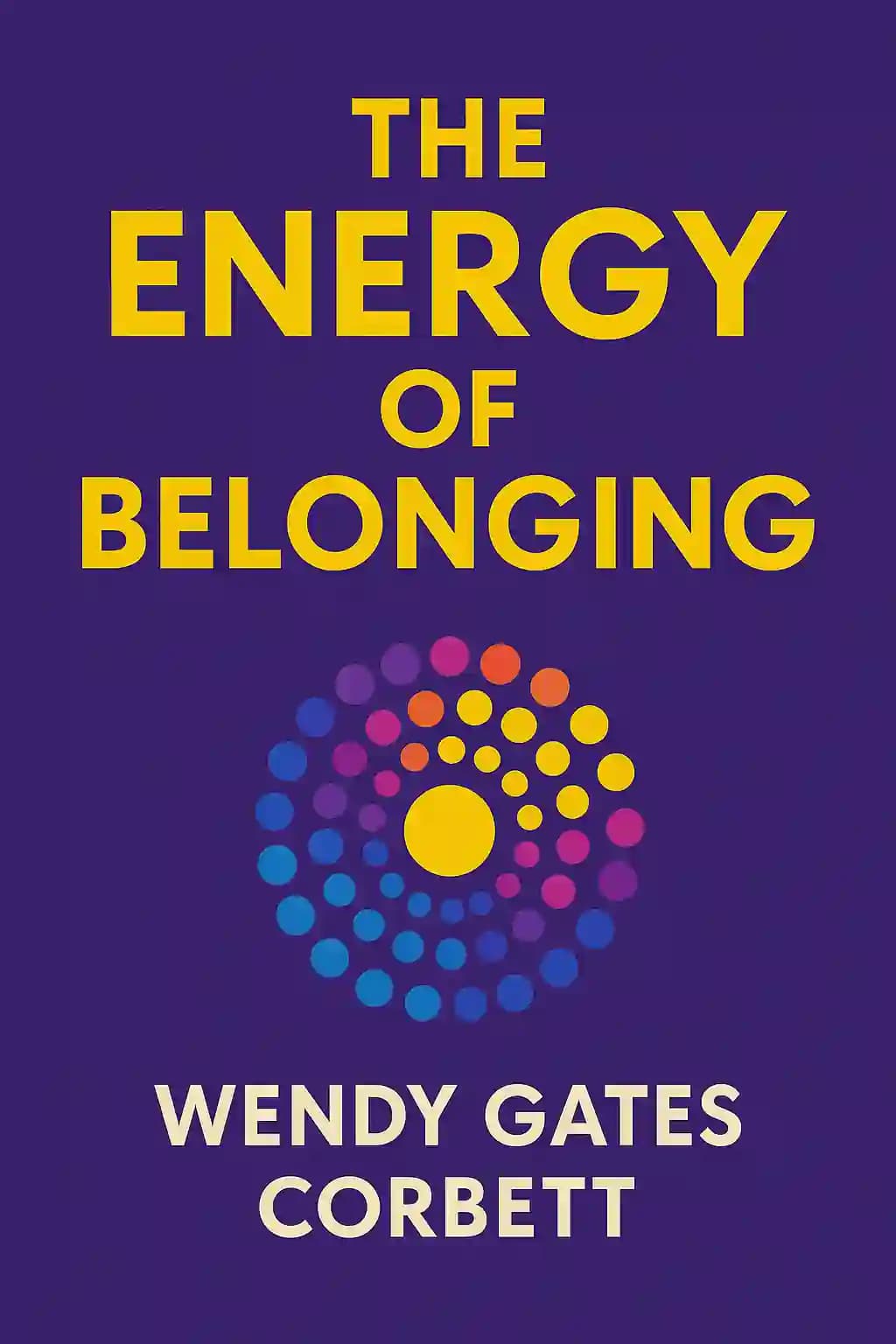
The Energy of Belonging
75 Ideas to Spark Workplace Community
Visão geral de The Energy of Belonging
In "The Energy of Belonging," Wendy Gates Corbett reveals 75 transformative strategies for creating workplace community. What if the key to productivity isn't perks but genuine connection? Discover why this practical guide is reshaping how successful organizations approach culture in our disconnected era.
Temas principais em The Energy of Belonging
- workplace community
- psychological safety
- inclusive behavior
- employee engagement
- interpersonal connection
Citações de The Energy of Belonging
Belonging is more than just a warm, fuzzy feeling.
Culture change starts with individual actions.
We all have biases, but they can inadvertently lead to exclusionary behaviors.
The impact of belonging in the workplace is astounding, and it's time we equip every employee with the tools to foster it.
Personagens de The Energy of Belonging
- Wendy Gates CorbettAuthor and expert on workplace belonging
Baixar resumo de The Energy of Belonging
Obtenha o resumo de The Energy of Belonging como PDF ou EPUB gratuito. Imprima ou leia offline a qualquer momento.
Perguntas Frequentes Sobre Este Livro
The Energy of Belonging provides 75 research-backed strategies to cultivate workplace communities where employees feel connected, respected, and protected. Rooted in Wendy Gates Corbett’s 30+ years of organizational consulting, it emphasizes practical actions anyone can take—regardless of job title—to foster belonging, boost engagement, and drive innovation.
This book is essential for professionals at all levels—managers, HR leaders, and individual contributors—who want to improve workplace culture. It’s particularly valuable for organizations facing retention challenges, collaboration gaps, or diversity initiatives needing actionable steps beyond theoretical frameworks.
Yes—it stands out for its action-oriented approach to belonging, avoiding abstract theories in favor of specific behaviors like inclusive meeting practices and peer recognition systems. With 30% of ideas requiring no budget or leadership approval, it’s a pragmatic toolkit for measurable culture shifts.
Wendy Gates Corbett’s framework focuses on:
- Connection (building peer relationships)
- Respect (valuing diverse perspectives)
- Protection (ensuring psychological safety)
These pillars form the basis for all 75 strategies, helping organizations address belonging holistically.
Unlike theoretical or leadership-centric guides, Corbett’s book targets every employee with concrete, daily actions—like “micro-inclusions” in meetings or peer-to-peer appreciation rituals. Its strength lies in democratizing culture change, making it accessible to non-managers.
- Belonging boosts productivity by 56% and retention by 50% (Corbett’s research)
- Simple acts like using inclusive language in emails create immediate impact
- Psychological safety directly correlates with innovation output
The book includes self-assessment tools to measure progress.
As a biracial adoptee and organizational consultant, Corbett combines personal experience with data from impacting 175,000+ employees globally. Her Duke University leadership courses and TEDx coaching ensure strategies are both academically rigorous and practically tested.
Yes—25% of the ideas specifically address hybrid/remote environments, such as virtual “coffee roulette” pairings and asynchronous recognition channels. Corbett emphasizes that belonging requires intentional design in distributed workplaces.
The book suggests measuring:
- Participation in ERGs (Employee Resource Groups)
- Frequency of cross-departmental collaboration
- Anonymous safety perception surveys
Corbett provides templates to benchmark and improve these metrics quarterly.
It tackles issues like implicit bias in promotions and meeting domination through tactical fixes:
- “Amplification” techniques for quieter voices
- Blind idea submissions for projects
- Structured peer feedback systems
Case studies show companies reduced turnover by 40% using these methods.
While praised for practicality, some note it focuses more on individual behaviors than systemic policy changes. Corbett acknowledges this, positioning the book as a foundation for grassroots change that should complement (not replace) structural DEI initiatives.
Corbett’s research ties strong belonging cultures to:
- 34% faster project completion
- 27% higher customer satisfaction
- 6x lower absenteeism
The book includes ROI calculators to justify belonging investments to executives.