Capítulo 1
The Psychology of Change: Breaking Barriers to Lasting Transformation
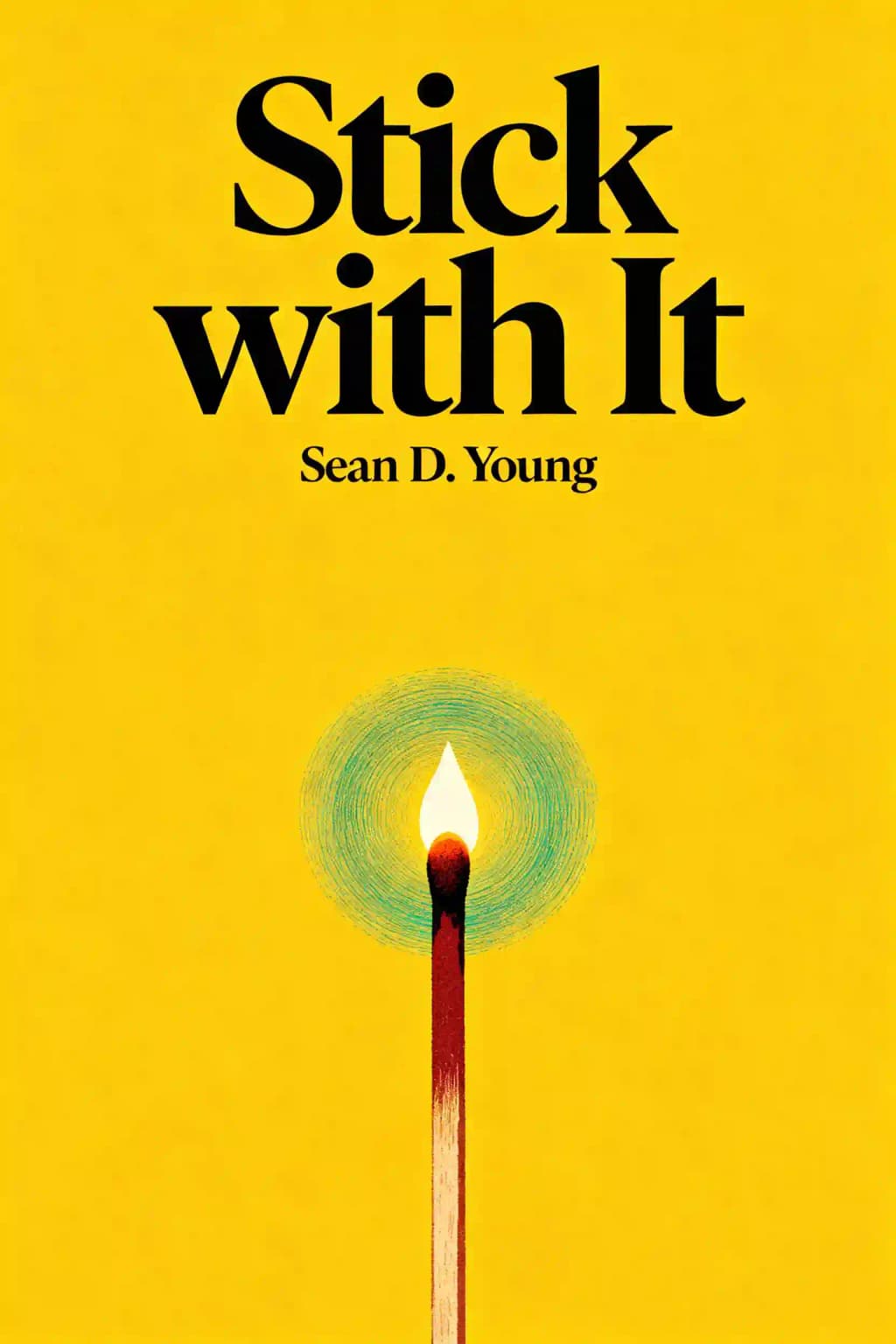
Have you ever wondered why 92% of New Year's resolutions fail by February? Or why the most intelligent, disciplined people still struggle to take their medications as prescribed? In his groundbreaking book "Stick With It," behavioral psychologist Sean Young challenges conventional wisdom about lasting change. Unlike most self-help authors who suggest you need extraordinary willpower or passion, Young offers a revolutionary perspective: you don't need to change who you are to transform your behavior. The book has become required reading at companies like Google and Facebook, where executives apply its principles to both product design and organizational behavior. Celebrities from Oprah to Tim Ferriss have praised its science-backed approach, and it's frequently cited as the "missing manual" for human behavior that psychology classes should teach but rarely do.
Capítulo 2
The Science Behind Lasting Change
What separates those who successfully make lasting changes from those who repeatedly fail? Traditional wisdom suggests changing your personality or developing extraordinary willpower. But this approach fundamentally misunderstands human behavior. Your core personality doesn't change much throughout life, and fortunately, it doesn't need to. Research shows that personality traits remain relatively stable after age 30, with only modest shifts occurring in response to major life events.
The key insight from Young's fifteen years of research at institutions like NASA, Stanford, and UCLA is that successful change isn't about who you are but about the process you follow. His extensive studies, involving over 25,000 participants across diverse backgrounds and goals, demonstrate that people using his methods were nearly three times more likely to successfully change their behavior compared to control groups. This success rate held true regardless of age, education level, or initial motivation levels.
Young introduces the SCIENCE framework-seven psychological forces that drive lasting change: Stepladders, Community, Important, Easy, Neurohacks, Captivating, and Engrained. These forces aren't just theoretical concepts; they're practical tools that can be adapted to fit individual needs and circumstances. Each force addresses a specific aspect of human psychology and behavior modification. Stepladders break overwhelming goals into manageable chunks, while Community leverages our social nature for support and accountability. Important connects changes to deeply held values, and Easy reduces friction in the change process.
Consider Josh Nava, who struggled with ADHD and a history of quitting projects. By applying these forces, particularly stepladders (breaking goals into tiny steps) and community support, he successfully crafted a wooden spoon every day for an entire year. He started with simple designs, gradually increasing complexity, and built an online community that provided daily accountability. Or Rishi Desai, who transformed from an anxious, socially awkward 14-year-old college freshman into a successful doctor and creator of Khan Academy's medical curriculum by systematically designing increasingly challenging social interactions. He began with brief conversations with classmates, progressed to study groups, and eventually led medical training sessions.
The framework has shown remarkable versatility across different contexts. Sarah Chen used it to transition from a sedentary lifestyle to completing a marathon by breaking down her training into weekly micro-goals. Marcus Rodriguez applied it to overcome social anxiety by creating a series of progressively more challenging social situations, from smiling at strangers to giving public presentations.
These aren't anomalies-they represent the predictable outcomes of properly applied psychological forces. The beauty of this approach is that it works with your existing personality rather than trying to fundamentally change who you are. Success comes not from forcing dramatic personality changes but from aligning your environment and habits with your natural tendencies while systematically building new capabilities through proven psychological principles.
Capítulo 3
Small Steps, Giant Leaps: The Power of Stepladders
When Brad Delson dreamed of becoming a rock star, conventional wisdom told him to focus on his big dream. But he noticed something curious: his academic success came from methodically focusing on small, incremental steps rather than fixating on the end goal. This insight would later help his band Linkin Park become one of the most successful rock groups in history.
The stepladders approach recognizes that most people plan steps that are too large. We find it more exciting to dream big than to plan small steps-like resolving to lose ten pounds before a wedding rather than planning to go to the gym today. This happens because of psychological anchoring: when we focus on big dreams, we unconsciously create larger steps, making it more likely we'll become discouraged and quit.
Young's stepladders model breaks this pattern by focusing on appropriately sized steps. Dreams are ambitious plans typically taking more than three months, goals are intermediate plans taking one week to three months, and steps are small tasks taking less than one week. The key is focusing on goals that take about one week with steps taking fewer than two days.
This works because our brains value smaller, quick rewards over larger delayed ones-what behavioral economists call "intertemporal choice" or "delay discounting." Neuroscience shows that dopamine release depends on relative expectations: if you expect $1 or $5 and get $5, dopamine releases, but if you expect $5 or $25 and get $5, it doesn't. Breaking goals into small steps creates more frequent rewards and greater motivation.
Effective stepladders require proper planning of incremental steps and reflection-taking time to celebrate accomplishments. This builds self-efficacy, the belief that change is attainable. Successful apps like MyFitnessPal apply this principle through gradual onboarding processes that incrementally increase complexity, explaining why they have over 60 million registered users with 90% completing workout programs.
Capítulo 4
The Magnetic Pull of Community
When Janja Lalich first heard about the Jonestown massacre, she actually sided with the cult despite the tragedy. This wasn't surprising-she herself had spent twelve years in a paramilitary-style socialist group with similar practices. Despite being educated and intelligent, holding advanced degrees and working as a successful publisher, she only left when the group disbanded. Now a sociology professor studying cults, her story reveals how even the most unlikely people can be drawn into extreme communities. Her experience demonstrates that intelligence and education provide no immunity against the powerful psychological forces that bind people to groups.
Communities are groups with shared characteristics-beliefs, backgrounds, hobbies, or circumstances. The strongest possess what Young calls a "social magnet"-a force that keeps people participating even when motivation wanes. Adult scavenger hunts exemplify this: participants commit to lengthy activities, often spanning entire weekends or multiple events, because they're pulled together by team dynamics and shared experiences. Similarly, CrossFit gyms create intense loyalty through group workouts and shared challenges. Without this magnetic force, even well-intentioned arrangements like gym buddies or diet support groups often fail to sustain lasting change, typically dissolving within weeks.
Robert Downey Jr.'s journey illustrates community's profound influence. From childhood exposure to drugs through his father to surrounding himself with Hollywood's party crowd, his communities fueled his addiction. His father would show him movies while they both used marijuana, normalizing substance use from an early age. Later, the fast-paced entertainment industry reinforced these behaviors. His recovery similarly depended on new communities-family, AA meetings five times a week, therapy groups, and a support network of sober entertainment professionals who understood his unique challenges.
Creating effective behavior change communities requires addressing six core psychological needs: trust through personal sharing and vulnerability, clear social norms that help people understand how to fit in, boosting self-worth through recognition and achievement, a social magnet drawing people together through shared experiences, consistent rewards for positive behaviors, and empowerment through mentorship and accessible role models who demonstrate success is possible.
Young's HOPE intervention demonstrates these principles in action, using peer role models (about 15% of the community) who share demographic characteristics with members but have achieved success in the target behavior. These models engage reluctant participants through supportive outreach, personal story sharing, and regular check-ins, creating the social magnet that keeps people involved. They're carefully selected to represent different backgrounds and experiences, making success feel attainable to all members. The results are impressive-over 90% retention after three months and 80% after eighteen months, compared to typical online communities with less than 50% engagement. These retention rates hold across diverse populations and behaviors, from weight loss to addiction recovery.
Capítulo 5
Making It Matter: The Force of Importance
What made the difference between Young's two grandmothers after losing loved ones? Doris Levine Felner deteriorated rapidly after losing her youngest daughter, losing her ability to walk almost overnight and dying within two years. Meanwhile, Beatrice "Billie" Young responded to her husband's death by walking endlessly through her grief, eventually returning to her passions and living another twenty years until passing at 97 while swimming.
The difference wasn't genetics or nutrition. It was about what each woman found important in life. Self-help books often promote developing a personality that "burns with motivation," but research psychologists believe there's no such thing as a motivated personality. Instead, people act because of their context-being in the right place at the right time.
Research shows three primary motivators are most important to people: money, social connections, and health. Mexico's Oportunidades program demonstrated money's power by giving cash directly to women (with conditions for school attendance and healthcare), dramatically improving outcomes for millions in poverty. But social connections often matter even more-Harvard's 75-year study found strong relationships were the most crucial factor for happiness. Brain scans reveal that social warmth activates similar neural pathways as physical warmth, while social rejection triggers the same brain regions as physical pain.
Sometimes life events can suddenly make something important. After Suzanne Crotty's 19-year-old son Zach died of an opioid overdose, preventing prescription drug abuse became her mission despite having no professional background in healthcare. She channeled her grief into advocacy, helping pass the I-STOP Act requiring electronic medication tracking.
Top life insurance agent Tom Pugmire demonstrates how to make something important to people who initially don't care about it. He succeeds by creating emotional connections rather than intellectual ones-building trust by showing he's personally invested in the products he sells, telling emotional stories about retirement planning mistakes, keeping his message simple, and using stepladders by starting clients with smaller investments they can afford.
Capítulo 6
The Path of Least Resistance: Making Change Easy
Joseph Coulombe transformed struggling Pronto stores into Trader Joe's after realizing that making shopping decisions easier for customers would change their behavior. While typical grocery stores carry 50,000 items, Trader Joe's offers just 4,000 but sells twice the merchandise per square foot as competitors. This strategy created lasting changes in customer behavior by making shopping simpler and less overwhelming.
People naturally gravitate toward and continue doing things that are easy. The science of making things "easy" involves three main approaches: controlling the environment, limiting choices, and using roadmaps.
Small environmental changes can significantly impact behavior. Studies show that removing tobacco products from the home is among the most effective strategies for smokers trying to quit. Similarly, people living near liquor stores drink more alcohol. The MIT Westgate studies found that 65% of students' closest friends lived in the same building, demonstrating how proximity and ease influence even our relationships.
Despite technologies supposedly making it easier to meet romantic partners, marriage ages keep increasing because people have too many choices, creating "choice paralysis." In a famous grocery store study, researchers found that customers offered samples from just six jams (versus twenty-four) were more likely to purchase. Similarly, participants offered chocolate samples from six varieties (versus thirty) were more likely to choose chocolate over money as payment.
Having a clear plan also makes it easier for people to follow through. A classic Yale study demonstrated this by providing students with information about tetanus vaccination. While all students received basic information, only half received detailed instructions including a map to the clinic and available appointment times. Those with this action plan were significantly more likely to get vaccinated.
Beyond technology, there are many low-tech ways to make life easier. Many successful people-from Steve Jobs and Mark Zuckerberg to Barack Obama and Karl Lagerfeld-adopt personal "uniforms" to eliminate decision fatigue. Matilda Kahl, art director at Saatchi & Saatchi, reported that wearing the same white silk shirt and black trousers daily dramatically reduced her stress.
Capítulo 7
Neurohacks: Change Your Actions, Change Your Mind
In 2011, Mauricio Estrella transformed his life through a simple hack-changing his computer password to "Forgive@h3r" to help him move past his divorce. This neurohack worked so well that a month later he changed his password to "Quit@smoking4ever" and immediately stopped smoking. Five years later, he's happily remarried with a child on the way and hasn't smoked since.
Neurohacks challenge conventional wisdom that behavior change starts in the mind. Instead, they show that making small behavioral changes first allows the mind to reflect on those changes, creating lasting transformation. Self-identity plays a crucial role in this process, as people decide whether to continue behaviors based on how they view themselves.
Benjamin Franklin demonstrated this brilliantly when he asked a political rival to lend him a rare book. This small favor transformed their relationship from enemies to lifelong friends. By getting his rival to act kindly toward him, Franklin helped the man form a new identity as Franklin's friend rather than foe.
Your physical movements can dramatically influence your thoughts and decisions. In one study, people who nodded their heads while listening to an advertisement were more likely to agree with it than those who shook their heads side to side. Similarly, researchers found that writing with your non-dominant hand versus your dominant hand affects self-esteem and confidence.
Our physiological responses and emotional expressions also influence our perceptions. Men rated women in pictures as more attractive when they heard what they thought was their own heartbeat increasing or decreasing in speed while viewing the images. Facial expressions can generate corresponding emotions-people holding a pen between their teeth (forcing a smile-like expression) found cartoons funnier than those holding pens between their lips (preventing smiles).
How we speak about ourselves dramatically shapes our behavior. Studies show that people who were asked "How important is it for you to be a voter?" rather than "How important is it for you to vote?" were more likely to actually vote. Similarly, people instructed "Please don't be a cheater" were less likely to cheat than those told "Please don't cheat." The difference lies in linking the behavior to identity rather than just action.
Capítulo 8
The Reward Factor: Making Change Captivating
Christy Rakoczy became an "extreme coupon shopper," obsessively combining store sales with coupons to get items for free. She accumulated random products-diabetes monitors (despite not having diabetes), excessive amounts of cough syrup, and stockpiles of household goods that often went unused or expired. After spending eight hours shopping for free toothpaste on Black Friday despite already having "an entire room full of stuff," she finally quit cold turkey.
This happens because couponing isn't just about saving money-it's fun, addicting, and captivating. People continue behaviors when they feel rewarded. Shopping illustrates this perfectly: people buy far beyond their necessities because they enjoy the experience itself. Similarly, metal detecting enthusiasts spend hundreds on equipment they'll likely never recoup through findings. They do it for the pleasure of the activity and the anticipation of possibly finding something valuable.
The science of captivation dates back to behaviorists who studied animal motivation through rewards and punishments. Modern "habit science" books rehash these behaviorist theories, but they're limited because people aren't caged animals. The key insight: rewards must be truly captivating-powerful enough to make someone willingly repeat an action thousands of times.
When scientists struggled for fifteen years to identify the structure of an AIDS-causing monkey virus, the University of Washington's Center for Game Science created Foldit-an online puzzle game teaching biochemistry principles. Over 240,000 players solved in ten days what experts couldn't solve in fifteen years.
To make activities captivating, make "right" things fun-healthy eating doesn't have to be boring. Use carrots instead of sticks-fear motivates briefly but creates avoidance long-term. Don't assume money is the best motivator-its power wears off and isn't universally effective. Education alone rarely changes behavior-people continue harmful activities despite knowing better. Make the activity itself rewarding rather than relying on external rewards.
There are two effective approaches to making activities captivating: the Quick Fix provides immediate reinforcement right after starting a behavior, while the Trick Fix rewards occasionally rather than every time, creating stronger addiction through intermittent reinforcement.
Capítulo 9
The Power of Repetition: How Behaviors Become Engrained
Michael Richards, a recovering cocaine addict, experienced intense drug cravings during an fMRI study when researchers subliminally showed him cocaine images for just 33 milliseconds-too brief for conscious recognition. His brain immediately activated addiction-related regions, particularly the nucleus accumbens and amygdala, demonstrating how deeply behaviors become engrained. This automatic response occurred before Richards could consciously process the images, highlighting how behavioral patterns can operate below our awareness.
However, Gabrielle Giffords's remarkable recovery after being shot through the brain proves that even severely damaged neural pathways can be rebuilt. Through intensive rehabilitation involving repetitive exercises, music therapy, and consistent practice, Giffords regained speech and movement capabilities, demonstrating the brain's "plasticity"-its ability to adapt and form new neural connections. Her recovery process included singing therapy to rebuild language pathways, physical exercises repeated thousands of times, and daily cognitive training sessions that gradually strengthened new neural circuits.
Our brains are designed for efficiency, automatically storing repeated information and behaviors to reduce cognitive load-switching from "manual" to "automatic" mode. This process, known as chunking, allows complex behaviors to become automated, like how experienced drivers navigate without consciously thinking about every gear shift or turn signal. When we repeat behaviors, the brain rewards us with dopamine, encouraging continuation until these actions become default habits requiring minimal thought. This efficiency explains why we can perform routine tasks like typing or tying shoelaces without conscious attention.
The military's rigorous training process exemplifies how behaviors become engrained through repetition. Soldiers learn to wake at 4:30 a.m., march in unison, and follow commands under fire because these behaviors are practiced until they become automatic. Basic training deliberately creates stress while drilling these behaviors, ensuring they persist under pressure. However, trauma can disrupt engrained behaviors. For soldiers with PTSD like David George, traumatic events create new unwanted habits that make civilian reintegration difficult. Simple activities like driving become challenging when trauma has rewired the brain to perceive ordinary situations as threats.
Successful people use "magnetic behaviors" to maintain discipline through ritualized routines. Michael Phelps has performed the same pre-race ritual since age twelve-stretching, listening to hip-hop, and flapping his arms. While fans seek his playlist thinking it's the secret to his success, they miss that these easy-to-perform actions serve as magnetic behaviors that pull him into the more challenging task of swimming at his best. Other athletes demonstrate similar patterns: Serena Williams bounces the ball exactly five times before her first serve, and Rafael Nadal precisely arranges his water bottles before each match. These familiar routines become engrained in the brain, creating a psychological comfort zone that makes it easier to follow through even on difficult days. The power lies not in the specific actions but in their consistent repetition, which creates reliable neural pathways that support peak performance.
Capítulo 10
Tailoring Your Approach: The ABCs of Behavior Change
Is one solution enough to help people stick with anything they want to change? Most behavior change books suggest acquiring a single quality that successful people have. But this approach fails because motivation from reading doesn't last without immediate action, and the "habit science" these books describe is based on outdated conditioning principles that work well for animals but not complex human behaviors.
Different behaviors require different approaches. Young's research reveals three distinct types of behaviors requiring different change strategies: automatic, burning, and common behaviors. The key difference lies in how much conscious control we have over them.
Automatic behaviors happen without conscious awareness-like mindlessly checking phones at stoplights or biting nails. Since people aren't aware when performing automatic behaviors, forces requiring consciousness (like Stepladders or Important) won't work effectively. Instead, use forces that don't require awareness: Easy (making unwanted behaviors difficult by changing your environment), Captivating (providing rewards), Engrained (creating repetition), and Neurohacks (using mental tricks).
Burning behaviors are characterized by irresistible urges that feel impossible not to act on. Unlike automatic behaviors which occur without awareness, people are conscious of burning behaviors but feel powerless against them. Examples include addictions, cravings, and obsessions. For changing burning behaviors, the most effective forces are Easy, Neurohacks, Captivating, and Engrained, with Community as additional support.
Common behaviors are conscious actions that people repeatedly do and want to change, like unhealthy snacking or hitting the snooze button. For these, using as many of the seven forces as possible is recommended, with Community being particularly effective.
To create lasting change, you must first identify whether a behavior is automatic (A), burning (B), or common (C), then apply the appropriate forces. For determining behavior type, be specific and listen for key words: "unconsciously" suggests automatic behaviors, "urge" or "compulsive" indicates burning behaviors, while "motivated," "tired," or "bored" points to common behaviors.
Unlike leaves that are passively moved by external forces, humans have brains that allow us to choose the forces that create change in our lives. Though we can't control nature's forces, we can strategically position ourselves to harness them. While behavior change is difficult, it's achievable with the right approach-using science to work with your personality rather than trying to change who you are.