Capítulo 1
The Giant Leap: How Ordinary People Achieved the Extraordinary
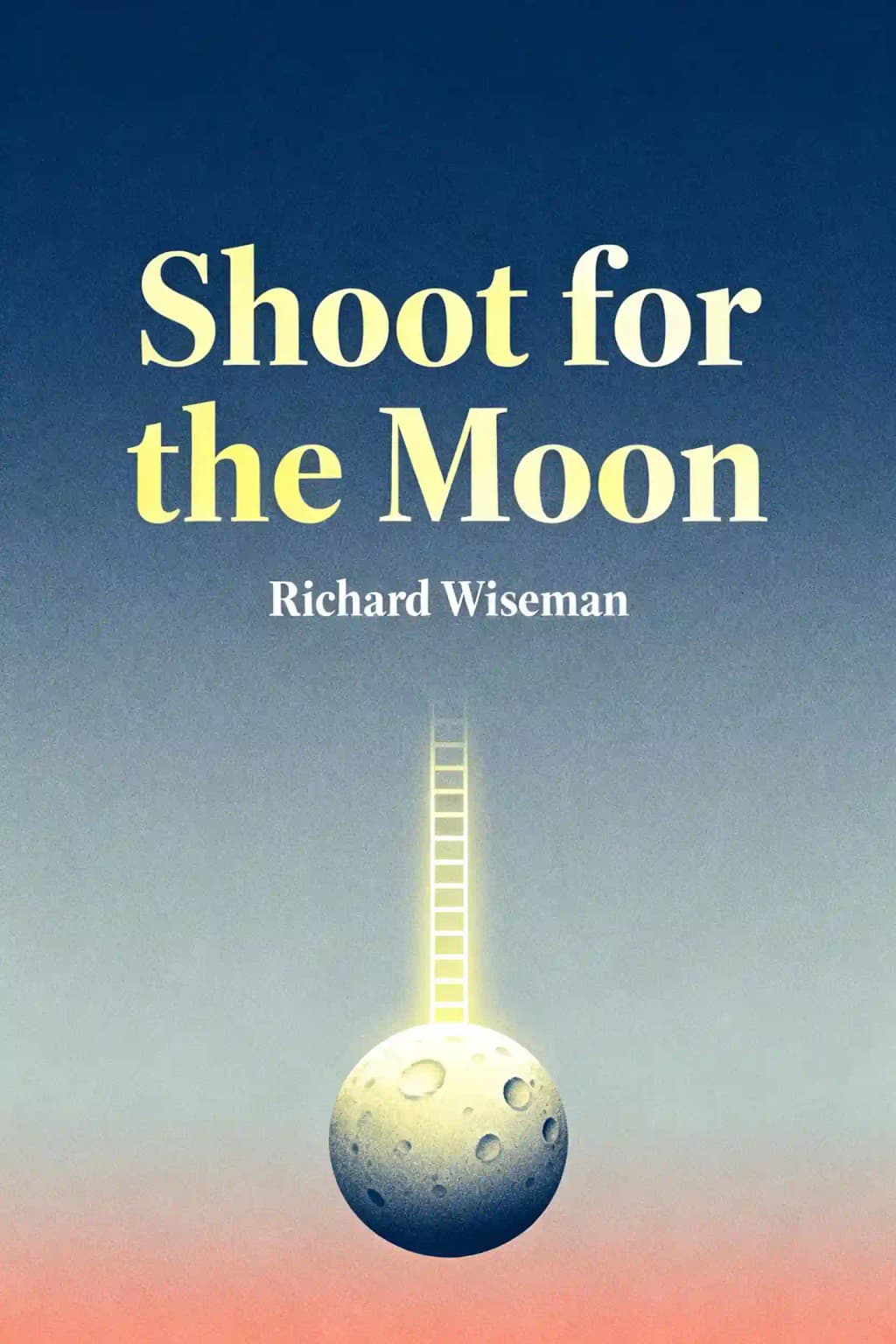
In 1961, America had barely managed to send a man on a fifteen-minute suborbital flight. Yet somehow, just eight years later, Neil Armstrong was taking his first steps on the lunar surface. This remarkable achievement wasn't accomplished by superhuman geniuses or extraordinary talents, but by surprisingly ordinary people with an extraordinary mindset. The average age of Mission Control staff when Armstrong stepped onto the Moon? Just twenty-six. These young controllers, many from modest backgrounds and first-generation college graduates, accomplished what many considered impossible through a specific psychological approach that anyone can learn.
The book has become a favorite among Silicon Valley executives and startup founders seeking to build high-performing teams. Even Elon Musk reportedly keeps a copy in SpaceX headquarters, referencing its principles when discussing how to achieve seemingly impossible goals. What makes this story particularly powerful is how it demystifies success - showing that remarkable achievements come not from innate genius but from specific mindsets and approaches that anyone can adopt.
Capítulo 2
The Power of Passionate Purpose
When the Soviet Union launched Sputnik in October 1957, President Eisenhower's lackluster response epitomized poor crisis leadership. He disappeared for a golfing weekend, waited five days before addressing the nation, and then downplayed the threat. This triggered political backlash, with one senator demanding a national "week of shame and danger" while Michigan's Governor published a sarcastic poem in the New York Times mocking the President's golf habit while "Uncle Sam's asleep."
The Soviets capitalized on their success with propaganda and quickly advanced their space program, launching Sputnik 2 with Laika the dog aboard. America's humiliation deepened when their response - the Vanguard TV-3 rocket - exploded spectacularly on the launch pad, earning global ridicule with headlines like "Kaputnik," "Flopnik," and "Stayputnik."
When John F. Kennedy narrowly defeated Richard Nixon in 1960, he inherited this challenge. Despite early setbacks including the Bay of Pigs invasion, Kennedy chose an audacious response to the space race - sending a man to the Moon before the decade's end. This bold goal would secure America's place in history, outpace the Soviets, and ensure democratic control of space.
In September 1962, Kennedy delivered his historic Rice University speech to 40,000 people. The President masterfully articulated why America must lead in space, declaring they would go to the Moon "not because it is easy, but because it is hard." He outlined the immense technological challenges ahead and invoked explorer George Mallory's famous Everest quote: "Because it is there." The speech transformed lives, including fifteen-year-old Terry O'Rourke who skipped school to attend and later became an environmental lawyer, and basketball player Jerry Woodfill who abandoned sports to study engineering, eventually helping develop safety systems for the lunar missions.
The lunar mission captivated people worldwide for various reasons - childhood science fiction dreams, the allure of unprecedented challenge, promoting freedom and democracy, or simply beating the Soviets. This passion proved essential to the program's success, transforming grueling work into joyful play. Senior engineer Bill Tindall Jr. later insisted they weren't working at all: "It was just so much fun." Flight Director Glynn Lunney echoed this sentiment: "We loved the work, the comradeship, the competition, the sense of doing something important."
To harness passion in your own life, consider nine key questions: recall moments of feeling truly alive; identify topics you could read about endlessly; imagine what you'd do with complete financial freedom; remember childhood joys; consider abandoned hobbies; envision end-of-life regrets; imagine creating something new; recall activities where time disappeared; and visualize images that appeal to you. Research shows having two passions leads to greater happiness than just one, though caution is needed to avoid unhealthy obsession driven by external rewards rather than intrinsic joy.
Kennedy's audacious Moon landing goal exemplifies effective stretch goals that work best when evoking the "fear factor" - creating an adrenaline rush that simultaneously frightens and energizes. For maximum effectiveness, find the sweet spot between too easy (90% certainty) and too difficult (10% chance), with researchers suggesting a 50-70% chance of success is ideal. The most successful stretch goals propel organizations forward, ensuring that even those who don't fully achieve them accomplish far more than those with modest aims.
Capítulo 3
Innovation: Creating Ideas That Are Out of This World
When NASA began exploring ways to fulfill Kennedy's lunar vision, Wernher von Braun's team initially considered a Direct Ascent approach - sending a spacecraft straight from Earth to the Moon and back. Finding this impractical due to fuel requirements, they explored Earth Orbit Rendezvous, which involved assembling spacecraft in Earth orbit. Both approaches faced significant problems, particularly the challenge of landing a massive, fuel-laden spacecraft on the lunar surface.
John Houbolt, a NASA engineer, proposed a radical alternative called Lunar Orbit Rendezvous. His plan avoided taking unnecessary weight to the lunar surface by keeping return fuel, supplies, and the heat shield with an orbiting spacecraft while a specialized Lunar Lander ferried astronauts to and from the Moon. While von Braun wanted to build "a huge Cadillac" by landing a giant spaceship on the lunar surface, Houbolt preferred "a much more modest Chevrolet."
Despite Houbolt's conviction, NASA administrators repeatedly rejected his plan, with remarks like "He doesn't know what he's talking about" and "His figures lie." In a last-ditch effort, Houbolt broke the chain of command and wrote directly to NASA leadership. After months of negotiations and analysis, key decision makers, including von Braun, eventually switched their allegiance to his scheme. When Neil Armstrong stepped onto the lunar surface, von Braun turned to Houbolt and said, "John, it worked beautifully."
Success requires innovation, especially when achieving the seemingly impossible. Research shows we all experience the Einstellung effect - once we find one solution, we become blind to alternatives. Additionally, we resist evidence contradicting theories we've created ourselves, as von Braun's team did by clinging to their giant rocket idea.
Studies of "divergent thinking" show young children are remarkably creative, but this ability drops around ages 9-10 (the "fourth grade slump"). Researchers blame educational systems that initially encourage creativity but gradually shift toward critical thinking and finding single correct answers, teaching children to conform rather than create.
To boost creativity, avoid falling in love with your first idea (like von Braun did), instead forcing yourself to produce multiple alternatives. As Emile Chartier said: "Nothing is more dangerous than an idea when it is the only one you have." When solving problems, we tend to fall in love with our first solution because it came from our own minds. The solution is surprisingly simple: force yourself to generate multiple alternatives.
Contrary to popular belief, having more resources doesn't necessarily lead to greater innovation. In 1957, Dr. Seuss created "The Cat in the Hat" using just 250 words from a first grader's vocabulary list, selling a million copies. Later, he wrote "Green Eggs and Ham" using only 50 words, selling over 8 million copies. Research by Irene Scopelliti from City, University of London confirms this principle. When faced with limitations, our minds are forced to think differently and more creatively.
Houbolt's Lunar Orbit Rendezvous exemplifies "Vice Versa Thinking" - doing the opposite of conventional wisdom. While von Braun favored gigantic spaceships, single rockets, and direct pathways, Houbolt proposed small landers, multi-part craft, and orbital rendezvous. This creativity technique encourages breaking from tradition by considering the opposite approach: if everyone goes big, go small; if everyone goes slow, go fast.
Creative problem-solving benefits tremendously from incubation periods - taking breaks between intense work sessions. Research shows people who work on puzzles for three minutes, take a break, then return for another three minutes significantly outperform those who work continuously for six minutes. This "incubation effect" occurs because the brain unconsciously processes problems during downtime. The effect works best when you've first invested considerable effort in the problem and then engage in relaxing activities like walking (which increases creative output by 60%), napping, bathing, or meditating.
Capítulo 4
The Right Stuff: Building Unshakable Self-Belief
Following Sputnik's launch, America established Project Mercury to restore national pride by putting humans in orbit. NASA recruited test pilots with at least 1,500 flying hours, engineering degrees, and heights under 5'11". Candidates underwent extreme physical tests and psychological assessments to ensure they could handle space's unknown dangers. Only seven made the cut - the Mercury Seven - including Alan Shepard, who would become America's first man in space.
While astronauts like Shepard rightfully received public acclaim, a second group working quietly behind the scenes proved equally vital to the Moon missions' success. Chris Kraft, from modest beginnings in tough Phoebus, Virginia, created Mission Control - a room housing ground crew providing real-time monitoring and support to astronauts. Unlike the military-trained astronauts, Kraft recruited young people from humble backgrounds who had worked hard to succeed. People like Jerry Bostick, a farm boy from Mississippi with a strong work ethic, who became head of Mission Control's Flight Dynamics Branch at just 29. These optimistic youngsters succeeded precisely because "we didn't know that it couldn't be done!"
Kraft deliberately sought people from modest backgrounds who had made something of their lives through hard work and determination. Many came from rural farming families and were first-generation college graduates. They possessed high work ethics, passion for space exploration, and willingness to tackle impossible challenges. Their youth and optimism proved crucial assets.
Albert Bandura's groundbreaking work on self-efficacy reveals that our beliefs about our capabilities become self-fulfilling prophecies. When people have low self-efficacy, they avoid challenges or quit when obstacles arise. Those with high self-efficacy make an effort and persevere, discovering innovative solutions. This principle proved vital to the Apollo program - while many believed reaching the Moon was impossible, Chris Kraft recruited optimistic people who believed in themselves. As engineer Jay Honeycutt noted: "We thought we were damned invincible... There was no chance we're going to fail."
Harvard researcher Teresa Amabile discovered through analyzing 12,000 work emails that "small wins" consistently predict success across diverse industries. Breaking overwhelming goals into manageable steps makes them seem achievable and builds confidence. Each accomplished mini-stage catalyzes future success - what psychologists call the "progress principle," which improves performance 90% of the time. This approach helped NASA tackle the Moon mission by dividing it into specific challenges: building a rocket to escape Earth's gravity, designing spacecraft to orbit the Moon, creating a lunar lander, and planning the rendezvous.
The power of self-talk emerges through the classic children's story "The Little Engine That Could," where a small engine pulls freight over a hill by repeating "I think I can." Unfortunately, most people's inner monologues are far more negative. To combat this, imagine what you'd say to a best friend expressing the same doubts you have about starting a relationship, business, or changing careers. You'd challenge their negative assessments, ask for evidence, and boost their confidence - this is exactly how you should talk to yourself.
Our past successes shape our future expectations. Mission controllers, many from modest backgrounds, had overcome adversity throughout their lives, building confidence that they could tackle even sending astronauts to the Moon. To develop this mindset, recall times when you succeeded despite the odds - perhaps acing a difficult exam or completing a challenging project. Replay these successes mentally, visualizing them like a sports highlight reel.
Capítulo 5
Learning from Failure: The Apollo 1 Tragedy
After the Apollo 1 fire that killed astronauts Gus Grissom, Ed White, and Roger Chaffee, investigators discovered horrifying safety issues in the Apollo capsule: bare and frayed wires that could spark fires, flammable materials throughout, pure oxygen atmosphere that accelerated flames, and a complex hatch system that prevented quick escape. NASA spent 18 months and millions of dollars redesigning the spacecraft with a quick-release hatch, reduced combustible materials, and a hydrogen-oxygen mix instead of pure oxygen.
Beyond technical changes, the disaster transformed NASA's culture. Gene Kranz delivered what became known as the "Kranz Dictum," declaring Mission Control would be defined by two words: "Tough and Competent." This meant taking full responsibility for actions and maintaining the highest standards of knowledge and skill. The culture shifted from covering up mistakes to openly embracing errors as learning opportunities - what one flight controller described as "playing with your cards face up."
Carol Dweck's research shows that people with "fixed" mindsets see intelligence as unchangeable, avoiding challenges and hiding failures, while those with "growth" mindsets believe they can improve through effort and experience. This mindset difference affects many aspects of life - from weight loss and relationships to workplace performance.
In organizations, fixed-mindset leaders believe employees can't change, preferring to hire new talent rather than develop existing staff. Growth-mindset leaders see potential in everyone and focus on helping people improve. The key isn't avoiding failure but welcoming challenges, being open about mistakes, and learning from errors.
The Astronaut Challenge demonstrates these mindset differences. When presented with a difficult puzzle, fixed-mindset individuals avoid the challenge or make excuses for failure. Growth-mindset individuals see opportunities to learn regardless of outcome. The puzzle (which is actually impossible to solve) reveals how people respond to failure - those with growth mindsets remain curious about solutions and even find ways to use their new knowledge.
NASA's mission controllers exemplified growth mindset by holding regular debriefing sessions at a local beer garden to discuss mistakes and solutions. Organizations can foster this culture through "failure parties" or practices like social media company NixonMcInnes's "Church of Fail," where employees "confess" mistakes and share what they've learned, followed by applause from colleagues.
Dale Carnegie kept a personal file of his mistakes and what he learned from them. This technique can help anyone grow from failure rather than ignore it. The key is to document errors and their lessons, avoiding repeated mistakes. It's acceptable to make mistakes as long as you learn from them.
The language we use significantly impacts mindset development. Carol Dweck's research showed that praising intelligence fosters a fixed mindset, while praising effort cultivates growth. When giving feedback, focus on learning strategies, resilience, and willingness to face challenges rather than natural talent. Adding the word "yet" to statements about limitations transforms them into opportunities for growth: "I don't have enough money to start my own business, yet."
Capítulo 6
The Attitude That Gives You Altitude: Responsibility
Gunter Wendt, known for his bow ties and eccentric personality, ruled the Saturn V White Room with both a pleasant smile and iron fist. Nobody touched anything without his permission, and he once had an engineer removed for attempting unauthorized changes. The Apollo team joked about his strong sense of responsibility, with John Glenn nicknaming him "der Fuhrer of der Launch Pad." Wendt embodied the same accountability as the technician who spoke with Mattingly, telling Annie Glenn before her husband's flight: "I cannot guarantee John's safe return... but when the spacecraft leaves, it's in the best possible condition for launch."
This attitude permeated Mission Control in Houston. Ed Fendell, who managed communications during the Moon landing, reflected that Apollo's success came not from exceptional intelligence but from the right attitude: "Everyone had a strong 'can do' attitude. I never heard anyone say, 'I can't do that'." The controllers worked tirelessly, often until 9pm and on Saturdays. Glynn Lunney hired people based on attitude rather than perfect grades, seeking those passionate about making Apollo successful. Leaders like Chris Kraft created an environment of trust and responsibility, giving even young engineers significant autonomy. As Jerry Bostick put it: "You would walk out of his office thinking, 'I can't let that man down.'"
Lewis Terman's groundbreaking work on intelligence and success found that conscientiousness consistently outperformed both intelligence and other personality traits as a predictor of life outcomes. Across hundreds of studies globally, conscientious people achieve better grades, avoid criminal behavior, find and keep employment, earn higher salaries, and enjoy happier relationships. Even having a conscientious partner correlates with higher income, greater job satisfaction, and increased likelihood of promotion.
Conscientiousness encompasses punctuality, meeting deadlines, hard work, minimal procrastination, and strong integrity. Conscientious people excel through organization (better preparing for exams and assignments), healthy habits (avoiding reckless behaviors), reliability (completing tasks properly), and trustworthiness (being held in high regard). Their consistent dependability means projects never fail because of them.
Julian Rotter's concept of locus of control classifies people on an external-internal continuum. Those with external locus believe outside forces control their lives, while those with internal locus believe their thoughts and actions dictate outcomes. Research shows people with internal locus of control tend to be happier, healthier, and more successful - they take responsibility, work hard, persist through failure, and finish what they start.
Nearly 95% of people procrastinate, but conscientious individuals have developed techniques to overcome this tendency. First, think about future consequences rather than immediate gratification - research shows that visualizing long-term outcomes significantly reduces procrastination. Second, take tasks "one brick at a time" rather than becoming overwhelmed - break large goals into manageable pieces and work consistently regardless of mood. Third, create smart deadlines that don't spill into the next week, month or year, as research shows people procrastinate more when deadlines cross these time boundaries.
Capítulo 7
Finding Courage: From Talk to Action
In late 1968, the Soviets' successful Zond 5 mission - which sent tortoises and other creatures around the Moon - put pressure on America's space program. With the Lunar Module behind schedule, NASA officials boldly pivoted Apollo 8's mission from Earth orbit to a Moon orbit. Despite the enormous risks - potential trajectory errors could send astronauts into deep space or crashing into the Moon - Flight Director Glynn Lunney captured the team's mindset perfectly: "If you're going to go to the Moon, sooner or later you've got to go to the Moon."
The mission's success odds were estimated at just fifty-fifty, yet Frank Borman, James Lovell, and William Anders accepted the challenge. Approaching the Moon, Apollo 8's crew faced their most dangerous maneuver: firing their engines while behind the lunar surface to enter orbit. If the burn failed, they'd slingshot back to Earth; too long a burn risked crashing into the Moon. Worse, this had to happen out of contact with Mission Control.
The engine burn succeeded perfectly - though the astronauts later described it as the longest four minutes of their lives. Apollo 8 entered lunar orbit, making Borman, Lovell, and Anders the first humans to see the Moon's far side. They also captured the iconic "Earthrise" photograph, later named by Time magazine as one of the century's most influential images. On Christmas Eve, they read from Genesis during a live broadcast watched by millions, earning them an Emmy Award.
For fifty years, psychologists have studied how people respond to challenging decisions, finding reactions fall into two categories: Flight or Fight. Those with "flight" mentality run from fears, valuing short-term comfort over long-term change. They make excuses, remain trapped in suboptimal situations, and typically experience failure, unhappiness and unfulfillment.
In contrast, those with "fight" mentality face fears to create better futures. This action-based approach focuses on overcoming problems rather than avoiding them. The advantages are twofold: learning through doing and increasing opportunities through engagement. Not surprisingly, this mentality correlates with success by reducing fear, encouraging action, and fostering growth.
Our perception of risk is often illogical - most people feel more frightened flying than driving, though driving is approximately a hundred times deadlier. Our homes contain numerous hazards that cause thousands of deaths annually, yet we rarely fear them.
Tim Ferriss offers techniques to bypass fear's damaging effects and assess decisions more rationally. His exercise helps evaluate both potential upsides and downsides of decisions by imagining best and worst-case scenarios, rating their likelihood, planning preventive measures, and considering coping strategies. The exercise concludes by examining the often-overlooked costs of inaction, echoing Kennedy's wisdom that "the risks of action are far less than the long-range risks of comfortable inaction."
While perseverance matters, knowing when to pause is equally important. During the Apollo 12 launch in November 1969, the Saturn V rocket was struck twice by lightning shortly after liftoff. In Mission Control, Flight Director Gerry Griffin faced an immediate decision: abort the multi-million dollar mission or risk the astronauts' lives. With the immediate crisis averted, Griffin's boss Chris Kraft approached him saying, "Young man, we don't have to go to the Moon today." This gentle reminder conveyed both trust in Griffin's judgment and permission not to succumb to "go-fever."
Capítulo 8
The Power of Preparedness: Expecting the Unexpected
The Apollo program's success hinged on "What if..." thinking at every level. Jerry Woodfill, inspired by Kennedy's Moon speech, joined NASA and helped design the Lunar Module's safety systems. When he realized the radar's heat alarm might falsely trigger after landing, potentially cutting short the moonwalk, his team fixed this small but crucial issue, saving millions of dollars and potential embarrassment.
Even the White House prepared contingencies - Nixon had a haunting speech ready if Armstrong and Aldrin became stranded on the Moon, with poetic lines about brave men who "will stay on the moon to rest in peace." The most extensive contingency planning happened in Mission Control, where simulation teams relentlessly tested controllers with unexpected problems - from fuel leaks to power failures - sometimes running multiple simulations daily, six days weekly.
When the Eagle's computer signaled a "1202" program alert during its descent to the Moon, Jack Garman's preparation proved vital. Having created a crib sheet of computer alarms after a simulation mishap, Garman immediately recognized the "Executive overflow" warning wasn't critical, allowing 26-year-old Steve Bales to confidently give the landing a green light.
As the Eagle continued its descent, it faced multiple challenges - additional "1201" alarms, overshooting the intended landing site, and heading toward a boulder-filled crater with dwindling fuel reserves. Armstrong's calm manual piloting, honed through countless simulations, guided them through blinding lunar dust to touchdown with just seconds of fuel remaining.
Benjamin Franklin's wisdom "By failing to prepare, you are preparing to fail" introduces the concept of defensive pessimism - a positive approach to negative thinking. Unlike regular pessimists who avoid anxiety-inducing situations, defensive pessimists identify potential problems and develop solutions for them. Psychologist Julie Norem discovered that roughly a third of pessimists use this constructive strategy.
The Apollo team's success relied heavily on rehearsals - a powerful preparation technique that can be adapted for various goals. When physical rehearsals aren't practical, mental rehearsals offer an effective alternative used by athletes, musicians, actors and entrepreneurs. For important presentations, this technique begins with a simple exercise: draw a vertical line down paper, labeling the left column "PROBLEM" to identify potential issues. Rather than imagining perfect scenarios, realistically anticipate challenges like technical failures, nervousness, stumbling over words, or mind blanks. For each problem identified, develop specific solutions in the right column - whether preventative measures or recovery tactics - creating a mental contingency plan that builds confidence through preparation.
Beyond rehearsals, psychologist Gary Klein developed the "pre-mortem" technique to prepare for potential failures. This two-part method begins by mentally time-traveling to imagine your venture has spectacularly failed, then asking: "Why did it go so badly wrong?" Whether working alone or in groups, identify every possible problem without self-censorship. Once you've compiled these disaster scenarios, select the top ten "show-stoppers" and develop solutions for each.
Capítulo 9
Thriving Through Flexibility and Improvisation
On July 21, 1969, Armstrong stepped onto the lunar surface with his famous words about a small step for man. Aldrin joined him twenty minutes later, and together they placed a commemorative plaque on the lunar surface declaring "We Came In Peace For All Mankind." After just over two hours on the Moon, they returned to the Lunar Module only to discover a critical problem: one of them had accidentally broken off the switch needed to arm the ascent engine. Without it, they couldn't leave the Moon.
Faced with the broken circuit breaker needed to arm the Lunar Module's ascent engine, Buzz Aldrin demonstrated crucial improvisational thinking. Reluctant to use his finger or anything metal in the electrical circuit, he remembered the felt-tip marker in his shoulder pocket. The thin tapered end fit perfectly, allowing him to activate the breaker and prepare for liftoff. The two astronauts successfully fired up their ascent engine, lifting away from the Moon.
Adaptability is crucial for success in challenging situations. Research shows psychologically flexible employees feel more in control, experience better mental health, demonstrate higher productivity, suffer less stress, have lower absenteeism, and transition between careers more easily. Employers increasingly value adaptability, with one survey revealing that recruitment officers consider dealing with the unexpected the most desirable attribute for organizational success.
Just as physical yoga increases bodily flexibility, "mental yoga" develops cognitive adaptability. Dutch psychologist Simone Ritter demonstrated this by having volunteers prepare chocolate chip sandwiches in unconventional ways, finding that those who broke from routine scored higher on flexible thinking tests. Professor Ben Fletcher's "Do Something Different" program similarly helps people become more adaptable through regular exposure to novel experiences.
To practice mental yoga yourself, try habit-busting activities like changing ingrained routines, exploring new foods or music, or visiting unfamiliar places. Getting in touch with your "inner clown" through playful activities - writing spontaneous poems, moonwalking across rooms, or building sofa-forts - promotes relaxation and adaptability. Research shows creative entrepreneurs benefit from diverse social networks, as varied perspectives enhance flexible thinking. Similarly, teams mixing "innovators" (who create new ideas) with "adapters" (who modify existing ones) outperform homogeneous groups.
A fun challenge called "Duncker's Candle Problem" helps develop improvisational thinking. In this scenario, you must fix a lit candle to a wall without wax dripping onto the floor, using only a candle, matches, and a small box of drawing pins. Most people attempt ineffective solutions like pinning the candle directly to the wall or using melted wax as adhesive. The elegant solution - emptying the box, pinning it to the wall, and using it as a candle platform - eludes roughly 60% of people. This mental block occurs because we habitually see containers as holding objects rather than as useful objects themselves.
Luke Rhinehart's cult classic novel The Dice Man tells of a psychiatrist making major life decisions based on dice rolls - a technique Rhinehart himself used to overcome shyness and push beyond comfort zones. The approach has influenced many, including Richard Branson, who once followed dice commands to scream hourly and fly to Finland to see a band called Wigwam. Adding this random element to decision-making can break rigid thinking patterns: write down six possible scenarios for any decision, number them, roll a die, and commit to following whatever option comes up.
Capítulo 10
The Legacy of Apollo: Ordinary People, Extraordinary Achievement
America's space program achieved the seemingly impossible - reaching the Moon and returning safely just seven years after Kennedy's historic speech. Mission controllers like Jerry Bostick, Steve Bales, Ed Fendell and Chris Kraft formed the heart of this enterprise, transforming from ordinary backgrounds to extraordinary achievements. Throughout this journey, we've explored eight psychological principles underpinning Mission Control's success: the motivational power of passion, the importance of innovation, the crucial role of self-belief in getting started, learning from failure, conscientiousness as bedrock for success, courage as a springboard for progress, positive pessimism for preparedness, and flexibility in the face of unexpected challenges.
Despite their central role in humanity's greatest achievement, the mission controllers displayed remarkable humility, consistently choosing "we" over "I" and acknowledging colleagues' contributions. Research shows humble people tend to be more secure, altruistic, forgiving, and likeable, resulting in stronger relationships and workplace success. Their humility stands in stark contrast to today's self-aggrandizing culture.
While Apollo produced countless technological innovations we use daily, from memory foam to integrated circuits, its psychological impact may be even more profound. The iconic Earthrise photograph taken during Apollo 8 shifted humanity's perspective, fueling environmental awareness and demonstrating our planet's fragility. The mission controllers' story rewrites our understanding of success - showing how ordinary people from modest backgrounds achieved the seemingly impossible through teamwork and determination. Their legacy reminds us that with the right mindset, we too can reach seemingly impossible goals.
As Doug Ward, the "voice of Apollo," reflected: "Looking back, I guess the most remarkable thing about the whole team was how unremarkable we all were!" This perhaps is the most inspiring lesson of all - that extraordinary achievement doesn't require extraordinary people, just ordinary individuals with the right psychological tools and mindsets working together toward a common goal.