Capítulo 1
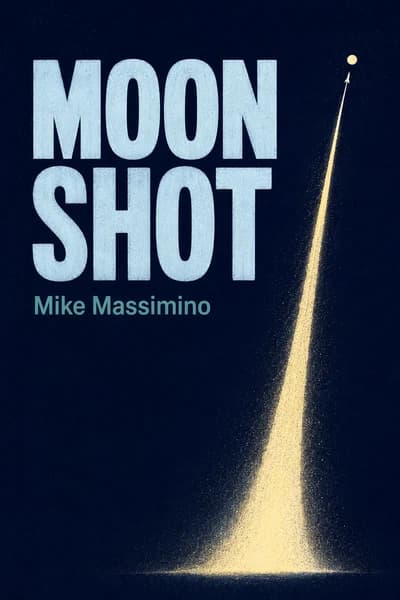
Reaching for the Stars: A Gangly Kid's Journey to Space and Beyond
When Neil Armstrong took that historic step on the lunar surface in 1969, millions of children dreamed of becoming astronauts. Few actually made it. Mike Massimino wasn't your typical astronaut material-a working-class kid from Long Island with bad eyesight and a fear of heights. Yet through determination and grit, he achieved what seemed impossible. His journey resonated with audiences worldwide through his appearances on The Big Bang Theory (where he played himself in seven episodes), making him one of NASA's most recognizable former astronauts. Named one of the "Most Influential People in Space" by Time Magazine, Massimino's story isn't just about space exploration-it's about overcoming seemingly insurmountable odds to achieve your personal "moonshot." As he discovered, the path to extraordinary achievement isn't about being exceptional from the start; it's about persevering through countless setbacks and learning that "one in a million is not zero."
Capítulo 2
One in a Million Is Not Zero
I was watching the Oscars from my tiny Cambridge apartment on March 30, 1992, when something unexpected happened. The broadcast cut to a live feed from the space shuttle in orbit. Seeing those astronauts floating effortlessly above Earth crystallized my determination: "I have to be one of those people."
My astronaut dream had lived and died countless times since age six when Neil Armstrong walked on the moon. I'd discovered my fear of heights at eight, worked unfulfilling jobs at IBM, and been jolted back to my passion after the Challenger disaster. That night, I thought becoming an astronaut was "a one-in-a-million shot," but then did the math: "One in a million is not zero. It's just a really small number: 0.000001." The only way to make it truly impossible was to give up.
My path forward wasn't clear. When I applied to NASA, my poor eyesight earned me a big red "DISQUALIFIED" stamp on my application. Ten years of work toward my goal seemed wasted. But when I spoke with Duane Ross from the Astronaut Selection Office, he revealed they had been seriously considering me before the medical results came back. Some astronauts on the selection committee even encouraged me to try again if I could fix my eye issues.
Rather than accept defeat, I approached my vision problem like an engineering challenge. I found Dr. Desiree Hopping, who specialized in vision training. Though she typically worked with children, she agreed to help me. For seven months, I dedicated myself to eye exercises-staring at marbles on strings, focusing on eye charts at different distances, and wearing undercorrected glasses to strengthen my eye muscles.
When NASA announced their next astronaut search earlier than expected, I submitted my application with documentation of my vision improvement. They allowed me to retake the eye exam, which I passed, putting me back in contention. Despite having to unexpectedly repeat the test during selection week, I passed again. Six months later, I was accepted into the NASA Astronaut Class of 1996.
The lesson became clear: successful people aren't those who never fail-they're those who never let failure stop them. One in a million odds aren't zero, and the only way to guarantee failure is to stop trying.
Capítulo 3
No One Leaves the Pool Until Everyone Passes
My excitement at receiving NASA's welcome packet quickly turned to dread when I read that I'd need to pass a swim test-a skill I'd never mastered despite growing up on Long Island. The requirements were daunting: demonstrating multiple survival strokes, drownproofing, lifesaving techniques, and treading water while wearing a full flight suit, helmet, and boots.
During our first week at NASA, class sponsor Jeff Ashby announced that our first major event would be the swim test. Then he said something that revealed NASA's true culture: "We don't want to leave the pool until everyone passes the test." This wasn't about individual achievement; it was about succeeding as a team.
The strong swimmers, including Navy diver Heidi Piper, spent their weekend helping those of us who struggled. On test day, despite my nervousness, I found myself supported by 43 teammates. The camaraderie was palpable, with classmates like "Scorch" Hobaugh building esprit de corps and Mike "Spanky" Fincke maintaining humor despite being an even worse swimmer than me.
During the brutal final portion-treading water in full flight gear-I noticed Fincke holding his breath underwater while keeping only his hands above water to technically pass the test. His creativity and determination exemplified our collective resolve. Every single astronaut candidate passed. We won as a team.
Years later, during the STS-125 Hubble repair mission, I witnessed how this principle extended beyond training. When John Grunsfeld accidentally damaged a low-gain antenna during our final spacewalk, rather than blame John, the entire crew owned the mistake collectively. Our commander reported it as a shared responsibility, and the Astronaut Office chief dismissed it as inconsequential compared to our overall success.
What I miss most about being an astronaut isn't the experience of space itself, but being part of NASA's exceptional team. NASA seeks people who prioritize mission success over personal ambition, who support teammates through struggles, and who stand together during failures. True teamwork means being there for each other in good times and bad.
The complex challenges we face today can only be overcome together. Stop comparing yourself to mythical "lone geniuses," find partners whose strengths complement your weaknesses, freely share your own talents, and always give credit to the team.
Capítulo 4
Speak Up When Something Doesn't Look Right
NASA's approach to training civilian astronauts who lack military flying experience is fascinating. Rather than choosing between training pilots to be scientists or scientists to be pilots, NASA does both. Civilian Astronaut Candidates must log monthly flight hours in T-38 jets to learn operational skills in real-life situations with actual consequences, unlike simulators.
This training teaches crucial skills beyond flying-particularly the ability to speak up when something doesn't look right. In aviation and spaceflight, hesitating to voice concerns can be fatal. NASA deliberately creates a culture where everyone, regardless of rank or experience, is expected to speak up about potential problems.
This principle was demonstrated powerfully when rookie astronaut Drew Feustel revolutionized a risky Hubble telescope repair procedure. The traditional method for replacing Rate Sensor Units (RSUs) required me to work inside a cramped navigation area, risking damage to delicate star trackers. Drew, despite being new, spoke up and proposed a "Pick Stick" tool inspired by his children's toy that would allow the work to be done safely from outside the telescope.
Though initially met with skepticism, the team listened to Drew's idea, built a prototype, and successfully implemented this superior approach. His willingness to speak up, and the team's openness to hearing a rookie's perspective, made the mission safer and more effective.
The lessons are clear: vocalize concerns immediately when something feels wrong; acknowledge mistakes openly rather than hiding them; recognize that rookies bring valuable fresh perspectives; and for leaders, actively welcome and incentivize new ideas. While not all problems stem from poor communication, our inability to address them usually does-so always speak up and listen to those who do.
Capítulo 5
Trust Your Training, Trust Your Gear, Trust Your Team
On launch day for STS-109, I felt terrified seeing Columbia surrounded by vapor clouds and making otherworldly noises. Despite six years of astronaut training, self-doubt plagued me. Mentors like Mike Weiss and Steve Smith reminded me that NASA wouldn't send unprepared astronauts to space. I realized spaceflight was an "open-book test"-I didn't need to memorize everything but could ask for help when needed.
This experience taught me the "Three Trusts" philosophy that helped me overcome fear: trust your training, trust your gear, and trust your team.
Trusting my training came from recognizing that NASA's preparation was comprehensive. Trusting the shuttle itself-one of the most complex machines ever built-came through familiarity with the spacecraft during visits to Kennedy Space Center. Watching a technician meticulously apply epoxy with a thin paintbrush to a solid rocket motor joint showed me the incredible care that went into each component.
But ultimately, trusting your training and gear depends entirely on trusting your team. The people who trained you wouldn't recommend you for important tasks if they lacked confidence in you. Trust is earned through personal relationships-getting to know people and letting them know you. At NASA, everyone from Vernon keeping our NBL locker room floors dry to the Range Safety Team was critical to mission success.
Even with trust, tragedy can strike. The Columbia disaster in 2003 tested my faith in the program. After losing seven colleagues when the shuttle disintegrated during reentry, we discovered a piece of foam insulation had broken off during launch and damaged the wing's thermal protection system. Rather than cover up mistakes, NASA embraced transparency, rebuilt trust, and implemented crucial safety improvements.
As Don Bourque wisely advised me: "It might be somebody else's job to make sure things work, but it's your rear end on that rocket ship." Trust doesn't mean blind acceptance-follow up and communicate. In high-risk situations, teammates should welcome questions without interpreting them as doubt.
Capítulo 6
You Can Always Make It Worse
When facing challenges, rushing and panicking often makes situations worse. This universal truth became crystal clear during my early spacewalk training at NASA's Neutral Buoyancy Laboratory. As a rookie astronaut eager to prove myself among seasoned veterans, I encountered a minor issue with my safety equipment. Instead of calmly addressing the situation, I frantically tried to untangle myself, resulting in becoming hopelessly entangled in my safety tether - transforming a simple problem into a complex predicament that required multiple divers to resolve.
This humbling experience taught me what we came to call "Hoot's Law" - named after astronaut Hoot Gibson: no matter how bad things seem, you can always make them worse through hasty actions. This principle directly influenced NASA's implementation of the Two-Person Rule, which requires a second set of eyes on all critical operations. The mantra "Go slow to go fast" became fundamental to our training. I found inspiration in my family friend Joe LoPiccolo, a master mechanic who could fix anything by working methodically. Whether dealing with complex engines or simple household repairs, Joe's patient, systematic approach consistently produced better results than rushed solutions.
This methodical philosophy proved invaluable during mission STS-109 when we faced a potentially mission-threatening situation. Just hours before a crucial spacewalk to replace the Hubble Space Telescope's power control unit, John Grunsfeld's spacesuit experienced a critical malfunction in its primary life support system. The pressure was immense - this repair was essential to Hubble's survival, and we had limited time to complete it. Rather than succumb to panic, our crew implemented a systematic troubleshooting approach. We carefully extracted John from the compromised suit, methodically diagnosed the issue, and then reconfigured a new suit using compatible parts from different backup units. Each step was verified by multiple crew members, ensuring no detail was overlooked.
By maintaining our composure and following our methodical approach, we not only enabled the spacewalk to proceed safely but actually completed the complex repair ahead of schedule. This success reinforced a crucial lesson: when facing any crisis, the natural instinct to rush must be actively resisted. Whether you're 350 miles above Earth working on a $10 billion telescope or fixing a leaky faucet in your bathroom, the principles remain the same. Take a breath, slow down, and remember that hasty reactions usually compound problems rather than solve them.
The Two-Person Rule has since become a personal philosophy I apply to all challenging situations. Having someone check your work isn't a sign of weakness or incompetence - it's a recognition that human error is inevitable and that prevention is always better than crisis management. This approach has repeatedly proven its worth, from complex space operations to everyday tasks, demonstrating that methodical problem-solving is the most reliable path to success.
Capítulo 7
The First Rule of Leadership
In my first year at NASA, our astronaut class attended talks from space program legends. While Neil Armstrong and Gene Kranz were impressive, Alan Bean's presentation changed my life. Rather than boasting about being the fourth man on the moon, Bean humbly shared his career mistakes to help us avoid them.
The most valuable lesson Bean shared came from his Apollo 12 commander, Pete Conrad, who taught him the First Rule of Leadership: "find a way to admire and care about every member of your team." When Bean complained about an engineer with "wacky ideas," Conrad challenged him to see value in diverse thinking.
Bean initially resisted but eventually noticed how respected leaders like Jim McDivitt knew everyone's names and treated everyone with equal respect. This lesson transformed Bean into one of the Astronaut Office's most admired leaders.
This insight led me to develop my own leadership philosophy: the "Bank of Good Thoughts." When working with challenging team members like "Sam" on the Space Telescope Imaging Spectrograph repair, I made special efforts to know them personally, discovering Sam's brilliant engineering mind and dedication to the mission.
By banking positive thoughts about teammates, I could address problems constructively rather than negatively. This approach prevents negative assumptions from becoming self-fulfilling prophecies. When facing difficulties with colleagues, I deliberately replace negative thoughts with positive ones, remembering their strengths and contributions.
In my post-NASA career, I apply these leadership principles everywhere. During speaking engagements, I treat everyone from event planners to technicians as valued teammates. At Columbia University, I connect with students by learning their interests and goals from the start. Alan Bean's wisdom profoundly changed my life-a gift I now share with future generations.
Capítulo 8
Houston, We Have a Problem
After my first spaceflight, I became a CAPCOM-the astronaut in mission control who communicates directly with crews in space. Beyond relaying technical information, the CAPCOM provides crucial emotional support to astronauts experiencing the profound isolation of space.
Following the Columbia accident, my CAPCOM role took on heightened importance as I supported astronauts Don Pettit, Ken Bowersox, and cosmonaut Nikolai Budarin stranded on the International Space Station. I checked in frequently, keeping them updated on plans to bring them home via Soyuz spacecraft. Going beyond typical duties, I visited Don's family and even helped the crew with routine maintenance tasks to boost morale during their isolation.
This experience taught me the importance of being someone's lifeline when they need it most. During my Hubble repair mission, when I broke a handrail and jeopardized our mission, having my friend Dan Burbank as CAPCOM made all the difference. Though frantic problem-solving was happening behind the scenes, Dan never let me feel his panic or disappointment. He was my lifeline when I needed him most.
We need to identify our own "Houston"-people we can rely on when we feel adrift-and be that support for others. When someone reaches out with a problem, we should prioritize them, reassure them they're not alone, and stay with them until the issue is resolved. Life is hard, but having a lifeline makes it easier.
Capítulo 9
The Thirty-Second Rule
As a child watching Neil Armstrong walk on the moon, I idolized astronauts as flawless heroes. This hero worship gave me enthusiasm but an unrealistic view of these human individuals. My career has been marked by failures-applying to the wrong department at MIT, failing my PhD qualifying exam, and flunking my pilot's license test.
When mistakes happen, most people either deny them or dwell excessively. I've always been a dweller. During spacewalk training, I crashed my helmet into a trunnion pin, cracking my visor. Though John Grunsfeld told me to "let it pass," I struggled to move beyond my embarrassment.
The Thirty-Second Rule, which I learned from Megan McArthur (who learned it from Rick "CJ" Sturckow), changed everything: When you make a mistake, give yourself thirty seconds of regret. Feel miserable. Berate yourself. Then move on. Regret is natural, but limit it to thirty seconds. After that, let it go and re-engage with the mission. Your team needs you fully present.
This rule helped me tremendously when I made my biggest mistake-breaking the Hubble Space Telescope by stripping a screw on a handrail during a spacewalk. After reporting my error to mission control, I felt overwhelming shame and guilt. But I paused, looked at Earth, set a mental timer for thirty seconds, and let my self-criticism flow. Then I moved on, helped develop a solution, and we successfully completed the mission.
The Thirty-Second Rule taught me that no mistake is insurmountable, but a bad response to a mistake can be fatal. Give yourself permission to feel the emotions, then refocus on moving forward.
Capítulo 10
Be Amazed by This Incredible Universe
Looking at Hubble's early-release images like the "Global Star Cluster Omega Centauri" panorama reminds me of the big picture-something crucial when facing challenges. The cluster contains approximately 10 million stars, spanning 150 light-years across, offering a humbling perspective on our place in the cosmos. While I loved being an astronaut, including the intensive training at NASA's Johnson Space Center and being part of something larger than myself, the job had its downsides: late nights studying complex systems, missed holidays with family, endless safety procedures, and unglamorous behind-the-scenes work like maintaining equipment and reviewing emergency protocols.
As John Young taught me during our conversations at Kennedy Space Center (correcting that he didn't "walk" but "worked" on the moon), even extraordinary jobs have mundane aspects. He spent countless hours in simulators and technical meetings before his historic Apollo 16 mission. The groundbreaking science and understanding Hubble provided - from revealing the age of the universe to discovering dark energy - made all the hard work, sacrifice and risk worthwhile. I was willing to risk my life for space exploration because I felt so strongly about advancing human knowledge and inspiring future generations. The statistics were sobering - with a 1-in-50 chance of catastrophic failure - but the mission's importance outweighed the personal risk.
As moonwalker Alan Bean, the fourth person to walk on the lunar surface, wisely said, "The secret to life is to discover what you love and then figure out a way to earn a living at it." Bean himself became an accomplished artist after his NASA career, painting scenes from his lunar experiences with actual moon dust mixed into his paints.
When you're feeling frustrated about your work, remember to: Look around and appreciate this wonderful planet - from its diverse ecosystems to the intricate web of life it supports; embrace challenging situations as opportunities for growth, just as every space mission teaches us something new; and visualize the vastness of the universe - spanning 93 billion light-years - to remember the big picture of your existence and contributions. Contemplating the universe might make you feel small, but it also reveals what a miracle it is to be here-something too precious to waste. Consider that the atoms in your body were forged in ancient stars billions of years ago, making you literally a child of the cosmos.
Capítulo 11
Know When to Pivot and Embrace Change
As NASA transitioned from the Space Shuttle to commercial spaceflight, many astronauts including myself were skeptical of the new approach. The shuttle was manually operated, but commercial vehicles relied heavily on automation and artificial intelligence. However, we gradually gained confidence in these innovations as we saw their advantages. SpaceX demonstrated that computers could handle emergency scenarios more safely than humans and significantly reduced costs by reusing launch vehicles.
In April 2010, my boss and friend Peggy Whitson offered me a six-month ISS expedition assignment. Despite this being an incredible opportunity to live in space, I realized it would mean extensive time away from my family when my children needed me. After declining the assignment, I had the sobering realization that my days of spaceflight were over. With the Shuttle Program ending and only long-duration Russian Soyuz flights available, I needed to find a new career path.
Change is inevitable but always catches us by surprise. Fortunately, my next chapter had been with me all along-sharing the story of space exploration. I'd always been passionate about how space inspires people of all ages. This passion led me to become the first person to tweet from space in 2009, starting my journey of communicating the space experience to the public.
Though NASA emphasizes team over individual recognition, I discovered I had a talent for storytelling that many of my technically-minded colleagues didn't share. This led to documentary appearances, media interviews, and TV spots-including my recurring role on The Big Bang Theory, where I gave Howard Wolowitz the nickname "Froot Loops" after his mother interrupted a video call.
With my NASA career winding down, I began exploring academic opportunities. After a year at Rice University's Space Institute, Columbia University offered me a position teaching "Introduction to Human Spaceflight." This felt like coming home-both to my alma mater and to New York, the media capital where I could continue sharing space stories.
My NASA journey ended officially on July 28, 2014, almost eighteen years after I was sworn in as an astronaut. After turning in my computer, phone, and NASA Astronaut ID badge (receiving a "Former Astronaut" badge in return), I left with mixed emotions. At first, I seriously doubted my decision, wondering how I could give up my dream job. But I allowed myself only thirty seconds of regret before pressing on.
When facing change, remember: nothing is permanent; view change as an opportunity, not a loss; think of your new phase as a spacewalk into the unknown; and remember that human curiosity drives us forward. We don't control what happens in life, but we do control our perspective and reaction. Life will throw curveballs, and the world will change. Choose to embrace it, and you'll be much happier.