Capítulo 1
The Power of Persistence: Dreaming Big Through Small Steps
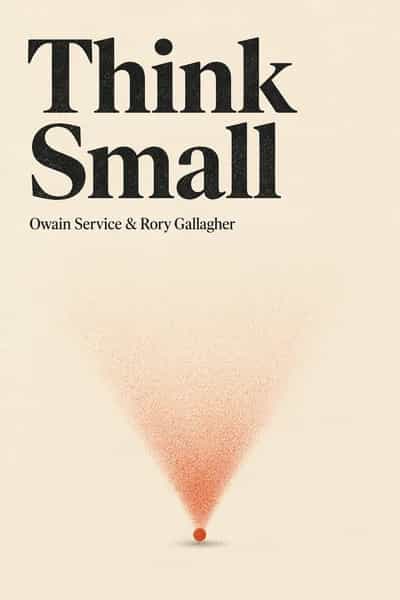
Have you ever wondered why some people achieve remarkable success while others with similar talents and opportunities fall short? The secret often isn't raw talent or lucky breaks-it's the power of consistent, small actions performed faithfully over time. Jeff Manion's "Dream Big, Think Small" challenges our culture's obsession with overnight success and instant gratification by revealing a counterintuitive truth: extraordinary lives are built through ordinary faithfulness.
This book has become a quiet phenomenon among leaders seeking sustainable success. Tim Cook reportedly keeps a copy on his desk at Apple, while Brene Brown has cited it as influencing her approach to meaningful work. The book's message resonates particularly in our social media age, where we're bombarded with highlight reels of instant success that mask the years of consistent effort behind them. As the Wright brothers discovered after their historic flight-an achievement that followed countless failed experiments so routine their own nephew barely noticed-true breakthroughs emerge from persistent dedication to small, daily disciplines.
Capítulo 2
The Myth of Overnight Success
We live in a culture obsessed with instant results. From viral videos to overnight sensations, we're conditioned to believe that success happens in dramatic, life-changing moments. But this narrative is fundamentally flawed. After thirty-plus years serving at Ada Bible Church, I've learned that even apparent breakthroughs were preceded by years of faithful persistence.
Consider the Wright brothers' historic first flight. While history records December 17, 1903, as the moment of triumph, this "sudden" achievement followed years of tedious experimentation. Their work was so commonplace that their own nephew barely noticed their daily efforts. The spectacular emerged from steady, unremarkable faithfulness.
Pastor Craig Groeschel captures this truth perfectly: "We overestimate what we can do in the short run but underestimate what we can do in a lifetime of faithfulness." Whether leading families, companies, or serving in various roles, extraordinary results come from steady devotion to small things-apologizing quickly, serving others, saving consistently, giving generously.
The path to significance isn't found in grand gestures but in the cumulative effect of consistent, positive actions. Apologizing quickly when you're wrong, serving generously, saving faithfully, giving regularly-these seemingly small behaviors, performed consistently over decades, create extraordinary lives and legacies. This book challenges our quick-fix mentality and invites us to embrace the power of steady faithfulness, building an extraordinary life one unremarkable day at a time.
Capítulo 3
The Quiet Virtue of Consistency
While we celebrate spectacular acts of heroism-like the three Americans who thwarted a terrorist attack on a Paris-bound train-such dramatic opportunities are exceedingly rare. These men risked their lives and received worldwide recognition, but such moments seldom present themselves in everyday life.
Instead, the most profound impact often comes through what Francois Fenelon called "faithfulness in the little things" and "the slow, plodding path rather than a passing fit of enthusiasm." This quiet virtue of consistency rarely makes headlines but creates lasting impact through steady movement in a singular direction over time.
Consider the humble ant. In ancient Israel, a wise father might show his son an anthill, pointing out how these tiny creatures with "little strength" prepare diligently for winter by gathering seeds in summer. This lesson from Proverbs 30:25 illustrates the accumulated effect of steady, repeated movement in the right direction-what I call "Ant Power."
This power hinges on repetition-engaging in the same activity over and over, with stunning results over time. A sixth-grader saving for a drum set through persistent small deposits, a marriage improving not from a weekend conference but from consistent application of its principles afterward, someone reading the Bible daily for decades. The grass isn't greener on the other side-it's greener where you take time to water it.
Faithfulness manifests in the father who reads to his children night after night, the couple who commits to years of youth ministry, and the believer who maintains a daily practice of scripture and prayer. These unremarkable but repeated acts of goodness shape lives profoundly. As Paul wrote, "Now it is required that those who have been given a trust must prove faithful." Greatness is accessible through taking a thousand unremarkable steps.
Remember, while building a life requires ant-like persistence, destroying it can happen quickly. A sexual indiscretion, drunk driving arrest, or academic dishonesty can undo years of reputation-building in moments. What takes years of Ant Power to build can be destroyed in an instant.
Capítulo 4
The Legacy of Passionate Longevity
Fred Rogers, my hero, left an extraordinary legacy through thirty-three years of consistent, dependable presence on television. His daily ritual of changing from suit coat to sweater and dress shoes to sneakers modeled stability for children who often lacked it in their own lives. As an ordained Presbyterian minister, he chose television as his ministry field, creating a safe space for children to process difficult emotions.
For thirty-three years, he began each episode with the same ritual: entering with a smile, singing "It's a Beautiful Day in the Neighborhood," changing into his zip-up sweater and sneakers, and inviting viewers to be his neighbor. This repetition wasn't tedious but purposeful-modeling consistency for children from both structured homes and chaotic ones. His dependable presence provided stability, showing that life works well with certain rhythms and patterns practiced regularly.
Rogers' work attracted renowned musicians like Yo-Yo Ma, earned four Daytime Emmys, a Lifetime Achievement Award, induction into the Television Hall of Fame, and the Presidential Medal of Freedom. These accolades came not from sophisticated production but from passionate commitment over decades. With simple sock puppets and self-composed music, Rogers achieved greatness through redundant faithfulness and creative energy applied to routine tasks.
The key lesson from Fred Rogers is passionate longevity-bringing our best selves to people consistently over time. Building trust, refining skills, and establishing a reputation all require time. Our impact doesn't come from lunging between stunning achievements but from the collective sum of repeated moments. We must find what we're deeply committed to rather than dabbling, anchoring big dreams in daily discipline and trusting God to work in extraordinary ways through our ordinary faithfulness.
At each program's end, Mister Rogers would change back into his street clothes and sing, "And I'll be back, when the day is new..." Those four words-"And I'll be back"-defined his thirty-three years of dependable presence, day after day, week after week, decade after decade. This is the essence of passionate longevity.
Capítulo 5
Building a Legacy Through Faithful Steps
Business analyst Jim Collins notes that "the signature of mediocrity is chronic inconsistency." Many of us seek the Next Big Thing rather than embracing the power of consistently showing up. After thirty years serving Ada Bible Church, I take new staff members on a "mobile history lesson" to our former locations, teaching them that dreaming big is worthless without the faithful daily grind.
Our first stop is the unassuming home where Joe and Nancy Smith started Ada Bible Church four decades ago with services in their living room. Despite struggling through various temporary locations and seeing enthusiastic attendees come and go, they persevered for seven years, leaving behind a solid core of twenty faithful people when they resigned.
The tour continues to a yellow house where I first preached as a 21-year-old college student. This modest building held seventy folding chairs with a basement children's classroom. For five years I preached here, enduring three disappointing delays in relocating before finally moving services to a nearby high school as we attempted to build a new facility with volunteer labor.
Our next stop is a light-blue, boxy structure that housed the church from 1990 to 1998. After fourteen years of dedicated labor (seven years from the founders and seven from me), we had reached just 115 people on our opening weekend in this 200-seat auditorium. However, we soon experienced sudden growth to multiple services and hundreds of attendees, creating growing pains as we lost our small church identity.
The tour concludes at my home where my wife Chris has prepared lunch in our backyard. Under the shade of our birch tree, we candidly discuss disappointment, discouragement, and perseverance with the new staff members. This conversation isn't merely about history but about faithfulness-the challenge of showing up repeatedly when the ministry was small, struggling, and largely invisible to the community.
A legacy of faithfulness is what I desire for my coworkers, congregation, and readers. Building an impactful life requires faithfulness over time. Though you may experience sudden breakthroughs, these are usually surrounded by lengthy periods of steady, faithful plodding. People who change their world are those who live with chronic consistency-showing up time and again in the same way to the same people. Truly great lives are born from steady, persistent steps in a singular, holy direction.
Capítulo 6
The Twenty-Mile March to Success
In 1911, two explorer teams raced to reach the South Pole first-Britain's Robert Scott and Norway's Roald Amundsen. Their contrasting approaches reveal a powerful lesson about consistency. While Scott pushed his team to extremes when conditions were good but hunkered down in bad weather, Amundsen maintained a disciplined "twenty-mile march" regardless of conditions-never exceeding twenty miles even on good days, but always pressing forward even in blizzards. Amundsen not only reached the Pole first but returned safely with his entire team, while Scott's exhausted team perished just short of a supply depot on their return journey.
Our impact comes not from random activity but persistent movement. When viewed in isolation, no single activity looks impressive-reading to your child, volunteering at church, saving money, taking a walk, beginning with prayer. But when these become a disciplined routine-a twenty-mile march-the benefits accumulate. A legacy of faithfulness is born from small, repeated acts.
My wife Chris and I committed to tithing early in our marriage, giving 10% of our income despite financial struggles. Starting with modest $40 checks that stretched our faith, we persisted week after week, year after year. As our church grew and our salary increased, our giving grew too. By our early forties, we'd given away our first $100,000. The remarkable thing wasn't the size of any single gift but the consistency over time.
What we experienced with financial giving holds true with exercise, serving, Bible reading, and parenting. Legacies aren't built in a day but grow over time-step by step, mile by mile, day by day. Dream big, think small. Success in large things requires dependable commitment to small things.
Capítulo 7
Refilling Your Tank for the Long Journey
While monitoring a car's fuel gauge is straightforward-we watch the needle approach empty and know when to refill-gauging our spiritual and emotional reserves is far more complex. We often "run on empty" without realizing it, causing our mood to sour, creativity to evaporate, and decision-making to suffer.
At a Huey Lewis concert, before performing his decades-old hit "The Power of Love," Lewis joked about having to sing it daily "for the rest of my stinking life"-yet still performed it with energy and passion. This exemplifies people who bring enthusiasm to their work long after initial excitement has faded-like veteran teachers still pouring creativity into lessons, doctors who thoughtfully engage patients after thousands of appointments, or gray-haired carpenters who still care about quality craftsmanship.
In businesses, schools, churches, and families, we often quit long before reaching the finish line. You might still be married but have emotionally abandoned your spouse years ago. You might have stopped actively parenting before your child left home, giving up during the challenges of adolescence. Perhaps you recall a disappointing conversation with your boss that crushed your enthusiasm, leaving you physically present but emotionally checked out.
To sustain passionate faithfulness over decades, we need regular refilling. Friday is our Sabbath-a day we devote to getting nothing done. I preach three times on weekends, making Sunday anything but restful, so we chose Friday as our day of intentional rest. It begins with an unhurried breakfast, followed by activities like walking historic neighborhoods or hiking wooded trails.
This weekly rhythm provides freedom from the daily grind and gives us a regular finish line rather than waiting months for vacation. The practice follows God's instruction to the Israelites, who were commanded to rest one day weekly after generations of seven-day workweeks as slaves in Egypt. Sabbath isn't my reward for completing all tasks-it's a break in the middle of my work. When Thursday evening arrives, I whisper "Pencils up," acknowledging I'm stepping away from unfinished tasks. This reminds me I'm more than what I produce-our Creator designed us for both productivity and rest in life-giving balance.
Capítulo 8
Guarding Your Heart for Lasting Impact
Apple orchards flourish in our region, providing delicious cider from freshly picked fruit each autumn. Jesus used this imagery when he said, "Each tree is recognized by its own fruit," alluding to the heart's condition. A good heart produces blessing, while a nasty heart produces ruin. His counsel is clear: if you desire to lead a life that blesses and enriches others, you need to pay attention to your heart's condition.
I journal faithfully-not daily, but several times weekly-not because I enjoy it, but because I pray badly without one. Unlike heroes of intercessory prayer who can focus for extended periods, I struggle with concentration when praying. Without pen and paper, my prayers lose focus and my mind wanders from one thought to another.
When I journal, I quiet myself to express thanks, write about nature's beauty, scribble urgent prayers, and habitually add lines recalling who I am. It's how I talk to God and record what I hear from Him. I've found three helpful practices:
First is "Filling"-sitting quietly and asking, "How's my heart?" Some days I find peace; other days I detect anxiety or resentment. I want to address these dark threads before inflicting myself on others. As Solomon wrote, "Above all else, guard your heart, for everything you do flows from it." We all wear our hearts on our lips-if I blaze into my day with resentful words, I don't just have a "word problem"; I have a "heart problem."
Second is "Gratitude." I use my journal to express gratitude because I don't want to rush through life oblivious to the gifts bombarding me. Each day I jot down three specific things I'm thankful for-not general categories like "shelter, clothing, and food," but precise gratitude for my Chaco sandals or the macaroni and cheese we enjoyed last night. Thankfulness and anxiety are incompatible roommates.
Third is "Identity." I sign off almost every entry with "This is Jeff, your beloved son." Not to remind God who I am, but to remind myself-an adopted child of the Creator. Paul wrote to the Ephesians, "In love he predestined us for adoption to sonship through Jesus Christ." Before telling believers to do anything, Paul reminded them they were God's adopted kids-wanted, adored, treasured.
I journal not to fill pages with words, but to get my heart right and keep it right. A foundation isn't built in a day but formed by one scribbled prayer at a time, growing strong enough to support a life well lived.
Capítulo 9
The Strength of Life-Giving Relationships
While traveling in Zambia, I was reminded of this famous African proverb: "If you want to go fast, travel alone. If you want to go far, travel together." This well-known couplet suggests that a lengthy journey is best shared with others. Faithfulness is an endurance race and is most successful when traveled in the company of those who encourage our steady forward movement.
I sit in an overstuffed chair looking out over Lake Michigan. Later this morning, we will gather around the dining room table to study Luke's gospel. But in these early hours, the lake house is quiet. We rise when we feel like it, make coffee, sit in various parts of the house, read, write, and reflect.
The four of us meet here twice a year-spring and fall. We take a breather from the churches we lead and gather at this cottage to repair and replenish our lives. We've met like this for more than twenty years. When we initiated our twice-yearly retreats, my children were preschoolers. Now I am a grandfather.
These guys know me. They see both my hidden potential and the blind spots that could wreck me. They know my capabilities and my liabilities. They knew me when my church was small and struggling. They love me but are utterly unimpressed with any achievements. This is the kind of knowledge that comes only with time.
Would I still be in ministry without these friendships? Probably. Would I be serving out of a healthy, joy-filled, authentic space? Possibly not. If you are fully engaged, life is draining. You constantly pour yourself into people. This persistent pouring can leave you spent and depleted. You need refilling.
In Ecclesiastes, King Solomon warned of the danger of traveling alone: "Two are better than one... If either of them falls down, one can help the other up." Solomon describes a world that is neither safe nor sure. We fall, we get cold, we come under attack. The wise king's advice? "Don't travel alone." The friendships we build when nothing is going wrong sustain us when everything is going wrong.
Capítulo 10
Avoiding the Fall: Protecting Your Legacy
Like runners in Michigan's River Bank Run who endure brutal winter training to complete a 15.5-mile race, faithful living requires perseverance through difficult conditions. The finisher's medal becomes a treasured possession-not because it signifies winning, but because it represents completing the course despite challenges.
On a warm October hike with five young pastors, I paused at an old barn foundation to discuss what lies beneath the surface of our lives. This hidden foundation-our private world of holy disciplines or hidden sins-ultimately determines whether our public lives thrive or collapse. The growing casualty list of public figures exposed for secret sins demonstrates that trouble brewing beneath the surface eventually threatens the entire structure.
When implosions occur, people rarely remember the positive impact someone had-only their devastating fall. As Oswald Chambers wrote, "We are only what we are in the dark; all the rest is reputation." The stakes are immeasurably high, as private habits affect not just individuals but entire congregations and families.
I first learned about moral failure when our college dean gathered six of us to share that a beloved pastor from our community had fallen. His affair ended his marriage and ministry, devastating those who loved him. This experience taught me that none of us are immune to moral failure.
The anatomy of an affair often begins innocently: two colleagues develop mutual admiration through workplace collaboration. She feels genuinely heard and valued in ways missing from her marriage; he finds affirmation absent at home. Neither recognizes the emotional entanglement forming as they plan business travel together. Affirmation becomes intoxicating, impairing judgment. The heart's capacity for self-deception is massive.
Though no formula guarantees an affair-proof life, several practices dramatically increase your odds of avoiding moral wreckage. First, be aware of your capacity for self-deception-acknowledge "I am not immune." Second, build healthy friendships, as prolonged loneliness increases vulnerability. Third, don't run on empty; exhaustion can lead to a dangerous indifference about who gets hurt by your choices. Fourth, establish immediate distance if someone other than your spouse is feeding you emotionally. Finally, never verbalize attraction to someone inappropriate.
Becoming grandparents completely changed our lives, as Preston (and later Cooper and Hazel) captured our hearts in ways I hadn't anticipated. This new chapter has given me even more reason to finish well-what kind of sixty-year-old will my grandchildren encounter? Will I be generous and kind or bitter and impatient? I'm not fighting only for myself; I'm fighting for those I love.
Capítulo 11
The True Path to Extraordinary Impact
The directions on my instant oatmeal packet promise immediate results with just three simple steps. While I appreciate convenience, I fear we've created a culture of impatience where we expect instant everything-not just oatmeal, but instant results, instant impact, and holiness grown in a weekend. Yet a life that truly shapes and deeply blesses others takes time.
At a conference, a compelling speaker shared how she and her husband abandoned their comfortable American Dream life, selling everything to move to Central America where they opened a youth center for disadvantaged teenagers. Eighteen years later, their program has produced doctors, nurses, teachers, pastors, and a Bible college president. While this testimony is inspiring, I need to point out something crucial: those teenagers' lives weren't transformed simply because this couple sold everything and moved. They were transformed because EACH AND EVERY DAY these faithful people awakened, caught a bus, and opened their youth center, pouring themselves into the slow, painstaking work of discipleship.
We tend to emphasize the dramatic "Big Move" while giving brief mention to years of devoted ministry. Though possibly set in motion by a jarring event, your greatest impact will still need to rest upon steady, disciplined servanthood. It's what I call the Tabitha factor.
When Tabitha died, an entire Christian community mourned. The grief-stricken believers summoned Peter, who arrived to find widows weeping and showing him the robes and clothing Tabitha had made for them. In biblical times, widows faced desperate poverty without husbands, adult sons, or brothers to care for them. Tabitha stepped into their distress, devoting her days to reducing their suffering. The garments she created provided these destitute women with warmth against the cold Mediterranean winds, dignity instead of threadbare shame, and hope that someone was looking out for them.
While many of us desire to live great lives, we often make the mistake of searching for something BIG to do. But greatness rarely comes from doing great things-it comes from doing good things repetitively. Tabitha achieved greatness through a lengthy corridor of goodness, embracing what I call "holy redundancy." Unlike random acts of kindness, her devotion to the widows of Joppa represented a lifestyle of goodness. Day after day, she sat and sewed, performing seemingly mundane tasks that collectively created an extraordinary legacy.
Olympic champion Apolo Ohno appeared in a commercial where he recalled his father's wisdom: "Champions are made when no one is watching." This refers to the countless hours of unobserved, unapplauded training that precedes public success. While the payoff occurs in packed stadiums, the foundation is forged through thousands of solitary practice sessions. The same principle applies to most meaningful pursuits-from musical performance to effective communication. Public effectiveness is built through private discipline.
Capítulo 12
Goodness Grows Slowly: Embracing the Journey
Throughout this book I've challenged you to Think Small-to devote yourself to repeated positive activity that grows steadily over time. The challenge with this movement is that you rarely detect forward progress day to day. This differs from tragedy, which crashes into our lives with deafening force, upending us in moments. Coming to grips with the slow speed at which goodness travels is critical for maintaining the long, persistent journey of faithfulness.
One May evening, my friend Dale and I strolled through Santo Domingo's Colonial district before visiting a CURE International children's hospital. As we walked, we discussed a tragedy from a month earlier when a gunman killed three American doctors at the CURE hospital in Kabul. Dale observed, "Evil sticks, but goodness has a really short shelf life." When evil occurs, it has staying power, needing no reaffirmation. But to leave a lasting imprint, goodness must be reaffirmed continually over a lengthy period.
Consider how this plays out in a small community. A town mourns an accident claiming three teenagers' lives-tragedy strikes with screeching tires and twisting metal, news sweeping through the high school like a tsunami. Meanwhile, in the same community, a devoted coach builds a middle school girls' cross-country program over a dozen seasons, fostering diligence, teamwork, and confidence. Twenty years later, a woman from that community might cite both "The Accident" and "The Coach" as formative influences, but they arrived at different speeds and in radically different ways. Tragedy strikes. Goodness grows slowly.
The snail's pace at which kindness travels requires extreme devotion to the journey. Goodness demands staying power. The question is whether we will summon the requisite endurance for a slow, faithful, consistent outpouring of love. This is why the apostle Paul urged an early community of Jesus's followers: "Let us not become weary in doing good, for at the proper time we will reap a harvest, if we do not give up." Paul addresses the weariness that comes from the tedious repetition of goodness-bringing ourselves again and again to the same tasks and people.
Remember the agricultural imagery-you can't rush a harvest. You plow, plant, and wait. Keep showing up. Keep planting. The harvest will come. Goodness rarely crashes upon us with deafening impact. It arrives through the repeated kindness of the diligent faithful, traveling the slow path of devoted love. Dream Big but Think Small-day by day, one loving act after another.
As we conclude, it's essential to narrow your focus to two or three behaviors or disciplines you can immediately put into practice. Consistent movement in a few areas will carry you farther than twenty new ideas that quickly evaporate. Remember, you won't see immediate results-goodness grows slowly. Your greatest movement will be measured over months and years, not days. May God deliver you from the illusion of overnight success, provide daily strength and wisdom, fill your journey with hope and joy, and may you hear those words we all long to hear: "Well done, good and faithful servant!"