Capítulo 1
Beyond Buzzwords: The Path to Authentic DEI Work
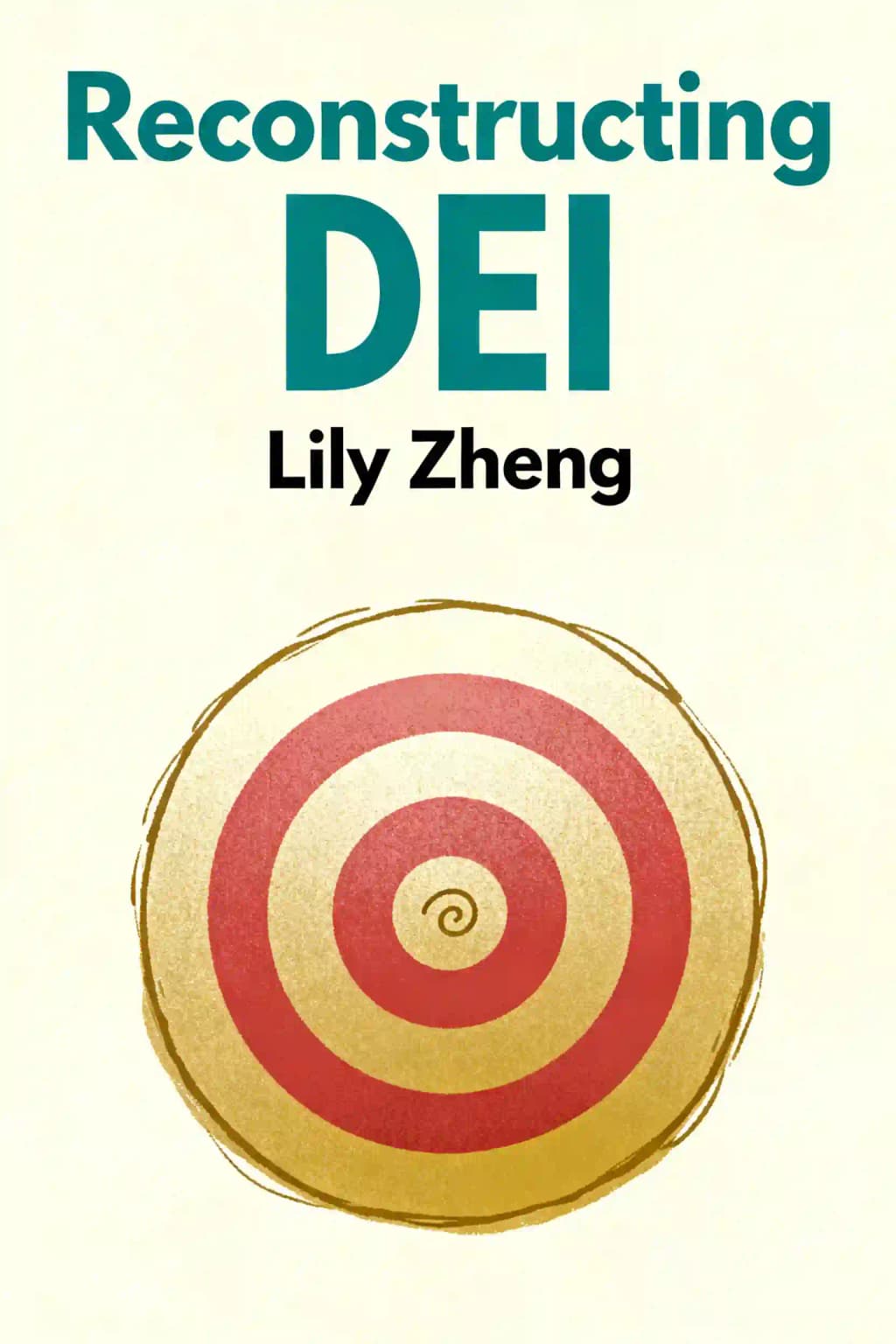
In a world where corporate DEI initiatives often amount to little more than performative gestures, Lily Zheng's "Reconstructing DEI" arrives as a refreshing antidote to superficial approaches. As a practitioner who identifies as both a DEI strategist and one of the industry's biggest critics, Zheng offers a pragmatic workbook that transforms abstract concepts into actionable strategies. Named a Forbes D&I Trailblazer and featured in publications from Harvard Business Review to the New York Times, Zheng has become a trusted voice for organizations seeking meaningful change rather than quick fixes. This workbook-companion to their earlier "DEI Deconstructed"-has rapidly gained traction among forward-thinking leaders who recognize that genuine inclusion requires more than mission statements and cultural celebrations. With their characteristic no-nonsense approach, Zheng invites readers to move beyond performative allyship toward the challenging but rewarding work of creating sustainable, systemic change.
Capítulo 2
The Foundation: Self-Work as the Starting Point
Effective DEI work begins not with organizational initiatives but with personal introspection. Before attempting to transform systems, practitioners must first understand themselves-their values, identities, experiences, and biases. This foundation prevents the common pitfalls of unexamined privilege, moral injury, and burnout that derail many well-intentioned efforts.
The journey starts with establishing core values-the personal principles that guide our decisions and priorities. By selecting and reflecting on eight central values from a comprehensive list, practitioners gain clarity about what matters most to them. This process isn't merely philosophical; research shows that values affirmation actually increases our receptiveness to challenging information and constructive criticism-essential qualities for effective DEI work.
Identity exploration forms the next critical component of self-work. We all possess multiple social identities across dimensions like race, gender, ability, sexuality, class, and religion that shape our experiences in profound ways. Using Kimberle Crenshaw's framework of intersectionality, practitioners learn to examine how their interlocking identities create unique advantages and disadvantages. A White woman experiences both privilege (racial) and marginalization (gender), but these don't simply add up-they interact in complex ways that influence how she navigates the world. By mapping these intersections, practitioners develop nuanced understanding of their social positioning.
This identity work naturally leads to recognizing areas of expertise and knowledge gaps. Our lived experiences make us experts in certain domains while limiting our understanding in others. A disabled transgender person who menstruates might possess deep expertise about navigating medical systems, while someone with upper-middle-class privilege and Ivy League credentials might understand the unspoken rules of predominantly White workplaces. Acknowledging these knowledge boundaries fosters humility and creates space for seeking others' expertise when needed.
The self-work foundation concludes with unpacking personal experiences of hardship and trauma. Whether acute (single incidents like natural disasters), chronic (repeated experiences like discrimination), complex (early-life trauma involving powerlessness), or historical (collective traumas shared across generations), these experiences profoundly shape our approach to DEI work. The goal isn't to dwell in pain but to find balance-neither living in constant emotional activation nor completely repressing difficult experiences. By naming these influences without judgment, practitioners develop awareness of how personal history affects professional practice.
Capítulo 3
Building Capacity: The Inner Resources for Sustained Impact
Self-awareness alone isn't sufficient for effective DEI work. Practitioners must develop internal capacities that sustain them through inevitable challenges. This section introduces essential skills for maintaining equilibrium while creating change.
The process begins with tuning your personal "DEI compass"-a moral framework that guides decision-making when the path forward isn't clear. Beyond cliched motivations like "it's the right thing to do" or "it makes business sense," an effective compass articulates your personal connection to DEI work, envisions what success looks like, and identifies the moral principles that keep you oriented during difficult moments. This compass becomes an operational tool for recalibrating when feeling lost or demoralized.
Emotional regulation techniques provide another crucial capacity. DEI work inherently involves emotional labor, as inequity and injustice affect people deeply. While empathy connects us with others' experiences, practitioners need balance to avoid becoming overwhelmed. Four complementary approaches-distancing (creating psychological space between oneself and difficult emotions), attention control (redirecting focus), mindfulness (increasing awareness and acceptance of emotions), and taking action (planning and executing responses)-help practitioners maintain effectiveness while protecting their wellbeing.
Humility emerges as another essential capacity. Engaging with unfamiliar identities and systems requires comfort with being a perpetual learner. Cultural humility-recognizing that cultural learning never ends and true "competence" is impossible-provides a valuable framework. By distinguishing between "surface culture" (visible elements like dress, food, and greetings) and "deep culture" (less visible aspects like social taboos, emotion norms, and attitudes toward authority), practitioners develop skills to approach unfamiliar cultures with appropriate respect.
Self-compassion completes this capacity-building section. DEI practitioners often extend tremendous compassion to others while being harshly critical of themselves. Learning to treat ourselves with the same kindness we offer others builds resilience that sustains long-term work. This involves identifying resistance to self-compassion, exploring practices beyond positive self-talk (like physical soothing or meeting emotional needs), and creating concrete plans for incorporating self-compassion during inevitable setbacks.
Capítulo 4
The Power of Connection: Building Supportive Networks
Sustainable DEI work cannot be accomplished alone. Even the most skilled practitioners need support networks and strong relationships to avoid burnout and disillusionment. This section shifts focus from internal capacity-building to the critical interpersonal dimension of effective practice, recognizing that lasting change requires a web of supportive relationships.
The journey begins with identifying personal "anchors"-trusted individuals who collectively meet our most important needs. These anchors typically fall into distinct categories: emotional supporters who provide comfort and validation, thought partners who challenge our thinking and offer new perspectives, accountability partners who keep us on track, and mentors who provide guidance based on experience. Rather than relying on a single person for all support, practitioners learn to build diverse networks where different people serve specific roles. For example, a senior colleague might serve as a strategic advisor, while a peer group provides emotional support during challenging initiatives. By analyzing which needs have sufficient support versus which need attention, practitioners develop targeted strategies for strengthening their networks, such as joining professional associations, participating in mentorship programs, or cultivating relationships across departments.
Asking for help effectively emerges as another crucial skill that many DEI practitioners struggle with. Using a structured "five W's plus how" framework, practitioners learn to make clear, specific requests. For instance, instead of broadly asking for "support with a diversity initiative," they might request: "Would you be willing to review our recruitment materials next Tuesday for potential bias and spend 30 minutes discussing your observations?" This approach acknowledges others' capabilities while articulating needs precisely. The exercise normalizes the discomfort that often accompanies help-seeking while providing practical tools to overcome these barriers, including scripts for different situations and strategies for managing rejection.
Setting boundaries-the counterpart to asking for help-prevents burnout by establishing clear limits on time, energy, and commitment. The framework identifies six boundary types: time (limiting after-hours availability), material (budget constraints), physical (workspace requirements), information (confidentiality limits), emotional (managing others' expectations), and intellectual (scope of expertise). Practitioners learn to proactively establish boundaries during low-stress moments rather than attempting to enforce them reactively. For example, setting regular office hours for DEI consultations or establishing clear parameters for project involvement at the outset of initiatives.
Shared accountability completes this section, introducing mutual commitments as a powerful form of interpersonal reliance. By creating specific agreements with others to hold each other responsible, exchange motivation, and provide coaching, practitioners increase their likelihood of achieving complex DEI goals. This might involve weekly check-ins with a colleague working on similar initiatives, monthly progress reviews with a mentor, or peer coaching circles where practitioners share challenges and solutions. The exercise emphasizes selecting accountability partners based on proximity (regular interaction), goal alignment, and skill fit (patience, discipline, empathy) rather than focusing solely on individual traits. Successful partnerships often involve clear agreements about communication frequency, feedback methods, and progress tracking mechanisms.
Capítulo 5
Strategic Positioning: Finding Your Place in Systems
Effective DEI work requires understanding how to leverage your unique position within organizational systems. This section helps practitioners analyze their positionality beyond identity alone, recognizing how formal authority, access to power, and contextual roles affect their ability to create change.
The journey begins with identifying what you "steward"-the systems, processes, policies, and practices that depend on you. These responsibilities translate directly to power and influence. The framework categorizes responsibilities into four types: task responsibilities (executing defined tasks), outcome responsibilities (ensuring specific results), stewardship responsibilities (defining or safeguarding important systems from the top down), and shared responsibilities (collectively maintaining important systems from the bottom up). Understanding this distribution reveals where practitioners can most effectively leverage their position.
Power analysis provides another crucial dimension of strategic positioning. Power extends far beyond formal authority to include six distinct types: formal (authority to request behavior), reward (ability to promise compensation), coercive (ability to threaten punishment), expert (influence through perceived expertise), information (influence through possessing greater information), and referent (influence through charisma and rapport). By recognizing which types they have more or less access to, practitioners develop more strategic approaches to advocacy.
Context further shapes the opportunities our identities create for DEI advocacy. In some environments, we blend with the majority; in others, we stand out as different. This positioning creates unique opportunities for influence. By identifying specific contexts where they belong to majority versus minority groups, analyzing relevant DEI issues, determining whether their identity expertise applies, and developing concrete action plans, practitioners learn to leverage their unique perspectives strategically.
The section concludes by exploring diverse change-making roles within effective movements. Rather than attempting to fill every role themselves, practitioners learn to specialize in positions that match their strengths, position, and capacity: Advocates raise awareness and challenge the status quo; Educators inform and upskill movement members; Organizers bring people together around clear issues and solutions; Strategists coordinate movement direction and tactics; Backers provide resources and legitimacy; Builders create new policies and processes; and Reformers work within existing systems for incremental improvement. This specialized approach prevents burnout while maximizing collective impact.
Capítulo 6
Evidence-Based Practice: Diagnosing Inequity
Identifying inequity requires more than gut instinct-it demands a data-driven approach to prove and address systemic issues. This section introduces frameworks for rigorous diagnosis that moves beyond moral imperatives to operational success.
The process begins with operationalizing outcomes. Abstract aspirations like "greater diversity, equity, and inclusion" must be translated into specific, measurable goals. The framework presents 33 common DEI outcomes ranging from representational parity and accessibility to psychological safety and work-life balance. By identifying the eight outcomes that best address their organization's most urgent needs, practitioners transform abstract aspirations into concrete, measurable goals tailored to specific contexts.
Organizational analysis provides essential context for effective intervention. The framework examines three key dimensions: structure (centralization, formalization, complexity), culture (power distance, interdependence, uncertainty avoidance, failure avoidance), and strategy (cumulative choices people make). By analyzing these elements, practitioners can identify how to tune DEI initiatives to work within their specific environment rather than imposing rigid agendas that clash with existing systems.
Research methodology forms another critical component of evidence-based practice. The framework outlines five key steps: setting clear goals, collecting diverse forms of data, testing hypotheses rigorously to avoid confirmation bias, recognizing limitations to prevent overgeneralization, and taking action based on results. Beginning with specific questions about who we're focusing on and what aspects of their experience matter, practitioners develop research plans that yield actionable insights.
The section concludes with storytelling strategies that transform raw data into compelling narratives. Even the most rigorous findings won't drive change without effective communication that builds shared investment. The key lies in grounding narratives in "why"-explaining why issues matter, why they arose, why analyses are trustworthy, and why action is necessary. By connecting data to organizational priorities, sharing emotional stories about affected groups, linking root causes to relevant concerns, explaining methodology, and framing participation as mutually beneficial, practitioners create compelling calls to action.
Capítulo 7
Creating Inclusive Environments: From Knowledge to Practice
Diagnosing inequity provides intellectual understanding, but championing inclusion requires making people feel safe, valued, and included in their environments. This section focuses on the interpersonal dimensions of DEI work that create genuine belonging, moving beyond theoretical frameworks to practical implementation.
The journey begins with learning how to learn about difference respectfully. While mistakes are inevitable, practitioners can minimize harm through six essential principles: First, recognizing context appropriateness - understanding when and where certain discussions are suitable. Second, following the community's lead by letting marginalized groups set the agenda for their own advocacy. Third, conducting independent research, prioritizing community-created content from multiple perspectives, including both academic sources and lived experiences. Fourth, determining what questions remain after thorough research. Fifth, checking boundaries before asking sensitive questions, recognizing that not everyone wants to be an educator. Finally, asking respectfully when seeking information, acknowledging others' emotional labor. This comprehensive approach prevents treating others as "exotic curiosities" while fostering genuine understanding and respect.
Culture change strategies provide practical approaches for shaping inclusive environments, recognizing that transformation happens at multiple levels. While organizational culture broadly can be difficult to shift, practitioners can actively influence "microcultures" at smaller scales - from departments to teams to individual relationships. For example, a team leader might establish inclusive meeting practices like rotating facilitation roles or implementing structured turn-taking to ensure all voices are heard. The framework emphasizes that culture's unspoken nature actually creates opportunities for influence, as the right leader taking decisive action at the right moment can establish enduring inclusive practices that become normalized over time.
Empowerment emerges as another essential element of inclusive leadership, shifting away from traditional hierarchical models. Rather than adopting a command-and-control approach, effective leaders use their power to remove barriers, interrupt inequitable systems, and actively enable others' success. This involves understanding others' needs through active listening and regular feedback sessions, rather than imposing one-size-fits-all solutions. Leaders must identify specific obstacles teams face, whether they're structural (like inflexible work hours) or cultural (like exclusive social norms). They secure needed resources, from budget allocations to technology access, while protecting teams from distractions and organizational politics. Additionally, they excel at translating complex organizational demands into actionable information that teams can implement effectively.
Strategic visibility completes this section, showing how leaders can leverage their platform not for self-promotion but to advocate for important issues and create lasting change. The three-stage process begins with challenging existing norms by introducing alternatives - for example, questioning traditional meeting structures or promotion criteria. It proceeds to taking bold action by embodying new norms with personal protection for others, such as openly supporting flexible work arrangements or diverse hiring practices. Finally, it culminates in doubling down by celebrating success and institutionalizing changes through formal policies and procedures. This strategic approach transforms what once seemed impossible into the new normal through careful framing that positions new approaches as reasonable while revealing the status quo as unreasonable. Leaders might showcase metrics demonstrating improved outcomes, share success stories, and create formal mechanisms to sustain positive changes.
Capítulo 8
Navigating Conflict: Addressing Harm Effectively
No matter how diligently we implement DEI initiatives, we cannot completely eliminate harm in the short term. As we work to change deep-rooted inequities, people will continue making mistakes and maintaining inequitable practices. This section develops skills for addressing conflict and harm effectively when they inevitably occur.
Active listening forms the foundation of effective conflict resolution. The best leaders can pause, ground themselves, and truly listen without immediately judging or acting. This skill communicates that others' experiences matter and are worth understanding. Four key techniques-reflecting/paraphrasing messages, asking thoughtful questions, providing verbal affirmation, and validating emotions-help practitioners communicate genuine interest and comprehension, particularly in the critical moments after conflict or harm occurs.
Conflict management strategies provide frameworks for navigating disagreements productively. Well-managed conflict can produce positive outcomes, including exposure to new ideas, improved ability to express needs, and better problem-solving. The framework introduces five primary conflict management styles-avoidance, accommodation, competition, compromise, and collaboration-each with specific strengths and weaknesses for different situations. Rather than seeking a universally "best" approach, effective practitioners develop fluency in all five styles, switching between them based on contextual needs.
Restorative practices offer alternatives to traditional punitive approaches when addressing harm. Instead of assigning blame and punishment, which often fracture communities, restorative processes center relationships by asking: Who was harmed? How? What needs weren't met? What obligations exist to make things right? This approach allows communities to repair harm without destroying relationships. While formal consequences may sometimes emerge from restorative processes, they're the exception rather than the rule.
Root cause analysis completes this section, moving beyond addressing symptoms to understanding fundamental organizational problems. The framework provides analytical tools for examining both structural elements (centralization, formalization, complexity) and cultural dimensions (power distance, interdependence, uncertainty avoidance, failure avoidance). This transformative approach shifts focus from Band-Aid solutions to meaningful systemic change that prevents recurring patterns of harm by tackling the underlying organizational dynamics that perpetuate inequity.
Capítulo 9
Creating Sustainable Change: Building Movements for Transformation
The final section focuses on creating lasting, collective change through movement-building and system reimagining. This approach recognizes that while individual action matters, systemic transformation requires coordinated effort across all organizational levels, from frontline workers to executive leadership and external stakeholders.
Movement building begins with thorough research-"scouting" the landscape to understand the issue completely, including everyone affected and previous change attempts. This process often reveals surprises like existing efforts or reasons why past initiatives failed. For example, a healthcare transformation initiative might uncover informal support networks among nurses that could be leveraged, or previous failed attempts at electronic health record implementation that created lasting resistance. By identifying all relevant stakeholders, gathering information about their priorities, and understanding the complete context, practitioners prepare for effective coalition-building. This includes mapping informal influence networks, documenting successful past initiatives, and identifying potential resistance points.
Power mapping provides strategic insight for organizing effective movements. By analyzing stakeholders using a framework of "hard power" (formal authority, reward, coercive) versus "soft power" (expertise, information, referent/charisma), practitioners visualize the landscape and develop targeted engagement strategies. For instance, a junior employee might possess significant soft power through their technical expertise or strong relationships across departments, while a senior executive might struggle with limited influence despite their formal authority. This approach warns against making assumptions about power based on position or identity alone, as reality often includes surprising exceptions that can make or break change initiatives.
Coalition formation requires evolving movements strategically-enough to attract powerful allies without losing core missions. By drawing creative connections between movement goals and potential partners' agendas, practitioners craft tailored messages highlighting alignment with diverse interests. For example, an environmental initiative might appeal to finance departments through cost savings, to HR through employee engagement, and to marketing through brand enhancement. The reality of coalition-building is messy-people join for various reasons beyond pure idealism-but success comes from grounding in desired outcomes while accepting evolution as new partners join. This includes managing competing priorities, addressing conflicts constructively, and maintaining momentum through early wins.
Systems change requires more than cosmetic adjustments-it demands resetting organizational foundations through deliberate, sustained effort. This process begins with tracking trust levels, as trust functions as the currency of organizational change. High-trust environments enable ambitious initiatives by fostering patience and collaboration, while low-trust contexts require different approaches focused on rebuilding credibility through consistent delivery of small promises. By developing theories of change that address root causes, creating tailored strategies with clear initiatives and timelines, and implementing rigorous measurement systems, practitioners transform abstract aspirations into concrete, sustainable change. This includes establishing feedback loops, celebrating progress milestones, and adjusting approaches based on emerging data and stakeholder input. Successful system change often requires maintaining dual focus on both short-term wins that build momentum and long-term structural transformations that ensure lasting impact.
Capítulo 10
The Journey Continues: Sustaining DEI for the Long Haul
While DEI work is often described as never-ending, practitioners must maintain the belief that achieving concrete outcomes is possible. The vision of creating environments where everyone feels seen, represented, respected, and valued provides essential motivation. This vision manifests in tangible ways: increased representation at leadership levels, equitable promotion rates across demographics, and measurable improvements in employee engagement scores. Without this vision and clear metrics of progress, disillusionment and burnout inevitably follow.
Sustaining DEI requires recognizing organizational maturity levels-from reactive, prerequisite-free actions to comprehensive initiatives requiring universal buy-in. Early-stage organizations might focus on basic awareness training and policy updates, while more mature organizations implement sophisticated talent pipelines, mentorship programs, and accountability frameworks. Success requires meeting organizations where they are while continuously pushing for advancement.
Documentation plays a crucial role in preserving progress. This includes capturing best practices, recording successful initiatives, maintaining detailed metrics dashboards, and creating comprehensive handover documents. When key champions leave, these resources ensure their successors can build upon existing foundations rather than starting anew. Similarly, thoughtful succession planning involves identifying and developing multiple DEI leaders throughout the organization, creating committees and working groups that share responsibility, and establishing governance structures that outlast individual contributors.
Personal sustainability demands equal attention. Practitioners must actively combat compassion fatigue through regular self-assessment and boundary-setting. This might include establishing "no-meeting" days, participating in affinity groups or professional networks, celebrating small wins, and scheduling regular periods of rest and reflection. Many successful DEI leaders incorporate mindfulness practices, seek peer support, and maintain interests outside their DEI work to preserve their energy and perspective.
The journey concludes with a powerful reminder: "To sustain DEI work, we need to know how to do it well. But to sustain ourselves, we need to BE well too. To achieve DEI, we need to do enough to move the needle, but no matter how much we do, remember that as you are, YOU ARE ENOUGH." This balance between action and acceptance, between changing systems and honoring our humanity, represents the true heart of reconstructing DEI work for meaningful, sustainable impact. It acknowledges that while systemic change requires persistent effort, personal wellbeing cannot be sacrificed in the process. Success in DEI work comes not from perpetual pushing, but from strategic action combined with intentional rest and renewal.